What you’ll learn
- The science behind Hedione and why perfumers call it “luminous jasmine”
- How Hedione acts as a scent multiplier to boost projection and longevity
- Which iconic perfumes rely on this molecule to create irresistible charm
- Practical ways to layer and choose fragrances rich in Hedione
Introduction
Have you ever walked past someone and caught a trail of perfume so airy, warm, and inviting that you had to turn around? That captivating effect isn’t just luck. It is often the work of a single secret ingredient working quietly behind the scenes.
Meet Hedione—the jasmine molecule that makes perfumes sensual, radiant, and utterly unforgettable.
Known chemically as methyl dihydrojasmonate, this synthetic masterpiece revolutionized modern perfumery in the late 20th century. While natural jasmine oil can feel heavy or indolic, Hedione offers a fresh, transparent floral breeze with smooth citrus undertones.
It doesn’t just add scent; it transforms every other note in a fragrance bottle. By lifting heavy florals and softening sharp musks, it creates a golden halo of aroma around the wearer.
Whether you are a casual fragrance enthusiast or a dedicated scent collector, understanding this magical note will completely change how you shop for perfumes. Let’s dive in.
The Origins of Hedione and Why It Changed Perfumery Forever
To understand why this ingredient dominates modern perfumery, we have to travel back to 1957. Scientists at the Swiss flavor and fragrance giant Firmenich were analyzing the delicate chemical structure of natural jasmine blossom.
During their research, chemist Édouard Demole isolated methyl dihydrojasmonate. Firmenich patented the compound under the trade name Hedione, derived from the Greek word hedone, meaning pleasure or delight.
At first, perfumers were hesitant. The molecule itself does not smell like a intense blast of crushed petals. Instead, it has a subtle, dew-drenched aroma reminiscent of jasmine tea, green lemon, and fresh morning air.
Everything changed in 1966 when master perfumer Edmond Roudnitska used Hedione in Christian Dior’s Eau Sauvage. By dosing the fragrance with roughly 2% Hedione, Roudnitska created an unprecedented citrus-floral aura that captured international acclaim.
Today, Hedione is one of the most widely used aroma chemicals in the world. Industry estimates suggest it appears in over 60% of modern fine fragrances across all scent families.
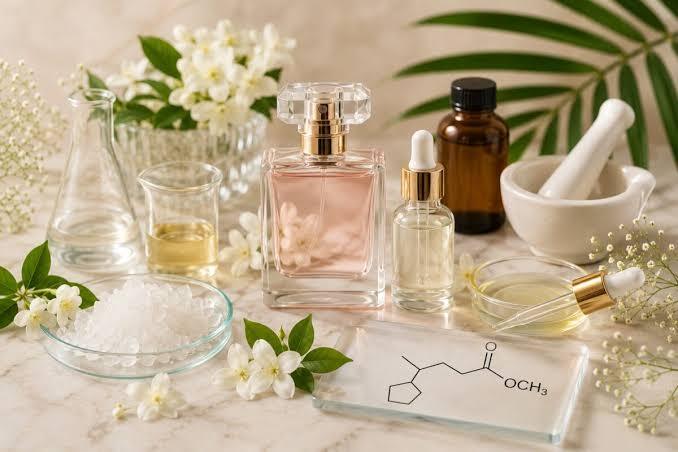
How Hedione Transforms Scent: The Science of Sensuality
The Radiant Halo Effect (Diffusion and Projection)
In perfumery, projection refers to how far a scent radiates from your skin into the air around you. Heavy notes like vanilla, amber, and patchouli often stay close to the skin.
Hedione acts like a scent amplifier. When added to a formula, it increases the volatility of other notes, pushing them outward without making the perfume feel harsh or overwhelming.
It creates what perfumers refer to as “aeration.” Think of it as adding bubbles to syrup—it turns a dense, heavy oil blend into an effervescent cloud that floats effortlessly.
The Behavioral Chemistry of Attraction
Beyond traditional olfactory aesthetics, Hedione holds a fascinating place in human neuroscience. A landmark 2015 study conducted by researchers at Ruhr-University Bochum in Germany revealed groundbreaking findings about scent perception.
The study showed that Hedione activates a specific limbic region in the human brain associated with hormone release and emotional processing. Unlike standard floral notes, Hedione specifically stimulated the VN1R1 receptor.
This chemical interaction triggers feelings of warmth, familiarity, and subconscious attraction. It turns a standard floral composition into an intimate, magnetic skin scent.
The Ultimate Blending Agent
Raw essential oils can sometimes clash. Rose can overpower violet, while cedarwood can drown out citrus top notes.
Hedione acts as a diplomatic mediator inside the bottle. It binds disparate ingredients together, smoothing over rough edges and filling in empty spaces between top, heart, and base notes.
Because it possesses almost no heavy color or dark undertones of its own, it leaves the primary notes crisp, clean, and radiant from the initial spray down to the dry-down.
5 Iconic Fragrances That Showcase Hedione
If you want to experience the power of the jasmine molecule that makes perfumes sensual, look no further than these masterwork creations:
- Christian Dior — Eau Sauvage (1966): The perfume that started the revolution. A crisp blend of lemon, rosemary, and 2% Hedione that defined men’s luxury grooming.
- Maison Francis Kurkdjian — Baccarat Rouge 540 (2015): This global sensation relies heavily on Hedione paired with Ambroxan and ethyl maltol to produce its famous airy, spun-sugar aura.
- Chanel — No. 19 (1970): Hedione lifts the iris and galbanum notes in this classic green floral, preventing the earthy roots from feeling overly dense.
- CK One — Calvin Klein (1994): The quintessential 90s unisex scent used Hedione to blend bergamot, green tea, and translucent florals into a universal skin freshener.
- Parfums de Marly — Delina (2017): Modern fruity-floral elegance at its finest, where Hedione expands the crisp lychee and turkish rose heart for hours of trail projection.

Common Misconceptions About Synthetic Molecules in Perfume
1: Natural Ingredients Are Always Superior to Synthetics
Many consumers assume natural oils are inherently better quality than synthetic aroma chemicals. In reality, high-end perfumery relies on both. Natural jasmine extract costs thousands of dollars per kilo and can trigger skin sensitivities. Hedione provides a clean, stable, and hypoallergenic alternative that enhances natural materials rather than replacing them.
2: Hedione Smells Like Pure Jasmine Oil
While derived from research into jasmine, pure Hedione does not smell like a dense bouquet of flowers. If you smell pure Hedione on a blotter strip, you will detect a sheer, watery, lemon-jasmonic haze. It shines brightest when interacting with other notes.
3: Synthetic Notes Ruin Scent Longevity
Some believe synthetic molecules evaporate too quickly. Hedione, however, is a heart-to-base note with remarkable tenacity. It stays on clothes and skin for over 8 to 12 hours, maintaining the freshness of top notes long after they would normally fade.
Expert Tips to Maximize Your Perfume’s Aura
Building an impressive scent trail requires a bit of technique. Here is how you can use Hedione-rich scents to your advantage:
- Apply to Warm Pulse Points: Target your neck, inner elbows, and the back of your knees. Body heat activates Hedione’s diffusive properties.
- Layer with Pure Musks: Combine a Hedione-heavy floral with a clean white musk oil. The molecule will lift the musk, creating a customized “your skin but better” scent signature.
- Spray Clothes Lightly: Natural fabrics like cotton and cashmere hold Hedione molecules longer than skin, giving you subtle wafts throughout the day.
- Don’t Rub Your Wrists: Friction crushes the delicate top note structure. Spray your perfume and let it dry naturally to preserve its airy radiance.
Summary of Why Hedione Belongs in Your Collection
Fragrance is more than just smelling nice; it is an invisible extension of your personality. Hedione revolutionized the perfume industry by offering perfumers a tool to craft light, glowing, and sensual compositions.
From vintage masterpieces like Dior’s Eau Sauvage to modern icons like MFK’s Baccarat Rouge 540, this remarkable ingredient continues to define how modern luxury smells.
By seeking out scents featuring this luminous jasmine derivative, you ensure your fragrance doesn’t just sit flat on your skin—it breathes, projects, and enchants everyone in your path.
Conclusion
Understanding perfume ingredients opens up a whole new world of olfactory appreciation. The jasmine molecule that makes perfumes sensual is proof that science and art can come together to create pure magic in a bottle. Next time you catch a mysterious, glowing floral trail in public, you will know exactly which molecule is casting the spell.
Did you find this helpful? Drop a comment below or share this with a fellow fragrance lover!
Frequently Asked Questions
Q1: What does Hedione smell like on its own?
A: On its own, Hedione has a very light, transparent floral scent. It smells like a blend of fresh green jasmine petals, morning dew, and a slight touch of lemon zest. It is appreciated more for its airy radiance than a heavy perfume aroma.
Q2: Is Hedione safe for sensitive skin?
A: Yes, Hedione (methyl dihydrojasmonate) is widely considered very safe and has a exceptionally low risk of skin sensitization. It is thoroughly tested and regulated by IFRA (International Fragrance Association) guidelines.
Q3: Is the jasmine molecule that makes perfumes sensual used in men’s fragrances?
A: Absolutely. Ever since its debut in Dior’s Eau Sauvage in 1966, Hedione has been a core component in men’s cologne, providing fresh lift to citrus, woody, and aquatic compositions.
Q4: How does Hedione differ from natural jasmine extract?
A: Natural jasmine extract is dark, thick, indolic, and intensely sweet. Hedione is clear, sheer, fresh, and watery, giving perfumers a way to add floral brightness without adding heavy sweetness.
Q5: Can Hedione make perfumes last longer?
A: Yes. While it acts primarily as a diffuser to improve projection, Hedione also acts as a subtle fixative that anchors lighter top notes like bergamot and grapefruit to your skin for longer periods.
Q6: How can I tell if a perfume contains Hedione?
A: Fragrance brands rarely list raw chemical names on the box. Look for notes like “luminous jasmine,” “transparent florals,” “solar notes,” or “radiant jasmine.” If a perfume feels noticeably airy and diffusive, it almost certainly contains Hedione.
Leave a Reply