

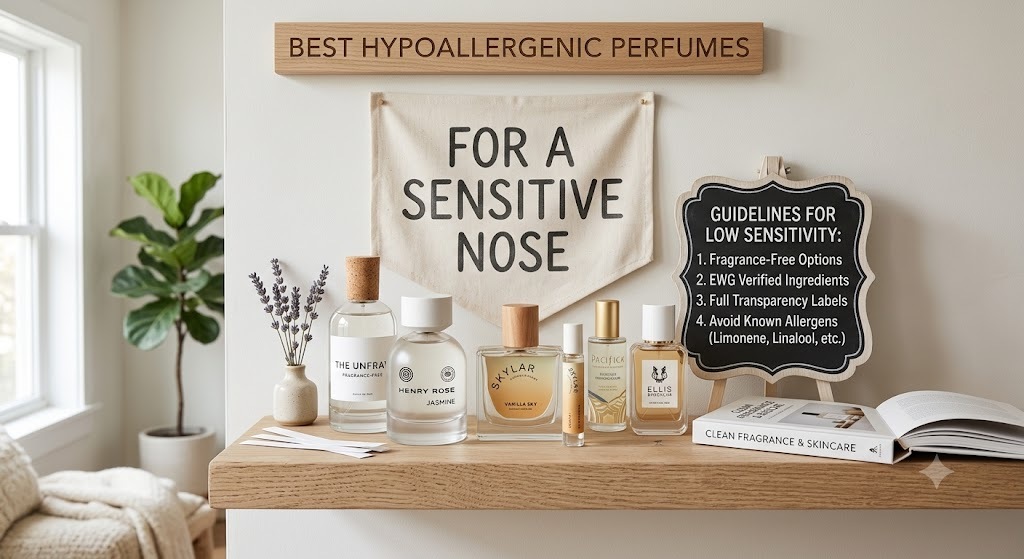
What you’ll learn
- Why some perfumes trigger sneezing, headaches, or skin irritation — and others don’t
- The specific hypoallergenic perfumes worth trying in 2026
- How to read a fragrance label like a pro before you buy
- Mistakes that make sensitivities worse, and expert tips for wearing scent safely
Introduction
You spritz your wrist, and thirty seconds later your eyes are watering and your head is pounding. If that sounds familiar, you already know why hypoallergenic perfumes matter more than any other beauty category on your shelf.
The good news: a sensitive nose doesn’t mean you have to give up fragrance entirely. It means you need to shop differently, read labels more carefully, and know which brands are actually formulating with sensitivity in mind rather than just slapping “gentle” on a bottle.
This guide walks through what makes a fragrance irritating in the first place, which hypoallergenic perfumes are genuinely worth your money, and how to build a scent routine that won’t leave you reaching for the antihistamines.
Let’s dive in.
Why Some Perfumes Trigger Reactions and Others Don’t
Traditional perfumes can contain anywhere from 50 to several hundred aromatic compounds in a single formula. Any one of them can be a potential irritant for someone with sensitive skin or a reactive respiratory system.
The biggest culprits tend to be synthetic musks, certain essential oils used in high concentration, and a preservative-like compound called oakmoss, which is heavily restricted in the EU because of its allergy potential.
Fragrance for sensitive skin isn’t about “natural versus synthetic” — that’s a common myth. Plenty of natural essential oils, like cinnamon or citrus peel oils, are more likely to irritate than lab-created, allergen-screened synthetic molecules.
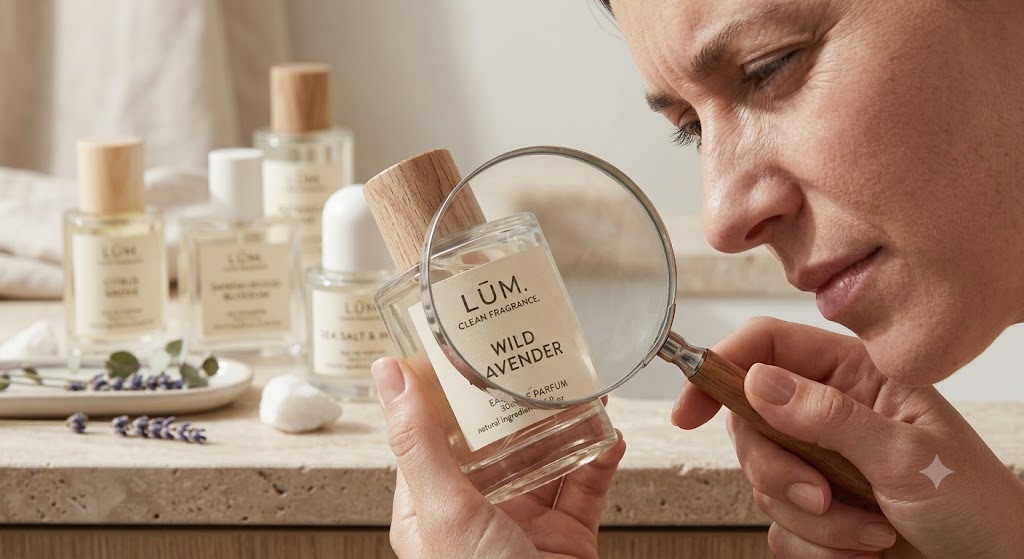
What actually matters is concentration, the presence of known allergens (the EU maintains a list of 26, soon expanded to over 80, fragrance allergens that must be disclosed on labels), and how a formula is built. Simpler formulas with fewer raw materials generally mean fewer chances for a reaction.
The Best Hypoallergenic Perfumes to Try
This is the part you came for. Below are fragrance houses and specific releases that are genuinely formulated with sensitivity in mind, not just marketed that way.
Skylar
Skylar built its entire brand around being hypoallergenic, vegan, and made without the most common irritating ingredients, including phthalates and parabens. Their Vanille Vanille and Isle scents are soft, warm, and rarely trigger the sneeze-and-sniffle reaction that heavier florals can cause.
What sets Skylar apart is transparency. Every ingredient is listed clearly, and the brand explicitly formulates around a published list of allergens to avoid. For a first-timer rebuilding trust with fragrance, this is often the easiest entry point.
Henry Rose
Founded by actress Michelle Pfeiffer, Henry Rose is one of the few perfume lines independently verified by the Environmental Working Group for ingredient safety. Every fragrance in the line, including the popular Undone and Torn scents, discloses its full ingredient list, which is almost unheard of in traditional perfumery.
The formulas skew toward soft musks, clean woods, and light fruit notes rather than heavy, resinous bases. That lighter construction tends to be much easier on sensitive skin and sinuses.
Phlur
Phlur’s Missing Person became a viral favorite, and part of its appeal is how it wears: close to the skin, warm, and not overpowering. The brand avoids some of the harsher synthetic amplifiers found in mass-market perfumes, which makes their scents a gentler option for reactive skin types.
Step-by-Step: How to Shop Hypoallergenic
Finding the right hypoallergenic perfume isn’t just about picking a “clean” brand off a shelf. Follow these steps to shop smarter.
- Check the ingredient list first, not the marketing copy. Look for shorter formulas and avoid anything that just says “fragrance” or “parfum” with no further breakdown.
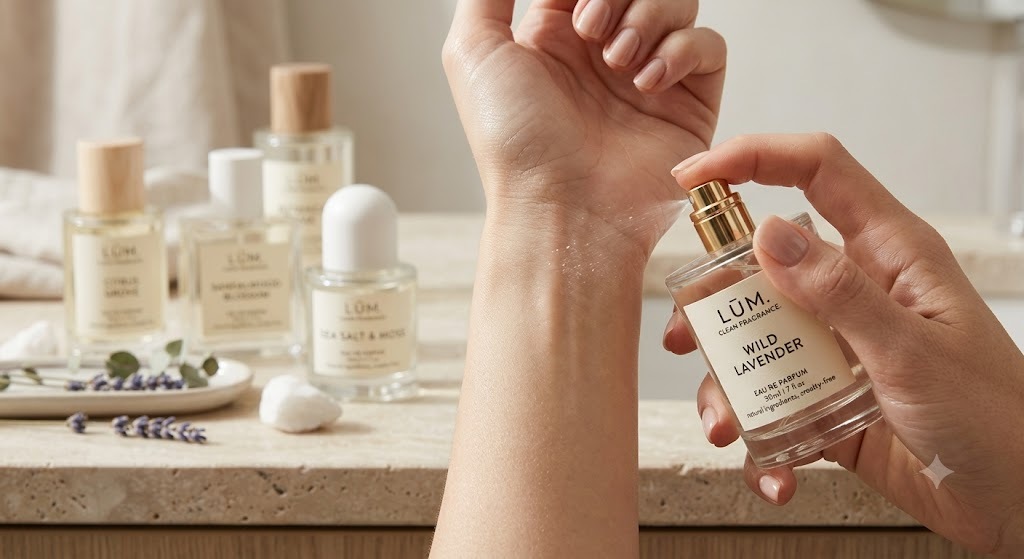
- Patch test on skin before spraying near your face. Apply a small amount to your inner forearm and wait 24 to 48 hours before deciding it’s safe.
- Start with lower concentrations. An eau de toilette has less fragrance oil than an eau de parfum, which means fewer irritants reaching your skin per spray.
- Avoid known heavy irritants. Watch for high concentrations of cinnamal, oakmoss, and certain synthetic musks if you have a documented sensitivity.
- Test in-store, then wait before buying. Fragrance changes over several hours as it dries down; a reaction can also take time to develop, so don’t buy on the first sniff.
Common Mistakes People Make With Sensitive Fragrance Shopping
Assuming “natural” always means safer. As mentioned earlier, natural essential oils can be just as irritating, sometimes more so, than synthetic alternatives.
Layering too many scented products. Scented lotion, scented laundry detergent, and perfume all stacked together multiply your total allergen exposure, even if each product alone seems fine.
Ignoring alcohol content. High-alcohol formulas can dry out and irritate already-sensitive skin, independent of the fragrance oils themselves.
Buying based on a friend’s recommendation alone. Sensitivity is highly individual. A scent that’s perfectly gentle on one person’s skin can still cause a reaction on yours.
Skipping the patch test because you’re excited to wear something new. This is the single most common reason people end up with an unexpected reaction.
Expert Tips for Wearing Fragrance Safely
Dermatologists generally recommend applying perfume to clothing rather than directly to skin if you have a history of sensitivity, since fabric doesn’t absorb and react the way skin does.
Spraying into the air and walking through the mist, rather than spraying directly onto your body, is another practical trick that reduces direct skin contact while still letting you enjoy the scent.
If you’re prone to headaches specifically, opt for lighter, single-note fragrances over complex “gourmand” blends, which tend to use more layered synthetic compounds to achieve their depth.
Final Recommendations
If you’re just starting to rebuild a relationship with fragrance after a bad reaction, Skylar is the most beginner-friendly hypoallergenic perfume brand thanks to its transparent, allergen-conscious formulas.
If you want something closer to a luxury experience with the same safety-first approach, Henry Rose offers EWG-verified formulas without sacrificing a polished, wearable scent profile.
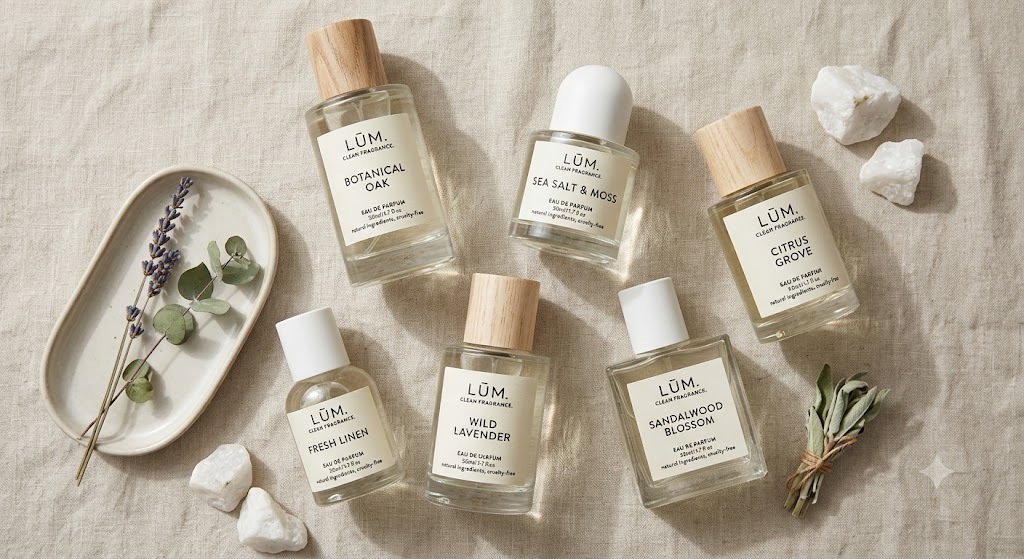
Whatever you choose, remember that “hypoallergenic” reduces risk, it doesn’t eliminate it entirely. Everyone’s skin chemistry is different.
Conclusion
Living with a sensitive nose doesn’t mean giving up on fragrance. It means being a more careful, informed shopper. The best hypoallergenic perfumes share a few things in common: shorter ingredient lists, transparent labeling, and formulas built around fewer, well-tested compounds.
Start with a patch test, choose lighter concentrations, and give brands like Skylar, Henry Rose, and Phlur a try before committing to a full bottle. Your future self, headache-free and smelling wonderful, will thank you.
Did you find this helpful? Drop a comment below or share this with a fellow fragrance lover!
Frequently Asked Questions
Q1: What does “hypoallergenic perfume” actually mean? A: It means the fragrance is formulated to reduce the likelihood of triggering an allergic reaction, typically by avoiding common irritants like certain synthetic musks, parabens, and high concentrations of known allergens. It doesn’t guarantee zero reaction for every person, since sensitivity varies individually.
Q2: Can I be allergic to a “natural” perfume too? A: Yes. Natural essential oils, including citrus, cinnamon, and certain florals, can be just as irritating as synthetic ingredients, sometimes more so. “Natural” is not the same as “hypoallergenic.”
Q3: How do I know if a perfume is causing my headaches? A: Try removing fragrance from your routine for a week, then reintroduce a single, simple scent and monitor your reaction. If symptoms return with fragrance exposure, consider lighter, single-note formulas and consult a doctor if symptoms persist.
Q4: Are alcohol-free perfumes better for sensitive skin? A: They can be gentler, since high alcohol content can dry and irritate skin independent of the fragrance oils. Oil-based perfumes are often a good alternative for very reactive skin.
Q5: Where should I apply hypoallergenic perfume if I have sensitive skin? A: Consider spraying onto clothing rather than skin, or misting into the air and walking through it. If applying to skin, stick to less reactive areas and always patch test first.
Q6: Are expensive perfumes automatically more hypoallergenic? A: No. Price has little correlation with allergen content. Some budget-friendly brands are more transparent and allergen-conscious than luxury houses, so always check the ingredient list rather than the price tag.
Pingback: Can Perfume Actually Boost Your Mood? The Science Explained - fragrantip