

What you’ll learn
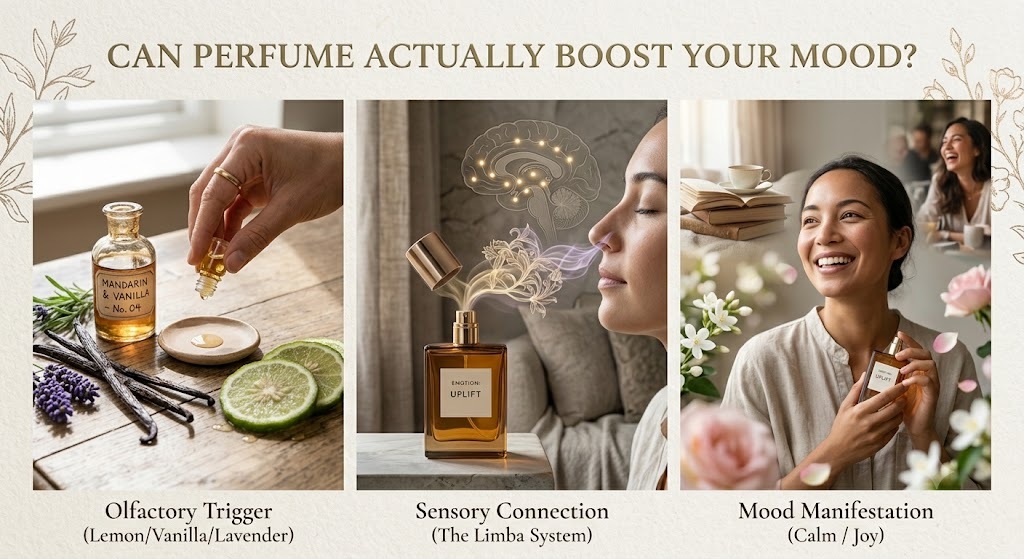
- The biological link between your olfactory system and the brain’s emotional center.
- Specific scent families proven to trigger happiness, calm, and focus.
- How to build a personal “scent wardrobe” tailored to your daily emotional needs.
- Pro tips for making your uplifting fragrances last significantly longer.
Introduction
Imagine waking up on a gray, rainy Tuesday feeling completely drained of energy. You walk over to your vanity, spritz a vibrant, sparkling citrus cologne, and suddenly feel a wave of optimism wash over you. Can perfume actually boost your mood so instantly, or is it all just clever marketing by luxury beauty houses?
The truth is much more fascinating than simple wishful thinking. Scientists have spent decades studying the profound connection between our sense of smell and our psychological well-being. Every mist of your favorite fragrance delivers microscopic aroma molecules that interact directly with your brain biology.
Understanding how scent alters our emotional state can transform the way you approach your daily beauty routine. Let’s dive in.
The Psychology and Biology of Scent
To appreciate why a specific bottle of fragrance can shift your mindset, we must look at human anatomy. Your sense of smell is the only human sense that bypasses the thalamus—the brain’s traditional relay station. Instead, scent molecules travel directly to the olfactory bulb, which has immediate access to the amygdala and the hippocampus.
These twin structures form the heart of the limbic system, the ancient brain region responsible for processing emotions, survival instincts, and vivid memories. This direct neural pathway explains why a single whiff of a powdery lavender perfume can instantly transport you back to your grandmother’s garden. It triggers a profound sense of comfort before your conscious mind even registers the specific ingredients.
Aromachology, the scientific study of the relationship between psychology and fragrance technology, confirms that scents exert measurable effects on our behavior. Research shows that olfactory stimulation can alter brain wave patterns, heart rates, and cognitive performance. When we ask if fragrance can change how we feel, science answers with a resounding yes.

How Different Scent Families Alter Your Mindset
Perfumery relies on a diverse wheel of fragrance families, each possessing its own unique emotional signature. By learning how these aromatic profiles interact with your nervous system, you can consciously select scents to manipulate your daily state of mind.
Citrus Profiles for Dynamic Energy
If you need an immediate wake-up call that rivals your morning espresso, look directly to the citrus family. Scents featuring dominant notes of bright bergamot, tangy grapefruit, zesty lemon, and sweet mandarin act as instant stimulants for the central nervous system. These volatile top notes evaporate quickly but leave behind a trail of pure, vibrant optimism.
Neurological studies suggest that the inhalation of citrus oils, particularly bergamot, can significantly reduce cortisol levels in the human body. This reduction helps dispel feelings of fatigue and sluggishness while promoting high-level mental clarity. A stellar real-world example is Maison Margiela Replica Under the Lemon Trees, which captures the invigorating essence of a sun-drenched Italian orchard to battle mental fog.
Floral Notes for Comfort and Deep Serenity
Floral fragrances represent the diverse heart of traditional perfumery, offering profound emotional balancing benefits. Classic white florals like rich jasmine and voluptuous tuberose contain high concentrations of indoles, which possess naturally relaxing properties. Meanwhile, the timeless elegance of fresh rose notes promotes feelings of safety, self-compassion, and gentle emotional healing.
Lavender stands out as the ultimate champion for stress reduction and evening relaxation. Its high content of linalool relaxes overactive nervous systems and encourages deep, restorative sleep. For a luxurious dose of tranquility after a high-stakes workday, a light spray of Jo Malone London Amber & Lavender provides an exquisitely soothing sanctuary.
Earthy and Woody Bases for Grounding Stability
When the modern world feels chaotic and overwhelming, woody and earthy fragrances offer a solid psychological anchor. Notes of rich sandalwood, smoky vetiver, dry cedarwood, and green oakmoss connect us subconsciously to the stabilizing rhythms of nature. These warm, complex base notes linger on the skin for many hours, providing a continuous sense of security.
Sandalwood contains chemical compounds that closely mimic human pheromones, which induces a state of quiet confidence and inner peace. Vetiver, often referred to as the “oil of tranquility” in traditional wellness practices, actively quietens a spinning, anxious mind. Wearing an earthy masterpiece like Tom Ford Oud Wood can make you feel utterly unshakable during stressful business presentations.
Step-by-Step Guide to Coding Your Emotions with Perfume
Harnessing the emotional power of fragrance requires more than just spraying a random bottle before running out the door. You can intentionally design a personal scent ritual that conditions your brain for success throughout the day. Follow this structured approach to optimize your olfactory wellness routine.
- Conduct a Morning Mindset Audit: Before reaching for a bottle, check in with your current mental state. Are you anxious and needing calm, or are you exhausted and needing a major spark of motivation?
- Layer for Emotional Progression: Apply a bright citrus or green scent on your pulse points for an immediate morning boost, backed by a warm vanilla or amber base that will emerge later to comfort you during the afternoon slump.
- Anchor Your Fragrance to Specific Tasks: Reserve a distinct, sharp fragrance—like a crisp mint or eucalyptus blend—exclusively for deep, focused work sessions. Over time, your brain will recognize this scent as an instant cue to focus.
- Create a Nighttime Decompression Ritual: Roughly thirty minutes before bed, mist your linens and skin with a comforting, powdery blend of lavender, chamomile, or soft white musks to signal to your brain that it is safe to sleep.
Common Myths About Fragrance and Mental Wellness
As the popularity of functional fragrance continues to grow, several misconceptions have emerged online. Dismantling these myths helps you make smarter purchasing decisions and maintain realistic expectations for your scent collection.
The biggest myth circulating in beauty spaces is that synthetic perfume molecules do not offer any emotional or therapeutic benefits. Many consumers assume that only 100% all-natural essential oils can influence the human brain. In reality, high-quality synthetic aroma compounds designed by expert perfumers replicate natural molecular structures perfectly and can trigger the exact same positive limbic responses.
Another common mistake is assuming that a perfume that makes your friend feel blissful will have identical effects on you. Olfactory preferences are deeply tied to personal memories and cultural backgrounds. If a childhood bully wore a specific rose perfume, that scent will likely trigger stress for you, regardless of the rose’s naturally soothing properties. Trust your own nose over generic internet recommendations.
Pro Insider Secrets for Designing a Functional Scent Wardrobe
To truly elevate your fragrance game, you should view your collection as an emotional toolkit rather than a static display of status symbols. Expert perfumers recommend curating a balanced “scent wardrobe” that covers the entire spectrum of human emotion. You need distinct choices for energy, focus, romance, comfort, and unshakeable power.
When testing new fragrances to add to your rotation, always observe how the notes evolve over a full eight-hour wear cycle. A perfume that opens with a wildly energizing burst of green apple might dry down into a heavy, dark patchouli that makes you feel somber. Let the juice develop completely on your warm skin before deciding if it matches your desired emotional profile.
If you are eager to learn more about how different perfume structures perform throughout the year, be sure to check out our comprehensive guide on [How to Choose the Perfect Signature Fragrance for Every Season]. Matching your scent’s molecular weight to the ambient temperature dramatically enhances both its longevity and its psychological impact.
The Ultimate Takeaway on Fragrance and Mood Enhancement
At its core, utilizing perfume as a mood enhancer is a beautiful blend of rigorous neurobiology and artistic self-expression. By moving past generic marketing claims and understanding scent families, you gain the power to influence your emotional state with a simple click of an atomizer.
Investing in high-quality fragrances is not merely an act of vanity; it is a legitimate form of sensory self-care. Whether you need the vibrant rejuvenation of Mediterranean citrus or the protective comfort of rich East Indian sandalwood, there is a bottle waiting to assist you. Treat your collection as a delicious daily prescription for happiness.
Conclusion
So, can perfume actually boost your daily mood and elevate your mental clarity? The scientific evidence clearly demonstrates that our olfactory pathways have a direct line to the emotional core of our brains. By choosing your daily fragrance with clear intention, you can easily manifest feelings of calm, energy, or fierce confidence.
The next time you spray on your favorite luxury scent, take a slow, deep breath and consciously welcome the emotional transformation. Your fragrance is a silent, invisible superpower that shapes your reality every single day.
Did you find this helpful? Drop a comment below or share this with a fellow fragrance lover!
Frequently Asked Questions
Q1: Can perfume actually boost your mood if you are feeling deeply stressed?
A: Yes, targeted fragrances can rapidly mitigate feelings of mild stress by directly stimulating the limbic system to lower heart rates. Soothing notes like lavender, chamomile, and sandalwood encourage the brain to reduce cortisol production. However, while perfume is an excellent daily stress-management tool, it should be used to complement proper lifestyle choices rather than replace medical treatments for clinical anxiety.
Q2: Which specific perfume notes are the best for increasing focus at work?
A: If you need to boost productivity and sharp mental focus, look for fragrances rich in peppermint, eucalyptus, rosemary, and sharp citrus notes like lemon or white grapefruit. These specific botanical profiles stimulate cognitive processing, increase alertness, and help combat afternoon brain fog. Cultivating a dedicated “focus scent” helps condition your brain to enter a productive flow state much faster.
Q3: Why does a specific fragrance suddenly make me feel incredibly sad?
A: This phenomenon occurs because the olfactory bulb shares a direct neural highway with the hippocampus, the brain’s primary memory center. If a specific scent profile is present during a distressing or sorrowful time in your past, your brain permanently links that aroma to sadness. When you smell it again years later, the emotional memory triggers instantly, demonstrating the raw power of scent association.
Q4: How long do the mood-boosting effects of a top note last?
A: The immediate, high-energy impact of volatile top notes, such as citrus and light green mint, typically lasts between 15 to 30 minutes on the skin. However, as the fragrance develops, the heart and base notes take over to provide sustained emotional support. A warm amber or grounding cedarwood base note can continue to provide comfort and stability for up to eight hours.
Q5: Can synthetic ingredients in modern perfumes affect emotions like natural oils do?
A: Absolutely. Modern synthetic aroma compounds are masterfully engineered to interact with human olfactory receptors in the exact same manner as natural botanicals. In many instances, high-quality synthetic notes are more stable and reliable than raw materials, delivering a consistent emotional trigger. The brain reacts directly to the specific molecular shape of the scent, regardless of whether it was created in a lab or picked from a field.
Q6: How many sprays of an uplifting perfume are needed to experience the mental benefits?
A: You only need two to three strategic sprays to enjoy the full psychological benefits of an uplifting fragrance. Apply the perfume directly to warm pulse points, such as your wrists, the sides of your neck, or even your inner elbows. These warm areas help release the aroma molecules consistently into your personal breathing zone, allowing you to inhale the therapeutic benefits all day long.
Pingback: Best Calming Perfumes to Reduce Stress and Anxiety - fragrantip
Pingback: Best Vetiver Perfumes for People Who Love Earthy Scents - fragrantip