

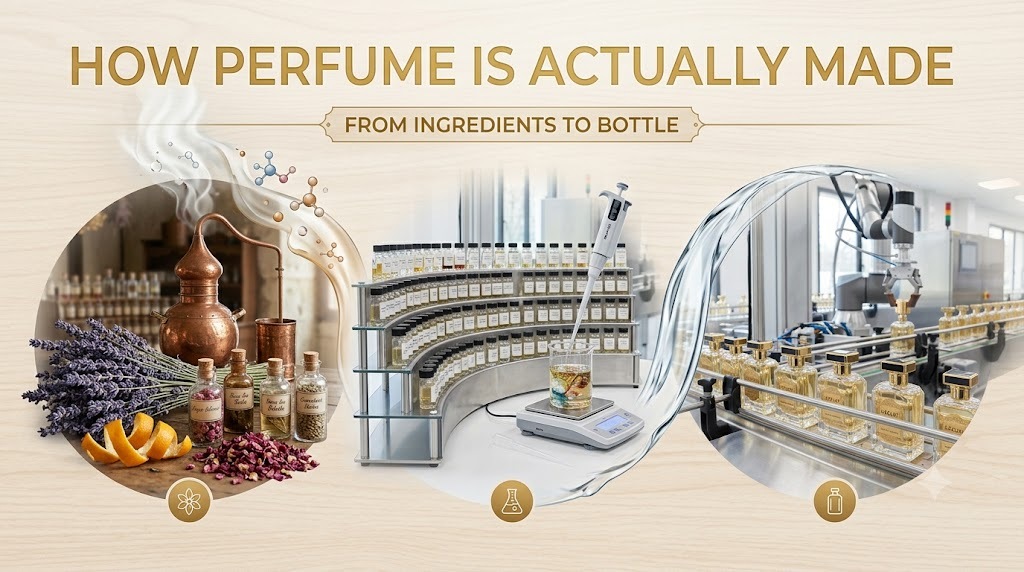
What you’ll learn
- The fascinating journey of raw botanicals converting into luxury liquid gold.
- How master perfumers extract natural scents and engineer synthetic aroma molecules.
- The intricate steps of blending, aging, and stabilizing high-end fragrances.
- Essential tips for recognizing quality craftsmanship when shopping for your next signature scent.
Introduction
Have you ever sprayed your favorite fragrance and wondered how perfume is actually made behind the scenes? That single mist on your wrist is the culmination of years of craftsmanship, centuries of tradition, and cutting-edge chemistry. In fact, a single bottle of luxury perfume often contains hundreds of individual natural and synthetic ingredients sourced from every corner of the globe.
From the sun-drenched jasmine fields of Grasse, France, to high-tech research laboratories, the perfume making process is an extraordinary blend of art and science. Raw flowers, woods, resins, and lab-synthesized molecules go through meticulous extraction, secret formulation, precise alcohol dilution, and months of aging.
Understanding the mechanics of scent construction transforms how you appreciate every spritz. It alters the way you shop, apply, and care for your personal collection. Let’s dive in.
The Fascinating History and Science Behind Perfumery
Before exploring modern production lines, it helps to understand why crafting fine fragrance requires such immense precision. Perfumery is an ancient craft, dating back over 4,000 years to ancient Mesopotamia and Egypt, where people burned aromatics during sacred rituals. Today, the global perfume market is a multibillion-dollar industry driven by both passion and rigorous scientific innovation.
Modern scent creation bridges the gap between raw botanical harvesting and advanced molecular chemistry. Perfumers, often referred to as “Noses,” must memorize thousands of unique scent profiles. They understand how these raw materials interact with ambient humidity, skin chemistry, and temperature variations over time.
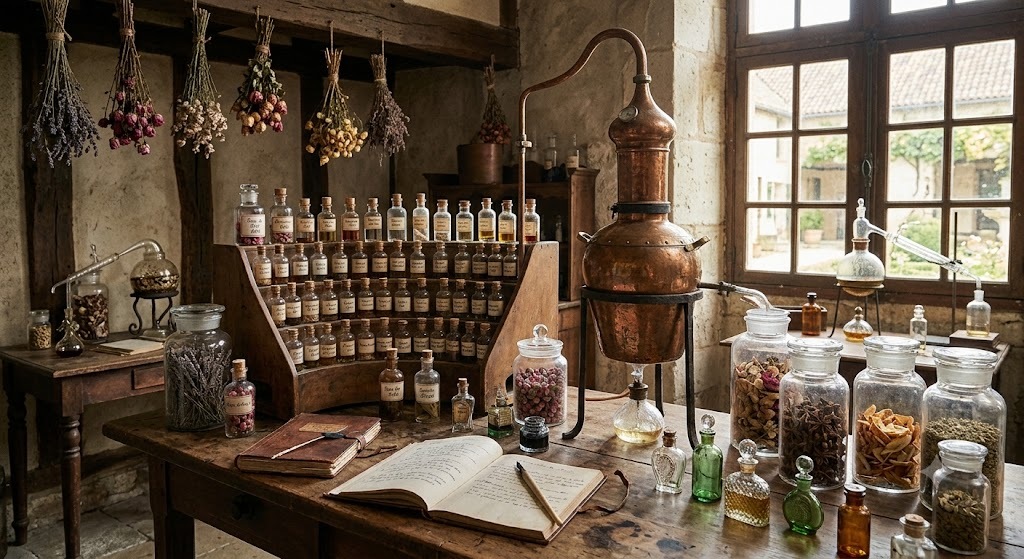
The Scent Creation Journey: Step-by-Step
The real alchemy of fine fragrance relies on four distinct development stages. Every step requires absolute patience, technical mastery, and uncompromising quality control.
Sourcing and Harvest of Raw Materials
Everything begins in the field. Natural perfumery relies on thousands of flowers, fruits, spices, leaves, resins, and woods. Sourcing these items is often a race against time and climate.
For instance, May Rose (Rosa centifolia) flowers in Grasse must be hand-picked in the early morning hours when their delicate essential oils are most concentrated, before the afternoon heat dissipates their aroma. It takes roughly 3,500 pounds of hand-gathered roses to yield just one single pound of pure rose essential oil. This incredible labor intensity explains why natural plant oils command such premium prices on the global market.
Extracting the Pure Scent Concentrates
Once harvested, raw botanicals must immediately release their aromatic compounds. Perfume houses utilize several distinct extraction methods depending on the delicate nature of the plant material:
- Steam Distillation: The raw materials pass through boiling water and hot steam. The aromatic steam rises into a condenser coil, cools down, and separates into pure water and raw essential oil. This technique works brilliantly for hardy materials like lavender, cedarwood, and sandalwood.
- Solvent Extraction: Delicate blooms like jasmine, tuberose, and orange blossom cannot withstand intense steam heat. Instead, workers submerge them in chemical solvents such as hexane. The solvent dissolves the aromatic compounds and waxes, leaving behind a waxy substance called a “concrete.” A secondary alcohol wash then clarifies this material into a highly concentrated liquid known as an “absolute.”
- Expression (Cold Pressing): Reserved almost exclusively for citrus peels like bergamot, lemon, grapefruit, and mandarin. The peels are mechanically squeezed to yield fresh, zesty essential oils without applying heat.
- CO2 Extraction: A modern, sustainable method that utilizes supercritical carbon dioxide under high pressure. This gentle process yields an extraordinarily pure extract that preserves the exact living scent profile of the original botanical.
Synthetic Molecules and Modern Aroma Chemistry
While natural extracts provide richness and soul, synthetic ingredients form the backbone of modern structural perfumery. Developed in the late 19th century, synthetic molecules revolutionized the industry by offering consistency, sustainability, and creative possibilities that nature cannot match.
Without synthetic chemistry, classic perfumes like Chanel No. 5—famous for its sparkling burst of synthetic aliphatic aldehydes—would simply not exist. Synthetics allow perfumers to capture notes that cannot be extracted naturally, such as fresh sea breeze, wet rain, peach, lily of the valley, or soft musk. Additionally, lab-created alternatives protect endangered species by replacing natural deer musk, ambergris, and Indian sandalwood.
Formulating, Blending, and Aging the Liquid Gold
Once the perfumer secures raw oils, absolutes, and synthetic aroma compounds, the delicate task of balancing the liquid composition begins.
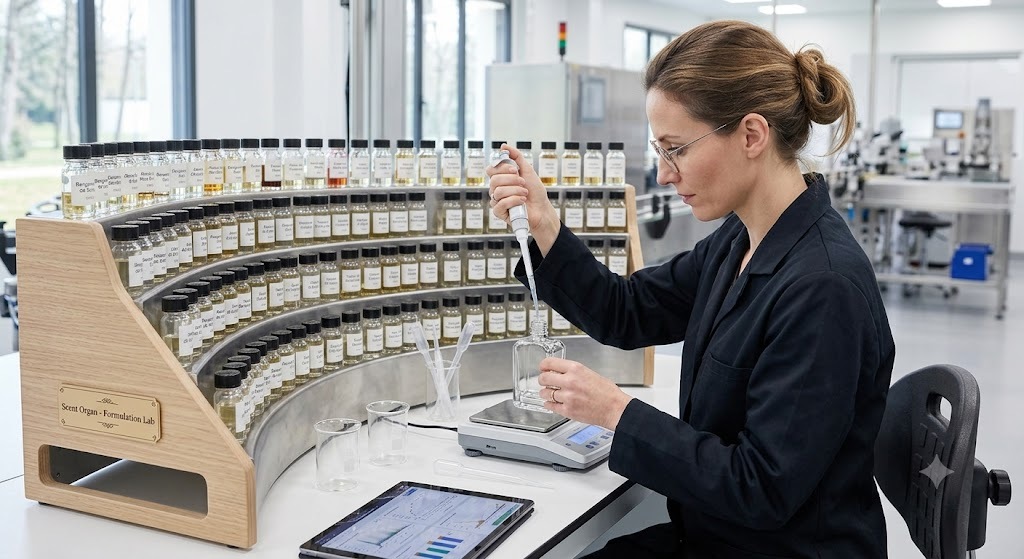
- The Olfactory Pyramid Composition: A master perfumer blends ingredients based on evaporation rates. Top notes (citrus, light fruits) evaporate within 15 minutes to give a strong first impression. Heart notes (florals, spices) emerge next, forming the core identity for several hours. Base notes (vanilla, amber, woods, musks) feature large, heavy molecules that linger on the skin for eight hours or longer.
- Alcohol Dilution: The pure scent blend (known as the fragrance oil concentrate) is mixed with high-grade, neutral ethyl alcohol and a small amount of distilled water. The ratio of raw concentrate to alcohol dictates the strength: Extrait de Parfum (20–30% concentrate), Eau de Parfum (15–20%), and Eau de Toilette (5–15%).
- Maceration and Aging: Newly blended perfume needs rest. The mixture sits undisturbed in cool, dark, temperature-controlled stainless steel tanks for four to eight weeks. During this crucial maceration period, chemical bonds form between the disparate aromatic compounds, smoothing out harsh edges and harmonizing the overall profile.
- Chilling and Filtration: Once properly aged, the perfume batch is chilled to near-freezing temperatures and passed through fine paper filters. This removes lingering waxes or botanical resins, ensuring the liquid stays crystal clear inside the bottle.
Myths and Common Misconceptions About Perfume Making
Understanding how perfume is actually made helps clear up common myths floating around the beauty world.
- 1: Synthetic ingredients mean low quality. In reality, high-end synthetic molecules are often more expensive and complex to manufacture than natural essential oils. They grant fine fragrances their remarkable longevity and projection.
- 2: All natural perfumes are safer for your skin. Raw natural botanicals contain hundreds of complex chemical components that frequently trigger contact dermatitis and skin allergies. Synthetic ingredients are rigorously tested for dermatological safety.
- 3: Color determines strength. The visual hue of perfume usually comes from natural raw materials (like deep oakmoss or rich vanilla) or added cosmetic dyes. Color strength has very little relation to scent concentration or longevity.
Pro Advice: How to Test and Preserve Craft Fragrances
Now that you appreciate the delicate alchemy inside each bottle, you can protect your investment and evaluate scents like an industry professional.
- Store Away from Heat and Sunlight: UV light and sudden temperature shifts break chemical bonds within the perfume structure, turning your fresh citrus sour and darkening the liquid. Keep your bottles in a cool drawer or their original box rather than on a warm bathroom counter.
- Allow the Dry-Down: Never judge a fragrance from the initial spray on a paper tester card. Give the alcohol two minutes to flash off, and monitor how the heart and base notes develop on your skin over four to six hours.
- Avoid Rubbing Your Wrists: Friction generates physical heat, which breaks down delicate top-note molecules like bergamot and neroli prematurely. Spray cleanly and let the mist dry down naturally.
For more deep dives on extending the shelf life of your favorite scents, check out our comprehensive guide on proper perfume storage techniques on FragrantTip.com.
From Mass Production to High-End Niche Bottling
The final stage of the journey takes place on high-speed, automated bottling lines, or via careful hand-filling in boutique artisan ateliers. Glass bottles undergo thorough air-cleansing before receiving liquid, followed by hydraulic crimping of the spray pump mechanism to guarantee an airtight seal.
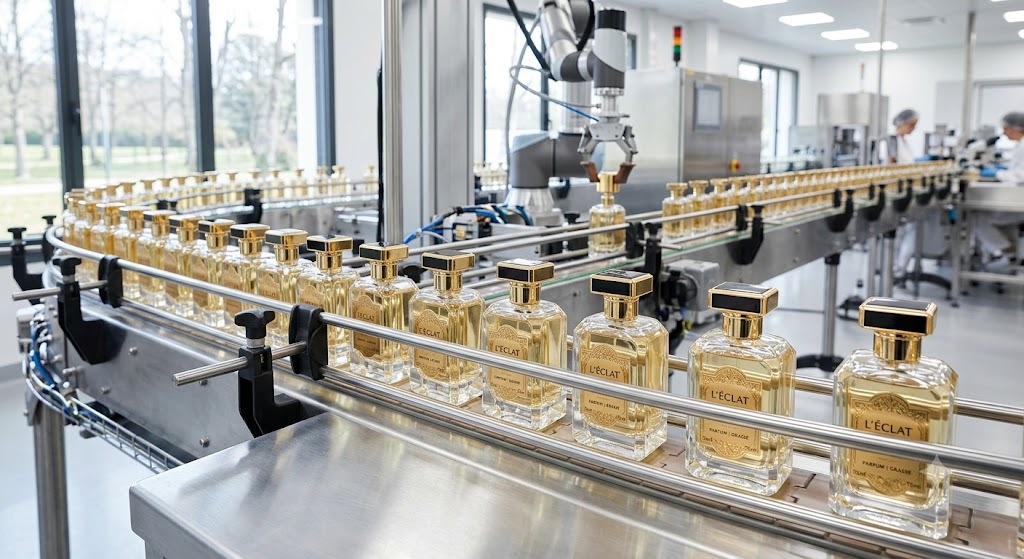
Visual presentation plays a massive role in luxury branding. From weighted magnetic caps to heavy crystal flacons, the exterior design honors the hundreds of hours spent perfecting the liquid inside. Once packaged and sealed, your favorite perfume begins its final journey to boutique shelves worldwide.
Conclusion
Understanding how perfume is actually made sheds light on the incredible effort packed into every single drop. From hand-picking delicate rose petals at dawn to spending months fine-tuning balance in quiet laboratories, perfumery remains one of humanity’s most poetic unions of art, science, and nature. Next time you reach for your signature scent, take a brief moment to inhale deeply and appreciate the complex journey from harvest to bottle.
Did you find this helpful? Drop a comment below or share this with a fellow fragrance lover!
Frequently Asked Questions
Q1: How perfume is actually made using natural ingredients versus lab synthetics?
A: Natural ingredients are harvested from plants and extracted through steam distillation, solvent extraction, or cold pressing. Synthetic ingredients are engineered in laboratories using organic chemistry. Modern perfumery combines both methods: naturals provide rich depth and nuance, while synthetics offer structural stability, unique notes, and impressive longevity.
Q2: How long does the entire perfume making process take from start to finish?
A: Development usually takes anywhere from six months to two full years. Formulating the initial scent structure requires hundreds of test iterations by the perfumer. Once the formula is locked in, the physical blending, alcohol maceration, chilling, filtering, and bottling stages take an additional two to three months.
Q3: Why are luxury perfumes so expensive?
A: The high cost reflects labor-intensive raw material harvesting, expensive extraction processes, top-tier perfumer talent, and lengthy aging requirements. Additionally, custom glass bottle manufacturing, elegant packaging, strict quality control, and international safety compliance add to total production overhead.
Q4: What is maceration in perfume making and why is it important?
A: Maceration is the aging process where pure fragrance oil blends sit diluted in alcohol in cool, dark tanks for several weeks. This step allows diverse chemical compounds to interact, settle, and fuse together, resulting in a smoother, harmonious scent profile that will not break down easily over time.
Q5: Can I make high-quality perfume at home?
A: Yes, you can craft simple artisan perfumes at home using carrier oils or high-proof neutral grain alcohol mixed with essential oils and aroma compounds. However, achieving the complex layering, safe dermatological balance, and long-lasting projection of commercial fine fragrances requires specialized chemistry equipment and precise raw materials.
Q6: What makes a perfume last longer on the skin?
A: Longevity depends heavily on the concentration of perfume oil versus alcohol, as well as the heavy base notes used in the formulation—such as amber, musk, vanilla, and woods. Well-hydrated skin also retains perfume molecules far better than dry skin.
Pingback: What Is a Perfumer? Meet the "Nose" Behind Your Favorite Scent - fragrantip