
What you’ll learn:
- What is a perfumer and what this rare job actually involves day to day
- How someone trains to become a “nose” in the fragrance industry
- The step-by-step process a perfumer follows to build a scent from scratch
- Common myths about this career and what separates a great perfumer from a good one
Introduction
Have you ever sprayed a perfume and felt instantly transported somewhere — a summer garden, a candlelit dinner, your grandmother’s kitchen? That reaction didn’t happen by accident. Somewhere behind that bottle sits a highly trained professional whose entire career is built around one extraordinary skill: the ability to smell.
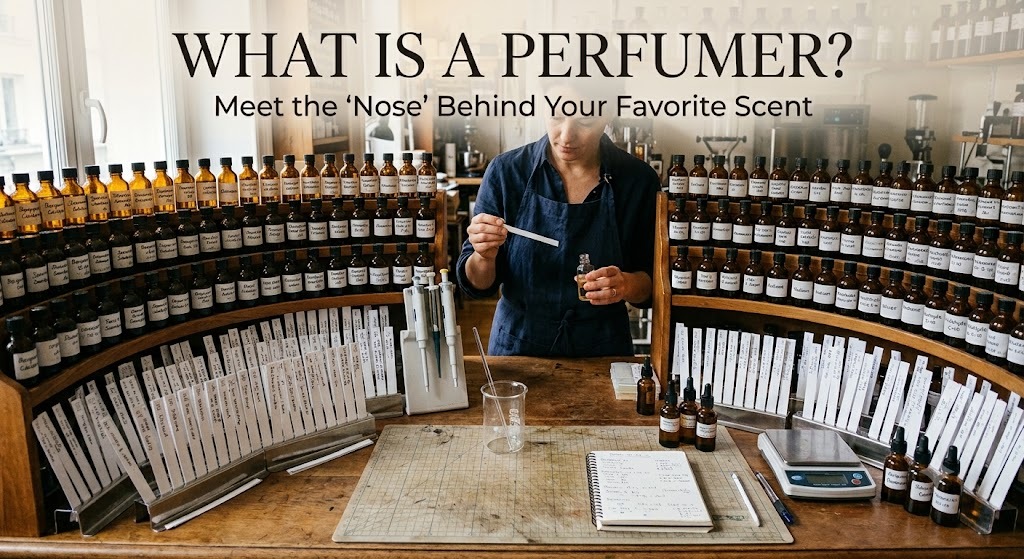
So what is a perfumer, exactly? A perfumer, often called a “nose” (or “le nez” in the fragrance capital of Grasse, France), is a specialist trained to identify, memorize, and combine thousands of individual scent materials into a single, balanced fragrance. It’s part science, part art, and almost entirely invisible to the public.
Fewer than 500 people worldwide currently hold the title of master perfumer, making it one of the rarest specialized careers in the beauty industry. Curious how someone actually gets there — and what the job looks like once they do? Let’s dive in.
Why the Perfumer’s Role Matters So Much
Most shoppers can name their favorite fragrance brand, but almost none can name the person who created it. That anonymity is part of the industry’s culture, yet it hides just how much influence a single perfumer has over what an entire generation associates with luxury, romance, or confidence.
A perfumer doesn’t just mix pleasant smells together. They’re responsible for translating an abstract creative brief — sometimes as vague as “make it feel like optimism” — into a physical formula made of dozens, sometimes hundreds, of raw materials.
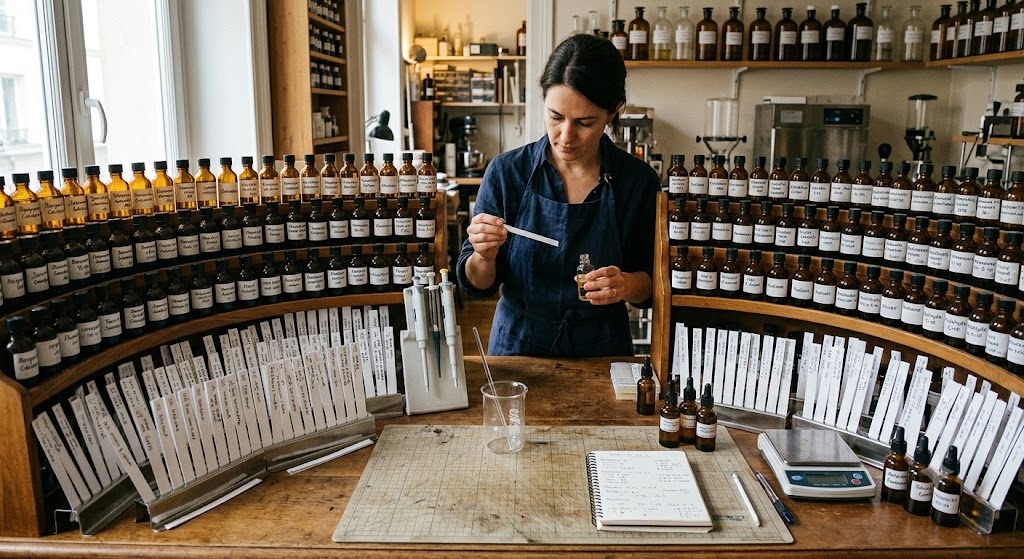
This is also where the fragrance industry career path becomes relevant. Behind every recognizable eau de parfum on a department store shelf is a formula that took, on average, one to three years to finalize. Some iconic scents took even longer.
The Making of a Nose: Training and Skill
It Starts With an Extraordinary Memory
Contrary to popular belief, perfumers aren’t born with superhuman noses. What they do have is an exceptionally trained scent memory, built through years of daily practice smelling and re-smelling raw materials until each one is instantly recognizable.
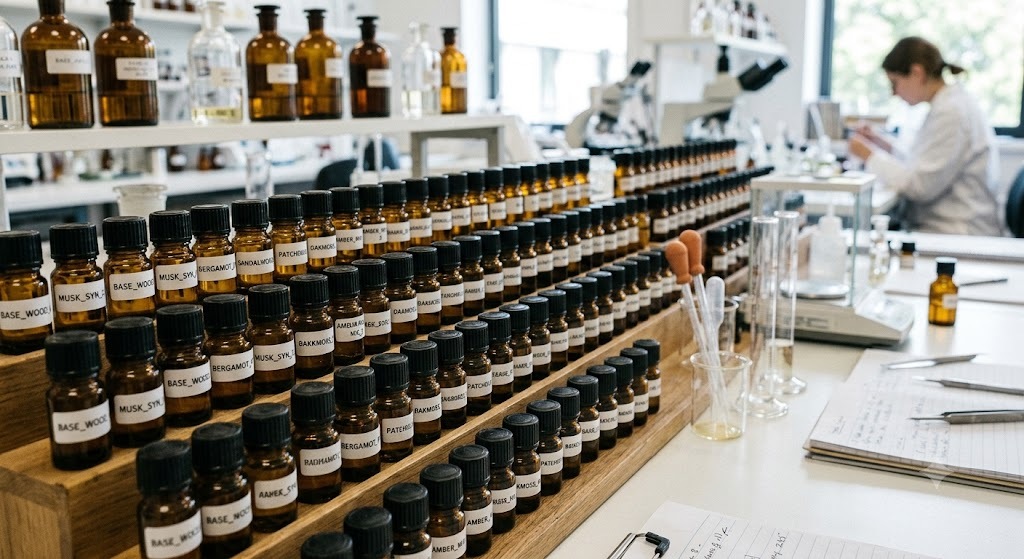
A working perfumer typically memorizes the exact scent profile of 1,500 to 3,000 individual raw materials — from rose absolute and sandalwood to synthetic molecules like Iso E Super. That’s not casual familiarity; it’s recall on demand, the way a musician recognizes a note the instant it’s played.
Most perfumers train at specialized schools such as ISIPCA in Versailles or through in-house apprenticeship programs at major fragrance houses like Givaudan, Firmenich, or IFF. These programs can take six to seven years to complete before someone is trusted to create a commercial formula alone.
Chemistry Knowledge Is Non-Negotiable
A nose also needs a working understanding of organic chemistry. Fragrance materials interact, evaporate at different speeds, and can shift dramatically when combined — a beautiful note in isolation might turn harsh or muddy next to another ingredient.
Perfumers study how molecular weight affects a material’s volatility, which determines whether it becomes a top note (bright, fast-evaporating, like citrus), a heart note (the fragrance’s core identity, like florals or spices), or a base note (heavy, slow-releasing, like musk or woods).
This scientific foundation is what separates hobbyist blending from professional perfumery. Anyone can combine two nice-smelling oils. Building a formula that stays balanced for eight hours on skin, in humidity, in cold weather, and across different skin chemistries takes real technical mastery.
Creative Vision Ties It All Together
Technical skill alone doesn’t make a great perfumer — vision does. The best noses in the industry, past legends like Jean-Claude Ellena or contemporary talents like Alberto Morillas, are known for signature styles that feel unmistakably theirs, the same way a novelist has a distinct voice.
This creative instinct is what allows a perfumer to take a brief like “a modern take on tuberose” and produce something genuinely new rather than derivative. It’s the difference between a technician and an artist working in scent.
How a Perfume Actually Gets Made: The Perfumer’s Process
Understanding what is a perfumer becomes much clearer once you see the actual workflow behind a launch. Here’s a simplified version of how it typically unfolds:
- The brief — A brand or client shares a concept, target demographic, and sometimes a mood board or reference scent.
- Formula sketching — The perfumer creates several initial formulas, often 10 to 30 different directions, using a mix of natural extracts and synthetic aromachemicals.
- Smelling and refining — Each version is tested on paper blotters and skin, then adjusted. This stage alone can involve hundreds of tiny formula tweaks.
- Stability and safety testing — Chemists test how the formula holds up under heat, light, and time, and confirm it meets IFRA (International Fragrance Association) safety standards.
- Client approval rounds — The brand reviews finalists, often narrowing hundreds of iterations down to one final formula.
- Production scaling — The approved formula is scaled from a small lab batch to mass production without losing its character.
Common Myths About Perfumers, Debunked
Misunderstandings about this job are everywhere, mostly thanks to movies and marketing copy. Here are the ones worth clearing up.
Perfumers only use natural ingredients. In reality, most modern fragrances rely heavily on synthetic molecules, which allow for scents that don’t exist in nature — like a “clean linen” or “blue sky” accord — plus far more consistency and sustainability than naturals alone could offer.
A great nose means never losing your sense of smell. Perfumers get colds, allergies, and off days just like everyone else. Professionals often work around this with strict routines, avoiding strong-smelling foods, fragranced products, and even certain toothpaste before formulating.
Anyone with a good sense of smell can become a perfumer. Natural sensitivity helps, but the job is closer to a decade of specialized training than a party trick. It’s a discipline, not a gift alone.
One person creates a perfume from start to finish, alone. Most commercial fragrances involve a lead perfumer plus evaluators, chemists, and marketing input shaping the final formula together.
Pro Insight: What Separates a Good Nose From a Great One
Talk to anyone inside the fragrance industry and a theme emerges quickly: technical skill can be taught, but restraint often can’t. Junior perfumers tend to overcomplicate formulas, piling on materials to chase complexity.
The most respected noses are known instead for editing — knowing exactly which three or four materials can carry an entire composition, and having the confidence to leave the rest out. That restraint is often what turns a “nice” fragrance into an iconic one.
Another underrated skill: business fluency. A perfumer today isn’t just working in a lab — they’re collaborating with marketing teams, understanding regional scent preferences, and staying aware of cost constraints per raw material, since some naturals like oud or orris root can cost more than gold by weight.
Final Takeaway: A Career Built on an Invisible Skill
So, what is a perfumer at its core? Someone who has turned one of our most overlooked senses into a precise, expressive craft — part chemist, part artist, part storyteller.
It’s a career built on thousands of hours of quiet, repetitive training, in service of a moment most people never think twice about: that first spray, that instant hit of memory or mood.
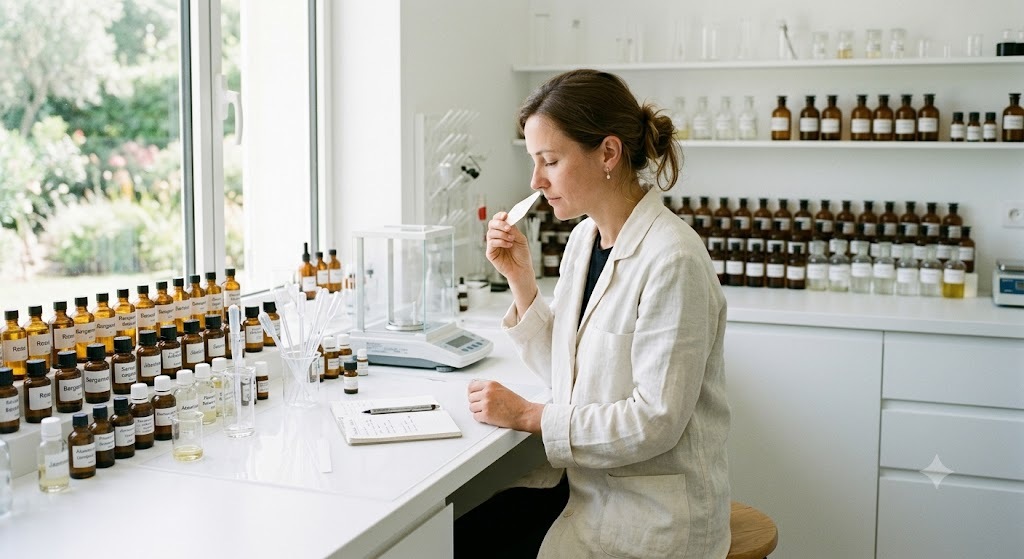
The next time a scent stops you in your tracks, remember there’s a nose behind it who spent years — sometimes decades — learning exactly how to make that happen.
Conclusion
Understanding what is a perfumer gives you a whole new appreciation for the bottle sitting on your dresser. It’s not just marketing and packaging — it’s years of trained memory, chemistry, and creative instinct distilled into a few milliliters of liquid.
Whether you’re a fragrance enthusiast or just perfume-curious, knowing the craft behind the scent adds a layer of meaning to something as simple as your daily spritz.
Did you find this helpful? Drop a comment below or share this with a fellow fragrance lover!
Frequently Asked Questions
Q1: What is a perfumer and what do they actually do all day? A perfumer is a trained specialist who creates fragrance formulas by combining raw materials into balanced compositions. Their day typically involves smelling and testing dozens of formula variations, adjusting ratios, meeting with brand teams, and reviewing safety and stability data before a scent goes to production.
Q2: How long does it take to become a professional perfumer? Most perfumers train for six to seven years, either through specialized schools like ISIPCA or in-house apprenticeships at major fragrance houses. Even after formal training, it often takes several more years of mentorship before someone leads their own commercial formula.
Q3: Do perfumers really memorize thousands of scents? Yes. Working perfumers typically memorize 1,500 to 3,000 individual raw materials by scent alone, recalling each one’s character, strength, and how it behaves when blended with others.
Q4: Is “nose” an official job title in the fragrance industry? “Nose” is an informal but widely used industry nickname for a perfumer, especially common in Grasse, France, historically considered the birthplace of modern perfumery. Formally, the job title is usually “perfumer” or “master perfumer.”
Q5: Can perfumers lose their sense of smell over time? It can happen, though most protect their noses carefully by avoiding strong scents, certain foods, and fragranced products before working. Temporary loss from illness or allergies is common and simply requires pausing formulation work.
Q6: Do perfumers only use natural ingredients like flowers and oils? No — most modern perfumes rely heavily on synthetic molecules alongside naturals. Synthetics allow for greater consistency, sustainability, and entirely new scent effects that don’t exist in nature, like an airy “ozonic” or “clean cotton” note.