
What you’ll learn
- How fragrance oil concentration impacts scent longevity, projection, and price point.
- The exact differences between Extrait de Parfum, Eau de Parfum, Eau de Toilette, and Eau de Cologne.
- Why higher concentration doesn’t always mean a scent smells “stronger” or better.
- Practical expert tips to pick the right perfume strength for any season, skin type, or occasion.
Introduction
Have you ever fallen head over heels for a scent at the department store counter, brought it home, and wondered why it vanished before your morning commute ended? Or perhaps you sprayed a rich, musky fragrance thinking it was light and airy, only to realize you filled the entire elevator with a suffocating cloud of scent?
Understanding what does perfume concentration actually mean is the ultimate secret to mastering your fragrance wardrobe and getting true value from every single spray. The world of perfumery uses elegant French terms like Eau de Parfum, Eau de Toilette, and Extrait to describe scent strength, but these labels do far more than look sophisticated on a heavy glass bottle.
At its core, perfume concentration dictates the precise ratio between pure fragrant oils and the carrier alcohol base. This concentration determines how long a scent lingers on your wrists, how far it radiates into the air around you, and how the fragrance notes unfold throughout the day. In this comprehensive breakdown, we will demystify the science, shatter widespread industry myths, and help you shop smarter. Let’s dive in.
The Science of Scent: Why Fragrance Concentration Matters
Before you can choose the ideal bottle for your collection, it helps to understand what goes on inside a perfumer’s laboratory. Every fine fragrance is a chemical blend of pure essential oils, aroma compounds, alcohol, and occasionally a small percentage of water. Alcohol acts as the solvent and delivery system: it dissolves the concentrated aromatic oils and evaporates upon contact with the warmth of your skin, lifting the fragrance molecules into the air.
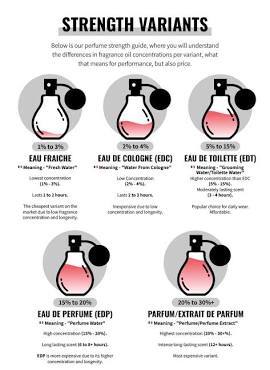
The concentration percentage tells you exactly how much pure aromatic extract is dissolved in that alcohol base. A higher percentage of fragrance oil means there is less alcohol to evaporate quickly, leaving a denser layer of scent on your skin. This directly influences three critical performance factors that every perfume enthusiast tracks:
- Longevity: How many hours the fragrance remains detectable on your skin.
- Sillage: The trailing scent plume left behind as you move through a room.
- Projection: How far outward the scent radiates from your pulse points when standing still.
Understanding these mechanics helps you decode why two bottles from the exact same line can behave completely differently. When you know the secondary details of fragrance formulas—such as how molecular weight affects evaporation rates—you gain total control over your personal scent bubble.
Decoding the Spectrum: From Extrait to Eau Fraiche
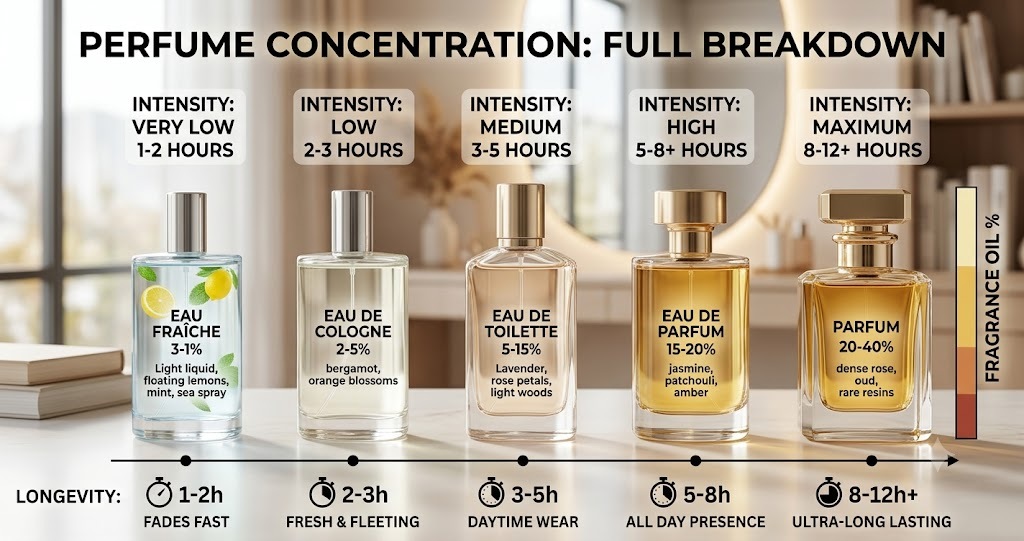
The fragrance industry categorizes products into distinct tiers based on their oil ratios. Here is the definitive breakdown of every major concentration level available today.
Extrait de Parfum (Pure Perfume)
Extrait de Parfum—often referred to simply as Parfum or Pure Extract—represents the pinnacle of luxury perfumery. Boasting a concentration between 20% and 40% fragrant oils, this is the richest, most potent formulation available to consumers. Iconic creations like Chanel No. 5 Parfum or Maison Francis Kurkdjian’s Baccarat Rouge 540 Extrait exemplify this opulent category.
Because Extrait de Parfum contains a low percentage of alcohol, it does not explode outward with aggressive projection. Instead, it clings closely to the skin, creating an intimate, velvety scent bubble that can last anywhere from 8 to 24 hours. The high concentration of heavy base notes—like warm amber, rich oud, smoky vetiver, and creamy sandalwood—gives it an unmistakable depth.
Furthermore, Extrait formulations are often gentle on sensitive skin. Alcohol can be drying or irritating for delicate skin types, so the higher ratio of natural and synthetic oils in an Extrait provides a smoother, non-drying application experience.
Eau de Parfum (EDP)
Eau de Parfum is widely considered the sweet spot for modern perfume collectors and daily wearers. Containing between 15% and 20% fragrance oil, EDPs deliver exceptional longevity—typically lasting 6 to 8 hours—while maintaining a vibrant, inviting projection. Bestsellers like Tom Ford Black Orchid and Yves Saint Laurent Black Opium owe much of their commercial success to this balanced concentration.
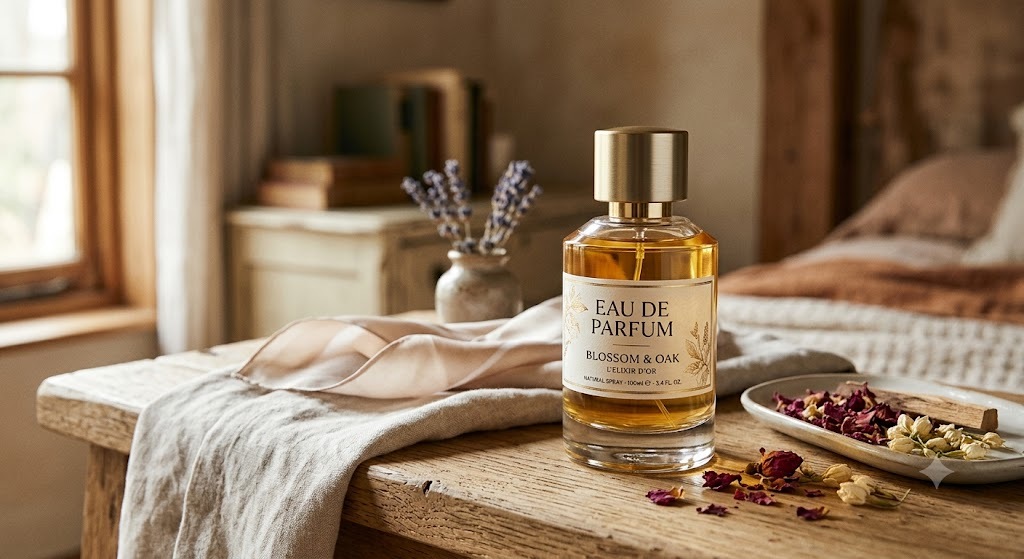
In an EDP formulation, the heart notes—such as lush jasmine, romantic rose, spicy cinnamon, or juicy peach—take center stage. The alcohol content is calibrated to push these mid-tier notes into the atmosphere, ensuring people notice your fragrance when you walk into a room without overpowering them.
If you are looking for a versatile fragrance that transitions effortlessly from a busy day at the office to an intimate dinner date, an Eau de Parfum is almost always your safest and most rewarding investment.
Eau de Toilette (EDT)
Eau de Toilette is one of the most popular fragrance categories on the market today, featuring an oil concentration between 5% and 15%. The name comes from the French phrase faire sa toilette, which historically referred to the morning ritual of washing and grooming. Famous classics like Dior Sauvage EDT and Chanel Chance Eau Tendre showcase the lively energy of this format.
Because EDTs contain a higher proportion of alcohol, the initial spray produces a bright, refreshing burst of top notes. Crisp citrus peel, sparkling bergamot, fresh aquatic accords, and green herbal elements shine brightly in an Eau de Toilette. However, because alcohol evaporates rapidly, an EDT generally lasts between 3 to 5 hours on the skin.
This shorter lifespan makes Eau de Toilette an ideal choice for summer heat, casual outdoor gatherings, daytime errands, or gym workouts where a heavy, lingering scent cloud might feel overwhelming.
Eau de Cologne (EDC) & Eau Fraiche
At the lighter end of the spectrum sit Eau de Cologne (2% to 4% oil concentration) and Eau Fraiche (1% to 3% oil concentration). Originating in Cologne, Germany, traditional Colognes were built around invigorating blend of citrus oils like lemon, orange, bergamot, and neroli.
Eau Fraiche takes lightness a step further by using an aqueous or low-alcohol formula that offers a delicate whisper of scent. Both categories typically last between 1 to 2 hours, making them perfect post-shower splashes or quick midday pick-me-ups.
Practical Tips: How to Choose the Right Concentration for You
Choosing the perfect perfume concentration is not just about buying the bottle with the highest percentage. It requires matching the scent strength to your lifestyle, climate, and personal body chemistry.
Match Concentration to the Season and Weather
Temperature plays a dramatic role in how fragrance behaves on your skin. Warm weather causes alcohol and fragrance oils to evaporate at a significantly accelerated pace, while cold winter air slows down evaporation.
- Spring & Summer: Opt for Eau de Toilette or Eau Fraiche. Light citrus, aquatic, and green accords thrive in heat without choking out those around you.
- Fall & Winter: Reach for Eau de Parfum or Extrait de Parfum. Rich gourmands, heavy spices, and sweet resins need body heat and higher oil concentrations to penetrate crisp winter air.
Consider the Setting and Occasion
Where you plan to wear your fragrance should heavily dictate your concentration choice. A cramped airplane cabin or a quiet corporate office demands subtle scent choices, whereas an open-air wedding or evening gala allows for bolder projection.
- Workplace & Professional Environments: Stick to lighter Eau de Toilette or crisp Eau de Cologne applications. Keep your scent trail subtle and professional.
- Evening Events & Date Nights: Choose Eau de Parfum or Extrait de Parfum for their mysterious, intoxicating warmth and romantic close-contact aura.
4 Common Myths About Perfume Concentration
Misconceptions about perfume concentration run rampant in online forums and beauty counters. Let’s set the record straight on four of the biggest myths in the fragrance world.
1: Higher Concentration Always Means “Better” Quality
Many consumers assume that an Extrait de Parfum is inherently superior to an Eau de Toilette. In truth, concentration reflects composition—not quality. High-grade raw ingredients like rare Bulgarian Rose or Florentine Orris can be formulated into a breathtaking Eau de Toilette, while synthetic, harsh compounds can be blended into a 30% Extrait. Quality comes from the perfumer’s craft and raw ingredients, not just the oil ratio.
2: EDP and EDT Versions of the Same Perfume Smell Identical
This is perhaps the most dangerous trap for buyers. Brands rarely use the exact same recipe when creating the EDP and EDT versions of a fragrance line. Perfumers actively adjust the formula to highlight different facets. For example, the EDT version of a popular cologne might feature extra grapefruit and mint for lightness, while the EDP version introduces patchouli and leather for dark evening intensity. Always test both on your skin before purchasing!
3: Cologne Is Exclusively for Men
The term “Cologne” is frequently misused in Western culture—particularly in North America—as a catch-all word for men’s fragrance. Historically and technically, Eau de Cologne refers purely to a specific concentration tier (2%–4% oil) characterized by refreshing citrus and herbal notes. Anyone of any gender can enjoy a invigorating Eau de Cologne on a hot summer afternoon.
4: Spraying More EDT Equals the Performance of an EDP
Applying ten sprays of an Eau de Toilette will not turn it into an Eau de Parfum. Doing this simply creates a sharp, synthetic blast of opening alcohol notes that can trigger headaches. Extra sprays increase short-term projection, but because the foundational heavy base oils are absent, the scent will still fade away within a few hours.
Expert Pro Advice: Maximizing Your Fragrance Performance
To elevate your fragrance experience, you need to understand how to get the absolute maximum performance out of whatever concentration level you choose.
Hydrate Your Skin Before Spraying
Perfume oils require lipid molecules to latch onto. Dry skin acts like a desert sponge, drinking up the alcohol and causing fragrance oils to dissipate prematurely. Apply an unscented lotion, body oil, or a thin dab of petroleum jelly to your pulse points before spraying your favorite Eau de Parfum. Moisturized skin can extend your fragrance’s longevity by up to 50%!
Spray Strategic Pulse Points (and Clothes)
Focus application on warm pulse points where blood vessels run close to the skin: the sides of the neck, inner wrists, elbow creases, and behind the knees. Additionally, consider lightly spraying natural fabrics like wool or cotton scarves. Fragrance oils evaporate much slower from textile fibers than from warm skin, allowing light Eau de Toilettes to linger for days on a jacket or sweater.
Store Your Bottles Correctly
Even the highest quality Extrait de Parfum will degrade if exposed to its three greatest enemies: heat, direct sunlight, and humidity. Never store your precious bottles on a sunlit vanity or in a steamy bathroom cabinet. Keep your collection inside a cool, dark closet or drawer to preserve the delicate aromatic oil bonds for years to come.
Fragrance Concentration Comparison: At a Glance
To simplify your shopping decisions, use this quick reference breakdown whenever you evaluate new additions for your scent collection.
| Concentration Level | Fragrance Oil % | Average Longevity | Best Suited For |
| Extrait de Parfum | 20% – 40% | 8 to 12+ Hours | Special occasions, cold weather, intimate settings |
| Eau de Parfum (EDP) | 15% – 20% | 6 to 8 Hours | Everyday luxury, evening wear, signature scents |
| Eau de Toilette (EDT) | 5% – 15% | 3 to 5 Hours | Daytime office wear, warmer weather, casual outings |
| Eau de Cologne (EDC) | 2% – 4% | 2 to 3 Hours | Post-shower refreshes, summer heat, subtle boosts |
| Eau Fraiche | 1% – 3% | 1 to 2 Hours | Sensitive skin, casual gym wear, ultra-subtle hints |
Conclusion
Understanding what does perfume concentration actually mean gives you the ultimate framework to shop smartly, wear scents with confidence, and build a versatile fragrance wardrobe suited for every moment in life. Whether you crave the intimate, velvety richness of an Extrait de Parfum for formal winter galas or the crisp, uplifting splash of an Eau de Toilette on a sun-drenched summer afternoon, matching oil percentages to your environment ensures you always smell extraordinary.
The journey into fine fragrance is deeply personal and endlessly rewarding. Pay close attention to how different formulas interact with your skin’s unique chemistry, and don’t be afraid to experiment across different concentration levels.
Did you find this helpful? Drop a comment below sharing your favorite concentration, or share this guide with a fellow fragrance lover!
Frequently Asked Questions
Q1: What does perfume concentration actually mean when shopping for cologne?
A: Perfume concentration refers to the ratio of pure aromatic fragrance oils dissolved in alcohol within the bottle. Higher concentration percentages mean less alcohol, resulting in longer skin longevity, deeper base notes, and a more intimate scent trail. Lower concentrations feature higher alcohol ratios, offering brighter initial projection and a lighter, shorter lifespan.
Q2: Is Eau de Parfum always better than Eau de Toilette?
A: No, Eau de Parfum is not inherently better than Eau de Toilette. While EDPs last longer due to higher oil levels (15%–20%), EDTs (5%–15%) offer vibrant top notes and lighter projection that make them superior for hot summer days, casual daytime wear, or office settings where heavy scents can feel suffocating.
Q3: Why does my perfume fade so quickly even though it is an EDP?
A: Rapid fading can be caused by dry skin, improper storage, or olfactory fatigue (noseblindness). Dry skin absorbs oils quickly, while heat and light degrade fragrance molecules inside the bottle. Additionally, your brain often blocks out familiar scents after consistent exposure, making you think the fragrance has vanished when others can still smell it.
Q4: Can I layer an Eau de Toilette with an Eau de Parfum?
A: Yes! Fragrance layering is an expert technique. Applying a rich Eau de Parfum or Extrait as a dense base, followed by a light spray of a complementary Eau de Toilette, creates incredible complexity. For instance, pairing a woody EDP with a bright citrus EDT gives you both long-lasting depth and immediate fresh projection.
Q5: How many sprays of Eau de Parfum should I apply?
A: For an Eau de Parfum, 2 to 4 sprays are usually sufficient. Apply one spray to each side of your neck and one to your inner wrists or chest. Because EDPs carry rich mid and base notes with strong projection, over-applying can overpower surrounding people, especially in enclosed environments like offices or vehicles.
Q6: Does perfume concentration affect the shelf life of the bottle?
A: Yes, higher concentration formulas like Extraits and Eau de Parfums generally have a longer shelf life because they contain a smaller proportion of volatile alcohol and higher amounts of stable oil resins. When stored properly in a cool, dark location away from humidity, high-concentration perfumes can maintain their beauty for five to ten years or longer.
Best Colognes for Men Over 50 — Classic Scents That Age Beautifully