
What you’ll learn
- How the primary purpose shapes the formulation of both wellness scents and fine fragrances.
- The critical differences between raw natural essential oils and synthetic aroma molecules.
- Practical strategies to blend both scent types into your daily beauty and lifestyle routines.
- How to avoid common shopping traps by recognizing misleading label claims.
Introduction
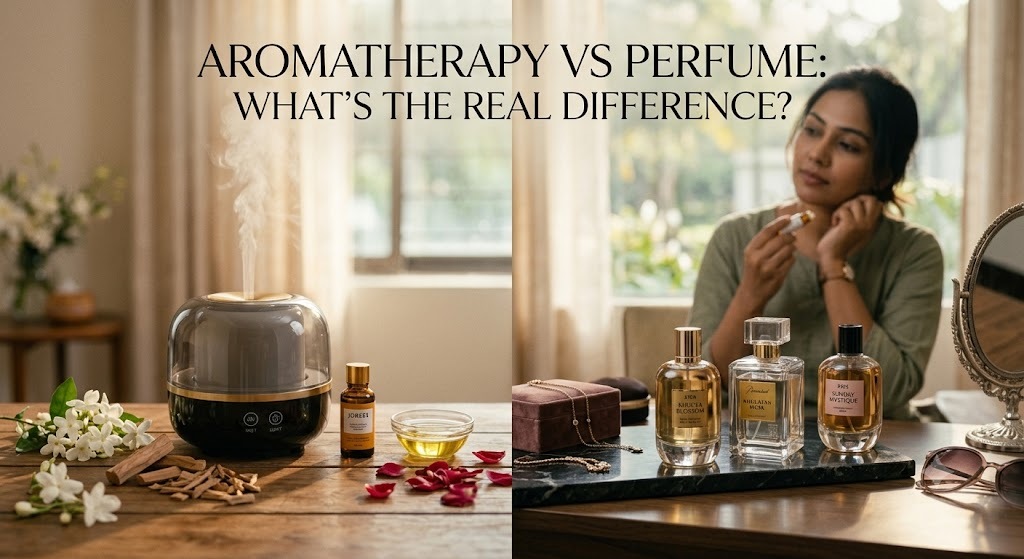
Imagine walking into a room and instantly feeling a wave of calm wash over you simply from a whiff of fresh lavender. Alternatively, think about the rush of confidence you experience when spraying a luxury designer scent before a big night out. Exploring the world of aromatherapy vs perfume reveals how these two distinct olfactory experiences impact our emotions and daily lives in completely unique ways.
While both practices rely heavily on our sense of smell, they serve entirely different masters. One focuses strictly on holistic well-being and natural balance, while the other celebrates artistic expression, style, and personal identity. Understanding this divergence helps you make intentional choices about what you apply to your skin.
The fragrance industry continues to evolve, pushing the boundaries of how we interact with scent molecules daily. By recognizing the mechanics behind each bottle, you can curate a collection that honors both your health and your style. Let’s dive in.
The Evolution of Scent Culture and Industry Standards
Human history shares a deep, unbreakable bond with aromatic plants, resins, and distilled waters. Thousands of years ago, ancient civilizations used raw botanical extracts for spiritual rituals, physical comfort, and basic masking of daily odors. Over time, this singular appreciation branched into two highly specialized fields that dominate the modern wellness and beauty markets today.
According to global beauty industry statistics, the luxury fragrance sector alone generates over $50 billion annually, proving that our obsession with smelling good is a massive financial force. Concurrently, the global aromatherapy market is growing rapidly as consumers seek natural lifestyle solutions. This economic boom drives intense innovation in how brands extract botanical oils and synthesize new aroma compounds.
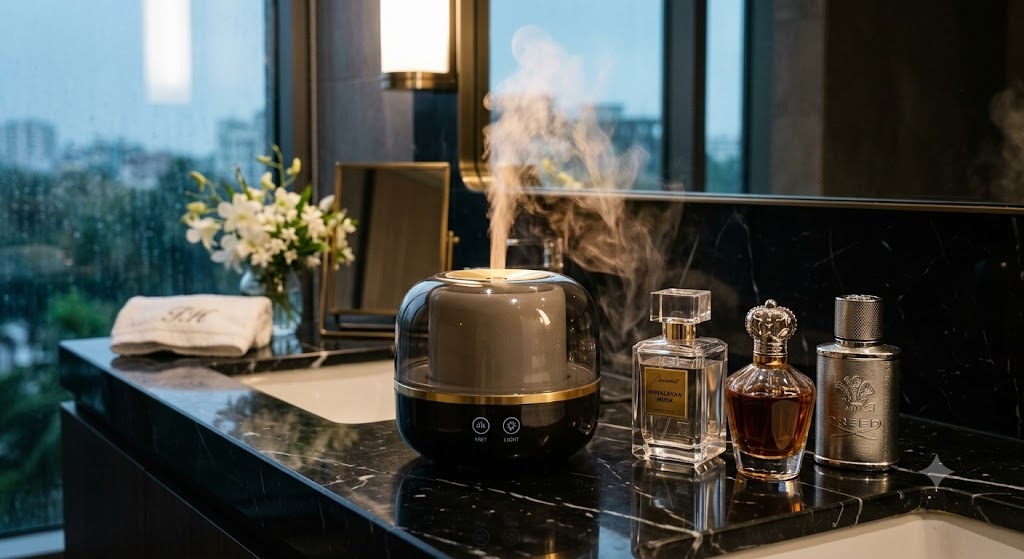
Understanding this divide helps us appreciate the secondary keyword focus: essential oils vs fragrance composition. While aromatherapy relies entirely on the unaltered essence of a plant, modern perfumery embraces a massive palette of laboratory-created elements. This structural difference alters how long a scent lasts, how it smells over time, and how it interacts with human biology.
Deconstructing Aromatherapy and Fine Fragrance
To truly grasp the debate of aromatherapy vs perfume, we must look under the hood at how creators formulate these products. Each serves a distinct function, utilizing different ingredients to achieve its goals.
The Nature and Purpose of Aromatherapy
Aromatherapy operates as a holistic wellness discipline centered on the physical and psychological effects of inhaling pure, unadulterated plant extracts. Practitioners utilize steam-distilled or cold-pressed oils derived from roots, leaves, flowers, and bark. The goal is to encourage a sense of balance, relaxation, or mental clarity through the natural properties of the plant.
Because these oils are completely raw and natural, they contain complex chemical profiles created entirely by nature. When you inhale pure peppermint or bergamot, your olfactory system transmits signals directly to the limbic system of the brain. True aromatherapy items completely avoid synthetic additives, fixatives, or artificial colorants, keeping the focus entirely on pure botanical chemistry.
The Artistry and Chemistry of Fine Perfume
Fine perfume exists as a magnificent form of liquid art, designed primarily to project a specific aesthetic, mood, or personal identity. Master perfumers at luxury houses like Chanel, Dior, or Tom Ford combine natural raw materials with advanced synthetic aroma molecules. These synthetic elements allow creators to build fantastical scent profiles that do not exist in nature, such as the smell of fresh rain, warm suede, or metallic elements.
Furthermore, synthetic fixatives give designer perfumes their incredible longevity and complex structural evolution. A high-end perfume morphs over several hours, transitioning smoothly from bright top notes to rich, powdery heart notes, and finally settling into deep, musky base notes. The primary objective is to create an alluring, long-lasting sensory aura that complements your style.
Comparing Longevity, Sillage, and Performance
The structural differences between these two scent styles create completely contrasting performance metrics on the skin. Pure essential oils are highly volatile, meaning their molecules evaporate rapidly when exposed to air and body heat. A swipe of pure citrus oil might smell incredibly vivid initially, but it will completely vanish within an hour.
In contrast, an Eau de Parfum or Extrait de Parfum is specifically engineered to project away from the body and linger for hours. The synthetic anchors within a fine perfume slow down the evaporation process significantly. This engineering ensures that your signature scent trail remains noticeable to others throughout a full workday or an entire evening event.
How to Seamlessly Integrate Both Worlds Into Your Routine
You do not have to choose exclusively between wellness scents and luxury perfumes; instead, you can masterfully use both to enhance different moments of your day.
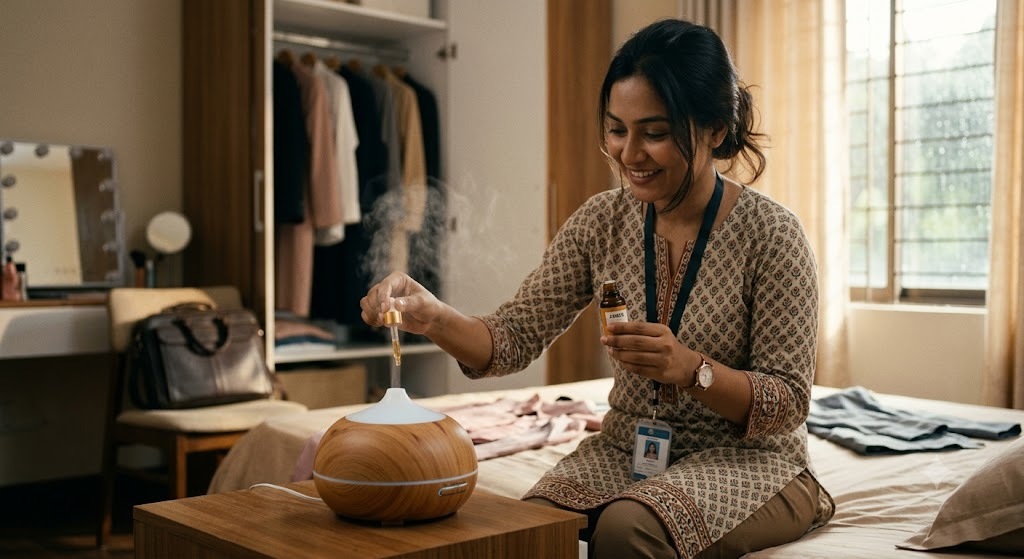
- Morning Grounding: Start your day by inhaling crisp eucalyptus or bright sweet orange oil directly from the bottle to wake up your senses naturally.
- The Professional Touch: Apply your favorite complex designer perfume, like Chanel Coco Mademoiselle or Yves Saint Laurent Libre, to your pulse points before heading out the door.
- Midday Reset: Keep a rollerball of pure peppermint or soothing frankincense at your desk to combat afternoon mental fatigue without altering your main perfume trail.
- Evening Wind-down: Wash away the stress of the day by diffusing pure French lavender oil in your bedroom an hour before you plan to sleep.
Common Mistakes and Myths in the Scent Community
One of the most frequent mistakes people make is assuming that any product labeled “natural” qualifies as authentic aromatherapy. The beauty industry is flooded with clever greenwashing terms, where products boast botanical imagery but contain synthetic fragrance oils. True wellness applications require 100% pure essential oils; synthetic variations will completely lack the holistic benefits of the actual plant.
Another widespread myth is that synthetic ingredients in designer perfumes are inherently toxic or inferior to natural oils. In reality, modern synthetic molecules undergo incredibly rigorous safety evaluations before entering the market. Furthermore, synthetics protect precious natural resources by replicating scents derived from endangered plants or animal sources, making modern perfumery highly sustainable.
Finally, do not expect a wellness oil to perform like a traditional luxury perfume spray. Expecting a pure oil blend to project across a crowded room or last for twelve hours will only lead to disappointment. Appreciate each style for its inherent strengths rather than forcing one to mimic the performance of the other.
Pro Insights on Smart Scent Shopping
When building a diverse collection, train your eye to read ingredient labels like a seasoned professional. Look for Latin botanical names on wellness products, which indicate the exact plant species used during the distillation process. If a label simply lists the generic term “fragrance” or “parfum,” you are holding a synthetic blend designed for aroma rather than therapeutic purposes.
Additionally, remember that price often reflects the scarcity of the raw ingredients rather than a brand markup. For instance, it requires thousands of individual rose petals to produce a single milligram of pure rose essential oil. If you stumble across an incredibly cheap bottle of jasmine or sandalwood oil, it is almost certainly a synthetic duplication meant for home scenting. For more advice on navigating ingredient lists, explore our guide on understanding fragrance families on our site.
Finding Your Perfect Balance
Ultimately, the comparison of aromatherapy vs perfume highlights two beautiful avenues of sensory enjoyment that can coexist peacefully. Wellness oils nurture your inner environment, providing moments of intentional peace, grounding, and mental rejuvenation throughout a chaotic week. Meanwhile, fine perfumes decorate your outer world, acting as an invisible wardrobe that communicates your taste to everyone around you.
Investing in high-quality options from both categories gives you complete control over your sensory environment. You can utilize natural botanicals to manage your personal energy at home, while relying on masterfully blended perfumes to showcase your personality to the public. Celebrate the unique properties of both sides to experience the full, magnificent spectrum of the olfactory world.

Conclusion
Navigating the diverse landscape of aromatherapy vs perfume empowers you to become a far more conscious and intentional consumer. Recognizing that one focuses purely on internal wellness while the other champions external style allows you to appreciate the unique magic inside every single bottle. By selecting high-quality natural extracts for your personal peace and masterfully crafted perfumes for your public expression, you create a beautiful, balanced sensory lifestyle.
Your sense of smell is an incredibly powerful tool for self-care, artistic exploration, and daily confidence. Treat your collection as a versatile toolkit designed to enhance your mood, elevate your style, and bring joy to your everyday routines.
Did you find this helpful? Drop a comment below or share this with a fellow fragrance lover!
Frequently Asked Questions
Q1: Can I use a luxury designer perfume for authentic aromatherapy purposes?
A: No, you cannot use a standard luxury perfume for true aromatherapy benefits. Designer perfumes are formulated primarily with synthetic aroma compounds and fixatives meant to create a long-lasting, pleasant scent profile. While a beautiful perfume can instantly boost your mood or evoke happy memories, it lacks the raw, biologically active plant chemistry required to trigger specific holistic wellness responses.
Q2: Why do pure essential oils fade so much faster than traditional perfumes?
A: Pure essential oils are highly volatile natural substances that evaporate rapidly when exposed to oxygen and the warmth of human skin. They completely lack the synthetic fixatives, heavy musks, and complex chemical resins that perfumers use to anchor fine fragrances. Consequently, a natural botanical oil delivers a swift, intense burst of aroma that fades naturally within an hour or two.
Q3: What exactly does the word “fragrance” mean when listed on a beauty product label?
A: The term “fragrance” or “parfum” on a commercial label serves as a legal umbrella term that protects a brand’s secret proprietary formula. It typically represents a complex blend of dozens of synthetic chemicals, stabilizers, and aroma enhancers designed to give the product a specific scent. It indicates that the product is crafted for aesthetic aroma rather than natural wellness applications.
Q4: Is it safe to apply undiluted aromatherapy essential oils directly onto my skin?
A: You should never apply most pure essential oils directly to your skin without diluting them first. Because they are highly concentrated plant extracts, direct application can cause intense skin irritation, redness, or allergic sensitization over time. Always mix your chosen botanical oils into a gentle carrier oil, such as jojoba, sweet almond, or argan oil, before topical application.
Q5: Can I mix my wellness oils with my favorite perfumes to create a custom scent?
A: You can absolutely experiment with layering both products to create a completely unique personal aroma. For the best results, apply your diluted natural wellness oil to your skin first as a grounding base layer, allowing it to settle completely. Afterward, mist your fine perfume over your pulse points to add a sophisticated, long-lasting top layer of artistry and projection.
Q6: How can I tell if a product is truly natural or just cleverly greenwashed?
A: The most reliable way to beat greenwashing is by thoroughly inspecting the ingredient list on the back of the packaging. True aromatherapy products will explicitly list the exact Latin name of the plant species along with the phrase “100% pure essential oil.” If the ingredient list contains synthetic descriptors, artificial dyes, or the generic word “fragrance,” the product is a synthetic blend.