Author: Piya

  • 15 Best Zara Perfumes to Try in 2026 Before They Sell Out

    What you’ll learn

    • The absolute top-tier Zara fragrances that smell identical to high-end niche perfumes.
    • How to identify which Zara scent profiles match your personal style and budget.
    • Professional longevity hacks to make budget-friendly EDTs last all day long.
    • Which limited-edition bottles you need to snap up before they disappear forever.

    Introduction

    Walking into a Zara store can feel like a sensory rollercoaster, especially when you reach the fragrance section. Dozens of sleek, minimalist glass bottles line the shelves, each promising luxury performance at a fraction of designer prices. Finding the 15 best Zara perfumes amidst this overwhelming sea of choices can quickly turn into a guessing game of trial and error.

    If you have ever sprayed a high-end designer fragrance like Maison Francis Kurkdjian’s Baccarat Rouge 540 or Tom Ford’s Lost Cherry, you already know the painful hit your wallet takes. Zara has disrupted the entire global beauty industry by collaborating with world-renowned master perfumers—including Jo Malone CBE—to democratize luxury scents. You no longer need to spend three hundred dollars to smell like absolute royalty.

    In this comprehensive guide, we are cutting through the clutter to reveal the top scent formulations that deserve a permanent spot on your vanity. Whether you crave warm gourmands, crisp citrus bouquets, or seductive woody accords, there is an incredible formula waiting for you. Let’s dive in.

    Why Zara Perfumes Have Taken Over the Fragrance World

    The global perfume industry is worth over fifty billion dollars, yet the way we consume fragrance has fundamentally shifted. Gone are the days when people kept a single “signature scent” for decades. Today, scent wardrobes are the norm, allowing fragrance lovers to swap notes based on mood, weather, or occasion. Zara stepped directly into this cultural shift by offering fast-fashion agility applied to fine fragrance.

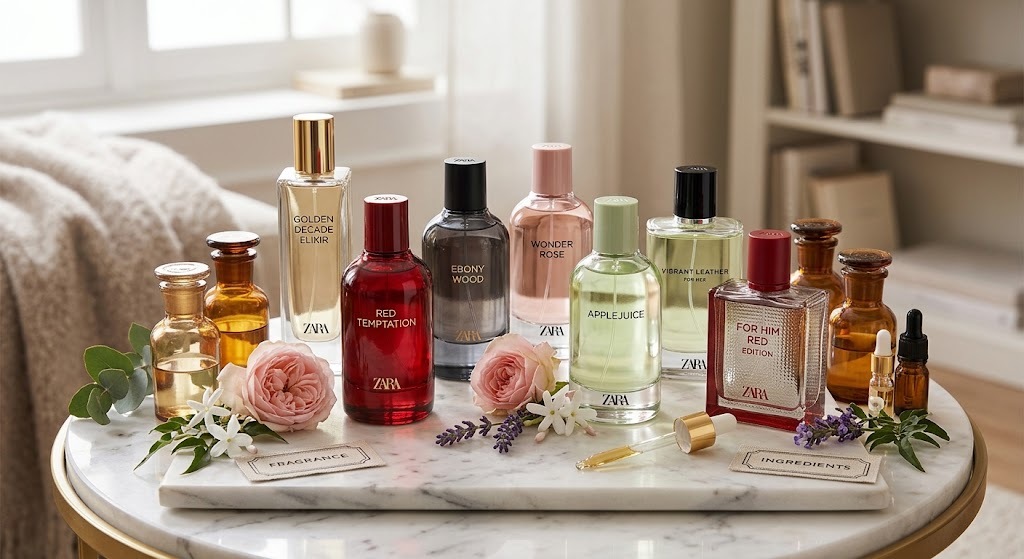
    By partnering with elite fragrance houses like Firmenich and Puig, Zara uses premium synthetic molecules and natural extracts. They launch high-concept collections that rival luxury houses while keeping prices under forty dollars. Secondary market collectors even trade discontinued Zara bottles like rare vintage wines because certain limited-run batches possess legendary status.
    Why Zara Perfumes Have Taken Over the Fragrance World

    The 15 Best Zara Perfumes You Must Try Right Now

    1. Red Temptation Eau de Parfum

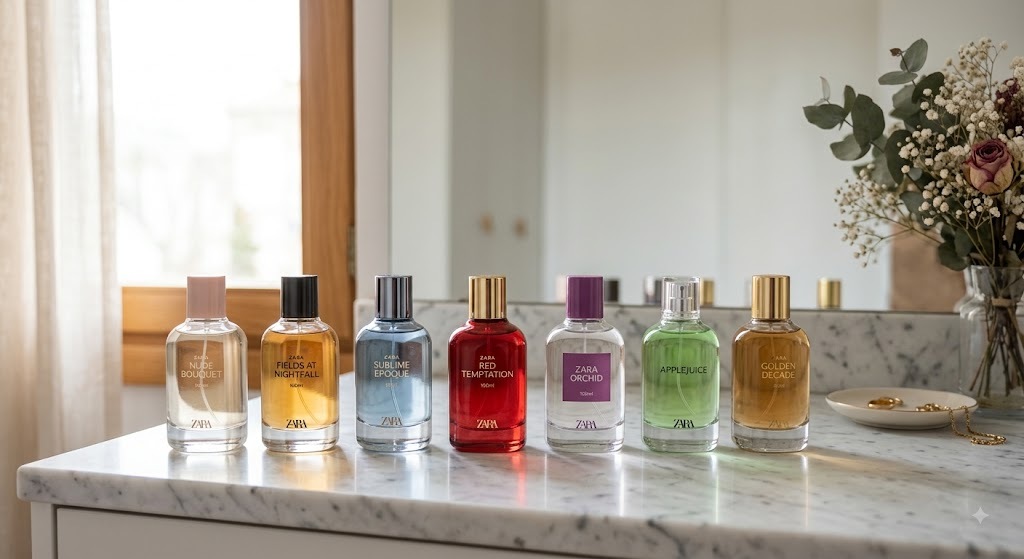
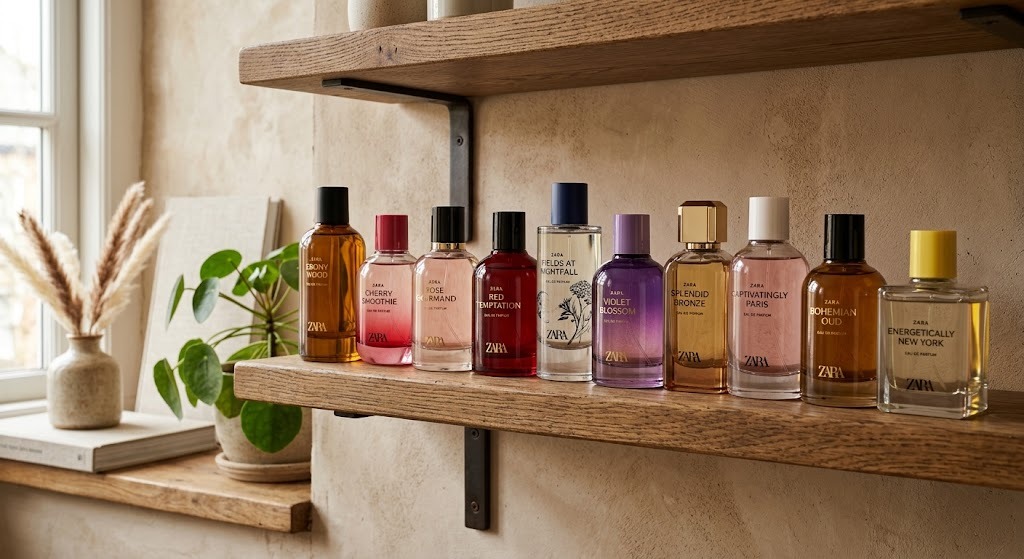
    If you love the iconic, airy amber profile of Baccarat Rouge 540, Red Temptation is your ultimate match. Opening with a spicy surge of saffron and bitter orange, it smoothly settles into a luxurious heart of praline and jasmine. The dry-down features rich moss and dry amber that lingers on clothing for days. It strikes an incredible balance between sweet, metallic, and warm woods.

    2. Fields at Nightfall

    Creamy, comforting, and deeply addictive, Fields at Nightfall is widely recognized as a spot-on double for Zadig & Voltaire’s This is Her! The perfume leads with a delicate praline note blended with sweet jasmine. As it warms up on your skin, a velvety sandalwood base emerges, creating a soft sweater-weather bubble that feels immensely luxurious and cozy.

    3. Ebony Wood (Zara Emotions Collection)

    Created in collaboration with Jo Malone CBE, Ebony Wood is an absolute masterclass in spicy woody fragrances. Pink pepper, clove, and ebony wood combine to forge an assertive, unisex scent profile. It carries a distinctive, high-end feel that works brilliantly during autumn and winter months, projecting confidence without overwhelming those around you.

    4. Golden Decade

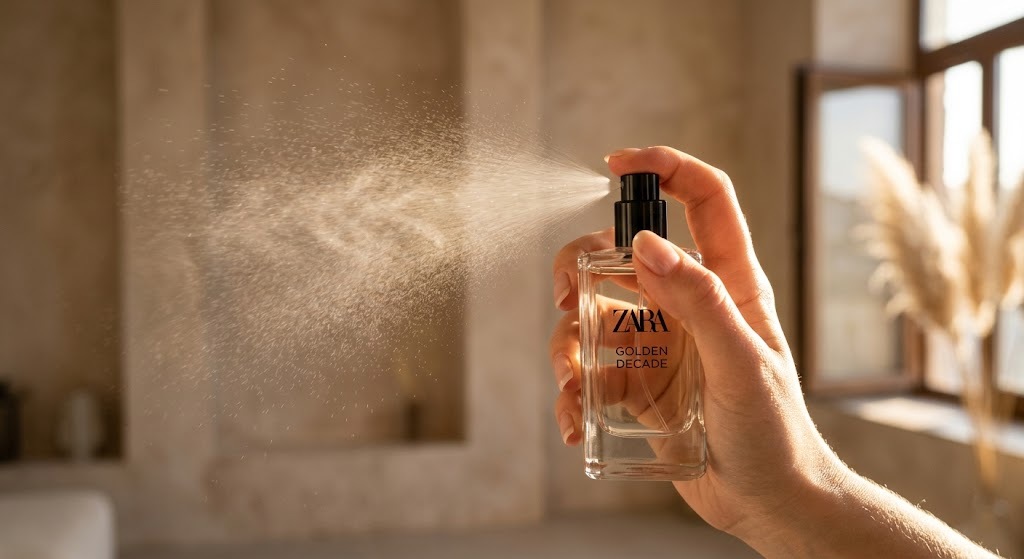
    Golden Decade pays homage to the legendary Yves Saint Laurent Libre Intense. This rich perfume bursts open with sparkling mandarin orange before giving way to a heart of orange blossom and lavender. The magic happens in the base, where warm vanilla, amber, and tonka bean create a glowing, sensual trail ideal for evening galas or date nights.

    5. Waterlily Tea Dress

    Another standout creation from the Jo Malone partnership, Waterlily Tea Dress captures the serene essence of a vintage garden party. Fresh mint leaves and crisp bergamot dominate the top, while soft waterlily forms a ethereal heart. It feels remarkably clean, airy, and green—making it one of the best Zara perfumes for scorching summer days.

    6. Applejuice

    If you adore the crisp, youthful brightness of Chanel Chance Eau Tendre, Applejuice will instantly steal your heart. Blending green apple, grapefruit, and cedarwood, this fragrance delivers a splash of refreshing fruity-floral notes. It serves as an effortless, non-intrusive daily driver perfect for office environments, school settings, or casual brunch dates.

    7. Nude Bouquet

    Nude Bouquet is a romantic homage to Miss Dior Blooming Bouquet. Delicately weaving cherry blossom, peony, and vanilla, this floral composition radiates fresh-cut sweetness. It embodies spring in a bottle, wrapping the wearer in a soft petal haze that smells sophisticated, bright, and endlessly feminine.

    8. Rich Warm Addictive (Tobacco Collection)

    Do not let the “tobacco” label intimidate you; this fragrance is pure gourmand heaven. Rich Warm Addictive combines creamy coconut, honey, rum, and white tobacco into a deliciously cozy syrup. It smells like a warm bakery nestled inside a wood cabin, making it an undeniable fan favorite for cool evenings.
     Rich Warm Addictive (Tobacco Collection)

    9. Gardenia

    Despite its name, Zara Gardenia is not a stark white floral, but rather an incredible dupe for Yves Saint Laurent’s Black Opium. Packed with notes of coffee, orange blossom, and sweet vanilla, it opens with energetic sweetness before settling into a warm gourmand haze. It represents an accessible luxury option for lovers of dark, sweet fragrances.

    10. Rose Gourmet

    For fans of rose-vanilla combinations like Parfums de Marly’s Delina or Mancera’s Roses Vanille, Rose Gourmet delivers an enchanting performance. Rose petals drenched in caramelized sugar sit atop a bed of soft amber and musk. It smells rich, decadent, and thoroughly modern without feeling old-fashioned or overly powdery.

    11. Hypnotic Vanilla

    Taking inspiration from Dior’s classic Hypnotic Poison, Hypnotic Vanilla offers a captivating blend of almond, jasmine, and rich vanilla bean. It provides a sweet, slightly nutty aura that feels alluring and velvety on skin. It projects wonderfully in cold air, making it a stellar cold-weather choice.

    12. Fleur de Patchouli

    Sophisticated, complex, and grounded, Fleur de Patchouli pairs woody patchouli with delicate white peony and spicy pepper. It captures an opulent, dark floral aesthetic that easily competes with high-end niche perfumes. This is the bottle you reach for when you want to project quiet authority and timeless style.

    13. Sublime Epoque

    Sublime Epoque pays tribute to Giorgio Armani’s My Way, highlighting brilliant tuberose, orange blossom, and jasmine. Balanced by a sturdy cedarwood and vanilla foundation, it projects a bright floral aura that turns heads wherever you walk. It captures pure sunshine, elegance, and joyful energy in a single bottle.

    14. Vetiver Pamplemousse

    Crisp, tart, and invigorating, Vetiver Pamplemousse smells like slicing into a fresh ruby red grapefruit on a bright morning. The sharp citrus opening softens gracefully into a clean vetiver base. If you prefer minimalist, unisex fragrances that feel invigorating, this bottle is an essential summer grab.

    15. Memorable Aura

    A vibrant, playful scent, Memorable Aura pairs tropical mango and dragonfruit with soft floral woods. It evokes warm beaches, cold cocktails, and effortless vacation vibes. It brings a happy, fruity lift to your day without leaning artificial or sickly sweet.

    How to Make Budget Perfumes Last All Day

    One common complaint about accessible fragrances involves longevity. While high-end extrait formulations carry higher oil concentrations, you can drastically boost the projection and stay-power of budget EDPs using simple scent hacks.

    Prep Your Canvas with Moisture

    Fragrance molecules slide right off dry skin, but cling effortlessly to moisture. Always apply an unscented body lotion or a thin layer of petroleum jelly to your pulse points before spraying your perfume.

    Prep Your Canvas with Moisture
    Longevity FactorStandard ApplicationMoisture-Prepped Skin
    Average Wear Time2 – 4 Hours6 – 9 Hours
    Sillage DistanceIntimate (Arm’s length)Moderate (Fills personal bubble)
    Note ClarityFades quickly to baseTop notes preserved longer

    Target Strategic Pulse Points

    Do not just spray your wrists and rub them together—rubbing generates friction that crushes delicate top notes! Instead, spray your neck, behind your knees, inside your elbows, and across your collarbones. Letting the alcohol evaporate naturally keeps the fragrance pyramid intact.

    Layer Your Scents

    Create custom hybrid scents while boosting overall longevity by layering complementary fragrances. Combine a neutral vanilla base note with a light floral top spray to build a signature scent profile nobody else can replicate.

    4 Common Fragrance Mistakes You Should Avoid

    1. Storing Perfumes in the Bathroom: Heat and humidity break down delicate aromatic compounds rapidly, souring your juice in months. Keep bottles in a cool, dark wardrobe instead.
    2. Blind Buying Full Bottles Without Testing: Skin chemistry drastically alters how scents dry down. Always test on skin—not just paper strips—and wait two hours before buying.
    3. Over-Spraying Gourmands in Heat: Heavy vanilla or sweet amber notes turn cloying and suffocating in high temperatures. Save heavy gourmands for cooler evenings.
    4. Judging a Scent on the Initial Spray: The initial blast contains concentrated alcohol. Give the juice 5 to 10 minutes to settle so the true heart notes can emerge.

    Pro Tips for Building an Affordable Scent Wardrobe

    To maximize your collection without overspending, organize your scents around functional categories rather than impulse purchases. A well-rounded collection only requires four foundational pillars:

    • The Daily Driver: Light, clean, and refreshing (e.g., Waterlily Tea Dress or Applejuice).
    • The Power Move: Woody, spicy, or patchouli-forward for professional impact (e.g., Ebony Wood or Fleur de Patchouli).
    • The Date Night Stunner: Sensual, sweet, or amber-rich (e.g., Golden Decade or Red Temptation).
    • The Comfort Classic: Cozy, warm, and inviting for rainy days or quiet evenings (e.g., Fields at Nightfall or Rich Warm Addictive).

    By curating around these pillars, you ensure every bottle in your collection serves a clear purpose while keeping your fragrance budget completely intact.

    Summary of Top Zara Fragrance Choices

    Finding your dream fragrance does not require spending half your paycheck at a luxury department store. Zara’s continuous push into fine fragrance has democratized luxury scent profiles, offering world-class perfumery to everyone.

    Whether you love the intoxicating aura of Red Temptation, the crisp sparkle of Applejuice, or the cozy gourmand warmth of Rich Warm Addictive, exploring the 15 best Zara perfumes offers an exciting journey into olfactory luxury without the financial strain.
    Summary of Top Zara Fragrance Choices

    Conclusion

    Building a collection of luxury scents no longer demands a fortune. The 15 best Zara perfumes featured in this guide prove that exceptional longevity, breathtaking scent profiles, and world-class perfumery are well within your reach. From daily office scents to show-stopping evening options, there is something here for every taste and occasion.

    Make sure to grab your favorite bottles quickly, as Zara’s most popular formulations often sell out faster than expected!

    Did you find this helpful? Drop a comment below with your favorite Zara fragrance, or share this guide with a fellow fragrance lover!

    Frequently Asked Questions

    Q1: Are Zara perfumes actual dupes for luxury designer scents?

    A: Yes, many Zara perfumes share striking similarities with famous luxury fragrances. Zara works with premier master perfumers who utilize similar key accord structures to popular designer scents, offering comparable smell profiles at a fraction of the cost.

    Q2: How long do Zara perfumes typically last on the skin?

    A: Longevity varies by formulation. Zara Eau de Parfums (EDPs) generally last between 4 to 8 hours, while Eau de Toilettes (EDTs) offer 2 to 4 hours. Applying unscented lotion before spraying significantly extends wear time.

    A: Zara frequently releases limited-edition collections alongside their permanent lines. When a particular bottle goes viral on social media for smelling identical to a luxury perfume, demand spikes instantly, leading to rapid sell-outs.

    Q4: Which Zara perfume lasts the longest overall?

    A: Red Temptation and Golden Decade are widely recognized as two of the longest-lasting options in Zara’s lineup. Their heavy base notes of amber, moss, and vanilla allow them to project strongly for up to 8 hours or more.

    Q5: Is Zara fragrance safe for sensitive skin types?

    A: Zara fragrances undergo rigorous international safety testing and comply with global cosmetics regulations. However, if you have sensitive skin, perform a patch test on your inner wrist before applying liberally.

    Q6: Can men wear Zara fragrances labeled for women?

    A: Absolutely! Scent has no gender. Many popular offerings like Ebony Wood, Red Temptation, and Rich Warm Addictive possess unisex profiles enjoyed equally by all fragrance lovers regardless of marketing labels.

    Best Zara Perfumes 2026: Affordable Designer-Inspired Fragrances
  • Morning vs Night Perfumes — Should You Wear Different Scents?

    What you’ll learn

    • Why your morning fragrance behaves differently on your skin compared to your night scent.
    • The exact chemical and note differences between uplifting daytime perfumes and sultry evening colognes.
    • How temperature, body chemistry, and mood dictate whether you should switch your scent.
    • Actionable tips to build a versatile day-to-night fragrance wardrobe without spending a fortune.

    Introduction

    Imagine waking up to a crisp morning, stepping out of the shower, and misting yourself with a sparkling burst of zesty Italian lemon and fresh white tea. That uplifting aura sets a vibrant tone for your morning commute and early meetings. Yet, when evening arrives, that same breezy citrus spray feels entirely out of place against the dim lights of a cozy dinner lounge. This exact scenario highlights the dynamic world of Morning vs Night Perfumes, a concept that changes how the world experiences your presence.

    Fragrance is much more than a pleasant accessory; it is a living, breathing invisible outfit that shifts according to the clock, the weather, and your personal energy. While some purists stick to a single signature scent for life, true fragrance enthusiasts know that swapping your daytime cologne for a richer nighttime blend unlocks an entirely new dimension of self-expression. Let’s dive in.

    The Science of Scents: Why Timing Actually Matters

    Before exploring specific bottles, understanding how fragrance interacts with your biology is essential. Olfactory science proves that human body temperature fluctuates throughout the day, typically peaking in the late afternoon and evening. Because heat acts as a natural diffuser, warm skin causes perfume molecules to evaporate much faster. This simple physiological fact explains why light, airy morning scents tend to vanish quickly by noon, while heavy evening formulations can feel overwhelmingly loud and cloying if worn under the morning sun.

    Furthermore, human perception of smell adapts based on environment and mood. Morning environments call for clean, approachable, and non-intrusive profiles that invite people in. Conversely, nighttime settings allow for mystery, warmth, and depth. Recognizing these shifts helps you curate a balanced fragrance wardrobe rather than forcing one bottle to handle every single hour of your busy lifestyle.

    The Science of Scents Why Timing Actually Matters

    Anatomy of Day and Night Fragrances

    The fundamental difference between morning and nighttime scents lies in their composition, concentration, and raw material families. Perfumers construct daytime and nighttime creations with entirely different goals in mind.

    The Bright, Energizing World of Daytime Perfumes

    Daytime perfumes focus primarily on freshness, clarity, and rejuvenation. When you step out into the world for work, school, or errands, you want a scent profile that communicates approachability and cleanliness. Common daytime notes include crisp citrus fruits like bergamot, grapefruit, and mandarin, alongside invigorating green tea, aquatic accords, and delicate white florals such as lily of the valley and freesia.

    These formulations usually lean toward Eau de Toilette (EDT) or Eau de Cologne (EDC) concentrations. Because they feature volatile top notes that evaporate gracefully, they rarely offend colleagues in tight office spaces or crowded public transit. Wearing a bright daytime perfume acts like an instant cup of espresso for your senses, keeping you feeling alert and polished from morning coffee until mid-afternoon.

    The Sultry, Complex Nature of Evening Scents

    As the sun sets, the fragrance landscape shifts dramatically toward warmth, sensuality, and deep complexity. Evening scents are designed to linger in the air, leaving a captivating sillage as you move through restaurants, theaters, or social gatherings. Master perfumers lean heavily into rich base notes like velvety amber, dark vanilla, smoky oud, earthy patchouli, and animalic musks.

    These heavier formulations frequently utilize Eau de Parfum (EDP) or Parfum concentrations, containing higher oil percentages that anchor the scent to your skin and fabric for hours. Where morning scents whisper, evening scents converse with confidence. They require cooler ambient temperatures to unfold properly without becoming cloying, making them the ultimate companions for nightlife and intimate settings.

    The Bridge Between: Transitional Scents

    Not everyone wants to carry two completely different bottles every single day. Transitional fragrances bridge the gap between morning brightness and evening depth. These versatile compositions often feature a sparkling fruit or floral opening that slowly melts into a warm, woody, or musky base over several hours.

    Scents featuring iris, fig, or soft leather frequently serve this dual purpose. They adapt seamlessly to your changing environment, making them ideal for professionals who transition straight from an office desk to an evening dinner date without returning home to refresh.

    Practical Steps to Build Your Day-to-Night Rotation

    Creating a seamless transition between your morning and evening scent routine does not require an overwhelming collection. Follow these practical steps to build an intentional fragrance wardrobe.

    1. Audit your current collection: Separate your bottles into two distinct groups based on their primary notes—citrus and fresh versus woody, spicy, and sweet.
    2. Identify your daily routine: Evaluate how much time you spend in professional versus social environments to determine whether you need more daytime staples or evening powerhouses.
    3. Invest in complementary profiles: If you love a specific brand, look for its lighter daytime flanker and its richer nighttime counterpart to maintain a consistent personal brand.
    4. Master the layering technique: Apply a neutral, clean lotion in the morning for your fresh scent, and mist a rich, spicy oil over pulse points in the evening to transform your daytime aura instantly.
    5. Store properly: Keep your delicate morning citrus bottles away from direct bathroom heat and humidity, ensuring they retain their crisp opening notes for months.
    Practical Steps to Build Your Day-to-Night Rotation

    Common Myths About Morning and Night Perfumes

    The fragrance community is filled with old wives’ tales and outdated rules that often confuse beginners. Let’s clear up some of the most persistent misconceptions regarding Morning vs Night Perfumes.

    One widespread myth claims that wearing heavy oriental or gourmand perfumes during the morning hours is strictly illegal in polite society. While dousing yourself in heavy vanilla-oud at 8 AM in a warm elevator is certainly ill-advised, modern perfumery offers sheer, airy interpretations of sweet and woody notes that wear comfortably during daylight.

    Another frequent misconception is that expensive perfumes work equally well at any hour. Price has zero correlation with time-appropriateness. A niche, high-end citrus scent will still fade quickly in a hot nightclub, just as an affordable synthetic vanilla bomb will still suffocate a small office room in July. Understanding note composition always trumps retail price tags when timing your scent application.

    Expert Tips and Pro Advice for Longevity

    True fragrance longevity relies on application technique as much as the bottle itself. Industry experts know that skin hydration plays a massive role in how morning and evening perfumes project. Always apply your morning citrus scents immediately after a shower onto well-moisturized skin to lock in fleeting volatile molecules.

    For evening wear, target pulse points where body heat naturally intensifies—the wrists, the sides of the neck, and behind the knees. Additionally, spraying a touch of your evening fragrance onto the collar of a wool coat or the hem of a scarf creates a gorgeous scent trail that outlasts the evening.

    For further reading on maximizing your fragrance collection, check out our guide on. Implementing these minor adjustments dramatically enhances your overall fragrance experience without requiring constant reapplication.

    Final Verdict: Should You Switch Your Scents?

    Ultimately, splitting your fragrance routine into distinct morning and evening categories elevates your daily ritual from a mundane chore into a mindful act of self-care. Wearing a crisp, energizing scent in the morning prepares your mind for productivity, while slipping into a rich, complex aroma at night signals your brain that it is time to unwind and socialize.

    While rigid rules do not exist in the art of perfumery, honoring the natural synergy between notes, temperature, and time of day ensures you always smell your absolute best. Experiment with your collection, trust your nose, and let your mood guide your daily choices.

    Should You Switch Your Scents

    Conclusion

    Navigating the world of Morning vs Night Perfumes is an exciting journey that deepens your appreciation for the artistry of scent. By understanding how temperature, ingredients, and daily environments affect your fragrance, you can effortlessly match your aroma to every moment of your day. Whether you prefer an ultra-fresh citrus burst at dawn or a mysterious amber veil under the stars, your signature style remains entirely your own. Did you find this helpful? Drop a comment below or share this with a fellow fragrance lover!

    Frequently Asked Questions

    Q1: What are the main differences between morning vs night perfumes? A: Morning perfumes typically feature light, refreshing notes like citrus, green tea, and white florals designed to feel clean and non-intrusive. Night perfumes rely on heavy, warm base notes like amber, oud, vanilla, and spices that project strongly in cooler evening temperatures and social settings.

    Q2: Can I wear a night perfume during the morning? A: You can, but you should apply it with a lighter hand. Heavy evening scents can feel overwhelming in professional or warm morning environments, so opting for a single spray or choosing a sheer variant is usually best if you choose to wear them early.

    Q3: Why does my daytime perfume fade so quickly? A: Daytime perfumes are usually formulated as Eau de Toilettes or Colognes containing high concentrations of volatile citrus and aquatic top notes. Combined with normal daytime body heat and physical movement, these light molecules evaporate much faster than heavy base notes.

    Q4: Do I need to buy separate perfumes for day and night? A: You do not strictly need two separate collections. Many modern fragrances feature versatile, transitional profiles—such as soft musks or woody florals—that bridge the gap between casual daytime wear and elegant evening events seamlessly.

    Q5: How many sprays of perfume should I apply in the morning versus at night? A: For morning wear in shared office spaces, 2 to 3 sprays of a light scent are ideal. For evening wear in open social settings or cooler weather, 4 to 5 sprays of a richer Eau de Parfum can be used to ensure proper projection and longevity throughout the night.

    Q6: Are expensive perfumes better for nighttime wear? A: Price does not determine whether a fragrance is suited for day or night. Composition and note density dictate timing. Many affordable fragrances offer rich, complex profiles that outperform expensive perfumes in nighttime or cold-weather settings.

    What Is Fragrance Wardrobing and Why Everyone Is Doing It in 2026

  • How to Choose a Different Perfume for Every Season: The Ultimate Fragrance Wardrobe Guide

    What you’ll learn

    • Why wearing the exact same perfume all year round might be limiting your signature style
    • How weather, temperature, and humidity completely change how fragrance molecules evaporate on your skin
    • Practical steps to build a balanced four-season perfume rotation using popular designer and niche brands
    • Pro tips for storing your seasonal fragrance collection so it stays fresh for years

    Introduction

    Picture this: it is a sweltering July afternoon, the sun is blazing, and you spray a heavy, syrup-thick amber vanilla perfume across your wrists. Within minutes, the scent turns cloying, suffocating, and entirely overwhelming in the humid air. Now, imagine a freezing January morning where you spritz a watery, ultra-light citrus cologne that vanishes into the crisp wind before you even reach your car. Knowing how to choose a different perfume for every season completely transforms your daily sensory experience. Your fragrance wardrobe should evolve just like your closet does, transitioning from cozy knits to breezy linens. Let’s dive in.

    The Science of Scent and Temperature

    Environmental temperature dictates how rapidly fragrance molecules evaporate from your pulse points. Heat acts as a natural amplifier, causing volatile top notes like lemon, bergamot, and aquatic accords to burn off at lightning speed while intensifying rich base notes. Conversely, winter cold numbs your skin and slows down molecular evaporation, meaning heavy perfumes sit closer to the body without projecting.

    According to global fragrance market insights, consumers increasingly view scent as an emotional accessory, with over forty percent of perfume enthusiasts maintaining distinct warm-weather and cold-weather rotations. Understanding this chemistry prevents your favorite fragrances from turning sour in the summer or disappearing entirely in the winter.

    The Science of Scent and Temperature

    Crafting Your Four-Season Fragrance Profile

    Building a comprehensive fragrance wardrobe requires categorizing scents by their weight, composition, and olfactory families. Each season demands specific chemical structures that harmonize with the ambient climate.

    Spring: Fresh Florals and Green Accords

    Spring is a season of awakening, renewal, and crisp air. When selecting a spring fragrance, look for dewy florals, fresh-cut grass notes, and bright, uplifting tea accords. Perfumes featuring lily of the valley, peony, freesia, and light green notes mirror the blossoming nature outdoors.

    For instance, fragrances like Jo Malone London Wild Bluebell or Hermès Un Jardin sur le Nil capture the refreshing, airy crispness of spring perfectly. These scents cut through lingering cool breezes without feeling heavy or intrusive.

    Summer: Citrus, Aquatics, and Tropical Fruits

    Summer heat demands high-energy, refreshing compositions that keep you feeling cool and revitalized. Citrus notes like mandarin, grapefruit, and bitter orange provide an instant burst of cooling refreshment, while marine and aquatic notes replicate ocean breezes.

    Look for solar notes and coconut water accords that evoke sun-kissed skin on tropical beaches. Classic choices like Dolce & Gabbana Light Blue or Maison Margiela Replica Beach Walk thrive in high temperatures, offering sparkling longevity without overwhelming those around you.

    Autumn: Spices, Woods, and Crisp Leaves

    As temperatures drop and leaves turn amber, your scent profile should shift toward grounding warmth. Autumn is the ideal time to embrace cozy spices, dry woods, and earthy elements like patchouli, cedarwood, cardamom, and cinnamon.

    Scents begin to feel richer, wrapping around you like a cashmere scarf. Icons like Tom Ford Oud Wood or Byredo Gypsy Water provide that mesmerizing balance of woody complexity and subtle sweetness that matches crisp autumn evenings.

    Winter: Gourmands, Amber, and Deep Resins

    Winter calls for absolute indulgence. When the air turns freezing, heavy gourmand notes, rich resins, and deep ambers step into the spotlight. Vanilla, tonka bean, frankincense, myrrh, and leather project beautifully in cold weather, creating an intoxicating warmth and a powerful sillage.

    Masterpieces like Maison Francis Kurkdjian Grand Soir or Yves Black Opium envelop the wearer in a luxurious, edible, and comforting cocoon that easily cuts through winter coats and scarves.

    Practical Steps to Build Your Seasonal Rotation

    Transitioning your perfume collection does not require buying dozens of new bottles. A strategic, minimalist approach saves money while keeping your signature style dynamic.

    • Step 1: Audit your current collection: Separate your existing perfumes into categories based on their weight, sweetness, and primary notes.
    • Step 2: Identify your gaps: Determine which season lacks representation. If you only own heavy winter vanillas, prioritize finding a fresh summer citrus.
    • Step 3: Test on skin in the target weather: Never judge a seasonal perfume in artificial store climates. Test summer scents in warmth and winter scents in cool environments.
    • Step 4: Invest in travel decants: Purchase 5ml or 10ml travel sprays for seasonal transitions so you can test a fragrance over several weeks before committing to a full bottle.
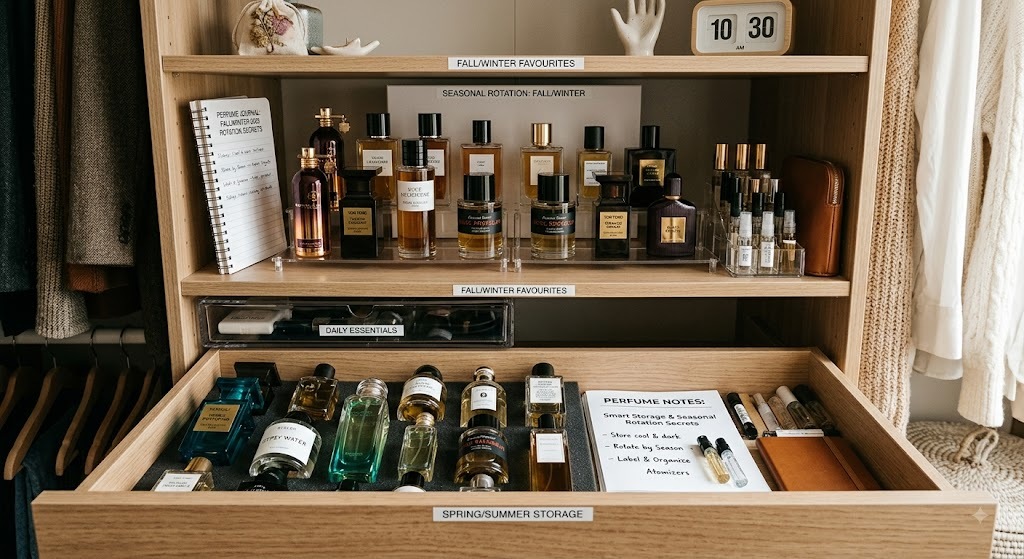
    • Step 5: Rotate your storage: Store out-of-season perfumes in a cool, dark drawer or box away from sunlight to protect their delicate top notes from degrading.
    Practical Steps to Build Your Seasonal Rotation

    Common Mistakes People Make With Seasonal Fragrances

    Many fragrance lovers fall into common traps that disrupt their perfume experience throughout the year. Avoiding these mistakes ensures your collection remains pristine and effective.

    One major mistake is wearing heavy gourmands in high humidity. High heat alters synthetic musks and sweet vanillas, often turning them sharp or sickeningly sweet. Another frequent error is storing perfume bottles on open bathroom windowsills; drastic temperature fluctuations and direct sunlight destroy fragile fragrance oils within months.

    Additionally, people often assume that expensive designer price tags guarantee better seasonal longevity. In reality, lighter summer colognes naturally fade faster than winter orientals, regardless of cost, because of the raw materials used. Reapplying a citrus fragrance midday is normal and expected.

    Expert Tips for Maximizing Sillage and Longevity

    Mastering seasonal wear involves understanding how to apply fragrance effectively based on the climate. In dry winter air, moisturize your skin thoroughly with an unscented body lotion or matching scented cream before spraying perfume; dry skin drinks up fragrance molecules, causing them to evaporate instantly.

    In contrast, summer skin is naturally more hydrated, but sweat can wash fragrance away quickly. Spray your summer scents on your clothes—such as cotton or linen hems—or into your hair to boost longevity without causing skin irritation under the sun.

    For more inspiration on building your collection, check out our guide on.Combining proper storage with smart seasonal application doubles the lifespan of your favorite luxury bottles.

    Summary and Final Recommendations

    Transitioning your signature scent throughout the year elevates fragrance from a simple hygiene routine into an art form. By aligning your scent profile with the shifting weather, you ensure that every note performs at its absolute best.

    Embrace bright citrus and aquatics when the sun is high, and lean into rich woods and deep ambers when frost settles on the ground. Your nose—and everyone around you—will appreciate the harmonious balance.

    Summary and Final Recommendations

    Conclusion

    Choosing a different perfume for every season allows you to experience the full emotional spectrum of perfumery. From the uplifting energy of spring blossoms to the deep comfort of winter spices, matching your scent to the climate enhances your mood, boosts your confidence, and protects the integrity of your fragrance investment. Learning how to choose a different perfume is an exciting journey of self-expression that turns every changing month into a new olfactory adventure. Did you find this helpful? Drop a comment below or share this with a fellow fragrance lover!

    Frequently Asked Questions

    Q1: How do I know if my signature perfume is too heavy to wear in the summer? A: If your perfume features dominant notes of heavy vanilla, thick amber, dense patchouli, or strong leather, it will likely project too aggressively in high heat and humidity. If the scent feels suffocating or gives you a headache on a hot day, switch to a lighter citrus, green, or aquatic alternative.

    Q2: Can I wear winter perfumes during spring transitional weather? A: Yes, but moderation is key. During early spring when temperatures still dip at night, you can wear lighter winter gourmands or soft woody scents by spraying them sparingly underneath your clothing rather than directly on exposed skin for a softer, intimate projection.

    Q3: Why does my summer perfume fade so quickly compared to my winter scents? A: Summer fragrances are formulated primarily with volatile top notes like citrus, mint, and aquatic accords, which evaporate rapidly in warm air. Winter perfumes rely on heavy base notes like resin, musk, and wood, which anchor the scent molecules to your skin for much longer periods.

    Q4: How many perfumes should I ideally have in my seasonal fragrance rotation? A: A well-balanced fragrance wardrobe typically features four core bottles—one signature scent tailored to each of the four distinct seasons. Advanced collectors often expand this to include day and night variations for each season, bringing their total active rotation to eight bottles.

    Q5: Should I store my off-season perfumes in the refrigerator? A: No, kitchen refrigerators subject perfumes to mechanical vibrations and frequent temperature shocks every time the door opens, which damages the fragile chemical bonds of the oils. Store your off-season bottles in a dark, climate-controlled closet or drawer at a stable room temperature.

    Q6: Do designer perfumes perform better across seasons than niche perfumes? A: Not necessarily. Performance depends entirely on concentration (Eau de Toilette vs. Eau de Parfum) and raw material composition rather than brand prestige. Many niche brands create exceptionally potent summer scents, while some designer houses produce airy, fleeting formulas.

    How to Build a Fragrance Wardrobe From Scratch on Any Budget

  • The 5 Colognes Every Man Needs in His Collection

    What you’ll learn:

    • Why one bottle of cologne is never enough
    • The 5 essential fragrance categories every man should own
    • Real brand recommendations for each category
    • Common mistakes men make when building a fragrance collection

    Introduction

    Most men own exactly one cologne, and they wear it everywhere — the gym, the office, first dates, funerals. If that sounds familiar, you’re not alone, but you’re also missing out on one of the easiest upgrades to how you present yourself.

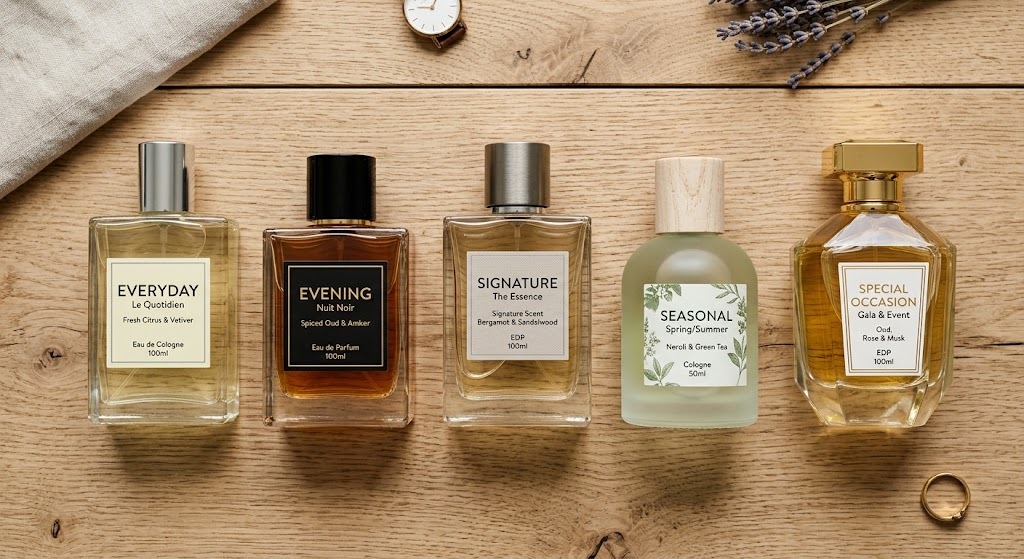
    The 5 colognes every man needs cover different moods, seasons, and occasions, so you’re never stuck wearing a heavy winter scent to a summer wedding or a beach-fresh spray to a big work presentation.

    A well-built collection doesn’t require dozens of bottles or a designer budget. It requires five smart choices that cover every situation life throws at you.

    Let’s dive in.

    Why a Fragrance Collection Matters

    Scent is tied directly to memory and first impressions. Research from the Sense of Smell Institute has found that smell influences mood and recall more powerfully than any other sense, which is exactly why the right cologne can make you unforgettable — and the wrong one can be distracting for all the wrong reasons.

    Wearing the same men’s fragrance year-round is a bit like wearing a wool suit to the beach. It might technically work, but it’s never quite right.

    Building an essential cologne collection means you always have something appropriate on hand, whether you’re headed into a client meeting or out for a Saturday night dinner.

    Why a Fragrance Collection Matters

    The Core Categories Every Collection Needs

    Think of your collection less as “five random bottles” and more as five tools, each built for a specific job. Here’s how they break down.

    1. The Everyday Fresh Scent

    This is your Monday-through-Friday workhorse — clean, light, and inoffensive enough for close-quarters office life.

    Citrus and aquatic notes dominate here. Something like Bleu de Chanel Eau de Toilette or Acqua di Gio by Giorgio Armani hits this brief perfectly, offering a crisp, showered-and-ready feel that never overwhelms a small conference room.

    Reach for this one on ordinary days when you want to smell put-together without making a statement.

    2. The Warm Evening Scent

    For dinners, dates, and after-dark occasions, you want something with more depth — think amber, vanilla, or spice.

    Tom Ford’s Tobacco Vanille or Yves Saint Laurent’s La Nuit de l’Homme are go-to choices in this category. Both project a confident, magnetic warmth that reads as intentional the moment you walk into a room.

    This is the bottle you save for when you actually want to be noticed.

    3. The Signature Statement Scent

    Every man benefits from one fragrance that becomes unmistakably “his” — the one people associate with him specifically.

    This doesn’t have to be expensive or rare. It simply needs to be distinctive: a scent with a personality, like a woody-spicy blend such as Dior Sauvage or a niche pick like Creed Aventus if your budget allows.

    Wear it consistently enough, and people will start to recognize you before they see you.

    The Signature Statement Scent

    Building Your Collection Step by Step

    Rather than buying five bottles at once, build deliberately using this approach:

    1. Start with your everyday fresh scent. This gets the most wear, so invest here first.
    2. Add a warm evening option next. You’ll likely use it monthly for dates and dinners.
    3. Pick a signature scent third. Give yourself time to test a few samples before committing.
    4. Fill in a seasonal fragrance fourth. A lighter citrus for summer or a cozy spice for winter rounds things out.
    5. Finish with a special-occasion bottle. Save this for weddings, big nights out, or milestone events.

    Sampling before buying full bottles saves money and regret. Most fragrance retailers, including Sephora and department store counters, offer sample vials for exactly this reason.

    Common Mistakes Men Make With Cologne

    Even with the right bottles, application habits can undercut a great fragrance collection.

    Over-applying is the number one mistake. Two to three sprays on pulse points is plenty; cologne should be discovered up close, not announced from across the room.

    Storing bottles in the bathroom exposes fragrance to heat and humidity, which breaks down the scent molecules faster. A cool, dark drawer keeps cologne fresher for years longer.

    Sticking to one scent for every season wastes the whole point of a collection. A heavy oud that works in December can feel suffocating in July.

    Spraying directly onto clothing instead of skin means missing out on how fragrance evolves with your body heat throughout the day.

    Expert Tips for Wearing Cologne Well

    A few habits separate men who wear cologne well from men who simply own it.

    Apply right after a shower, when skin is slightly damp — this helps the fragrance bind and last longer throughout the day. Target pulse points like the neck, wrists, and chest, where body heat helps the scent diffuse naturally.

    Layering matters too. Using a matching scented body wash or moisturizer underneath your cologne can extend wear time significantly without needing extra sprays.

    Bringing It All Together

    A complete fragrance wardrobe doesn’t need to be complicated. Five well-chosen bottles — an everyday fresh scent, a warm evening option, a signature statement scent, a seasonal pick, and a special-occasion fragrance — cover essentially every situation a man encounters.

    Bringing It All Together

    Start with one category, build gradually, and sample before you commit to full bottles.

    Conclusion

    Building the 5 colognes every man needs doesn’t happen overnight, and it doesn’t need to. Start with an everyday fresh scent, then layer in a warm evening pick, a signature statement bottle, a seasonal option, and something special for big occasions.

    Each bottle earns its place by solving a specific problem — smelling right for the moment, instead of hoping one cologne can do it all.

    Did you find this helpful? Drop a comment below or share this with a fellow fragrance lover!

    Frequently Asked Questions

    Q1: How many colognes should a man actually own? A: Five is a practical sweet spot — one for everyday wear, one for evenings, a signature scent, a seasonal option, and a special-occasion bottle. This covers nearly any situation without requiring an overwhelming collection or budget.

    Q2: What’s the difference between eau de toilette and eau de parfum? A: Eau de parfum has a higher concentration of fragrance oils, so it lasts longer and projects more. Eau de toilette is lighter and fresher, making it better suited for daytime or office wear where subtlety matters.

    Q3: How long should a bottle of cologne last? A: A 100ml bottle typically lasts 6–12 months with daily use of 2–3 sprays. Storage matters too — keeping cologne away from heat and sunlight helps preserve both scent quality and longevity.

    Q4: Should I match my cologne to the season? A: Yes. Lighter, citrus-forward scents work best in spring and summer, while warmer notes like amber, spice, and woods suit fall and winter. Seasonal matching keeps your fragrance feeling appropriate rather than overpowering.

    Q5: Is it okay to wear the same cologne every day? A: It’s fine if you love it, but building a small rotation prevents nose fatigue — where you stop noticing your own scent — and keeps things appropriate across different occasions and seasons.

    Q6: What’s a good starter cologne for someone new to fragrance? A: A versatile, crowd-pleasing option like Bleu de Chanel or Acqua di Gio is a safe, well-loved starting point. Both are easy to wear, widely available to sample, and work across most casual and semi-formal settings.

    The 5 Perfumes Every Woman Should Own — A Complete Wardrobe

  • The 5 Perfumes Every Woman Should Own — A Complete Wardrobe

    What you’ll learn

    • How to curate a functional, versatile five-bottle fragrance wardrobe for every phase of life.
    • The specific scent profiles required for daily wear, romantic dates, professional settings, and special evenings.
    • Insider tips on how to apply and store your luxury perfumes to maximize longevity.
    • Answers to common fragrance questions regarding concentration, layering, and seasonal rotation.

    Introduction

    Imagine opening your closet to find only one outfit. You might have a fabulous evening gown, but it feels completely absurd to wear a floor-length sequined dress to run Sunday morning errands. Yet, many of us treat our fragrance collections the exact same way. We rely on a single signature scent for every single occasion—from boardroom presentations to cozy movie nights at home. However, scent is one of the most powerful expressions of personal style, and relying on just one bottle means missing out on the incredible emotional versatility of perfumery. The concept of The 5 Perfumes Every Woman Should Own changes everything by treating your vanity like a capsule wardrobe.

    According to global fragrance industry insights, the prestige perfume market continues to expand rapidly as consumers recognize scent as an essential pillar of self-care and daily identity. Just as you own tailored trousers, casual denim, and a show-stopping dress, your fragrance shelf deserves a strategic rotation. Curating a cohesive collection allows you to match your aroma to your mindset, the weather, and the room you are walking into. Let’s dive in.

    Why a Fragrance Wardrobe Matters

    Building a curated collection of perfumes is about more than just collecting pretty bottles; it is about intentional storytelling through scent. Olfactory science proves that our brains process smells through the limbic system, the exact area responsible for emotion and memory. When you wear a fragrance tailored to a specific environment, you subconsciously anchor your mood and project a deliberate energy.

    Furthermore, skin chemistry changes based on humidity, temperature, and even your diet. A crisp citrus eau de toilette that invigorates you on a humid July afternoon might completely vanish in the dry, freezing air of January. By establishing a dedicated fragrance wardrobe, you ensure that your scent profile remains balanced, appropriate, and captivating year-round. This approach saves you money in the long run by preventing impulse buys of redundant scents, helping you invest instead in quality compositions that truly pull their weight.

    Why a Fragrance Wardrobe Matters

    The Five Pillars of a Women’s Fragrance Wardrobe

    The secret to a balanced capsule collection lies in choosing five distinct scent profiles that complement one another without overlapping. Here is the breakdown of the essential categories every fragrance enthusiast needs.

    The Effortless Everyday Signature (Fresh & Clean)

    Your everyday scent is your olfactive second skin—the fragrance you reach for when you are running errands, working from home, or simply want to smell effortlessly put-together. This category typically features crisp citrus, clean white florals, or breezy aquatic notes that feel uplifting and non-offensive. Think of notes like bergamot, crisp pear, lily of the valley, and soft white musk.

    A quintessential example in this category is Chanel Chance Eau Tendre, a sparkling floral-fruity composition that blends tart grapefruit with tender jasmine and smooth white musk. It sits close to the skin, creating an inviting aura of freshness that never overwhelms an elevator or a quiet office space. It is polished, bright, and endlessly wearable.

    The Professional Powerhouse (Sophisticated & Woody)

    When you step into a boardroom, lead a high-stakes meeting, or need to project absolute confidence, your fragrance should speak volumes before you even say a word. This pillar avoids overly sweet or sticky gourmand notes in favor of grounding, structured ingredients like vetiver, cedarwood, iris, and subtle leather. These notes communicate authority, elegance, and sharp focus.

    Hermès Twilly d’Hermès or Prada Infusion d’Iris serve as magnificent inspirations for this category. Prada Infusion d’Iris, for instance, utilizes clean, powdery iris paired with crisp neroli and cedarwood. It smells like crisp, ironed white linen and expensive stationery—the ultimate professional armor that demands respect while maintaining an air of refined grace.

    The Romantic Magnet (Sensual Floral & Amber)

    Every woman needs a fragrance dedicated to intimacy, romance, and date nights. This category turns up the heat with lush, velvety blooms and warm, enveloping bases. We are talking about midnight-blooming jasmine, opulent tuberose, velvety rose, and rich amber. These notes bloom with your body heat, creating a mesmerizing sillage that lingers in the air long after you leave the room.

    Parfums de Marly Delina or Tom Ford Black Orchid offer breathtaking explorations of this romantic territory. Delina marries rich Turkish rose with tart rhubarb, litchi, and a lush base of vanilla and cashmeran. It is ultra-feminine, deeply romantic, and leaves an unforgettable impression on anyone fortunate enough to stand close to you.

    The Cozy Comfort (Warm Gourmand & Vanilla)

    Some days call for total comfort—a fragrant cashmere blanket that makes you feel safe, nurtured, and utterly delicious. The cozy comfort category embraces rich, edible gourmand notes like Madagascar vanilla, roasted tonka bean, spun sugar, and warm amber. These fragrances are deeply addictive and provide incredible longevity thanks to their heavier, resinous base notes.

    Maison Margiela Replica By the Fireplace or Yves Saint Laurent Black Opium capture this mood brilliantly. Black Opium blends rich black coffee with sweet vanilla, white flowers, and patchouli. It is warm, sweet, and undeniably cozy, making it the ultimate weapon for chilly autumn evenings, coffee dates, or relaxing weekend nights in.

    The Bold Statement (Unique & Experimental)

    The final pillar of your fragrance wardrobe is the wild card—a daring, unconventional scent that breaks all the rules. This is the perfume you wear when you want to feel artistic, edgy, or utterly unique. It might feature smoky incense, deep spices, dark patchouli, or unexpected mineral and earthy accords that spark conversations.

    Byredo Gypsy Water or Maison Francis Kurkdjian Baccarat Rouge 540 exemplify this bold category. Baccarat Rouge 540, with its luminous blend of airy jasmine, saffron, cedarwood, and ambergris, creates a distinct, almost ethereal aura that feels both modern and luxurious. It is a signature piece of wearable art that sets you apart from the crowd.

    How to Build and Rotate Your Fragrance Wardrobe

    Curating your five essential perfumes does not mean you have to purchase every bottle overnight. Building a meaningful collection is a journey of patience and exploration. Follow this step-by-step approach to assemble your wardrobe with intention.

    1. Audit Your Current Shelf: Take stock of what you currently own. Identify which bottles you consistently reach for and which ones sit gathering dust. This reveals your natural scent preferences.
    2. Identify Your Gaps: Compare your current collection against the five core pillars. If you own three sweet vanilla perfumes but nothing fresh for summer, your next purchase is clear.
    3. Test Extensively on Skin: Never buy a full bottle based on a paper blotter test or a digital review alone. Chemistry dictates how a perfume develops, so wear a sample for a full day to test its longevity and dry-down.
    4. Rotate Seasonally: Bring your fresh and citrus bottles to the front of your vanity during spring and summer, while moving your warm gourmands and woody powerhouses to the forefront during fall and winter.
    5. Store Properly: Protect your investment by keeping your bottles away from direct sunlight, humidity, and extreme temperature fluctuations—ideally stored in a cool, dark drawer or closet.
    How to Build and Rotate Your Fragrance Wardrobe

    Common Mistakes People Make With Perfume

    Even seasoned fragrance lovers sometimes fall into common traps that diminish their perfume experience or damage their precious bottles. Avoiding these mistakes ensures your collection stays pristine and performs at its absolute best.

    One of the most frequent errors is rubbing your wrists together after spraying a perfume. This friction generates heat, which breaks down the delicate top notes—such as bright citrus and crisp fruits—causing the fragrance to evaporate much faster and altering its intended scent profile. Instead, simply spray and let the perfume dry naturally on your skin.

    Another widespread myth is that storing perfume in the bathroom is convenient. The fluctuating humidity and daily heat from showers act as a silent killer for complex fragrance formulas, causing them to oxidize and sour prematurely. Finally, over-spraying heavy oriental or gourmand scents in confined office spaces can induce headaches for coworkers. Always match your application intensity to your environment.

    Expert Tips for Maximizing Longevity

    If you want your luxury fragrances to project beautifully from morning until night, technique is everything. Master perfumers utilize specific layering and application tricks to lock scent molecules onto the skin.

    Start by moisturizing your skin with an unscented body lotion or a matching body cream before spraying. Fragrance molecules cling tightly to hydrated, oil-rich skin; dry skin drinks up perfume instantly, causing it to fade within an hour. Additionally, apply your perfume to your pulse points—where blood vessels run closest to the surface, generating natural warmth. Excellent pulse points include the sides of your neck, the inner elbows, behind your earlobes, and the backs of your knees.

    For an extra longevity boost, mist a light veil of perfume onto your clothing or hairbrush rather than soaking your hair directly in alcohol-based sprays. Natural fibers like wool, cotton, and cashmere hold onto scent molecules remarkably well, allowing you to catch whiffs of your favorite perfume days after application.

    Summary and Final Recommendations

    Curating The 5 Perfumes Every Woman Should Own is an empowering exercise in defining your personal identity through scent. By balancing a fresh everyday fragrance, a professional woody scent, a romantic floral amber, a cozy comfort gourmand, and a bold artistic statement, you unlock the ability to soundtrack every moment of your life with intention and elegance.

    Remember that your fragrance wardrobe should reflect your unique personality. Use these five categories as a foundational framework, but feel free to let your intuition guide your specific brand choices. Quality over quantity always wins in perfumery, and investing in five magnificent bottles will bring you infinitely more joy than owning twenty mediocre ones.

    Conclusion

    Building a capsule fragrance collection transforms your daily routine from a mindless habit into a luxurious ritual of self-expression. By understanding how different scent profiles interact with your mood, your environment, and your skin, you take complete control of your personal presence. Whether you are stepping into a high-powered meeting or enjoying a quiet evening wrapped in warm vanilla, having the right scent for the moment makes all the difference. Embrace the philosophy of The 5 Perfumes Every Woman Should Own and watch how your relationship with fragrance deepens. Did you find this helpful? Drop a comment below or share this with a fellow fragrance lover!

    Frequently Asked Questions

    Q1: What are The 5 Perfumes Every Woman Should Own for a complete collection? A: A well-rounded collection includes a fresh everyday citrus/clean scent, a professional woody or powdery fragrance, a romantic floral/amber date-night perfume, a cozy gourmand vanilla for comfort, and a bold, unique statement fragrance for special occasions.

    Q2: How many sprays of perfume should I apply daily? A: Generally, 3 to 5 sprays are ideal for an eau de parfum. Apply to pulse points like your wrists, neck, and inner elbows. If you are wearing a very powerful oriental or woody scent, 2 sprays are often more than enough to maintain a pleasant sillage without overwhelming others.

    Q3: How long do opened perfume bottles last before expiring? A: Most perfumes last between three to five years if stored properly in a cool, dark place away from direct sunlight and humidity. Fragrances with heavy woody, resinous, or vanilla bases often mature and improve with age, much like fine wine.

    Q4: Can I wear my date night perfume to the office? A: It is generally best to avoid heavy, loud, or intensely sweet date-night perfumes in professional environments. Office settings call for polite, understated, clean, or woody scents that stay close to the skin and foster a focused atmosphere.

    Q5: Should I store my perfumes in the refrigerator? A: No, storing perfume in a refrigerator is unnecessary and can actually harm the fragrance. The drastic temperature changes when taking the bottle in and out can destabilize the chemical bonds of the perfume oils. A dark bedroom drawer or closet is the best storage location.

    Q6: What is the difference between an Eau de Toilette and an Eau de Parfum? A: The main difference lies in the concentration of aromatic perfume oils. Eau de Parfum (EDP) contains a higher oil concentration, typically 15 to 20 percent, offering richer depth and 6 to 8 hours of longevity. Eau de Toilette (EDT) features a lighter 5 to 15 percent concentration, providing a fresher, shorter-lived aura of 3 to 5 hours.

    Best Afnan Perfumes — The Hidden Gem Brand You Need to Know

  • How to Build a Fragrance Wardrobe From Scratch on Any Budget

    What you’ll learn

    • How to identify core scent families to cover every occasion, season, and dress code.
    • Practical budget strategies to stretch your fragrance dollars without sacrificing quality.
    • Step-by-step framework to curate a versatile 3 to 5 bottle collection.
    • Essential application secrets, layering techniques, and storage habits to maximize performance.

    The Art of Scent Curation: Why You Need a Fragrance Wardrobe

    Unlocking the secret to personal style rarely stops at clothes, footwear, or accessories. Scent is an invisible tailored suit that enters the room before you do and lingers long after you leave. Knowing how to build a fragrance wardrobe from scratch transforms how you express yourself every single day.

    Most people fall into one of two traps. Either they stick to a single “signature scent” through scorching summer afternoons and freezing winter evenings, or they impulse-buy dozens of hyped bottles that end up gathering dust on a dresser. Neither approach serves your personal style or your wallet.

    A curated scent collection works exactly like a capsule clothing wardrobe. Just as you would not wear a velvet tuxedo to a beach barbecue or flip-flops to a board meeting, your fragrance choice should reflect your environment, humidity, temperature, and mood. By understanding notes, performance dynamics, and smart purchasing strategies, you can assemble a stunning fragrance lineup regardless of your financial limit. Let’s dive in.

    Understanding Fragrance Basics: Concentrations, Notes, and Olfactory Families

    Before spending a single dollar on full bottles, mastering the basic architecture of perfumery saves you from costly blind-buying mistakes. Fragrance composition is both a science and an evocative art form.

    Perfume Concentrations Demystified

    Fragrance longevity and projection depend heavily on the concentration of aromatic compounds dissolved in alcohol:

    • Eau de Cologne (EDC): Contains 2% to 4% aromatic oils. Light, refreshing, and fleeting, lasting roughly 1 to 2 hours. Perfect for post-shower boosts or quick workouts.
    • Eau de Toilette (EDT): Features 5% to 15% oil concentration. Crisp and vibrant, EDTs excel in warm weather and daytime settings, giving you 4 to 6 hours of performance.
    • Eau de Parfum (EDP): Contains 15% to 20% fragrance oil. Richer and deeper, EDPs project strongly for 6 to 8+ hours, making them ideal for evening wear and cool weather.
    • Extrait de Parfum / Parfum: Boasts 20% to 40% concentration. Dense and intimate, these rest close to the skin with impressive 10+ hour longevity.

    The Olfactory Pyramid: Top, Heart, and Base Notes

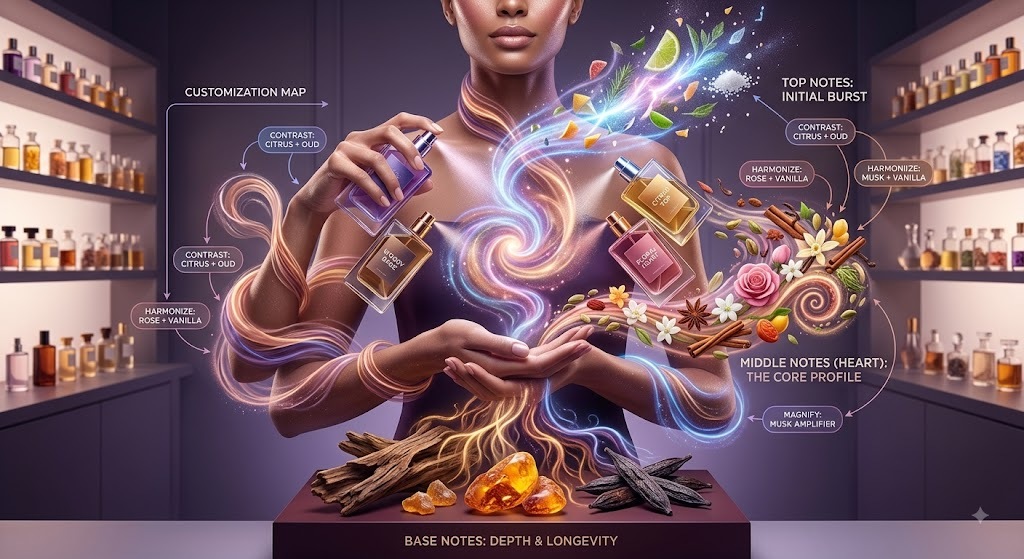
    A well-crafted perfume evolves over time across three distinct layers. Top notes deliver the bright initial impression during the first 15 minutes, typically featuring volatile citrus, light berries, or fresh herbs.

    As the top notes evaporate, the heart (or middle) notes emerge to define the character of the scent for the next 2 to 4 hours. Heart notes usually feature florals like rose and jasmine, spices such as cardamom, or aromatic green elements.

    Finally, base notes anchor the composition. Rich ingredients like sandalwood, amber, vanilla, oakmoss, and musks dry down onto your skin, lingering for hours and forming the lasting impression left on your clothes.

    The Four Core Scent Families

    To build versatility into your collection, aim for representation across the four primary olfactory categories:

    1. Fresh: Citrus, aquatic, ozonic, and green notes. Clean, energetic, and indispensable for hot weather.
    2. Floral: Jasmine, tuberose, neroli, lavender, and rose. Ranging from bright and airy to deep and velvety.
    3. Woody: Cedarwood, vetiver, patchouli, and rich sandalwood. Grounding, sophisticated, and dependable for professional environments.
    4. Amber / Warm (Gourmand & Oriental): Vanilla, amber, tonka bean, cinnamon, and incense. Cozy, romantic, and alluring during cold months.

    The Essential Framework: The 4-Bottle Fragrance Wardrobe

    When learning how to build a fragrance wardrobe from scratch, starting small is the golden rule. A minimalist 4-bottle collection ensures you are perfectly scented for any scenario throughout the year without overspending.

    1. The Everyday Signature (Fresh & Professional)

    Your daily driver needs to be clean, versatile, and mass-appealing. It should feel effortless whether you are wearing a t-shirt, running errands, or sitting in a cozy office space.

    Look for versatile compositions featuring bergamot, light vetiver, lavender, or subtle aquatic notes. Excellent benchmarks include Bleu de Chanel EDT, Prada L’Homme, Montblanc Explorer, or Versace Dylan Blue. These scents radiate neatness and subtle elegance without overwhelming colleagues in tight quarters.

    2. The Hot Weather Refresher (Citrus & Aquatic)

    When summer heat hits 90°F (32°C), heavy spices and sweet vanillas become cloying and suffocating. You need a crisp scent that cuts through humidity like a cool ocean breeze.

    Target fragrances loaded with lemon, grapefruit, sea salt, neroli, or mint. Standout examples include Dolce & Gabbana Light Blue Intense, Acqua di Gio Profondo, Rochas Man, or budget classics like Nautica Voyage. These act as instant sensory energy boosts on sweltering days.

    3. The Cold Weather Cozy (Woody, Warm & Gourmand)

    Crisp autumn air and bitter winter winds call for rich, comforting scent clouds. Warm ingredients interact beautifully with cold air, projecting a welcoming warmth.

    Focus on notes of cozy vanilla, rich tobacco, roasted tonka bean, amber, and cedar. Icons in this category include Spicebomb Extreme, Replica Jazz Club, Creed Royal Oud, or budget treasures like Lattafa Khamrah and Bentley for Men Intense.

    4. The Night Out / Special Occasion (Bold & Magnetic)

    When the sun goes down or you dress up for date nights, galas, and celebrations, your fragrance should make a memorable statement. You want something seductive, sophisticated, and memorable.

    Seek out dark woods, rich iris, leather, spicy cardamom, or warm amber. Classics like Dior Homme Intense, Yves Saint Laurent La Nuit de L’Homme, or Tom Ford Noir Extreme excel in night-out scenarios where you want to leave an intriguing scent trail.

    How to Build a Fragrance Wardrobe From Scratch on Any Budget

    You do not need thousands of dollars to curate a world-class scent collection. Here is how to allocate your budget effectively at three distinct price brackets.

    The Starter Budget: Under $100 Total

    Building a complete collection for under $100 sounds challenging, but smart hunting makes it simple:

    • Daily Driver ($25): Montblanc Individual or Afnan 9PM — clean, long-lasting, and universally liked.
    • Warm Weather ($20): Nautica Voyage — the undisputed budget king of fresh aquatic apple and lotus.
    • Cool Weather ($30): Lattafa Khamrah — a lush, spicy cinnamon and vanilla gourmand that punches way above its price tag.
    • Evening/Date Night ($25): Caron Un Homme or Zara Tobacco Collection Rich Warm Addictive — cozy, smooth, and alluring.

    The Balanced Budget: $250 to $350 Total

    This sweet spot opens up high-performing designer classics that deliver premium ingredients and iconic bottle designs:

    • Daily Driver ($80): Prada L’Homme or Versace Pour Homme — ultra-clean, soapy, and impeccably professional.
    • Warm Weather ($70): Dolce & Gabbana Light Blue Intense — incredible salty grapefruit longevity for hot days.
    • Cool Weather ($100): Viktor&Rolf Spicebomb Extreme or Azzaro Wanted by Night — rich, spicy, and warm.
    • Evening/Date Night ($80): YSL La Nuit de L’Homme or Guerlain L’Homme Idéal EDP — seductive almond, leather, and cardamom.

    The Luxury Connoisseur Budget: $600+ Total

    For those ready to invest in niche craftsmanship, rare raw materials, and artistic bottle art:

    • Daily Driver ($220): Creed Aventus or Parfums de Marly Sedley — sparkling, authoritative, and memorable.
    • Warm Weather ($200): Xerjoff Renaissance or Acqua di Parma Fico di Amalfi — hyper-realistic Mediterranean citrus and fig.
    • Cool Weather ($250): Maison Francis Kurkdjian Grand Soir or Tom Ford Tobacco Vanille — opulent amber and velvety spices.
    • Evening/Date Night ($240): Frederic Malle Musc Ravageur or Nishane Ani — hypnotic, complex vanilla and spicy wood notes.

    5 Critical Mistakes to Avoid When Starting Your Collection

    Avoiding common pitfalls will save you hundreds of dollars and prevent olfactory fatigue.

    1. Blind Buying Based on Online Hype

    Social media trends can persuade you to buy fragrances without testing them first. Scent chemistry varies wildly from person to person. A fragrance that smells incredible on a reviewer might turn sour, powdery, or overly sweet on your skin. Always test before buying a full bottle.

    2. Buying Too Many Similar Fragrances

    It is easy to fall in love with one specific note—like sweet vanilla or fresh bergamot—and accidentally purchase five bottles that serve the exact same purpose. Ensure every bottle in your wardrobe has a distinct job to do.

    3. Ignoring Paper vs. Skin Performance

    Testing a perfume on a paper strip only reveals top notes and early heart notes. Fragrances require heat, natural moisture, and skin oils to develop their true character over several hours. Never buy a bottle based solely on a 5-second paper test.

    4. Storing Bottles in the Bathroom

    Humidity, steam, and constant temperature swings inside a bathroom break down fragrance molecules quickly, spoiling expensive juices within months. Store your bottles in a cool, dark place like a bedroom closet or dedicated drawer away from direct sunlight.

    5. Over-Applying in Shared Spaces

    More is not always better. Excessive spraying can trigger headaches for people around you. Stick to 2–4 sprays for office or travel environments, focusing on warm pulse points like your neck and wrists.

    5 Critical Mistakes to Avoid When Starting Your Collection

    Insider Pro Tips to Stretch Your Fragrance Dollars

    Unlocking maximum value requires leveraging smart industry tactics known to perfume enthusiasts.

    For deeper insights into extending performance, check out our guide on.

    Leverage Decants and Discovery Sets

    Before committing to a $200 bottle, purchase 2ml to 10ml decants from reputable sampling services or official brand discovery sets. A 10ml decant provides roughly 120 sprays, giving you weeks to test performance in real-world settings.

    Shop Discounters, Not Department Stores

    Full-price retail stores charge maximum MSRP. Authorized online discounters sell genuine, factory-sealed fragrances at 30% to 70% off retail prices by sourcing overstock directly from distributors.

    Explore Middle Eastern Niche Houses

    Brands like Lattafa, Rasasi, Afnan, and Armaf have revolutionized the industry by offering high-quality EDP concentrations featuring rich woods, resins, and ambers at a fraction of Western designer prices.

    Smart Storage and Seasonal Rotation Secrets

    Proper care ensures your fragrance investment lasts for decades without losing potency or altering scent profiles.

    The Ideal Storage Environment

    Keep your bottles away from three major enemies: heat, direct sunlight, and moisture. Direct UV light breaks down chemical bonds in fragrance oils, darkening the juice and turning top notes rancid. Keep your collection inside a dresser, dark wardrobe, or vanity cabinet maintained between 60°F and 72°F (15°C–22°C).

    Rotating by Season

    Organize your shelf twice a year. As spring arrives, move heavy gourmands, thick ambers, and smoky leather scents to the back of your cabinet, bringing forward your energetic citruses, aquatics, and light florals. When autumn chill returns, reverse the layout.

    Conclusion

    Knowing how to build a fragrance wardrobe from scratch is an enriching journey that blends personal expression, sensory pleasure, and practical budget management. By focusing on versatile scent families, testing on skin before buying, and leveraging decants and discounters, you can curate a stunning collection tailored to your lifestyle. Start with two or three versatile bottles, learn what notes resonate with your skin, and enjoy every step of finding your signature scent profile.

    Did you find this guide helpful? Drop a comment below sharing your current favorite fragrance, or pass this article along to a fellow scent enthusiast!

    Smart Storage and Seasonal Rotation Secrets

    Frequently Asked Questions

    How many bottles do I need to build a fragrance wardrobe from scratch?

    A minimal, highly functional collection requires just 3 to 4 bottles: one versatile daily driver for work, one fresh scent for hot summer days, one cozy warm option for winter, and one alluring fragrance for date nights or formal events.

    What is the best way to test new fragrances before buying?

    Apply one or two sprays directly to your wrist or inner elbow and wear it for at least 6 to 8 hours. This allows you to experience the full evolution from top notes to the dry down while evaluating how it reacts with your natural skin chemistry.

    Can I wear winter fragrances during the summer?

    It is generally not recommended. Winter fragrances contain heavy base notes like vanilla, amber, and spices that expand aggressively in high heat and humidity, making them feel cloying and overwhelming to you and those nearby.

    Where should I apply perfume for the best longevity and projection?

    Apply to pulse points where body heat naturally projects scent: the sides of your neck, behind your ears, on your wrists, and inside your elbows. Spraying clean clothes also extends longevity, as fabric holds onto fragrance molecules longer than skin.

    Do perfumes expire after a few years?

    Unopened or properly stored fragrances kept away from heat, air, and sunlight can last 5 to 10+ years without degrading. If a perfume changes color drastically or smells vinegary and sour upon spraying, the top notes have likely oxidized.

    Is it better to buy Eau de Toilette or Eau de Parfum?

    Neither is inherently better; it depends on your performance needs. Eau de Toilette (EDT) offers brighter, fresher projection ideal for daytime and warm weather, whereas Eau de Parfum (EDP) provides richer depth and longer wear for evening or cool-weather settings.

    Best Arabic Perfumes Under $30 That Smell Like $200 Bottles

  • What Is Fragrance Wardrobing and Why Everyone Is Doing It in 2026

    What you’ll learn

    • The exact definition of fragrance wardrobing and how it differs from having a single signature scent.
    • Why beauty lovers, minimalist dressers, and fragrance enthusiasts are switching to scent curation in 2026.
    • A step-by-step framework to curate your personal scent rotation based on seasonal notes, occasions, and personal emotional vibes.
    • Advanced layering techniques, common mistakes to avoid, and expert advice to optimize your perfume longevity.

    Introduction

    Imagine wearing a heavy wool winter coat to a breezy midday beach party in July. You would feel completely out of place, uncomfortably warm, and visually misaligned with your surroundings. Yet, for decades, millions of people applied the exact same scent every single day, regardless of whether they were sitting in a corporate board meeting, lifting weights at the gym, or attending an intimate candlelit dinner.

    If you are curious about what is fragrance wardrobing and why everyone is doing it right now, you are not alone. The era of clinging to a single, locked-in signature perfume has officially shifted. Fragrance lovers across the world are embracing perfume rotation as an expressive, deeply personal art form. Scent connects directly to the brain’s emotional center, making your perfume choice a powerful tool for your daily mindset.

    Instead of relying on one bottle to do all the heavy lifting, scent wardrobing allows you to curate a deliberate collection of perfumes tailored to your mood, schedule, setting, and outfit. It gives you complete creative freedom over your personal olfactory signature. Let’s dive in.

    Why the Single “Signature Scent” Is Fading Fast

    For generations, the perfume industry sold us a romantic ideal: the elusive “signature scent.” We were told that finding one iconic bottle—and wearing it exclusively for decades—was the ultimate mark of personal elegance and sophistication.

    While the idea of leaving a single recognizable trail sound charming, modern lifestyle realities have transformed how we approach beauty. Wearing a rich, smoky oud to an early morning yoga class feels just as mismatched as wearing a crisp, watery citrus cologne to a black-tie winter gala.

    Why the Single Signature Scent Is Fading Fast

    Furthermore, wearing the exact same perfume every day inevitably leads to olfactory fatigue—commonly known as nose-blindness. Your brain quickly adapts to familiar scents, rendering your beloved perfume virtually invisible to your own senses after a few weeks of continuous application.

    By rotating your fragrances thoughtfully, you reset your olfactory receptors constantly. This rotation ensures that you actually get to enjoy the vibrant opening, developing heart notes, and cozy dry-down of your favorite perfumes every time you spray them.

    What Is Fragrance Wardrobing and How Does It Work?

    At its core, fragrance wardrobing is the practice of curating a versatile collection of scents that function like an actual clothing closet. Just as your wardrobe contains casual denim, crisp office button-downs, cozy loungewear, and formal evening attire, your scent wardrobe houses distinct fragrance profiles designed for specific settings, weather conditions, and emotional states.

    Understanding what is fragrance wardrobing and why everyone is doing it starts with recognizing that fragrance is an invisible extensions of your personal aesthetic. Rather than hoarding dozens of random bottles that gather dust on a vanity, a true scent wardrobe is intentionally built. It relies on balance, harmony, and functional variety.

    A well-constructed fragrance wardrobe usually ranges anywhere from four to eight key bottles. Each bottle serves a clear purpose, ensuring you never feel overwhelmed by choices while remaining prepared for every item on your calendar.

    Why Scent Wardrobing Has Exploded in Popularity

    The global perfume industry has experienced a massive boom over the past few years. According to industry market analysis, the global niche fragrance market is projected to reach over $60 billion in the coming years, driven largely by younger consumers who prioritize personalization and mood-boosting self-care over generic mass-market trends.

    Consumers no longer want to smell like everyone else in the room. They want unique, artisanal blends that reflect their individual complexity. Fragrance wardrobing fulfills this demand by putting the consumer in the driver’s seat as the creative director of their own sensory experience.

    Another key driver behind this cultural shift is wellness and aromatherapy integration. Modern fragrance wearers view scent as a functional tool to regulate their nervous system. A bright bergamot can energize a slow morning, while a soothing sandalwood can ground you during a high-stress workday.

    The Essential Pillars of a Balanced Fragrance Wardrobe

    Building a functional scent wardrobe does not require spending thousands of dollars on luxury bottles immediately. Instead, it requires thoughtful selection across key fragrance categories. Here are the core pillars every well-rounded collection should feature.

    1. The Crisp Daily Driver (Fresh & Clean)

    This is your effortless, low-maintenance scent. Think sparkling citrus notes like Italian bergamot, green tea, bright neroli, crushed leaves, or airy aldehyde accords.

    Your daily driver is non-intrusive, clean, and universally pleasant. It works brilliantly for casual errands, post-workout refreshment, or quiet work-from-home days when you want to feel pulled together without overpowering those around you.

    2. The Professional Anchor (Polished & Grounded)

    Your workplace or formal daytime scent should project subtle confidence, professionalism, and calm authority. Vetiver, cedarwood, soft iris, powdery violet, and clean white musks shine in this category.

    Options featuring notes of smooth sandalwood or dry cedarwood give off a composed, grounded energy. These scents stay relatively close to the skin, creating an inviting aura rather than an aggressive cloud during client meetings or long sessions in enclosed office spaces.

    3. The Romantic Evening Statement (Sensual & Warm)

    When the sun goes down and you transition to evening events, date nights, or special celebrations, your fragrance profile should evolve too. This pillar leans into warm, rich, and seductive scent families.

    Look for deep amber bases, velvety rose, spiced vanilla, warm leather, and dark patchouli. Scents in this category leave a memorable trail (known in the perfume world as sillage) that complements evening lighting, formal fabrics, and intimate conversations.

    4. The Seasonal Specialist (Cozy Winter or Sun-Drenched Summer)

    Finally, every complete scent wardrobe needs dynamic options tailored to extreme weather shifts. Temperature drastically affects how perfume performs on human skin.

    In extreme heat, heavy gourmand scents packed with sweet vanillas or resinous ouds can quickly become cloying and suffocating. Conversely, light citrus eau de colognes tend to evaporate within minutes in freezing winter winds. Having dedicated high-heat freshies and cold-weather cozy fragrances keeps your rotation seasonally aligned.

    How to Build Your Fragrance Wardrobe: Step-by-Step

    Creating your personalized scent lineup should be an enjoyable, sensory journey. Follow this structured step-by-step process to build a rotation that fits your lifestyle without overspending.

    1.Audit Your Current Bottle Collection:Clear out what no longer serves your lifestyle.

    Begin by evaluating the bottles you already own. Spray each one on a testing strip and note how it makes you feel. Group them into categories: daytime freshies, evening warmers, professional clean scents, or seasonal specials. Identify where you have duplicates and where you have clear gaps in your rotation.

    2.Identify Your Primary Scentscapes:Align fragrances with your actual routine.

    Take a realistic look at your weekly schedule. If you work remotely four days a week, your collection should skew heavily toward clean, uplifting daily drivers rather than heavy formal evening extraits. Tailor your scent allocations directly to where you spend 80% of your actual time.

    3.Sample Thoroughly Before Buying Full Bottles:Never blind-buy based on opening notes alone.

    Avoid buying a full-sized 100ml bottle immediately after a single spray on paper at a department store counter. Order 2ml to 5ml travel decants or discovery sets. Wear a fragrance on your actual skin for an entire day to test its true performance, longevity, and base-note dry-down before making a financial commitment.

    4.Organize and Store Your Collection Properly:Protect your investment from heat and light degradation.

    Fragrance molecules degrade when exposed to heat, air, and direct UV sunlight. Store your curated wardrobe in a cool, dark place like a bedroom closet or dedicated dresser drawer. Avoid keeping precious bottles on bathroom counters where shower humidity and temperature spikes will break down delicate top notes over time.

    The Art of Fragrance Layering: Next-Level Customization

    Once you master basic rotation, the true fun of fragrance wardrobing begins with scent layering. Perfume layering involves combining two or more complementary fragrances directly on your skin to create a completely custom signature blend that nobody else can replicate.

    The Art of Fragrance Layering Next-Level Customization

    Layering is a powerful technique that allows you to stretch a four-bottle wardrobe into dozens of unique combination possibilities. However, it requires a basic understanding of note harmony to avoid chaotic results.

    Simple Rules for Flawless Scent Layering

    • Apply the Heavy Scents First: Always spray your dense, heavy base notes—such as woody, amber, or vanilla fragrances—first. Allow them a moment to settle into the skin before applying lighter floral or citrus scents on top. This prevents the lighter notes from being suffocated.
    • Keep Ingredients Simple: When combining two perfumes, choose bottles that feature relatively clean, minimalist note pyramids. Combining two highly complex, 30-ingredient vintage perfumes usually results in a murky, overwhelming aroma clash.
    • Anchor with Single-Note Molecules: Modern synthetic molecule fragrances (like Iso E Super, Ambroxan, or clean white musks) act as brilliant priming bases. Spraying a single-molecule base coat boosts the projection and longevity of lighter fresh scents applied over them.

    Common Fragrance Wardrobing Mistakes to Avoid

    Even seasoned perfume lovers can make simple errors when putting together their daily lineups. Avoid these frequent pitfalls to keep your scent wardrobe performing at its absolute peak.

    Buying for the Opening Notes Instead of the Dry-Down

    The top notes of a fragrance are designed to be bright, sparkly, and immediately attractive to tempt impulse buyers at the retail counter. However, top notes evaporate within the first 15 to 30 minutes. Always judge a potential addition to your wardrobe by its heart and base notes after it has settled on your skin for at least two hours.

    Ignoring Your Skin Chemistry and Climate

    Fragrance reacts uniquely with human skin lipids, natural body temperature, and ambient humidity. A woody oriental perfume that smells divine on your best friend might turn overly sharp or excessively sweet on your skin. Always test fragrances on your own body in your local climate conditions before deciding if it deserves a permanent spot in your rotation.

    Rubbing Your Wrists Together After Spraying

    This is perhaps the most widespread perfume habit, and it damages scent integrity. Friction creates heat that breaks down delicate top-note molecules prematurely and disrupts the intended natural development phase of the fragrance formula. Spray your pulse points gently and let the liquid dry naturally on your skin.

    Pro Advice for Maximizing Longevity and Projection

    Building an incredible fragrance wardrobe is only half the battle; ensuring your scents actually last throughout the day requires proper application technique.

    Hydrate Your Skin Before Spraying

    Dry skin is the absolute enemy of fragrance longevity. Perfume oil absorbs rapidly into dry pores, causing the scent to disappear within hours. Apply an unscented lotion or a light layer of jojoba oil to your application points right after showering before spraying your chosen perfume. The moisture layer locks fragrance molecules onto the surface of your skin for significantly longer wear times.

    Target Strategic Pulse Points

    Pulse points generate natural body heat, which helps gently diffuse fragrance into the air around you throughout the day. Target key warm zones:

    • Behind the ears: Ideal for subtle sillage when greeting people.
    • Base of the neck: Excellent for creating an inviting personal scent bubble.
    • Inside the elbows: Radiates scent warmth during arm movements without washing off during handwashing routines.
    • Chest area: Allows warm scent projection to drift upward through your clothing layers naturally.

    Spray Fabrics and Hair for Extended Sillage

    Skin chemistry eventually breaks down perfume oils through natural sweat and body oils. However, natural fabrics like wool scarves, cashmere sweaters, and cotton shirts hold onto scent molecules for days. A light mist on your clothing or the ends of your hair ensures your fragrance leaves an elegant trail long after skin application has dried down.

    Spray Fabrics and Hair for Extended Sillage

    How to Curate a Minimalist 4-Bottle Wardrobe

    If you prefer a streamlined, clutter-free vanity, you do not need dozens of bottles to achieve full coverage. Here is the ultimate 4-bottle layout that covers every season, dress code, and occasion effortlessly:

    By keeping your collection tightly curated around these four distinct scent pillars, you maintain complete versatility while keeping your vanity looking organized and intentional.

    Conclusion

    Understanding what is fragrance wardrobing and why everyone is doing it opens up an exciting new dimension of personal styling and self-expression. Moving away from the static, single-bottle mentality allows you to align your sensory presentation with your evolving moods, seasons, and daily goals.

    Curating a scent wardrobe isn’t about accumulating endless bottles—it’s about intentionality. By picking high-quality scents that suit specific moments, learning the subtle art of layering, and practicing smart application techniques, you elevate your daily routine into a memorable ritual. Start small, sample broadly, trust your own nose, and enjoy building an expressive sensory lineup that is uniquely yours.

    Did you find this guide helpful? Drop a comment below with your current go-to scent rotation, or share this post with a fellow fragrance lover!

    Frequently Asked Questions

    Q1: What is fragrance wardrobing in simple terms?

    Fragrance wardrobing is the practice of collecting and rotating several different perfumes based on your daily mood, outfit, season, or specific occasion. Instead of wearing one single signature scent every day, you choose a fragrance that fits your current setting just like selecting clothing from a closet.

    Q2: How many perfumes should be in a basic scent wardrobe?

    A well-balanced starter fragrance wardrobe typically consists of 3 to 5 bottles. This usually includes a fresh daytime option for work and casual wear, a warmer evening scent for date nights, a rich seasonal fragrance for cold weather, and a versatile clean option for everyday use.

    Q3: Does fragrance wardrobing cause perfumes to go bad before finishing them?

    If stored correctly, high-quality perfumes usually last 3 to 5 years (and often much longer). To prevent degradation while rotating through a wardrobe, store your bottles away from direct sunlight, heat sources, and bathroom humidity. Keeping them in a cool bedroom drawer or original box keeps the formulas stable for years.

    Q4: Can you layer different perfumes from different brands?

    Yes, absolutely! You can layer fragrances from completely different brands, price points, and scent families. The key is to blend simpler fragrance profiles so the notes do not clash. Applying a heavy base scent first and layering a lighter fresh scent on top works exceptionally well regardless of brand.

    Q5: Is fragrance wardrobing expensive to start?

    Not at all. You do not need to purchase full 100ml luxury bottles to build a great scent wardrobe. You can start by purchasing official brand discovery sets, travel sprays (10ml size), or sample decants. This approach allows you to build a versatile 5-bottle wardrobe at a fraction of the cost of one full-sized designer bottle.

    Q6: How do I choose the right fragrance for a job interview?

    For professional environments like job interviews, choose a light, clean, and non-intrusive scent. Fragrances featuring soft iris, fresh vetiver, light white musk, or subtle tea notes work best. Apply lightly (1 to 2 sprays maximum) so your fragrance stays close to your skin without distracting anyone in an enclosed office space.

    What Is Attar Perfume? The Ancient Oil Fragrance Explained

  • Best Zara Perfumes 2026: Affordable Designer-Inspired Fragrances
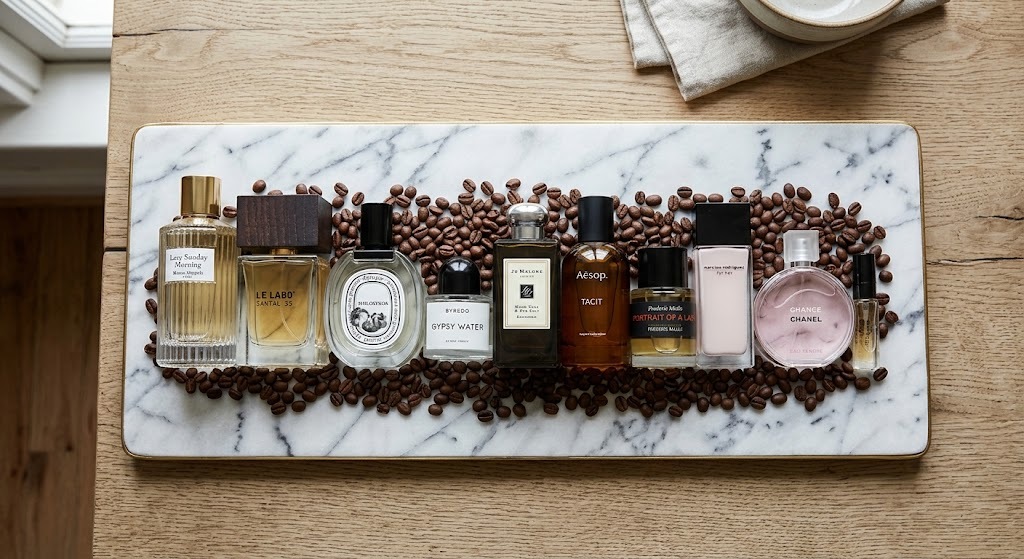
    What you’ll learn

    • Why Zara has quietly become one of the most talked-about names in affordable fragrance
    • The best Zara perfumes 2026 has to offer, broken down by scent family
    • How to layer, store, and shop Zara fragrances like a pro
    • Common mistakes people make when buying budget fragrance — and how to avoid them

    Introduction

    Walk into any Zara store in 2026 and you’ll notice something strange happening near the checkout counter: a small crowd, hovering over a rack of sleek glass bottles. They’re not there for the clothes. They’re there for the best Zara perfumes 2026 has to offer, and honestly, it makes sense.

    Zara’s fragrance line has gone from a checkout-line afterthought to a genuine phenomenon, with TikTok and Reddit threads dissecting which bottles smell closest to fragrances that cost five times as much. Bottles that once sat untouched now sell out within days of restocking.

    If you’ve ever wondered whether a $20 bottle can really hold its own next to a $150 designer counterpart, you’re about to find out. We’re breaking down the standout scents, the science behind why they smell so good, and how to build a fragrance wardrobe without draining your bank account.

    Let’s dive in.

    Why Zara Perfume Has Become a Fragrance Community Obsession

    A few years ago, “cheap perfume” was almost a punchline in fragrance circles. Thin, synthetic, gone in twenty minutes. Zara changed that conversation.

    The brand started working with perfumers who also develop scents for major fragrance houses, and it shows. Many Zara fragrances use higher concentrations of aromatic compounds than typical drugstore sprays, landing closer to eau de parfum territory in both feel and longevity.

    There’s also a simple economic reason this matters. The global fragrance market was valued at well over $50 billion in recent years, and a huge portion of that spending goes toward brand name and packaging rather than the juice inside the bottle. Zara essentially strips away the marketing markup and passes the savings to you.

    That’s the appeal of Zara perfume dupes: similar DNA, a fraction of the price, and none of the guilt about spraying too liberally.

    Why Zara Perfume Has Become a Fragrance Community Obsession

    The Best Zara Perfumes 2026: A Scent-by-Scent Breakdown

    Not every Zara fragrance is a home run, so let’s get specific. These are the bottles fragrance lovers keep coming back to this year.

    Zara Emotions Collection: The Crowd Favorite

    The Emotions line is where Zara really found its footing. Each scent is named after a feeling — think Golden Desire, Wanderlust, and Midnight Rush — and they lean into rich, layered compositions rather than single-note simplicity.

    Golden Desire, in particular, has drawn comparisons to warm, amber-vanilla designer scents that retail well into the hundreds. It opens with a bright citrus burst, softens into spiced florals, and settles into a cozy vanilla-musk base that lingers on skin for six to eight hours.

    What makes this collection stand out is the sillage — the trail a scent leaves as you move. Most budget fragrances stay close to the skin. The Emotions line actually projects, which is rare at this price point.

    Zara Vibrant Leather: The Unexpected Standout

    Leather scents are notoriously hard to pull off. Too often they read as harsh or overly synthetic. Vibrant Leather manages a smooth, slightly smoky leather note balanced with saffron and a touch of woody amber.

    It’s become a go-to recommendation for anyone wanting a unisex, evening-appropriate scent without committing to a designer leather fragrance that can run over $200.

    Zara Nuit: Nighttime Elegance on a Budget

    Nuit is the sleeper hit of 2026. Dark berries, black pepper, and a base of soft musk and cedarwood make this one feel intentionally moody — perfect for date nights or winter evenings.

    Reviewers consistently note that it wears closer to a niche fragrance than a mall-brand spray, which is exactly the reputation Zara has been chasing.

    Zara Nuit Nighttime Elegance on a Budget

    How to Shop and Wear Zara Perfumes Like a Pro

    Finding the right bottle is only half the equation. Here’s how to get the most out of your Zara fragrance purchase.

    1. Test on skin, not paper. Zara fragrances often shift once they interact with your body chemistry, so always spray a small amount on your wrist and wait 20–30 minutes before deciding.
    2. Shop early in restock cycles. Popular scents like Golden Desire and Nuit sell out quickly, especially after viral TikTok mentions.
    3. Layer strategically. Many Zara scents pair well with unscented body lotion to extend longevity, since budget fragrances can fade faster than luxury eau de parfums.
    4. Store bottles away from sunlight and heat. This preserves the composition and prevents the top notes from degrading prematurely.
    5. Buy travel sizes first. Zara often releases smaller bottles of new releases, which is a low-risk way to test before committing to a full-size purchase.

    Common Mistakes People Make With Budget Fragrance

    Even fragrance enthusiasts fall into a few predictable traps when shopping affordable scents.

    1: Assuming cheap always means low quality. Price and quality don’t move in lockstep the way they used to. Formulation matters more than the number on the price tag.

    2: Overspraying because it’s inexpensive. Just because a bottle costs less doesn’t mean it should be applied more heavily. Two to three sprays is usually plenty.

    3: Ignoring skin chemistry. A scent that smells incredible on a friend might read completely differently on you. Body oil levels, diet, and even medication can change how fragrance develops.

    4: Chasing “dupe” claims blindly. Not every fragrance marketed as a dupe is a true match. Trust your nose over online hype.

    Expert Tips for Building a Fragrance Wardrobe on a Budget

    A well-rounded fragrance collection doesn’t need a five-figure investment. The key is variety across occasions and seasons.

    Consider pairing a bright, citrusy Zara scent for daytime and office wear with a richer, muskier option — like Nuit or Vibrant Leather — reserved for evenings. This mirrors how perfumers themselves think about “wardrobing” scent, rotating fragrances the way you’d rotate outfits.

    It’s also worth rotating in a signature scent for special occasions, even if the rest of your collection leans budget-friendly. This keeps that one fragrance feeling meaningful rather than everyday.

    Final Recommendations: Which Zara Perfume Should You Buy First?

    If you’re only buying one bottle this year, start with Golden Desire from the Emotions collection. It’s the most universally loved, works across seasons, and gives you the clearest sense of what Zara fragrance can do at its best.

    If you gravitate toward darker, more mysterious scents, Nuit is the better starting point. And if you want something distinctive that doesn’t smell like everyone else’s perfume, Vibrant Leather is worth the search.

    Which Zara Perfume Should You Buy First

    Conclusion

    The best Zara perfumes 2026 has produced prove that great fragrance doesn’t have to come with a designer price tag. From the warm richness of Golden Desire to the moody elegance of Nuit, Zara has built a lineup that genuinely competes with names costing far more.

    Building a fragrance collection is about experimentation, patience, and knowing your own preferences — not just chasing the biggest name on the shelf. With a little research and some skin testing, you can put together a rotation that feels entirely your own.

    Did you find this helpful? Drop a comment below or share this with a fellow fragrance lover!

    Frequently Asked Questions

    Q1: What is the best Zara perfume for everyday wear in 2026? A: Golden Desire from the Emotions collection is widely considered the best all-around option. Its balance of citrus, spiced florals, and warm vanilla musk makes it versatile enough for both office and casual settings, while still offering noticeable longevity throughout the day.

    Q2: Are Zara perfumes actual dupes of designer fragrances? A: Some are closer matches than others. Zara doesn’t officially market its scents as dupes, but several bottles share strong similarities in structure and note composition with well-known designer fragrances, often at a fraction of the cost.

    Q3: How long do Zara perfumes typically last on skin? A: Most Zara fragrances last between four and eight hours, depending on skin type and the specific scent. Richer compositions like Nuit and Vibrant Leather tend to have better staying power than lighter, citrus-forward options.

    Q4: Is Zara perfume good quality for the price? A: Yes, particularly within the Emotions and Vibrant collections. Many bottles use higher concentrations of aromatic compounds than typical drugstore fragrances, giving them noticeably better projection and depth for their price point.

    Q5: Where can I buy Zara perfumes? A: Zara fragrances are available in-store at most Zara locations and through the Zara website. Popular scents can sell out quickly, so checking online availability before an in-store trip can save time.

    Q6: What’s the best Zara perfume for a first-time buyer? A: Golden Desire is the safest and most popular starting point thanks to its broad appeal. From there, first-time buyers can branch into more distinctive scents like Nuit or Vibrant Leather based on personal preference.

    Best Zara Perfumes 2026: Long-Lasting Scents Worth Buying

  • Best Arabic Perfumes Under $30 That Smell Like $200 Bottles

    What you’ll learn

    • Discover top-rated Middle Eastern fragrances that rival luxury designer houses.
    • Learn how to find long-lasting budget perfumes with incredible sillage.
    • Understand the secret behind why Arabic perfumes offer superior concentration and performance.
    • Master the art of smelling expensive without spending a fortune.

    Introduction

    Imagine walking past someone and catching a whiff of rich, warm amber, creamy vanilla, and smoky oud that lingers in the air long after they have gone. You instinctively assume they are wearing a niche designer masterpiece costing well over $200. But what if you could turn heads with that exact same luxury aura for less than the cost of a casual dinner? The market has shifted dramatically, and finding the best Arabic perfumes under thirty dollars has become the ultimate secret weapon for smart fragrance lovers. Middle Eastern perfumery is taking the global beauty industry by storm, offering phenomenal performance, complex flavor profiles, and gorgeous bottles that punch way above their weight class. Let’s dive in.

    The Middle Eastern Fragrance Revolution

    The global fragrance industry is undergoing a massive transformation, largely driven by the explosive popularity of Middle Eastern houses like Lattafa, Armaf, Paris Corner, and Al Haramain. For decades, traditional Western luxury houses dominated the conversation, often charging astronomical prices primarily for marketing and brand prestige rather than raw juice quality. Today, savvy consumers are looking past designer labels and discovering that houses in Dubai and the United Arab Emirates use rich, traditional ingredients like natural oud, high-grade amber, saffron, and dense resins.

    According to market research, the Middle Eastern fragrance segment is one of the fastest-growing sectors in global beauty, fueled by social media creators and TikTok communities praising budget gems. These brands prioritize oil concentration, ensuring that affordable Eau de Parfums (EDPs) outperform expensive Western Eau de Toilettes. By skipping the heavy celebrity endorsements of traditional retail, these brands pass massive savings directly to you.

    The Middle Eastern Fragrance Revolution

    Top Budget Gems That Rival Niche Masterpieces

    Navigating the vast sea of Middle Eastern perfumery can feel overwhelming because hundreds of new releases drop every season. Focusing on proven heavy-hitters makes your search much easier, guaranteeing you get complex blends, smooth transitions, and beast-mode longevity. Let’s break down the best categories to look for when hunting for luxury clones and original masterpieces under $30.

    The Ultimate Woody and Spicy Powerhouses

    If you love deep, complex fragrances that command a room, woody and spicy Arabic profiles are your absolute best bet. Fragrances like Lattafa’s Asad or Khamrah deliver rich sensory experiences built around warm cinnamon, nutmeg, dates, and smoky woods. They effortlessly mimic ultra-expensive gourmand and designer profiles, offering incredible warmth during cooler months. The initial spray hits you with bright spices before settling into a rich, edible, and opulent vanilla-amber dry-down that stays on clothes for days.

    Floral and Fruity Elegance for Everyday Wear

    For those who prefer bright, sparkling, and uplifting scents, budget Arabic houses excel at crafting gorgeous rose, jasmine, and tropical fruit combinations. Think of juicy mangoes mixed with coconut, or crisp white florals laced with whipped cream and soft musks. Perfumes in this category offer incredible versatility, transitioning seamlessly from a bright office environment to a romantic evening out. They rival high-end summer releases from luxury French houses without any synthetic harshness in the opening.

    Rich Oriental Resins and Deep Musks

    True luxury often smells mysterious, resinous, and deeply animalic in the best possible way. Affordable Arabian creations utilize notes of labdanum, frankincense, dark patchouli, and clean white musk to create an aura of pure elegance. These notes bloom beautifully on warm skin, creating a personal scent bubble that feels deeply intimate yet commanding. They offer the kind of rich depth that collectors usually associate with exclusive private-blend collections.

    How to Maximize Performance and Longevity

    Even the best budget perfumes perform even better when you apply them correctly. Follow these simple steps to squeeze every ounce of performance out of your affordable luxury bottles.

    1. Hydrate your skin: Apply an unscented lotion or body oil before spraying. Perfume oils bind much better to moisturized skin than dry skin.
    2. Target pulse points: Spray your neck, inner wrists, and behind your ears where body heat helps diffuse the fragrance naturally throughout the day.
    3. Macerate your bottles: Many authentic Arabic perfumes arrive fresh from the factory. Let your bottle sit in a cool, dark place for a few weeks after spraying it a few times; oxidation deepens the notes and supercharges longevity.
    4. Spray on clothing: Natural fibers like cotton, wool, and cashmere hold onto heavy Middle Eastern fragrance oils significantly longer than skin does.
    5. Store correctly: Keep your bottles away from direct sunlight and humid bathrooms to preserve the integrity of top and middle notes.
    How to Maximize Performance and Longevity

    Common Mistakes People Make With Budget Perfumes

    Buying inexpensive fragrances is exciting, but it is easy to fall into traps that ruin your experience. Avoiding these common mistakes ensures your collection always smells high-end.

    • Judging immediately on the first spray: Many budget Arabic perfumes feature high oil concentrations and alcohol-heavy openings. Give the scent 10 to 15 minutes to settle on your skin before evaluating it.
    • Skipping the maceration period: Panicking because a brand-new bottle feels weak is a classic rookie error. Let the fragrance breathe and mature over a month to unlock its true power.
    • Over-spraying beast-mode juices: Just because a perfume costs $25 doesn’t mean you need ten sprays. Heavy hitters featuring dense oud, caramel, and leather can easily choke out a room if overapplied.
    • Ignoring seasonal suitability: Wearing a thick, suffocating vanilla-oud powerhouse on a scorching 90-degree summer afternoon will overwhelm everyone around you. Match your scent profile to the weather.

    Expert Tips for Building a Budget Collection

    Curating a stellar fragrance wardrobe on a budget requires strategy rather than random impulse buying. Building a versatile collection means you will always have the right scent for any occasion, season, or mood.

    • Diversify your scent profiles: Balance your collection by owning at least one fresh citrus fragrance, one warm sweet gourmand, one professional woody scent, and one bold date-night option.
    • Read community reviews first: Check fragrance enthusiast communities and video reviews to understand whether a budget perfume leans masculine, feminine, or strictly unisex.
    • Check the concentration label: Always look for “Eau de Parfum” (EDP) or “Concentrated Perfume Oil” designations to guarantee maximum longevity for your money.
    • Buy from trusted discounters: Purchase your bottles from authorized stockists or reputable online sellers to avoid counterfeit products.

    Pro Tip: If you want to explore more affordable scent options, check out our detailed guide on to combine cheap scents into unique custom masterpieces.

    Final Verdict on Affordable Middle Eastern Scenting

    Stepping into the world of budget Middle Eastern perfumery completely changes how you look at luxury beauty. You no longer need to empty your savings account or wait for special holiday sales to enjoy complex, high-performing, compliment-getting fragrances. By focusing on the best Arabic perfumes under thirty dollars, you gain access to incredible craftsmanship, stunning bottle designs, and all-day performance. Embrace the journey, experiment with bold new notes, and enjoy smelling like a million bucks while keeping your wallet completely happy.

    Final Verdict on Affordable Middle Eastern Scenting

    Conclusion

    Building an incredible luxury fragrance wardrobe does not require a luxury budget. The modern perfume landscape proves that phenomenal quality, exquisite ingredients, and beast-mode longevity are accessible to everyone willing to look beyond traditional department store counters. Whether you lean toward rich spices, sweet vanillas, or sparkling citruses, the best Arabic perfumes under thirty dollars offer unmatched value and sophistication. Did you find this helpful? Drop a comment below or share this with a fellow fragrance lover!

    Frequently Asked Questions

    Q1: What are the best Arabic perfumes under $30 for beginners? A: For beginners, approachable and crowd-pleasing options include sweet gourmands like Lattafa Khamrah, fresh versatile scents like Armaf Club de Nuit, and warm amber profiles. These fragrances offer smooth, mass-appealing blends that transition easily from casual daytime wear to cozy evening outings without feeling overwhelming or overly medicinal.

    Q2: Why are Arabic perfumes so affordable yet long-lasting? A: Middle Eastern perfume houses manufacture their products in regions with lower production costs and operate with lower retail markup margins compared to Western luxury brands. Furthermore, they heavily emphasize high oil concentrations and traditional maceration techniques, giving you robust Eau de Parfum performance at a fraction of the traditional retail price.

    Q3: Do Arabic perfumes smell synthetic or harsh? A: While ultra-cheap fragrances can sometimes feature sharp openings, reputable Middle Eastern houses use high-quality raw materials, natural resins, and rich spices. Allowing a newly opened bottle to rest and macerate for a few weeks smooths out any initial alcohol harshness, resulting in a rich, smooth, and high-end scent profile.

    Q4: Are Arabic perfumes unisex or gender-specific? A: Many Middle Eastern fragrances are proudly unisex, embracing rich notes of rose, oud, spices, and amber that blend harmoniously on any skin chemistry. However, brands clearly categorize their products, offering everything from ultra-feminine white floral blends to deep, dark, hyper-masculine leather and tobacco powerhouses.

    Q5: How long do Arabic perfume oils and EDPs last on skin? A: Due to high oil concentration standards in Middle Eastern manufacturing, most budget EDPs easily last anywhere from 6 to 10 hours on skin. When sprayed on clothing or natural fibers, many of these fragrances can project strongly throughout the entire day and linger well into the next morning.

    Q6: What does “maceration” mean in perfume collecting? A: Maceration is the process of letting a fragrance sit after its first few sprays introduce oxygen into the bottle. This chemical interaction allows the ingredients to blend more cohesively, often resulting in richer color, deeper notes, and significantly improved longevity over several weeks.

    The Difference Between French Perfumes and Middle Eastern Perfumes

  • Why Middle Eastern Perfumes Last Longer Than Designer Brands

    What you’ll learn

    • The secret chemistry behind high oil concentrations in Arabic perfumery
    • Why traditional maceration processes beat rapid designer mass production
    • How high-quality raw materials like pure oud and ambergris elevate performance
    • Practical tips to make any fragrance last from morning until midnight

    Introduction

    Imagine stepping out the door in the morning, enveloped in a stunning cloud of rich, smoky oud, warm vanilla, and sweet amber. You breeze through your workday, run errands, and head out for dinner—only to realize that your scent is still projecting as strongly as it did at 8:00 AM. If you are used to mainstream department store fragrances fading into a faint skin scent by lunchtime, this experience feels almost magical. However, it is not magic at all.

    Why Middle Eastern perfumes outlast their Western counterparts comes down to a deep-rooted heritage of craftsmanship, higher oil concentrations, and uncompromising raw materials. In the realm of luxury fragrance, the Middle East operates under a completely different philosophy than commercial European and American houses. While many designer brands focus heavily on top notes designed for a quick impulse buy at a perfume counter, Arabic perfumery values depth, evolution, and exceptional staying power.

    Understanding this shift in formulation changes how you shop for scents forever. Let’s dive in.

    The Cultural Heritage of Scent and Longevity

    In Middle Eastern culture, fragrance is not merely an accessory; it is an essential form of self-expression, hospitality, and spiritual connection. The tradition of perfumery in the region spans thousands of years, evolving from ancient trade routes that brought precious resins, spices, and botanicals across the Arabian Peninsula. Because scent carries such profound cultural weight, the standard for quality is remarkably high.

    Historically, perfumery in the Gulf region relied heavily on heavy-hitting, natural ingredients like agarwood (oud), saffron, damask rose, and amber. Unlike modern mass-market production lines that prioritize cost-efficiency, traditional houses view perfume creation as an art form that requires patience. According to industry insights, the global perfume market sees continuous growth, yet consumer frustration over weak performance in mainstream designer releases has driven a massive surge in demand for Middle Eastern alternatives. When you purchase a bottle from renowned houses like Lattafa, Armaf, Swiss Arabian, or Rasasi, you are tapping into a lineage that demands performance and richness above all else.

    The Cultural Heritage of Scent and Longevity

    The Science Behind the Staying Power

    The exceptional longevity of Arabic fragrances is not an accident. It is the direct result of specific formulation choices, high-grade ingredients, and specialized aging techniques that set them apart from standard Eau de Toilettes and Eau de Parfums.

    High Concentration of Pure Oils and Extrait Standards

    The most significant factor determining how long a fragrance lasts is the concentration of aromatic compounds. Mainstream designer brands typically release fragrances as Eau de Toilette (EDT) or Eau de Parfum (EDP), containing anywhere from 5% to 15% fragrance oils, with the remainder being alcohol and water. Conversely, many Middle Eastern fragrances—especially traditional attars and high-end EDPs—boast concentrations that push well into the 20% to 30% range, often rivaling Western Extrait de Parfum categories. Because there is a higher ratio of oil to alcohol, the alcohol evaporates slowly, leaving the heavy, viscous molecules anchored firmly to your skin and clothing.

    The Power of Dense, Heavy Base Notes

    Western perfumery often favors bright, fleeting top notes like sparkling citrus, crisp green apple, or light aquatic accords to appeal to immediate consumer reactions. While these notes smell incredible initially, they disappear within an hour. Middle Eastern perfumery structures its scents differently, building heavy foundations out of dark woods, rich resins, animalic musks, and thick gourmand accords. Ingredients like synthetic or natural oud, patchouli, labdanum, and rich vanilla act as natural fixatives. These dense base notes hold the entire fragrance structure together, anchoring the lighter notes and ensuring the scent develops slowly over the course of twelve hours or more.

    Traditional Maceration and Aging Processes

    Just like fine wine, exceptional perfume improves with time. Many designer brands rush their formulations from the factory straight to retail shelves to meet strict quarterly quotas, resulting in a young juice that lacks harmony and depth. In contrast, prominent Middle Eastern perfume houses prioritize proper maceration. The blended oils and alcohol are left to steep together in giant vats for weeks or months, allowing the chemical bonds to mature fully. This rigorous aging process smooths out sharp edges, deepens the color of the liquid, and drastically enhances both projection and longevity. In fact, many fragrance enthusiasts note that their Middle Eastern perfumes actually get stronger and richer sitting on the shelf over a few months—a phenomenon known as maturation.

    Practical Tips to Maximize Your Fragrance Performance

    Even the most potent long-lasting perfume can benefit from smart application techniques. To get the absolute maximum performance out of your collection, follow these simple steps:

    1. Hydrate Your Skin First: Dry skin drinks perfume, causing the alcohol and oils to break down rapidly. Apply an unscented lotion or body oil before spraying to create a smooth, hydrated barrier that locks the scent molecules in place.
    2. Target Pulse Points Strategically: Spray your fragrance on warm areas of the body where blood vessels sit close to the surface—such as the sides of your neck, behind your ears, and inside your wrists. The body heat helps diffuse the rich oils steadily throughout the day.
    3. Mist Your Clothing and Hair: Natural fibers like cotton, wool, and cashmere hold onto fragrance oils remarkably well. A light mist on your scarf or jacket collar will often smell fresh for days. (Note: Test light-colored fabrics first to avoid oil staining).
    4. Resist the Urge to Rub: Rubbing your wrists together crushes the delicate top and middle notes, causing the fragrance to break down faster and fade prematurely. Let the spray dry naturally on your skin.
    5. Store Your Bottles Correctly: Protect your investment by keeping your perfume bottles away from direct sunlight and extreme temperature fluctuations. A cool, dark drawer or closet keeps the delicate oils stable and prevents premature degradation.
    Practical Tips to Maximize Your Fragrance Performance

    Common Myths and Mistakes with Long-Lasting Fragrances

    Navigating the world of potent fragrances can sometimes lead to confusion. Let’s clear up some common misconceptions and pitfalls that prevent people from enjoying their scents properly.

    One major myth is that “more sprays equal better longevity.” Because Middle Eastern perfumes are intensely concentrated, overspraying can quickly overwhelm people around you, turning a gorgeous, luxurious trail into an aggressive wall of scent. With these formulations, two to three sprays are usually more than enough for a full workday.

    Another mistake is judging a fragrance immediately upon the first spray. High-end Arabic scents often feature intense, complex, and sometimes challenging openings—such as sharp medicinal oud, heavy spices, or deep animalic leather. Panicking and scrubbing it off immediately means missing out on the breathtaking dry-down that unfolds thirty minutes later. Patience is essential when exploring this style of perfumery. Finally, assuming that a higher price tag guarantees better performance is a trap; many affordable Middle Eastern houses outperform luxury European brands costing four times as much.

    Expert Tips for Building a Powerful Fragrance Wardrobe

    Curating a collection of long-lasting scents requires a balance of versatility, mood, and seasonal suitability. Experts recommend starting with a diverse range of scent profiles rather than buying multiple bottles that smell identical. For daily professional wear, look for Middle Eastern compositions that blend clean white musks, soft florals, and light woods—such as creations featuring rose and gentle cashmeran. For cooler weather, evening events, or date nights, lean into decadent gourmands packed with caramel, honey, dark chocolate, and heavy smoky oud.

    Layering is another advanced technique beloved by fragrance connoisseurs. You can apply a rich, creamy vanilla lotion, spray a fruit-forward Arabian perfume over it, and top it with a tiny dab of concentrated oil (attar) on your pulse points. This creates a multi-dimensional scent bubble entirely unique to you. For further inspiration on building a versatile collection, explore our comprehensive guide on to maximize projection.

    Final Recommendations for Your Next Bottle

    Transitioning your collection toward high-performance fragrances opens up an entirely new world of olfactory luxury. You no longer have to carry a decant atomized spray in your bag to reapply every three hours. By investing in houses that prioritize high oil concentrations, traditional maceration, and rich, complex base notes, you ensure that your signature scent makes an unforgettable impression from morning until night.

    Final Recommendations for Your Next Bottle

    Conclusion

    Exploring the vibrant world of Arabic and Middle Eastern perfumery is one of the most rewarding journeys a fragrance lover can undertake. By understanding why Middle Eastern perfumes outlast their designer counterparts, you can make smarter purchasing decisions and enjoy exceptional quality without breaking the bank. From rich oud resins to sweet amber and velvety vanilla, these masterfully crafted juices deliver unmatched longevity, depth, and character.

    Did you find this helpful? Drop a comment below or share this with a fellow fragrance lover!

    Frequently Asked Questions

    Q1: Why do Middle Eastern perfumes last longer than designer brands? A: Middle Eastern perfumes typically feature a much higher concentration of fragrance oils—often reaching Extrait de Parfum levels—combined with heavy base notes like oud, amber, and musk, and a rigorous aging or maceration process that allows the ingredients to meld and strengthen over time.

    Q2: Are Middle Eastern perfumes too strong for daily office wear? A: While some traditional formulations are intensely smoky or animalic, modern Middle Eastern houses produce versatile everyday options. The key is application control; using just one or two sprays is usually enough to maintain a pleasant, subtle scent bubble without overwhelming coworkers.

    Q3: What is an attar, and how is it different from regular perfume? A: An attar is a traditional, natural perfume oil distilled directly from botanical sources into a base of sandalwood oil or carrier oil. Unlike alcohol-based sprays, attars contain zero alcohol, sit intimately on the skin, and react with your body heat to create a long-lasting, evolving scent.

    Q4: Do Middle Eastern perfumes expire or go bad? A: Like all perfumes, they can degrade if exposed to direct sunlight, high heat, or rapid temperature fluctuations. However, because many Arabic perfumes are heavily concentrated and properly macerated, they actually tend to age gracefully and become smoother and stronger over time when stored in a cool, dark place.

    Q5: What are some popular beginner-friendly Middle Eastern perfume brands? A: Excellent entry points into the market include Lattafa, Armaf, Rasasi, Swiss Arabian, Al Haramain, and Paris Corner. These houses offer incredible variety, ranging from sweet gourmands and fresh citrus scents to complex woody ouds at very accessible price points.

    Q6: How can I make my designer perfume last as long as an Arabic fragrance? A: You can boost the longevity of lighter designer scents by applying an unscented moisturizer or body oil before spraying, applying perfume directly to your pulse points and clothing, and avoiding rubbing your wrists together after application.