



What you’ll learn
- The exact definition of fragrance wardrobing and how it differs from having a single signature scent.
- Why beauty lovers, minimalist dressers, and fragrance enthusiasts are switching to scent curation in 2026.
- A step-by-step framework to curate your personal scent rotation based on seasonal notes, occasions, and personal emotional vibes.
- Advanced layering techniques, common mistakes to avoid, and expert advice to optimize your perfume longevity.
Introduction
Imagine wearing a heavy wool winter coat to a breezy midday beach party in July. You would feel completely out of place, uncomfortably warm, and visually misaligned with your surroundings. Yet, for decades, millions of people applied the exact same scent every single day, regardless of whether they were sitting in a corporate board meeting, lifting weights at the gym, or attending an intimate candlelit dinner.
If you are curious about what is fragrance wardrobing and why everyone is doing it right now, you are not alone. The era of clinging to a single, locked-in signature perfume has officially shifted. Fragrance lovers across the world are embracing perfume rotation as an expressive, deeply personal art form. Scent connects directly to the brain’s emotional center, making your perfume choice a powerful tool for your daily mindset.
Instead of relying on one bottle to do all the heavy lifting, scent wardrobing allows you to curate a deliberate collection of perfumes tailored to your mood, schedule, setting, and outfit. It gives you complete creative freedom over your personal olfactory signature. Let’s dive in.
Why the Single “Signature Scent” Is Fading Fast
For generations, the perfume industry sold us a romantic ideal: the elusive “signature scent.” We were told that finding one iconic bottle—and wearing it exclusively for decades—was the ultimate mark of personal elegance and sophistication.
While the idea of leaving a single recognizable trail sound charming, modern lifestyle realities have transformed how we approach beauty. Wearing a rich, smoky oud to an early morning yoga class feels just as mismatched as wearing a crisp, watery citrus cologne to a black-tie winter gala.


Furthermore, wearing the exact same perfume every day inevitably leads to olfactory fatigue—commonly known as nose-blindness. Your brain quickly adapts to familiar scents, rendering your beloved perfume virtually invisible to your own senses after a few weeks of continuous application.
By rotating your fragrances thoughtfully, you reset your olfactory receptors constantly. This rotation ensures that you actually get to enjoy the vibrant opening, developing heart notes, and cozy dry-down of your favorite perfumes every time you spray them.
What Is Fragrance Wardrobing and How Does It Work?
At its core, fragrance wardrobing is the practice of curating a versatile collection of scents that function like an actual clothing closet. Just as your wardrobe contains casual denim, crisp office button-downs, cozy loungewear, and formal evening attire, your scent wardrobe houses distinct fragrance profiles designed for specific settings, weather conditions, and emotional states.
Understanding what is fragrance wardrobing and why everyone is doing it starts with recognizing that fragrance is an invisible extensions of your personal aesthetic. Rather than hoarding dozens of random bottles that gather dust on a vanity, a true scent wardrobe is intentionally built. It relies on balance, harmony, and functional variety.
A well-constructed fragrance wardrobe usually ranges anywhere from four to eight key bottles. Each bottle serves a clear purpose, ensuring you never feel overwhelmed by choices while remaining prepared for every item on your calendar.
Why Scent Wardrobing Has Exploded in Popularity
The global perfume industry has experienced a massive boom over the past few years. According to industry market analysis, the global niche fragrance market is projected to reach over $60 billion in the coming years, driven largely by younger consumers who prioritize personalization and mood-boosting self-care over generic mass-market trends.
Consumers no longer want to smell like everyone else in the room. They want unique, artisanal blends that reflect their individual complexity. Fragrance wardrobing fulfills this demand by putting the consumer in the driver’s seat as the creative director of their own sensory experience.
Another key driver behind this cultural shift is wellness and aromatherapy integration. Modern fragrance wearers view scent as a functional tool to regulate their nervous system. A bright bergamot can energize a slow morning, while a soothing sandalwood can ground you during a high-stress workday.
The Essential Pillars of a Balanced Fragrance Wardrobe
Building a functional scent wardrobe does not require spending thousands of dollars on luxury bottles immediately. Instead, it requires thoughtful selection across key fragrance categories. Here are the core pillars every well-rounded collection should feature.
1. The Crisp Daily Driver (Fresh & Clean)
This is your effortless, low-maintenance scent. Think sparkling citrus notes like Italian bergamot, green tea, bright neroli, crushed leaves, or airy aldehyde accords.
Your daily driver is non-intrusive, clean, and universally pleasant. It works brilliantly for casual errands, post-workout refreshment, or quiet work-from-home days when you want to feel pulled together without overpowering those around you.
2. The Professional Anchor (Polished & Grounded)
Your workplace or formal daytime scent should project subtle confidence, professionalism, and calm authority. Vetiver, cedarwood, soft iris, powdery violet, and clean white musks shine in this category.
Options featuring notes of smooth sandalwood or dry cedarwood give off a composed, grounded energy. These scents stay relatively close to the skin, creating an inviting aura rather than an aggressive cloud during client meetings or long sessions in enclosed office spaces.
3. The Romantic Evening Statement (Sensual & Warm)
When the sun goes down and you transition to evening events, date nights, or special celebrations, your fragrance profile should evolve too. This pillar leans into warm, rich, and seductive scent families.
Look for deep amber bases, velvety rose, spiced vanilla, warm leather, and dark patchouli. Scents in this category leave a memorable trail (known in the perfume world as sillage) that complements evening lighting, formal fabrics, and intimate conversations.
4. The Seasonal Specialist (Cozy Winter or Sun-Drenched Summer)
Finally, every complete scent wardrobe needs dynamic options tailored to extreme weather shifts. Temperature drastically affects how perfume performs on human skin.
In extreme heat, heavy gourmand scents packed with sweet vanillas or resinous ouds can quickly become cloying and suffocating. Conversely, light citrus eau de colognes tend to evaporate within minutes in freezing winter winds. Having dedicated high-heat freshies and cold-weather cozy fragrances keeps your rotation seasonally aligned.
How to Build Your Fragrance Wardrobe: Step-by-Step
Creating your personalized scent lineup should be an enjoyable, sensory journey. Follow this structured step-by-step process to build a rotation that fits your lifestyle without overspending.
1.Audit Your Current Bottle Collection:Clear out what no longer serves your lifestyle.
Begin by evaluating the bottles you already own. Spray each one on a testing strip and note how it makes you feel. Group them into categories: daytime freshies, evening warmers, professional clean scents, or seasonal specials. Identify where you have duplicates and where you have clear gaps in your rotation.
2.Identify Your Primary Scentscapes:Align fragrances with your actual routine.
Take a realistic look at your weekly schedule. If you work remotely four days a week, your collection should skew heavily toward clean, uplifting daily drivers rather than heavy formal evening extraits. Tailor your scent allocations directly to where you spend 80% of your actual time.
3.Sample Thoroughly Before Buying Full Bottles:Never blind-buy based on opening notes alone.
Avoid buying a full-sized 100ml bottle immediately after a single spray on paper at a department store counter. Order 2ml to 5ml travel decants or discovery sets. Wear a fragrance on your actual skin for an entire day to test its true performance, longevity, and base-note dry-down before making a financial commitment.
4.Organize and Store Your Collection Properly:Protect your investment from heat and light degradation.
Fragrance molecules degrade when exposed to heat, air, and direct UV sunlight. Store your curated wardrobe in a cool, dark place like a bedroom closet or dedicated dresser drawer. Avoid keeping precious bottles on bathroom counters where shower humidity and temperature spikes will break down delicate top notes over time.
The Art of Fragrance Layering: Next-Level Customization
Once you master basic rotation, the true fun of fragrance wardrobing begins with scent layering. Perfume layering involves combining two or more complementary fragrances directly on your skin to create a completely custom signature blend that nobody else can replicate.
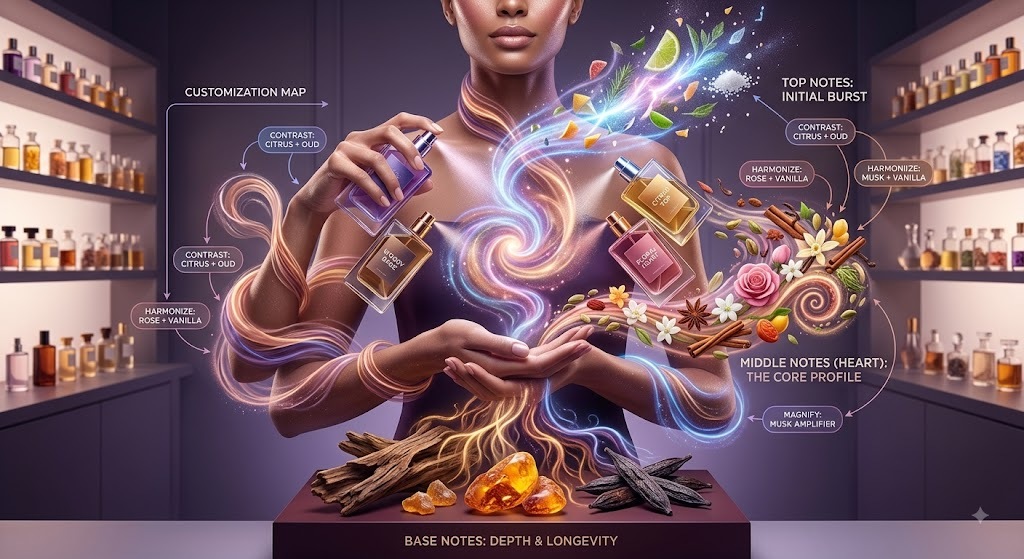
Layering is a powerful technique that allows you to stretch a four-bottle wardrobe into dozens of unique combination possibilities. However, it requires a basic understanding of note harmony to avoid chaotic results.
Simple Rules for Flawless Scent Layering
- Apply the Heavy Scents First: Always spray your dense, heavy base notes—such as woody, amber, or vanilla fragrances—first. Allow them a moment to settle into the skin before applying lighter floral or citrus scents on top. This prevents the lighter notes from being suffocated.
- Keep Ingredients Simple: When combining two perfumes, choose bottles that feature relatively clean, minimalist note pyramids. Combining two highly complex, 30-ingredient vintage perfumes usually results in a murky, overwhelming aroma clash.
- Anchor with Single-Note Molecules: Modern synthetic molecule fragrances (like Iso E Super, Ambroxan, or clean white musks) act as brilliant priming bases. Spraying a single-molecule base coat boosts the projection and longevity of lighter fresh scents applied over them.
Common Fragrance Wardrobing Mistakes to Avoid
Even seasoned perfume lovers can make simple errors when putting together their daily lineups. Avoid these frequent pitfalls to keep your scent wardrobe performing at its absolute peak.
Buying for the Opening Notes Instead of the Dry-Down
The top notes of a fragrance are designed to be bright, sparkly, and immediately attractive to tempt impulse buyers at the retail counter. However, top notes evaporate within the first 15 to 30 minutes. Always judge a potential addition to your wardrobe by its heart and base notes after it has settled on your skin for at least two hours.
Ignoring Your Skin Chemistry and Climate
Fragrance reacts uniquely with human skin lipids, natural body temperature, and ambient humidity. A woody oriental perfume that smells divine on your best friend might turn overly sharp or excessively sweet on your skin. Always test fragrances on your own body in your local climate conditions before deciding if it deserves a permanent spot in your rotation.
Rubbing Your Wrists Together After Spraying
This is perhaps the most widespread perfume habit, and it damages scent integrity. Friction creates heat that breaks down delicate top-note molecules prematurely and disrupts the intended natural development phase of the fragrance formula. Spray your pulse points gently and let the liquid dry naturally on your skin.
Pro Advice for Maximizing Longevity and Projection
Building an incredible fragrance wardrobe is only half the battle; ensuring your scents actually last throughout the day requires proper application technique.
Hydrate Your Skin Before Spraying
Dry skin is the absolute enemy of fragrance longevity. Perfume oil absorbs rapidly into dry pores, causing the scent to disappear within hours. Apply an unscented lotion or a light layer of jojoba oil to your application points right after showering before spraying your chosen perfume. The moisture layer locks fragrance molecules onto the surface of your skin for significantly longer wear times.
Target Strategic Pulse Points
Pulse points generate natural body heat, which helps gently diffuse fragrance into the air around you throughout the day. Target key warm zones:
- Behind the ears: Ideal for subtle sillage when greeting people.
- Base of the neck: Excellent for creating an inviting personal scent bubble.
- Inside the elbows: Radiates scent warmth during arm movements without washing off during handwashing routines.
- Chest area: Allows warm scent projection to drift upward through your clothing layers naturally.
Spray Fabrics and Hair for Extended Sillage
Skin chemistry eventually breaks down perfume oils through natural sweat and body oils. However, natural fabrics like wool scarves, cashmere sweaters, and cotton shirts hold onto scent molecules for days. A light mist on your clothing or the ends of your hair ensures your fragrance leaves an elegant trail long after skin application has dried down.

How to Curate a Minimalist 4-Bottle Wardrobe
If you prefer a streamlined, clutter-free vanity, you do not need dozens of bottles to achieve full coverage. Here is the ultimate 4-bottle layout that covers every season, dress code, and occasion effortlessly:
By keeping your collection tightly curated around these four distinct scent pillars, you maintain complete versatility while keeping your vanity looking organized and intentional.
Conclusion
Understanding what is fragrance wardrobing and why everyone is doing it opens up an exciting new dimension of personal styling and self-expression. Moving away from the static, single-bottle mentality allows you to align your sensory presentation with your evolving moods, seasons, and daily goals.
Curating a scent wardrobe isn’t about accumulating endless bottles—it’s about intentionality. By picking high-quality scents that suit specific moments, learning the subtle art of layering, and practicing smart application techniques, you elevate your daily routine into a memorable ritual. Start small, sample broadly, trust your own nose, and enjoy building an expressive sensory lineup that is uniquely yours.
Did you find this guide helpful? Drop a comment below with your current go-to scent rotation, or share this post with a fellow fragrance lover!
Frequently Asked Questions
Q1: What is fragrance wardrobing in simple terms?
Fragrance wardrobing is the practice of collecting and rotating several different perfumes based on your daily mood, outfit, season, or specific occasion. Instead of wearing one single signature scent every day, you choose a fragrance that fits your current setting just like selecting clothing from a closet.
Q2: How many perfumes should be in a basic scent wardrobe?
A well-balanced starter fragrance wardrobe typically consists of 3 to 5 bottles. This usually includes a fresh daytime option for work and casual wear, a warmer evening scent for date nights, a rich seasonal fragrance for cold weather, and a versatile clean option for everyday use.
Q3: Does fragrance wardrobing cause perfumes to go bad before finishing them?
If stored correctly, high-quality perfumes usually last 3 to 5 years (and often much longer). To prevent degradation while rotating through a wardrobe, store your bottles away from direct sunlight, heat sources, and bathroom humidity. Keeping them in a cool bedroom drawer or original box keeps the formulas stable for years.
Q4: Can you layer different perfumes from different brands?
Yes, absolutely! You can layer fragrances from completely different brands, price points, and scent families. The key is to blend simpler fragrance profiles so the notes do not clash. Applying a heavy base scent first and layering a lighter fresh scent on top works exceptionally well regardless of brand.
Q5: Is fragrance wardrobing expensive to start?
Not at all. You do not need to purchase full 100ml luxury bottles to build a great scent wardrobe. You can start by purchasing official brand discovery sets, travel sprays (10ml size), or sample decants. This approach allows you to build a versatile 5-bottle wardrobe at a fraction of the cost of one full-sized designer bottle.
Q6: How do I choose the right fragrance for a job interview?
For professional environments like job interviews, choose a light, clean, and non-intrusive scent. Fragrances featuring soft iris, fresh vetiver, light white musk, or subtle tea notes work best. Apply lightly (1 to 2 sprays maximum) so your fragrance stays close to your skin without distracting anyone in an enclosed office space.

1 thought on “What Is Fragrance Wardrobing and Why Everyone Is Doing It in 2026”