



What you’ll learn
- Why your morning fragrance behaves differently on your skin compared to your night scent.
- The exact chemical and note differences between uplifting daytime perfumes and sultry evening colognes.
- How temperature, body chemistry, and mood dictate whether you should switch your scent.
- Actionable tips to build a versatile day-to-night fragrance wardrobe without spending a fortune.
Introduction
Imagine waking up to a crisp morning, stepping out of the shower, and misting yourself with a sparkling burst of zesty Italian lemon and fresh white tea. That uplifting aura sets a vibrant tone for your morning commute and early meetings. Yet, when evening arrives, that same breezy citrus spray feels entirely out of place against the dim lights of a cozy dinner lounge. This exact scenario highlights the dynamic world of Morning vs Night Perfumes, a concept that changes how the world experiences your presence.
Fragrance is much more than a pleasant accessory; it is a living, breathing invisible outfit that shifts according to the clock, the weather, and your personal energy. While some purists stick to a single signature scent for life, true fragrance enthusiasts know that swapping your daytime cologne for a richer nighttime blend unlocks an entirely new dimension of self-expression. Let’s dive in.
The Science of Scents: Why Timing Actually Matters
Before exploring specific bottles, understanding how fragrance interacts with your biology is essential. Olfactory science proves that human body temperature fluctuates throughout the day, typically peaking in the late afternoon and evening. Because heat acts as a natural diffuser, warm skin causes perfume molecules to evaporate much faster. This simple physiological fact explains why light, airy morning scents tend to vanish quickly by noon, while heavy evening formulations can feel overwhelmingly loud and cloying if worn under the morning sun.
Furthermore, human perception of smell adapts based on environment and mood. Morning environments call for clean, approachable, and non-intrusive profiles that invite people in. Conversely, nighttime settings allow for mystery, warmth, and depth. Recognizing these shifts helps you curate a balanced fragrance wardrobe rather than forcing one bottle to handle every single hour of your busy lifestyle.
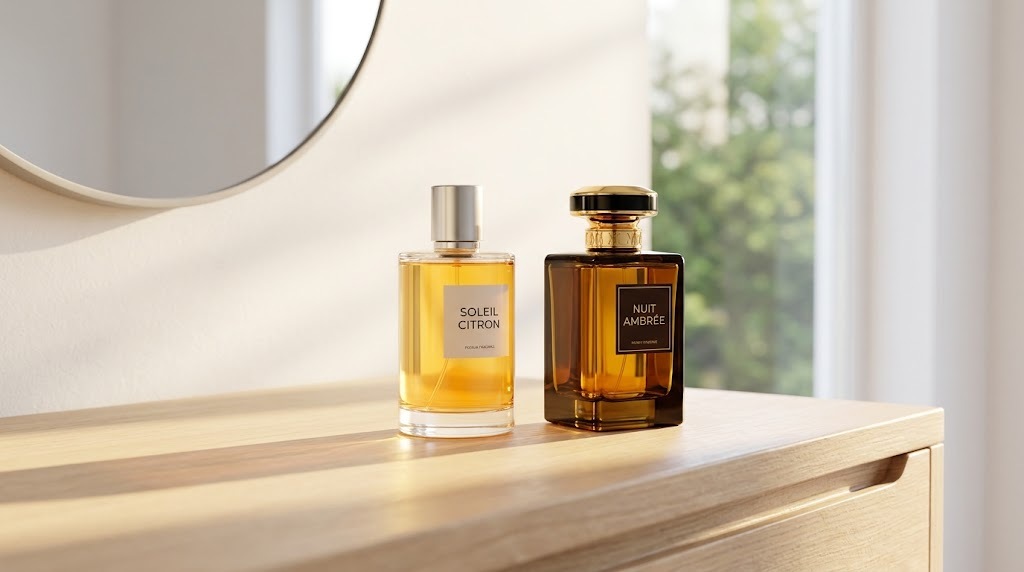
Anatomy of Day and Night Fragrances
The fundamental difference between morning and nighttime scents lies in their composition, concentration, and raw material families. Perfumers construct daytime and nighttime creations with entirely different goals in mind.
The Bright, Energizing World of Daytime Perfumes
Daytime perfumes focus primarily on freshness, clarity, and rejuvenation. When you step out into the world for work, school, or errands, you want a scent profile that communicates approachability and cleanliness. Common daytime notes include crisp citrus fruits like bergamot, grapefruit, and mandarin, alongside invigorating green tea, aquatic accords, and delicate white florals such as lily of the valley and freesia.
These formulations usually lean toward Eau de Toilette (EDT) or Eau de Cologne (EDC) concentrations. Because they feature volatile top notes that evaporate gracefully, they rarely offend colleagues in tight office spaces or crowded public transit. Wearing a bright daytime perfume acts like an instant cup of espresso for your senses, keeping you feeling alert and polished from morning coffee until mid-afternoon.
The Sultry, Complex Nature of Evening Scents
As the sun sets, the fragrance landscape shifts dramatically toward warmth, sensuality, and deep complexity. Evening scents are designed to linger in the air, leaving a captivating sillage as you move through restaurants, theaters, or social gatherings. Master perfumers lean heavily into rich base notes like velvety amber, dark vanilla, smoky oud, earthy patchouli, and animalic musks.
These heavier formulations frequently utilize Eau de Parfum (EDP) or Parfum concentrations, containing higher oil percentages that anchor the scent to your skin and fabric for hours. Where morning scents whisper, evening scents converse with confidence. They require cooler ambient temperatures to unfold properly without becoming cloying, making them the ultimate companions for nightlife and intimate settings.
The Bridge Between: Transitional Scents
Not everyone wants to carry two completely different bottles every single day. Transitional fragrances bridge the gap between morning brightness and evening depth. These versatile compositions often feature a sparkling fruit or floral opening that slowly melts into a warm, woody, or musky base over several hours.
Scents featuring iris, fig, or soft leather frequently serve this dual purpose. They adapt seamlessly to your changing environment, making them ideal for professionals who transition straight from an office desk to an evening dinner date without returning home to refresh.
Practical Steps to Build Your Day-to-Night Rotation
Creating a seamless transition between your morning and evening scent routine does not require an overwhelming collection. Follow these practical steps to build an intentional fragrance wardrobe.
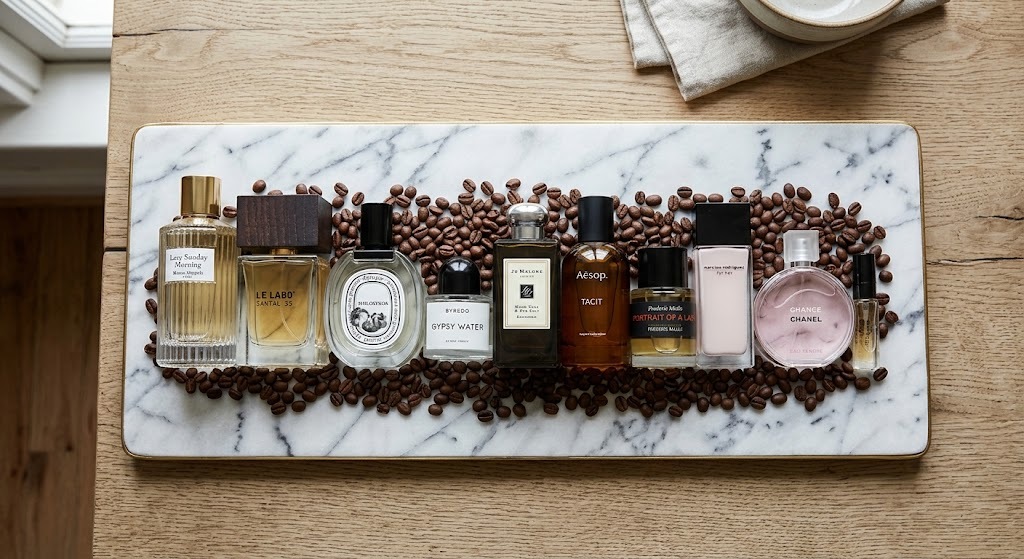
- Audit your current collection: Separate your bottles into two distinct groups based on their primary notes—citrus and fresh versus woody, spicy, and sweet.
- Identify your daily routine: Evaluate how much time you spend in professional versus social environments to determine whether you need more daytime staples or evening powerhouses.
- Invest in complementary profiles: If you love a specific brand, look for its lighter daytime flanker and its richer nighttime counterpart to maintain a consistent personal brand.
- Master the layering technique: Apply a neutral, clean lotion in the morning for your fresh scent, and mist a rich, spicy oil over pulse points in the evening to transform your daytime aura instantly.
- Store properly: Keep your delicate morning citrus bottles away from direct bathroom heat and humidity, ensuring they retain their crisp opening notes for months.

Common Myths About Morning and Night Perfumes
The fragrance community is filled with old wives’ tales and outdated rules that often confuse beginners. Let’s clear up some of the most persistent misconceptions regarding Morning vs Night Perfumes.
One widespread myth claims that wearing heavy oriental or gourmand perfumes during the morning hours is strictly illegal in polite society. While dousing yourself in heavy vanilla-oud at 8 AM in a warm elevator is certainly ill-advised, modern perfumery offers sheer, airy interpretations of sweet and woody notes that wear comfortably during daylight.
Another frequent misconception is that expensive perfumes work equally well at any hour. Price has zero correlation with time-appropriateness. A niche, high-end citrus scent will still fade quickly in a hot nightclub, just as an affordable synthetic vanilla bomb will still suffocate a small office room in July. Understanding note composition always trumps retail price tags when timing your scent application.
Expert Tips and Pro Advice for Longevity
True fragrance longevity relies on application technique as much as the bottle itself. Industry experts know that skin hydration plays a massive role in how morning and evening perfumes project. Always apply your morning citrus scents immediately after a shower onto well-moisturized skin to lock in fleeting volatile molecules.
For evening wear, target pulse points where body heat naturally intensifies—the wrists, the sides of the neck, and behind the knees. Additionally, spraying a touch of your evening fragrance onto the collar of a wool coat or the hem of a scarf creates a gorgeous scent trail that outlasts the evening.
For further reading on maximizing your fragrance collection, check out our guide on. Implementing these minor adjustments dramatically enhances your overall fragrance experience without requiring constant reapplication.
Final Verdict: Should You Switch Your Scents?
Ultimately, splitting your fragrance routine into distinct morning and evening categories elevates your daily ritual from a mundane chore into a mindful act of self-care. Wearing a crisp, energizing scent in the morning prepares your mind for productivity, while slipping into a rich, complex aroma at night signals your brain that it is time to unwind and socialize.
While rigid rules do not exist in the art of perfumery, honoring the natural synergy between notes, temperature, and time of day ensures you always smell your absolute best. Experiment with your collection, trust your nose, and let your mood guide your daily choices.

Conclusion
Navigating the world of Morning vs Night Perfumes is an exciting journey that deepens your appreciation for the artistry of scent. By understanding how temperature, ingredients, and daily environments affect your fragrance, you can effortlessly match your aroma to every moment of your day. Whether you prefer an ultra-fresh citrus burst at dawn or a mysterious amber veil under the stars, your signature style remains entirely your own. Did you find this helpful? Drop a comment below or share this with a fellow fragrance lover!
Frequently Asked Questions
Q1: What are the main differences between morning vs night perfumes? A: Morning perfumes typically feature light, refreshing notes like citrus, green tea, and white florals designed to feel clean and non-intrusive. Night perfumes rely on heavy, warm base notes like amber, oud, vanilla, and spices that project strongly in cooler evening temperatures and social settings.
Q2: Can I wear a night perfume during the morning? A: You can, but you should apply it with a lighter hand. Heavy evening scents can feel overwhelming in professional or warm morning environments, so opting for a single spray or choosing a sheer variant is usually best if you choose to wear them early.
Q3: Why does my daytime perfume fade so quickly? A: Daytime perfumes are usually formulated as Eau de Toilettes or Colognes containing high concentrations of volatile citrus and aquatic top notes. Combined with normal daytime body heat and physical movement, these light molecules evaporate much faster than heavy base notes.
Q4: Do I need to buy separate perfumes for day and night? A: You do not strictly need two separate collections. Many modern fragrances feature versatile, transitional profiles—such as soft musks or woody florals—that bridge the gap between casual daytime wear and elegant evening events seamlessly.
Q5: How many sprays of perfume should I apply in the morning versus at night? A: For morning wear in shared office spaces, 2 to 3 sprays of a light scent are ideal. For evening wear in open social settings or cooler weather, 4 to 5 sprays of a richer Eau de Parfum can be used to ensure proper projection and longevity throughout the night.
Q6: Are expensive perfumes better for nighttime wear? A: Price does not determine whether a fragrance is suited for day or night. Composition and note density dictate timing. Many affordable fragrances offer rich, complex profiles that outperform expensive perfumes in nighttime or cold-weather settings.
What Is Fragrance Wardrobing and Why Everyone Is Doing It in 2026

1 thought on “Morning vs Night Perfumes — Should You Wear Different Scents?”