

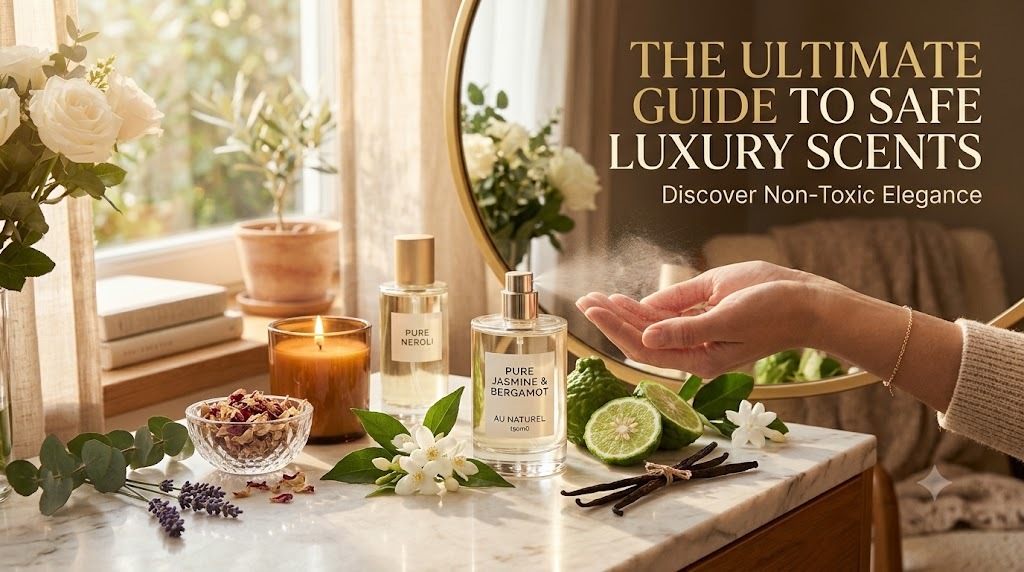
What you’ll learn
- How to identify hidden toxic chemicals lurking in traditional commercial fragrances.
- The critical difference between 100% natural ingredients and safe synthetic alternatives.
- A curated list of the top clean fragrance houses delivering luxury without compromise.
- Practical tips to maximize the longevity of your non-toxic perfumes on the skin.
Introduction
Finding the best clean perfumes shouldn’t mean compromising on sophistication, complexity, or staying power. For decades, the fragrance industry operated behind a veil of secrecy, using the single word “fragrance” or “parfum” on ingredient labels to mask a cocktail of hundreds of undisclosed synthetic chemicals. Many of these hidden compounds are linked to hormone disruption, skin allergies, and respiratory irritation.
Fortunately, a modern fragrance revolution is underway, ushering in an era of unprecedented transparency and artistic formulation. Today, conscious consumers can enjoy breathtaking, high-end olfactory experiences without exposing their bodies to known toxins. Whether you crave a velvety, sun-warmed amber, a crisp, dew-kissed floral, or a sharp, grounding woody blend, the clean beauty market has an exceptional option waiting for you. Let’s dive in.
Why Switching to Clean Fragrance Matters
The traditional perfume industry relies heavily on a legal loophole known as “trade secret” status. This regulation allows brands to protect their proprietary scent formulas by omitting specific chemical ingredients from consumer labels. While this protects intellectual property, it leaves consumers completely in the dark about what they are spraying directly onto their skin and inhaling into their lungs daily.
Recent cosmetic safety studies reveal that conventional perfumes often contain phthalates, synthetic musks, and formaldehyde releasers. Phthalates, specifically diethyl phthalate (DEP), are regularly used as solvents and fixatives to make fragrances last longer. However, clinical research links these chemicals to endocrine disruption, which can interfere with the body’s natural hormone signaling pathways.
Additionally, synthetic musks like galaxolide and tonalide accumulate in human fat tissue and aquatic ecosystems over time. By consciously choosing the best clean perfumes, you actively vote for systemic transparency, personal wellness, and environmental safety. You protect your endocrine system while supporting pioneering brands that prioritize sustainable ingredient sourcing and green chemistry.
Industry Fact: According to report data from the Breast Cancer Prevention Partners, fragrance chemicals comprise a significant percentage of the top hazardous compounds found in personal care products, often flying completely under regulatory radars due to labeling loopholes.

Understanding the Clean Olfactory Landscape
Navigating the world of non-toxic scents requires a bit of education, as the word “clean” is not legally defined by regulatory bodies. To find the best clean perfumes for your lifestyle, you must understand what goes into these modern bottles and how master perfumers create luxury profiles safely.
The Truth About “Safe Synthetics”
A common misconception is that a clean fragrance must be 100% plant-based and organic to be safe. In reality, many of the best clean perfumes utilize a thoughtful blend of responsibly sourced natural botanicals and rigorously vetted “safe synthetic” molecules.
Completely natural perfumes can sometimes trigger severe skin allergies because raw botanical oils contain complex, volatile allergens like tree moss, linalool, and eugenol. Safe synthetics are created in controlled laboratory environments to mimic nature perfectly without the accompanying allergens or environmental strain. Furthermore, utilizing safe synthetics prevents the over-harvesting of endangered natural resources like true Indian sandalwood or natural Madagascar vanilla.
Crucial Ingredients to Avoid Completely
When auditing your vanity for toxic formulations, there are several key offenders you should learn to spot. First and foremost, cross-reference ingredient lists for phthalates (often hidden under the generic term “fragrance” or “parfum”).
Next, avoid synthetic parabens (such as methylparaben and propylparaben), which serve as cheap preservatives but mimic estrogen in human cells. Finally, steer clear of BHT (butylated hydroxytoluene), a common synthetic antioxidant used to extend a perfume’s shelf life that is flagged as a potential skin allergen and endocrine disruptor. Clean fragrance houses consciously eliminate these chemicals, utilizing safe, food-grade antioxidants like vitamin E (tocopherol) instead.
Top Clean Fragrance Houses Leading the Industry
Several visionary brands have set the gold standard for clean luxury by publishing 100% of their ingredient lists openly. Brands like 7 Virtues focus on sourcing fair-trade, organic natural oils from nations rebuilding after war or strife, creating deeply evocative scents like Vanilla Woods.
Another standout is Henry Rose, founded by actress Michelle Pfeiffer, which boasts the distinction of being the first fine fragrance line to be completely certified by the Environmental Working Group (EWG). Their scent Torn blends rich vanilla bean with earthy vetiver for a mesmerizing, hypoallergenic wear. Additionally, By Rosie Jane crafts effortless, California-inspired scents like James and Dulce using completely recyclable packaging and clean, organic cane alcohol bases.
How to Transition to Non-Toxic Scents Smoothly
Switching your entire scent wardrobe can feel overwhelming, but breaking it down into actionable steps ensures a delightful, headache-free journey to clean beauty.
- Audit Your Current Vanity: Gather your favorite conventional perfumes and check their profiles. Note down the primary scent families you naturally gravitate toward—such as gourmand, fresh citrus, or heavy florals.
- Decode Scent Samples First: Because clean perfumes react intensely with your unique skin chemistry, never buy a full bottle immediately. Order sample flights or discovery sets directly from clean brands to test how the formulas evolve on your skin over several hours.
- Analyze the Base Ingredients: Look for formulas that utilize a base of organic cane sugar alcohol, organic jojoba oil, or fractionated coconut oil instead of denatured SD alcohol 40, which can dry out and irritate sensitive skin.
- Learn to Layer Correctly: Since clean fragrances omit synthetic chemical fixatives, layer your safe scents over an unscented organic body lotion or a light layer of pure jojoba oil to give the scent molecules a rich lipid base to adhere to.

Common Myths About Clean Perfumes
As non-toxic beauty surges in popularity, several persistent myths continue to confuse shoppers looking for high-quality alternatives to traditional scents.
The most pervasive myth is that clean fragrances have terrible longevity and fade completely within thirty minutes. While it is true that early natural perfumes evaporated quickly due to a lack of synthetic fixatives, modern clean perfumery utilizes innovative green chemistry. Perfumers now use safe, heavy synthetic base notes like clean musks, ambroxan, and ethically sourced resins to anchor lighter citrus and floral notes, ensuring your scent lingers beautifully for six to eight hours.
Another common myth is that clean perfumes always smell like health-food stores, patchouli, or simple aromatherapy oils. While basic essential oil rollers certainly have their place, contemporary clean fine fragrance is incredibly sophisticated. World-class master perfumers are now formulating for clean brands, creating multi-layered, evolving olfactory pyramids that rival the complexity of historic French fashion houses.
Expert Tips for Maximizing Your Clean Fragrance
To get the absolute most out of your clean perfume collection, you should understand how to handle and apply these delicate, mindfully crafted formulas like an industry insider.
First, store your clean bottles far away from humidity, direct sunlight, and extreme temperature fluctuations. Because non-toxic perfumes lack aggressive synthetic preservatives like BHT, they are more susceptible to oxidation and degradation. Keep your bottles tucked safely inside a cool, dark bedroom closet or drawer rather than displaying them on a sunny bathroom vanity.
Second, avoid the instinctual habit of rubbing your wrists together after spraying your perfume. This common friction action generates intense heat that prematurely shears the delicate top notes—like bright bergamot or zesty mandarin—crushing the initial phase of the scent’s intended evolution. Instead, spray your scent deliberately onto your warmest pulse points—the base of the throat, behind the knees, and inside the elbows—and let it air-dry naturally.
If you are eager to learn more about curating a completely sustainable, holistic vanity space, check out our comprehensive guide on [Internal Link Placeholder: Sustainable Beauty Routines for Beginners] to discover eco-friendly skincare pairings that complement your safe fragrance lifestyle seamlessly.
Embracing a Healthier Fragrance Wardrobe
Making the conscious switch to non-toxic beauty products is a powerful act of self-care that profoundly benefits your long-term physical health and the environment.
When you invest in the best clean perfumes, you are not simply purchasing a beautiful scent profile; you are actively funding ethical sourcing chains, supporting fair-trade farmers across the globe, and reducing the chemical load entering our shared air and water systems. You no longer have to compromise your personal health, your respiratory comfort, or your hormonal balance just to enjoy the luxurious, transformative ritual of fine fragrance.
Conclusion
The evolution of modern perfumery has proven that we can enjoy breathtaking, complex, and intoxicating scents without compromising our physical well-being. By prioritizing transparency, seeking out safe synthetics, and avoiding harmful fixatives like phthalates and parabens, you can confidently curate a luxurious scent collection that treats your body with the utmost respect. Exploring the best clean perfumes opens up an entirely new world of mindful, rich sensory experiences that align with a healthy, vibrant lifestyle.
Did you find this helpful? Drop a comment below or share this with a fellow fragrance lover!
Frequently Asked Questions
Q1: What exactly makes a fragrance qualify as one of the best clean perfumes?
A: A clean perfume is formulated with complete transparency, entirely omitting known toxic ingredients such as phthalates, parabens, BHT, synthetic musks, and endocrine disruptors. These brands responsibly disclose their entire ingredient lineup, utilizing a thoughtful combination of safely harvested natural botanicals and rigorously screened, allergen-free safe synthetics to guarantee both safety and luxury performance.
Q2: Why do conventional perfumes give so many people severe headaches?
A: Traditional perfumes frequently contain petrochemicals, synthetic benzene derivatives, and hidden chemical aldehydes that irritate the nervous and respiratory systems. When you breathe in these aggressive, undisclosed synthetic compounds, they can trigger immediate sinus inflammation, respiratory distress, and chemical-induced migraines, which is why transitioning to clean, transparent alternatives provides immense relief.
Q3: Are 100% all-natural perfumes completely hypoallergenic for sensitive skin?
A: Not necessarily. Pure essential oils derived directly from plants contain natural, volatile allergens like limonene and geraniol that can trigger contact dermatitis in sensitive individuals. The safest clean perfumes often balance pure botanical extracts with carefully formulated, non-toxic synthetic molecules engineered specifically to eliminate common biological allergens while remaining completely safe for human health.
Q4: How long do clean perfumes realistically last on the skin throughout the day?
A: High-quality clean perfumes typically last between five to eight hours. Modern clean perfume houses utilize green chemistry and safe, heavy molecular bases—such as clean ambroxan, plant resins, and ethically sourced vetiver—to anchor the lighter, more volatile top notes, matching the impressive longevity of traditional luxury fragrances without relying on toxic chemical fixatives.
Q5: Can I safely layer different clean perfumes to create my own custom signature scent?
A: Yes, absolutely! Layering clean perfumes is highly encouraged because their transparent, mindfully crafted formulas tend to blend beautifully without becoming cloying or overwhelming. Try spraying a deeper, grounding woody or amber clean scent as your base layer, then misting a lighter, vibrant citrus or airy floral clean perfume directly on top.
Q6: Does Sephora or the EWG have a certification standard for non-toxic fragrances?
A: Yes, both organizations offer helpful guidance. Sephora features a “Clean + Planet Positive” seal for fragrances that meet strict ingredient criteria, omitting phthalates and formaldehyde. For the absolute highest standard of safety, look for the “EWG Verified” mark, which demands 100% ingredient transparency and completely prohibits any ingredients flagged as health hazards.
Best Skin Scents That Just Make You Smell Like You, Only Better
Pingback: Best Alcohol-Free Perfumes That Last All Day - fragrantip
Pingback: The Rise of Wellness Perfumes — What Brands Are Doing It Right - fragrantip