


What you’ll learn:
- The distinct scent profiles of both iconic Chanel fragrances
- How the history and personality behind each bottle shapes the scent
- Which fragrance suits different occasions, ages, and personalities
- Practical tips to help you decide which one to add to your collection
Introduction
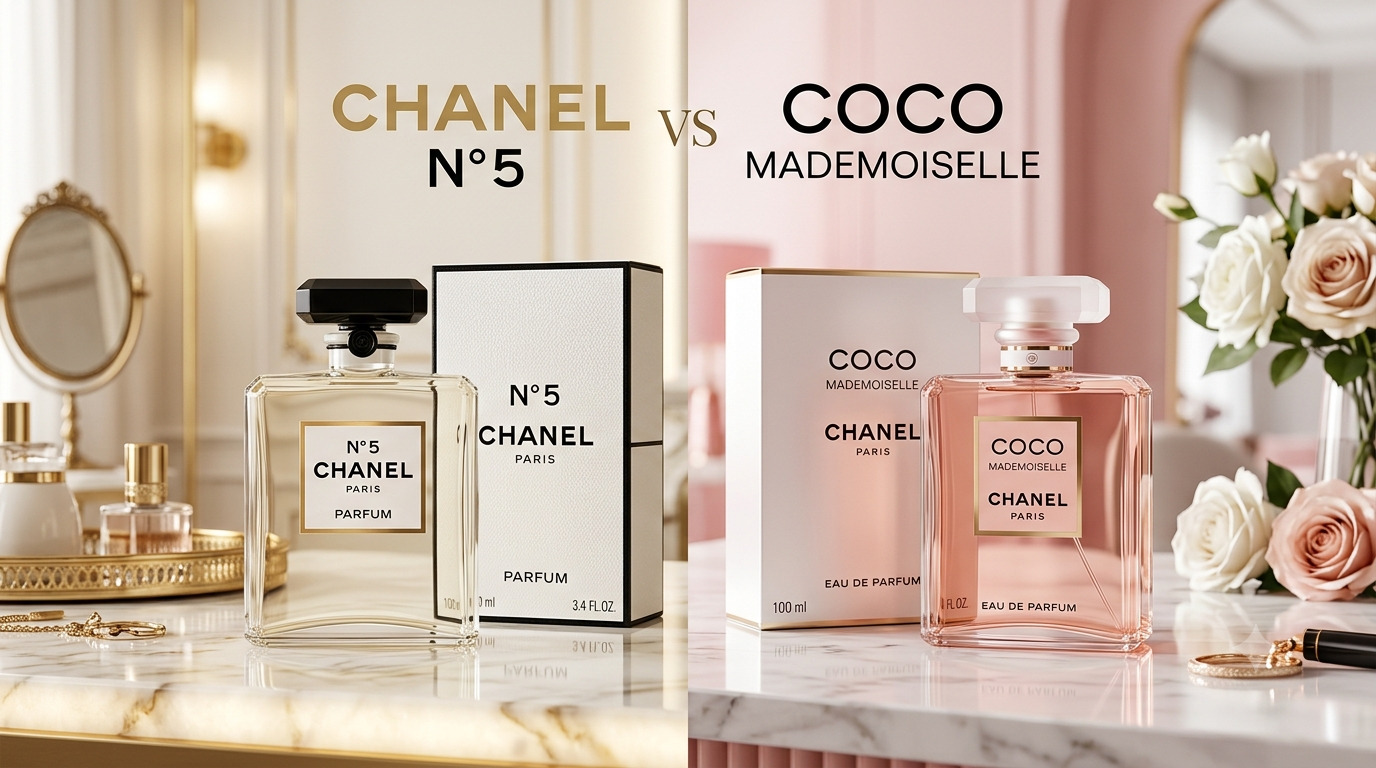
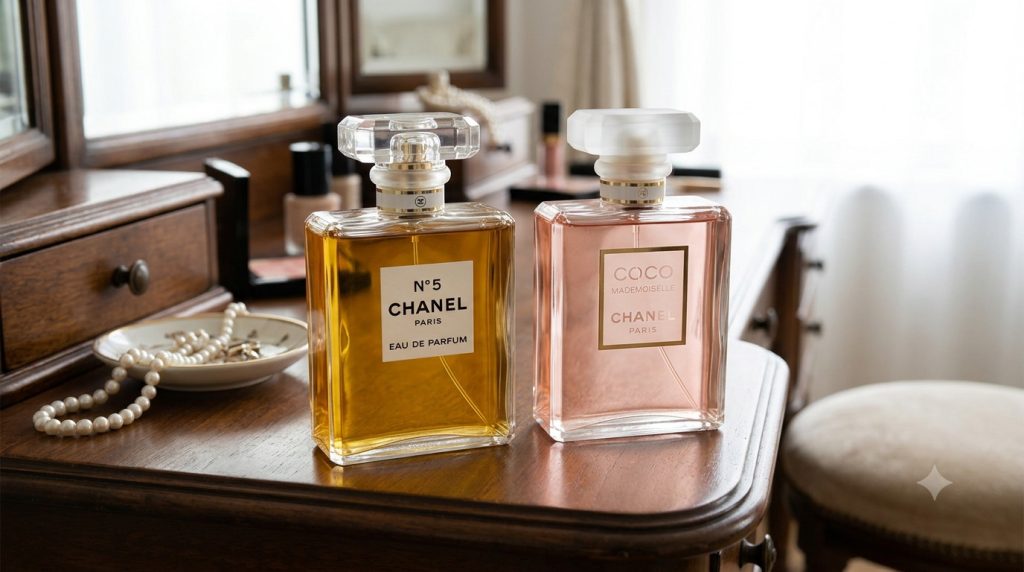
Walk into any department store fragrance counter in the world, and two Chanel bottles will almost certainly be staring back at you — the timeless, geometric flacon of Chanel No. 5 and the sleek, modern silhouette of Coco Mademoiselle. They’re both icons. Both Chanel. Both wildly popular. But the difference between Chanel No. 5 and Coco Mademoiselle goes far deeper than their packaging.
These two fragrances represent entirely different women, different eras, and different moods. One is a powdery, abstract floral built for grandeur; the other is a fresh, vibrant oriental designed for the bold and independent. Understanding what separates them is the key to choosing the right one for you.
Whether you’re buying your very first Chanel or debating whether to switch things up, this guide breaks everything down — from the top notes to the dry-down to who actually wears each one best. Let’s dive in.
A Tale of Two Icons: The History Behind Each Bottle
To truly appreciate the difference between these two fragrances, you need to understand where they came from. Chanel No. 5 and Coco Mademoiselle were created in completely different eras — and they carry that context in every spritz.
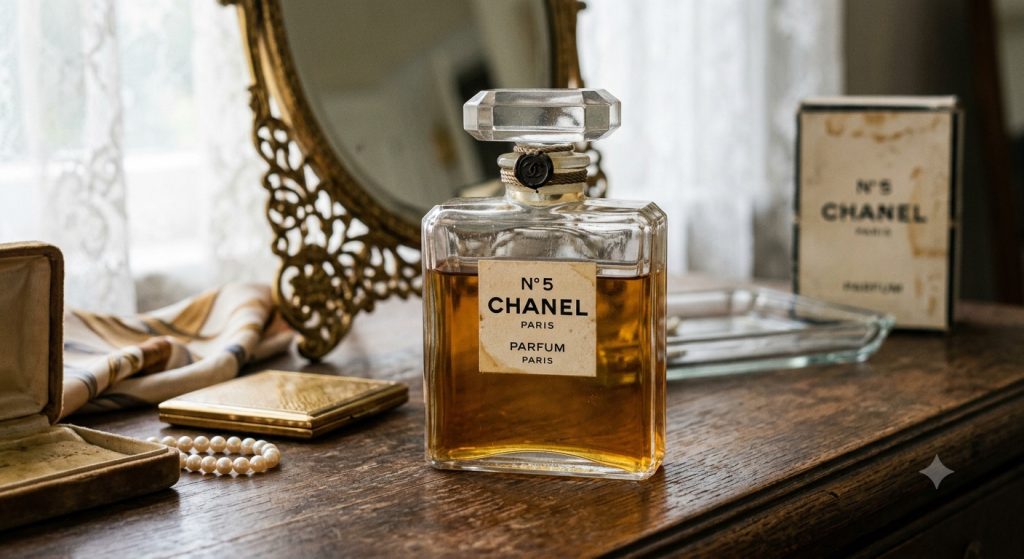
Chanel No. 5 was born in 1921, making it over a century old. It was created by perfumer Ernest Beaux at the request of Gabrielle “Coco” Chanel herself. She reportedly asked for “a woman’s perfume with a woman’s scent” — something abstract and complex, not a simple floral. Beaux presented her with ten samples, and she chose the fifth. The name stuck.
The result was revolutionary. No. 5 was one of the first fragrances to use synthetic aldehydes on a large scale, giving it that famous soapy, luminous quality that felt unlike anything available at the time. Marilyn Monroe famously declared she wore “five drops of Chanel No. 5” to bed — and the fragrance has been a cultural landmark ever since.

Coco Mademoiselle arrived nearly 80 years later, launched in 2001 as part of Chanel’s Coco fragrance line. Created by master perfumer Jacques Polge, it was designed as a younger, more spirited interpretation of the Chanel woman — independent, playful, and unapologetically modern.
Where No. 5 is steeped in old-world glamour, Coco Mademoiselle radiates contemporary confidence. The global fragrance industry is worth over $50 billion annually, and Coco Mademoiselle consistently ranks among the best-selling women’s fragrances in the world — a remarkable feat for a scent that positioned itself as the “rebellious” alternative to the establishment.
The Scent Profiles: What Do They Actually Smell Like?
This is where the real difference lies. These two fragrances smell nothing alike — and once you understand their structures, choosing between them becomes much easier.
Chanel No. 5: Powdery, Aldehydic, and Timeless
Chanel No. 5 opens with a luminous, almost soapy burst of aldehydes — that signature effervescent quality that immediately signals classic perfumery. Underneath, you catch fleeting hints of neroli, ylang-ylang, and bergamot. It’s bright but not exactly what you’d call “fresh.”
The heart blooms into a rich, abstract floral bouquet — rose, jasmine, and iris intertwine in a way that feels simultaneously feminine and architectural. There’s nothing literal or photorealistic about it; the flowers are more like a memory of flowers than flowers themselves.
The dry-down is where No. 5 truly settles in and shows its age (in the best possible way). Sandalwood, vetiver, and musk warm the composition into something genuinely enveloping. The famous powdery quality becomes most prominent here. It’s the kind of scent that lingers on skin and silk alike, hours after application.
Words that describe Chanel No. 5: powdery, aldehydic, floral, luminous, creamy, classic, refined, bold.
Coco Mademoiselle: Bright, Zesty, and Sensually Warm
Coco Mademoiselle opens with an immediate pop of bergamot and orange — it’s citrusy, cheerful, and instantly energizing. There’s a hint of grapefruit in there too, which keeps it lively and youthful right from the first spray.
The heart transitions into a confident floral-oriental combination of Turkish rose and jasmine, but unlike No. 5, these florals feel grounded rather than abstract. They have weight and warmth without being heavy. A beautiful, smooth patchouli note also begins to emerge here, lending a subtle earthiness that makes the whole composition feel modern and a little edgy.
The dry-down of Coco Mademoiselle is where it truly seduces. Vetiver, white musk, and vanilla settle into something deeply warm and sensual — not sweet in an obvious way, but soft and skin-like. It’s incredibly wearable, and the patchouli keeps it from ever tipping into cloying territory.
Words that describe Coco Mademoiselle: fresh, citrusy, floral-oriental, warm, patchouli-tinged, sensual, modern, elegant.

Who Should Wear Each Fragrance?
The scent profiles already hint at this, but let’s be direct: these two fragrances attract genuinely different personalities and lifestyles.
Chanel No. 5 Is For You If…
- You love classic, old-world elegance and aren’t afraid of a bold, powdery signature
- You want a fragrance that commands a room — one people will remember and ask about
- You appreciate heritage and craftsmanship over trends
- You wear a lot of formal or business attire and want a scent that matches that energy
- You’re drawn to abstract, complex compositions rather than crowd-pleasing sweetness
No. 5 is sometimes described as “mature,” and while that can feel like a slight, it really just means it rewards people who’ve developed a relationship with fragrance. It’s the kind of perfume you grow into and then never want to leave. Many wearers in their 20s find it a touch heavy, then fall completely in love with it in their 30s and beyond.
Coco Mademoiselle Is For You If…
- You want a fragrance that feels both confident and approachable
- You love something that’s universally appealing but still distinctly sophisticated
- You want versatility — a scent that works for both daytime and evening wear
- You’re newer to niche or designer perfumery and want something that won’t feel overwhelming
- You enjoy fresh, slightly citrusy openings but with real warmth and depth in the dry-down
Coco Mademoiselle is often the gateway Chanel for younger wearers — and there’s no shame in that. It’s beautifully composed, long-lasting, and genuinely flattering on a wide range of skin types.
Occasions and Seasonality: When to Reach for Which
Both fragrances are technically year-round, but they have distinct seasonal and situational sweet spots.
Chanel No. 5 shines brightest in autumn and winter. Its creamy, powdery warmth layers beautifully with heavier fabrics, cold air, and candlelit settings. It’s a formal dinner perfume, a gala fragrance, a “going somewhere important” scent. Summer can make the aldehydes feel a bit soapy and intense, though the lighter Eau de Toilette version handles warmer weather more gracefully.
Coco Mademoiselle is far more versatile across seasons. The bright citrus opening makes it pleasant in spring and summer, while the warm patchouli base keeps it relevant in autumn and winter too. It’s the kind of fragrance you can wear to a client meeting, a brunch with friends, or a night out — and it always feels right.

Common Mistakes People Make When Comparing These Two
Assuming One Is “Better” Than the Other
This is probably the most common pitfall. Chanel No. 5 and Coco Mademoiselle aren’t in competition — they’re complementary. No. 5 is more complex and challenging; Coco Mademoiselle is more immediately approachable. Neither is objectively superior.
Testing Both on the Same Wrist at Once
Please don’t do this at the fragrance counter. Each scent needs clean skin to reveal its true character. Spray one on each wrist if you must compare simultaneously — but even better, test them on separate days.
Judging Entirely From the Top Notes
Both fragrances open differently from how they finish. No. 5’s bold, soapy aldehydes calm into something deeply feminine and soft. Coco Mademoiselle’s bright citrus fades into warm, sensual depth. Always let a fragrance develop for at least 30 minutes before deciding.
Ignoring the Different Concentrations Available
Both fragrances come in multiple concentrations:
- Chanel No. 5: Parfum, Eau de Parfum, Eau de Toilette, Eau Première (a lighter flanker)
- Coco Mademoiselle: Eau de Parfum, Eau de Toilette, Intense (a richer, heavier version)
If you tried one concentration and didn’t love it, the others might completely change your mind. The Coco Mademoiselle Intense, for example, dials up the patchouli and rose dramatically — it’s practically a different fragrance.
Expert Tips for Choosing and Wearing Either Fragrance
Sample before you commit. Both Chanel No. 5 and Coco Mademoiselle are widely available as discovery samples online and at counters. A $3–5 sample vial will save you from a $150 regret.
Apply to pulse points, not fabric. The warmth of your skin activates the top and middle notes beautifully. Wrists, neck, and behind the ears are your best bets. Spraying onto clothing can stain and also prevents proper development.
Less is more with No. 5. Because of its aldehydic richness, one or two sprays is genuinely sufficient. Over-applying is the reason some people find it overwhelming.
Layer Coco Mademoiselle for longevity. The matching body lotion or shower gel creates a fragrance base on your skin, helping the Eau de Parfum last significantly longer — often an extra 2–3 hours.
Consider your skin chemistry. Fragrances interact with your natural skin oils and pH, which means No. 5 may smell powdery and luminous on one person and oddly clinical on another. Coco Mademoiselle tends to be a bit more forgiving and consistent across different skin types.
Don’t sleep on vintage No. 5. Fragrance enthusiasts who’ve tried vintage formulations of Chanel No. 5 — particularly from the 1970s and 80s — often say the modern version, while still beautiful, has been reformulated to remove or reduce certain ingredients under EU regulations. If you’re curious about how it once smelled, vintage bottles occasionally surface on fragrance community forums and auction site
Summary: Chanel No. 5 vs Coco Mademoiselle at a Glance
| Feature | Chanel No. 5 | Coco Mademoiselle |
|---|---|---|
| Launch Year | 1921 | 2001 |
| Perfumer | Ernest Beaux | Jacques Polge |
| Scent Family | Floral Aldehyde | Floral Oriental |
| Opening | Soapy, luminous aldehydes | Fresh citrus, bergamot |
| Heart | Rose, jasmine, iris | Rose, jasmine, patchouli |
| Base | Sandalwood, vetiver, musk | Vetiver, white musk, vanilla |
| Mood | Timeless, commanding, classic | Modern, confident, approachable |
| Best Season | Autumn / Winter | Year-round |
| Best For | Formal occasions, evenings | Daily wear, versatile |
| Learning Curve | Higher | Lower |
Both deserve a place in any serious fragrance collection. If you have to pick just one, choose based on your personality and lifestyle — not on which bottle looks more iconic on a shelf.
Conclusion
Choosing between Chanel No. 5 and Coco Mademoiselle isn’t about finding the “right” answer — it’s about discovering which version of Chanel resonates with you. No. 5 offers a century of history, powdery grandeur, and an abstract beauty that defies easy description. Coco Mademoiselle brings vibrant energy, warmth, and a versatility that makes it endlessly wearable in modern life.
Both fragrances are masterworks. Both are worth experiencing on your own skin. And both will tell you something different about who you are — or who you want to be — when you wear them.
The best way to decide? Get samples of both, wear them on separate days, and pay attention to how each one makes you feel. Your skin, your mood, and your gut instinct will guide you better than any review ever could.
Did you find this helpful? Drop a comment below or share this with a fellow fragrance lover!
Frequently Asked Questions
Q1: What is the main difference between Chanel No. 5 and Coco Mademoiselle? The core difference comes down to scent style and personality. Chanel No. 5 is a powdery, aldehydic floral with a bold, classic character that feels timeless and sophisticated. Coco Mademoiselle is a fresh floral oriental with bright citrus notes, warm patchouli, and a more modern, approachable vibe. No. 5 is formal and complex; Coco Mademoiselle is versatile and immediately appealing.
Q2: Is Chanel No. 5 or Coco Mademoiselle better for everyday wear? Coco Mademoiselle is the better choice for everyday wear. Its fresh opening and warm, well-rounded dry-down make it suitable for work, casual outings, and even evenings. Chanel No. 5 is more powerful and better reserved for special occasions, formal events, or cooler weather when its rich, powdery character feels perfectly at home.
Q3: Which Chanel fragrance is better for younger women? Most fragrance lovers agree that Coco Mademoiselle tends to resonate more naturally with younger wearers. Its brightness, modern edge, and immediate appeal make it easier to wear and fall in love with. Chanel No. 5 is a fragrance many women grow into over time — it’s complex and bold in ways that become more rewarding with life experience and a more developed palate for perfumery.
Q4: Does Coco Mademoiselle smell like Chanel No. 5? No — they smell quite different. While both are distinctly “Chanel” in their quality and elegance, the two fragrances belong to different olfactory families entirely. No. 5 is heavy on powdery aldehydes and abstract florals; Coco Mademoiselle opens with bright citrus and transitions into a warm, patchouli-tinged oriental. Wearing one is a completely different experience from wearing the other.
Q5: Which lasts longer — Chanel No. 5 or Coco Mademoiselle? Both fragrances have respectable longevity in their Eau de Parfum concentrations, typically lasting 6–8 hours on skin. Chanel No. 5 Parfum (the pure perfume concentration) is one of the longer-lasting options in the lineup and can linger for 10+ hours. For Coco Mademoiselle, the Intense version offers the strongest projection and longevity. Using the matching body products for either scent can also extend wear time noticeably.
Q6: Can men wear Coco Mademoiselle or Chanel No. 5? Fragrance has no gender — wear what you love. That said, both are marketed as feminine fragrances and are very much in that tradition stylistically. Coco Mademoiselle’s patchouli base gives it a slightly androgynous warmth that some men find appealing. Chanel No. 5’s powdery florals are traditionally feminine. If you enjoy these types of compositions, wear them with confidence. Fragrance is personal expression first and foremost.

0 thoughts on “Chanel No. 5 vs Coco Mademoiselle — What’s the Difference?”