What you’ll learn
- The exact environmental triggers that destroy your expensive fragrance notes.
- The best and worst places in your home to keep your signature scents.
- How to spot the warning signs of a perfume that has completely gone bad.
- Practical, stylish, and safe storage solutions for any size collection.
Introduction
Imagine investing hundreds of dollars in a luxurious, velvety bottle of Tom Ford Black Orchid or a crisp, effervescent splash of Chanel Chance, only to have it smell like sour rubbing alcohol a year later. Knowing how to store perfume correctly is the absolute single most important factor in protecting your hard-earned olfactory investments from a premature death. Fragrances are complex, delicate chemical cocktails that require a specific environment to remain stable, vibrant, and true to their original scent profiles.
Many fragrance lovers unknowingly destroy their favorite colognes and perfumes simply by keeping them on the wrong shelf or in the wrong room entirely. When you understand the science of juice preservation, you can easily extend the lifespan of your bottles by years, if not decades. Protecting your collection doesn’t require expensive, industrial-grade equipment, but it does require a bit of strategic intentionality. Let’s dive in.
Why Fragrance Preservation Matters: The Science of Scent
Before exploring the practical steps of scent preservation, we must first understand the delicate chemistry hidden inside those gorgeous glass flacons. Perfumes are composed of essential oils, synthetic aroma compounds, fixatives, and alcohol carriers blended in a precise harmony. Every single bottle contains top notes, heart notes, and base notes that evaporate at intentionally different rates to give you a beautiful olfactory journey throughout the day.
However, these organic and chemical bonds are not permanent. When exposed to negative environmental catalysts, the molecules begin to break apart, recombining into entirely new chemical structures that smell sharp, metallic, or stale. This degradation process is known as oxidation. The International Fragrance Association highlights that while a standard fragrance formulation technically has an official average shelf life of roughly three to five years, optimal climate control can stretch that timeline significantly.
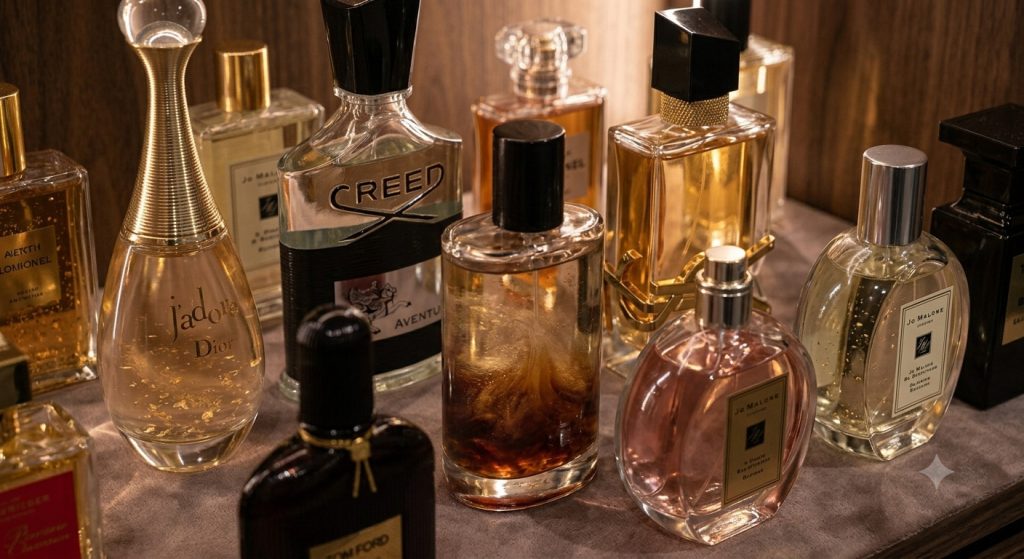
When oxidation occurs, the bright, sparkling top notes, like bergamot, lemon, or mandarin, are always the very first to vanish into thin air. You are then left with a flat, distorted version of the scent that completely lacks its original character and depth. By mastering how to store perfume, you actively shield these microscopic volatile compounds from breaking down, ensuring that every spray smells just as intoxicating as the first day you brought it home from the boutique.
The Three Ultimate Enemies of Your Perfume Collection
To keep your fragrances pristine, you must wage war against three specific environmental elements that actively degrade your scent molecules every second.
Heat and Extreme Temperature Fluctuations
Heat is the absolute fastest way to ruin a premium fragrance. High temperatures accelerate chemical reactions, causing the fragile essential oils to break down rapidly and cook inside the bottle. Just as you wouldn’t leave a fine bottle of wine sitting in a roasting hot car, you should never allow your precious scents to bake in a warm environment.
Equally destructive are rapid temperature swings. When a room constantly fluctuates from freezing cold to boiling hot, it causes the liquid inside the glass to expand and contract repeatedly. This constant physical stress destabilizes the delicate chemical equilibrium of the juice, forcing the aromatic compounds to separate and spoiling the smooth transition from top notes to base notes.
Direct Sunlight and UV Ray Exposure
Sunlight may look absolutely stunning when it filters through a beautifully faceted crystal perfume bottle on a vanity, but it is pure poison for the liquid inside. Ultraviolet (UV) rays are incredibly energetic and destructive, capable of breaking down the chemical bonds of fragrance ingredients with shocking speed.
Clear glass bottles offer virtually zero protection against this aggressive UV radiation. Within just a few weeks of direct sun exposure, a vibrant, light pink juice can turn into a muddy amber color, and a fresh, zesty citrus scent can mutate into something that resembles burnt plastic. Even dark or opaque bottles will absorb the radiant heat of the sun, causing internal damage.
High Humidity and Ambient Moisture
Moisture is a silent, creeping killer of luxury scents. When a bottle lives in an environment saturated with water vapor, that ambient moisture can actually find its way underneath the spray nozzle and inside the delicate collar mechanism over time. Once water introduces itself into the alcohol-based solution, it disrupts the formula completely.
High humidity also breeds mold and mildew on the outer packaging, destroying collectible boxes and loosening labels. If water manages to contaminate the interior reservoir, it cloudy-fies the liquid and can introduce bacteria that ruin the spray. Keeping things completely dry is non-negotiable for scent longevity.
Step-by-Step Guide to Perfect Perfume Storage
Now that we know exactly what we are fighting against, here is the ultimate, foolproof blueprint for safely organizing and protecting your treasured scent collection.
- Select a Cool, Dark, Climate-Controlled Space: Identify a specific location in your home that maintains a steady, cool temperature year-round, ideally between 60°F and 68°F.
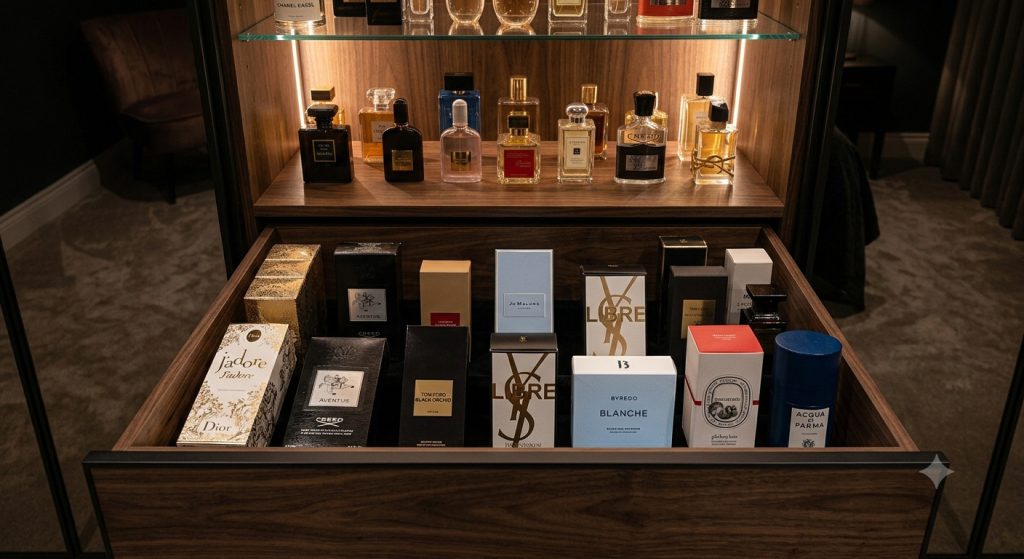
- Keep Bottles Tucked Away in the Dark: Place your fragrances inside a dedicated drawer, a dark wardrobe, or an enclosed storage cabinet where light cannot reach them.
- Utilize the Original Boxes for Ultimate Safety: Never throw away the heavy cardboard boxes your perfumes arrive in. These boxes are custom-engineered to block out all damaging UV light and provide an extra layer of thermal insulation against temperature shifts.
- Maintain Low Elevation Levels: Always store your bottles on lower shelves or bottom drawers rather than high up near the ceiling. Because heat naturally rises, the air near your floor is consistently cooler and more stable.
- Leave the Original Caps Securely Placed: Make a habit of pushing the cap firmly back onto the spray nozzle immediately after every single application. This simple action limits the amount of ambient oxygen that can creep into the pump mechanism.
Common Mistakes People Make with Perfume Storage
Even the most passionate fragrance collectors frequently fall into destructive habits that drastically shorten the life expectancy of their perfumes.
The absolute biggest and most widespread mistake is storing your collection on a bathroom counter or vanity shelf. It seems incredibly convenient to grab your bottle of Creed Aventus or Dior Sauvage right after you step out of the shower, but the bathroom is a hostile wasteland for perfume. The steam from hot showers creates a destructive cycle of intense heat and extreme humidity that will ruin a bottle in record time.
Another major error is transferring the liquid into decorative, non-original crystal decanters. Antique glass bottles with open stoppers or squeeze-bulb atomizers look highly romantic, but they are not airtight. They allow massive amounts of oxygen to constantly mingle with the juice, evaporating the alcohol carrier and drying out the precious oils until the scent is completely dead.
Finally, never violently shake your perfume bottle before applying it. Unlike certain beauty products or paints, perfume is a perfectly homogeneous solution that never separates. Shaking the bottle forcefully does nothing but introduce micro-bubbles of trapped air throughout the liquid, which accelerates the unwanted process of internal oxidation.
Pro Secrets: Refrigerator Storage and Traveling Safely
If you want to elevate your preservation game to a truly professional level, you can explore the advanced concept of dedicated fragrance refrigeration.
Many seasoned collectors and perfume houses utilize a specialized cosmetic fridge to keep their delicate summer colognes, rich extraits, and vintage formulations perfectly chilled. Keeping your fragrances at a constant, cool temperature slows down chemical degradation to a absolute crawl. If you decide to try this, make sure the fridge is not set to freezing temperatures, and never store your perfumes alongside open food items, which can pass strong odors to the bottles.
When it comes to traveling with your favorite scents, safety should be your top priority. Avoid tossing a massive, heavy glass bottle directly into your hot luggage or purse where it will be subject to friction and extreme heat. Instead, purchase high-quality, airtight travel atomizers that allow you to decant a few milliliters of juice safely. This keeps your main, expensive bottles safe and sound at home in their controlled environment while you enjoy your trip.
How to Tell If Your Perfume Has Gone Bad
Despite your best efforts, or if you are dealing with an older vintage purchase, there comes a time when you need to evaluate if a fragrance has crossed the point of no return.
The first major red flag is a distinct, dramatic shift in color. If your beautiful, crystal-clear liquid suddenly looks dark, cloudy, milky, or has developed a strange green or amber tint, it is a definitive sign that chemical bonds have broken down. You might also notice a layer of dark sediment or oily separation resting at the bottom of the glass.
The ultimate test, however, is always the smell. Spritz the perfume onto a piece of clean paper; if the initial blast smells violently like sour vinegar, intense rubbing alcohol, or stale cooking oil, the top notes have completely oxidized. While an oxidized perfume isn’t necessarily toxic or dangerous to spray onto your clothes, it will lose its beautiful complexity and fade away into nothingness within just a few minutes of application.
Summary of Ultimate Perfume Storage Rules
Protecting your fragrance investment doesn’t have to be complicated if you commit to a few basic principles. Keep your collection away from the bathroom, store your bottles in their original packaging, and choose dark, cool closets over bright window sills. By taking control of the temperature, light, and humidity around your collection, you ensure that your signature scents remain incredibly vibrant, crisp, and beautifully intoxicating for many wonderful years to come.
Conclusion
Investing time into learning how to store perfume is the ultimate way to respect both the artistry of the master perfumer and your own financial budget. Your fragrance collection is a deeply personal extension of your style, mood, and memories, and it deserves to be protected with care. By implementing these simple, climate-controlled storage habits today, you can confidently preserve every single precious spray for the future.
Did you find this helpful? Drop a comment below or share this with a fellow fragrance lover!
Frequently Asked Questions
Q1: Can I store my perfume in the bedroom closet safely? A: Yes, a dark bedroom closet is actually one of the absolute best places to implement proper techniques on how to store perfume. Closets naturally stay dark, dry, and insulated from the harsh temperature spikes and high humidity levels found in kitchens or bathrooms, providing an ideal oasis for your collection.
Q2: Does perfume expire if it is never opened? A: An unopened, sealed bottle of perfume has a much longer shelf life than an opened one because it hasn’t been exposed to oxygen. However, it can still degrade over time if left in a hot room or under direct sunlight, so safe storage is still mandatory.
Q3: Why does my perfume smell like alcohol all of a sudden? A: If your fragrance suddenly shocks your nose with a heavy smell of rubbing alcohol, it means the delicate top notes have completely oxidized and evaporated due to heat or light damage. The remaining juice is mostly the alcohol base carrier with degraded essential oils.
Q4: Is a standard kitchen refrigerator safe for perfume storage? A: While the cool temperature is beneficial, a standard kitchen refrigerator is generally too cold and can cause delicate oils to crystallize. Furthermore, the constant opening and closing of the door causes light and temperature fluctuations, and food odors can potentially permeate the bottle seals.
Q5: Can extreme cold ruin a perfume bottle? A: Yes, freezing temperatures can be highly damaging. If a fragrance freezes completely, the water and alcohol content can expand significantly, which puts extreme pressure on the pump mechanism and can potentially crack or shatter the glass bottle entirely.
Q6: Does the color of the perfume bottle glass affect its shelf life? A: Absolutely. Dark amber, opaque black, or deep blue glass bottles naturally filter out significantly more harmful UV radiation than clear or translucent glass flacons. Clear glass bottles require much more strict storage inside dark drawers or original cardboard boxes to prevent spoilage.
Leave a Reply