
What you’ll learn:
- The physical clues that separate authentic bottles from counterfeits
- How scent, color, and longevity differ between real and fake perfume
- Where counterfeiters most often slip up
- Practical steps to protect yourself before and after you buy
Introduction
You finally scored your favorite fragrance for half the retail price, but something feels off the moment you open the box. Knowing how to tell if a perfume is fake can save you from wasted money and a scent that just doesn’t smell right. Counterfeit perfume is a bigger business than most shoppers realize, and it’s not limited to shady street vendors anymore — fakes show up on major marketplaces, in discount stores, and even at pop-up kiosks in malls.
The good news is that counterfeiters, no matter how good they get, almost always leave clues behind. Once you know what to look for, spotting a fake becomes second nature. In this guide, we’ll walk through the packaging details, scent characteristics, and seller red flags that give away a counterfeit fragrance.
Let’s dive in.
Why This Matters: The Real Cost of Counterfeit Perfume
Fake fragrance isn’t just a “cheaper version” of the real thing. Many counterfeit perfumes use synthetic fillers, denatured alcohol, or unregulated ingredients that can irritate skin or trigger allergic reactions. The global counterfeit goods trade, including cosmetics and fragrance, is estimated to cost legitimate brands billions of dollars in lost revenue every year, which is part of why authentication has become such a hot topic among fragrance collectors.
Beyond the safety concerns, buying counterfeit perfume also means you’re not actually getting the fragrance you paid for. The top notes might smell similar, but the depth, longevity, and drydown almost never match up. If you’ve ever wondered why your “designer” perfume fades in twenty minutes, a fake bottle could be the reason.
The Main Signs of a Fake Perfume
Counterfeiters have gotten better at mimicking packaging, but they still make consistent mistakes. Here are the areas to inspect closely.
1. Check the Batch Code and Cellophane Wrap
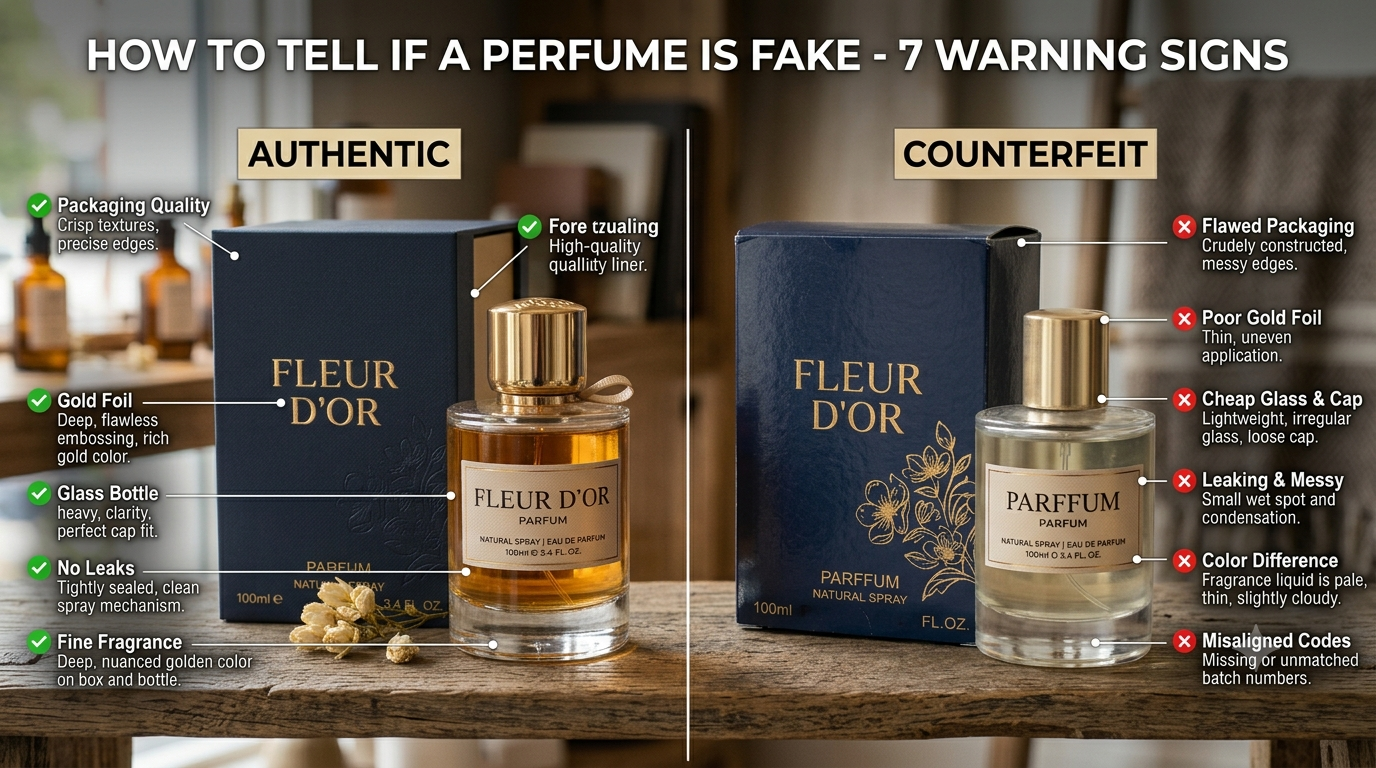
Every authentic bottle has a batch code, usually a small engraving or sticker on the bottom of the box or the base of the bottle. You can plug this code into a batch code checker site to confirm the manufacturing date and country of origin.
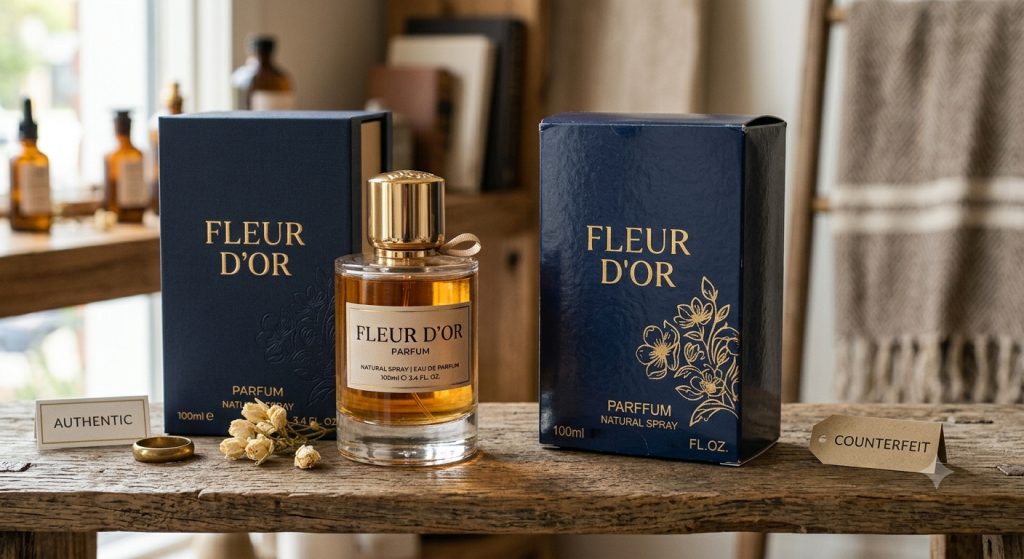
Fakes often have batch codes that are smudged, missing, or don’t match any real production run. The cellophane wrapping is another giveaway. Authentic brands like Chanel and Dior use precise, tightly sealed wrap with a factory-fold pattern, while counterfeit wrap is often loose, wrinkled, or sealed with visible tape.
2. Examine the Bottle and Cap Quality
Luxury fragrance houses invest heavily in bottle design, and it shows in the weight, glass clarity, and finish. A fake Tom Ford or Yves Saint Laurent bottle often feels noticeably lighter, with a cap that clicks loosely or doesn’t align perfectly with the bottle’s neck.
Look closely at the printed logo and text. Authentic bottles use crisp, evenly spaced lettering. Counterfeits frequently show slightly blurry fonts, uneven spacing, or logos that are just a touch off in size or color compared to the real thing.
3. Compare the Scent and Sillage
This is where fakes fall apart fastest. A counterfeit perfume might nail the initial spray, but the middle and base notes typically smell thin, harsh, or overly alcoholic. Authentic perfume evolves in layers over several hours; fake perfume tends to smell almost identical from spray to fade.
Sillage, the trail a scent leaves behind, is another clue. Genuine eau de parfum concentrations should project for at least a few hours. If your “EDP” disappears within 30 minutes, or smells like rubbing alcohol up close, that’s a strong signal you’re dealing with a fake.
Practical Steps to Verify Authenticity
Follow these steps whenever you’re unsure about a bottle:
- Buy from authorized retailers — department stores, brand websites, or verified sellers on major platforms.
- Check the price — if it’s dramatically below retail (more than 40-50% off) without a clear promotion, treat it as a red flag.
- Inspect the box art — compare fonts, color saturation, and logo placement against official product photos.
- Verify the batch code — use an online batch code checker and cross-reference the country of origin.
- Test the spray pattern — authentic atomizers produce a fine, even mist; fakes often spray unevenly or leak.
- Trust your nose — if the dry-down smells nothing like reviews or your past bottles, that’s meaningful evidence.

Common Mistakes People Make When Spotting Fakes
1: Assuming a good deal is a good deal. Steep discounts happen during real sales, but a $150 bottle for $30 with no explanation is almost always a warning sign.
2: Judging only by smell on the first spray. Top notes are the easiest part of a fragrance to replicate. Always wait to judge the drydown.
3: Ignoring the seller’s reputation. A seller with no reviews, vague return policy, or stock photos instead of real product images deserves extra scrutiny.
4: Trusting “factory overrun” or “tester” claims blindly. These terms are sometimes used honestly, but they’re also common cover stories for counterfeit stock.
Expert Tips for Serious Fragrance Buyers
Collectors and fragrance enthusiasts often keep a reference bottle purchased directly from a boutique or department store specifically to compare future purchases against. This side-by-side comparison, glass color, cap weight, spray pattern, is one of the most reliable authentication tricks available.
It also helps to familiarize yourself with a brand’s typical packaging updates. Houses like Guerlain and Chanel periodically refresh box designs, and knowing the current design cycle helps you spot an outdated or incorrect box style immediately.
[INTERNAL LINK: How to Make Your Perfume Last Longer on Skin]
Final Recommendation: Trust the Details, Not Just the Deal
Spotting a counterfeit comes down to patience and attention to detail. No single clue guarantees a fake, but when several red flags appear together, batch code issues, a lightweight bottle, and a scent that fades fast, you’re likely holding a counterfeit.
Conclusion
Learning how to tell if a perfume is fake takes a bit of practice, but it becomes intuitive once you know what to check. Pay attention to the batch code, bottle weight, box printing, and how the scent develops over several hours. Buying from authorized retailers remains your best protection, but these inspection habits will serve you well no matter where you shop.
Did you find this helpful? Drop a comment below or share this with a fellow fragrance lover!
Frequently Asked Questions
Q1: How can I tell if a perfume is fake just by smell? Fake perfumes often smell sharp or alcoholic up close and fade quickly compared to authentic versions. Genuine fragrances develop in layers over several hours, while counterfeits tend to smell flat and similar from the first spray to the last.
Q2: Do fake perfumes use real ingredients? Counterfeit perfumes typically use cheaper synthetic substitutes and lower-grade alcohol. This is why they can smell “close” at first spray but lack the depth and longevity of the original formula.
Q3: Can I check if a perfume is fake using the batch code? Yes. Most authentic bottles have an engraved or printed batch code you can look up through an online batch code checker to confirm production details and origin.
Q4: Are discounted perfumes always fake? Not always. Legitimate sales and clearance stock exist, but discounts of 50% or more with no clear reason should prompt extra verification before you buy.
Q5: Why does my perfume smell different from the one in stores? This could mean you have a counterfeit, a different batch with slight formula variations, or a bottle that’s been improperly stored in heat or sunlight, which can alter the scent over time.
Q6: Is it safe to use a fake perfume on my skin? It’s best to avoid it. Counterfeit perfumes may contain unregulated ingredients or contaminants that can cause skin irritation or allergic reactions, since they aren’t subject to the same safety testing as authentic products.