

What you’ll learn
- How to identify your personal fragrance preferences using the fragrance wheel.
- The essential bottle categories needed to build a versatile scent wardrobe.
- Practical budgeting strategies to acquire luxury scents without breaking the bank.
- Proper storage techniques to maximize the shelf life of your investment.
Introduction
Stepping into the world of luxury fragrance can feel incredibly overwhelming. With thousands of beautiful bottles lining department store shelves, learning how to build a perfume collection that truly reflects your personality is an art form. You might love a scent on a friend, only to find it smells completely different on your own skin. This happens because fragrance interacts uniquely with your personal skin chemistry, turning every bottle into a deeply personal experience.
Fortunately, curation does not require a massive bank account or an overnight shopping spree. Building a fragrance wardrobe is a joyful, slow journey of self-expression and sensory exploration. By understanding the basics of scent families and concentration levels, you can confidently select bottles that suit your lifestyle. Ready to transform the way you dress your senses every morning? Let’s dive in.
Hidden Psychology: Why a Fragrance Wardrobe Matters
Before buying your first bottle, it helps to understand why we wear fragrance in the first place. Smell is our most primitive sense, hardwired directly into the limbic system of the brain. This is the exact region where memories are formed and emotions are processed. Therefore, learning how to build a perfume collection is actually about creating an emotional toolkit for your daily life.
The global perfume industry is booming, with analysts reporting that the luxury fragrance market is projected to surpass $70 billion in the coming years. People are moving away from the old concept of a single “signature scent” and are embracing scent wardrobes instead. A well-curated collection allows you to match your mood, dress for specific occasions, and alter how others perceive you. A crisp citrus scent can make you feel alert before a big meeting, while a warm amber wrap can make you feel cozy on a rainy evening.

Decoding the Fragrance Wheel: Understanding Scent Families
The absolute foundation of building a great fragrance wardrobe is understanding scent families. Perfumers use a classification system known as the fragrance wheel to group aromas based on their dominant characteristics. Recognizing these groups helps you identify patterns in the scents you naturally prefer.
Fresh and Citrusy Scents
Fresh fragrances are bright, uplifting, and energetic. They prominently feature notes of bergamot, lemon, green tea, and marine accords. These scents mimic the crisp air of the ocean or a sun-drenched Mediterranean grove. They are perfect for daytime wear, casual outings, and hot summer months when you want to feel clean and revitalized.
Floral and Sweet Accords
Florals represent the largest and most popular family in modern perfumery. This category ranges from single-note linear creations, like a crisp red rose, to complex bouquets of jasmine, tuberose, peony, and gardenia. If you enjoy powdery, sweet, or romantic aromas, the floral family will likely form the backbone of your collection.
Warm, Woody, and Earthy Profiles
Woody fragrances are grounding, sophisticated, and deeply comforting. They utilize rich base notes of sandalwood, cedarwood, patchouli, and vetiver. These perfumes often feel dry, smoky, or mossy, making them incredible choices for professional settings or autumn evenings when you want to project an aura of calm confidence.
Rich, Spicy, and Amber Scents
Formerly known as the oriental family, amber fragrances are sensual, opulent, and exotic. They feature heavy notes of vanilla, cinnamon, clove, frankincense, and warm resins. These perfumes possess incredible longevity and sillage, meaning they leave a captivating trail behind you. Save these rich creations for date nights, formal events, and cold winter weather.
Step-by-Step Guide to Curating Your Collection from Scratch
Now that you know the major scent profiles, you can begin the physical process of selecting your bottles. Follow this systematic approach to ensure every purchase is a intentional success.
Set a Strict Budget and Start Small
Resist the urge to buy five full-sized bottles during your first month of exploration. High-quality raw materials make luxury perfumery expensive, and buyers remorse is real. Decide on a comfortable monthly or quarterly budget for your new hobby. Treat the process of discovering how to build a perfume stash as a marathon, not a sprint. One exceptional bottle you adore is worth vastly more than ten mediocre blind buys.
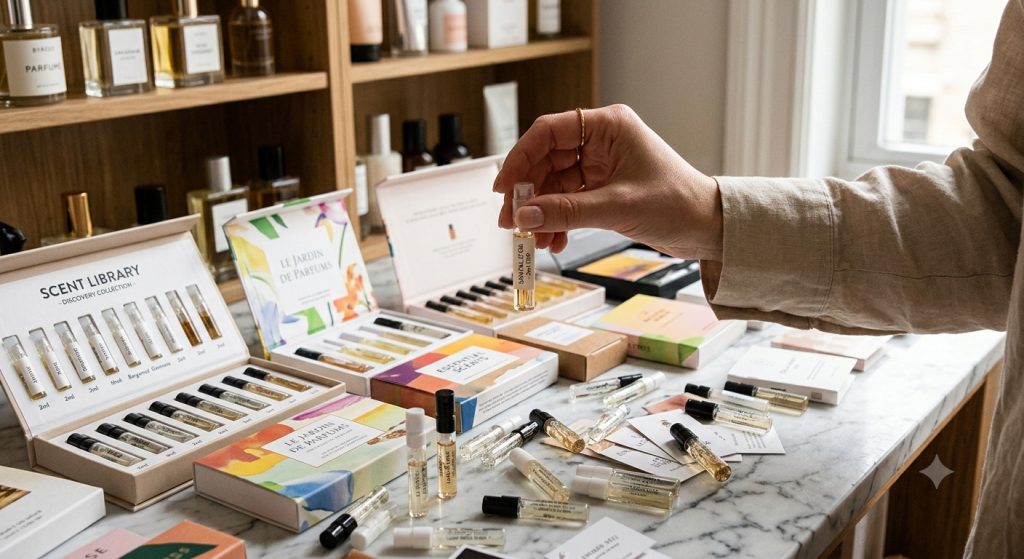
Utilize Samples and Discovery Sets
Never buy a full bottle based purely on a paper strip test at a retail counter. A perfume changes dramatically over several hours as the top notes evaporate to reveal the heart and base notes. Instead, purchase discovery sets directly from houses like Maison Francis Kurkdjian, Jo Malone, or Byredo. Wear a single sample on your skin for an entire day to see how it evolves and lasts.
Cover the Three Essential Pillars
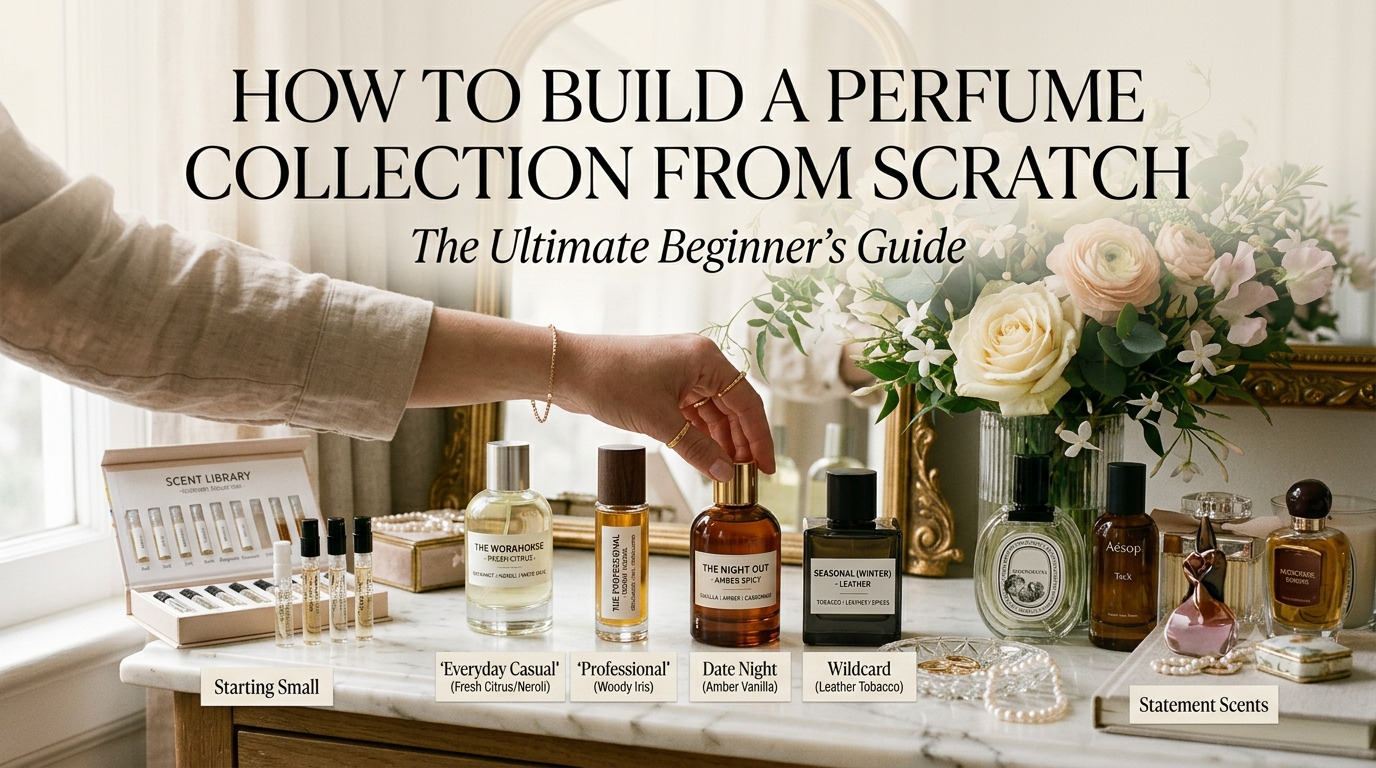
To achieve maximum versatility early on, aim to own three distinct styles of fragrance. First, select an “Everyday Casual” scent that is light, clean, and workplace-safe. Second, choose a “Date Night/Evening” scent that is deeper, mysterious, and seductive. Finally, invest in a “Wildcard Statement” bottle—something unique that makes you feel incredibly confident and stands out in a crowd.
4 Common Mistakes Beginners Make With Fragrance
Avoiding common pitfalls will save you hundreds of dollars and keep your collection organized. Here are the traps most rookies fall into when starting out.
Buying Into Social Media Hype
It is easy to watch an influencer rave about a trending bottle and assume you will love it too. However, fragrance taste is entirely subjective. A scent that feels luxurious to one person might smell cloying or synthetic to you. Always trust your own nose over online hype and algorithmic trends.
Purchasing the Wrong Concentrations
Pay close attention to the abbreviations on the labels. Eau de Cologne (EDC) and Eau de Toilette (EDT) contain lower concentrations of perfume oils, making them fresh but short-lived. Eau de Parfum (EDP) and Extrait de Parfum are highly concentrated, offering superior longevity and depth. Ensure you know what strength you are paying for.
Blind Buying Full Bottles Online
Discounts on gray-market websites can make blind buying incredibly tempting. However, purchasing a perfume without smelling it first is a massive gamble. Unless you are purchasing a tiny travel spray, skip the blind buys and sample the juice on your skin beforehand.
Neglecting Proper Storage Environments
Light, heat, and humidity are the ultimate enemies of delicate perfume molecules. Storing your beautiful bottles on a humid bathroom counter or a sunny windowsill will cause the top notes to oxidize and spoil within months. Keep your collection safe by storing bottles in a cool, dark drawer or closet.
Pro Insider Tips to Elevate Your Scent Game
Once you have mastered the basics of how to build a perfume lineup, you can apply professional techniques to stand out. These strategies will help you get the absolute most out of every drop you own.
Master the Art of Fragrance Layering
You do not have to wear just one perfume at a time. Create a completely custom signature aroma by layering two complementary scents. Try spraying a heavy, woody base fragrance first, then topping it with a light, bright citrus spray. This creates a fascinating, multidimensional trail that belongs entirely to you.
Understand Scent Projection Points
To maximize the longevity of your application, spray your pulse points where the blood vessels run closest to the skin. The wrists, the base of the throat, and behind the ears generate natural body heat, which continuously diffuses the fragrance throughout the day. Remember to never rub your wrists together, as this friction breaks down the delicate top notes prematurely.
Explore Niche and Indie Houses
While designer giants like Chanel, Dior, and Tom Ford make incredible fragrances, don’t overlook indie brands. Houses like Imaginary Authors, DS & Durga, and Zoologist offer avant-garde creations that tell vivid stories. Exploring indie brands expands your olfactory palate and guarantees you won’t smell like everyone else in the room.
Summary of the Ideal Starter Wardrobe Layout
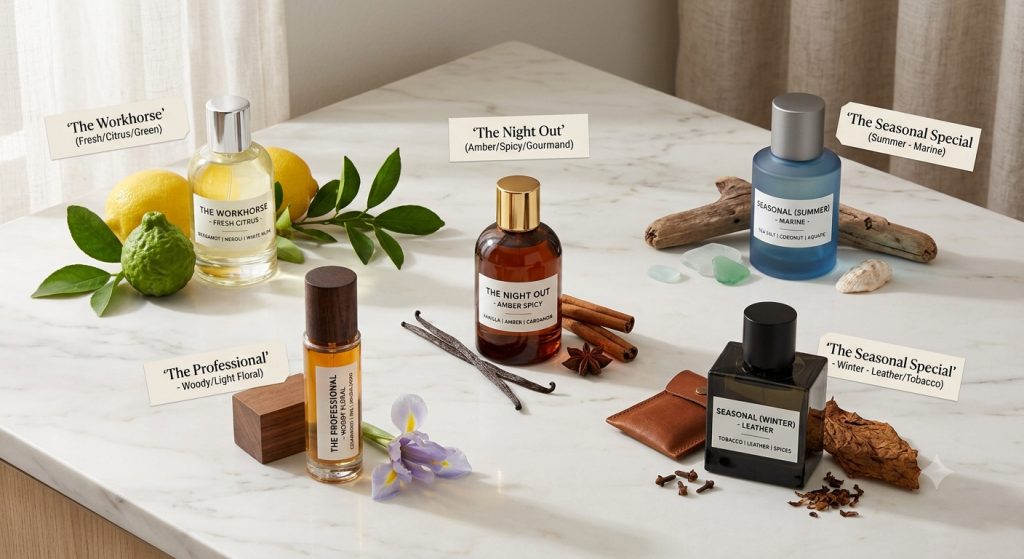
To make your journey simple, aim for a balanced collection that covers all your bases. Use this quick-reference table to visualize a perfectly rounded, four-bottle starter wardrobe.
| Category | Recommended Scent Family | Ideal Setting | Best Example Notes |
| The Workhorse | Fresh / Citrus / Green | Office, Errands, Gym | Bergamot, Neroli, White Musk |
| The Professional | Woody / Light Floral | Meetings, Interviews | Cedarwood, Iris, Sandalwood |
| The Night Out | Amber / Spicy / Gourmand | Dates, Parties, Dinners | Vanilla, Amber, Cardamom |
| The Seasonal Special | Marine or Heavy Leather | Summer Vacations or Winter | Sea Salt, Coconut, Tobacco, Leather |
Conclusion
Building a meaningful fragrance collection from scratch is a deeply rewarding personal journey. It allows you to explore your tastes, play with memories, and curate a unique sensory identity. By understanding scent families, testing on your skin, and avoiding common storage mistakes, you can easily master how to build a perfume wardrobe that brings you joy every single morning.
Take your time with the process and enjoy every sample along the way. Your perfect collection is out there waiting to be discovered, one sniff at a time.
Did you find this helpful? Drop a comment below or share this with a fellow fragrance lover!
Frequently Asked Questions
Q1: How many bottles do I actually need to build a versatile perfume collection?
A: You only need three to four well-chosen bottles to create a fully versatile wardrobe. Aim for one fresh daytime scent, one sophisticated professional scent, and one deep evening fragrance. Quality always beats quantity when learning how to build a perfume collection that lasts.
Q2: What is the true difference between Eau de Toilette and Eau de Parfum?
A: The main difference lies in the concentration of pure perfume oils. Eau de Toilette typically contains between 5% and 15% oil, lasting about three to five hours. Eau de Parfum contains 15% to 20% oil, providing a richer experience that lasts six to eight hours.
Q3: Why does a perfume smell amazing on my friend but terrible on me?
A: This variations occurs because of your unique skin chemistry. Factors like your skin’s pH level, natural oiliness, diet, and even hormone levels interact directly with the fragrance notes, altering how the perfume develops and smells on your body.
Q4: Do perfumes eventually expire or go bad over time?
A: Yes, perfumes can degrade over time, but they don’t expire like food. A typical bottle lasts between three to five years if stored properly. You will know a fragrance has gone bad if the juice changes color dramatically or smells sour and metallic.
Q5: Where is the absolute best place to store my perfume bottles?
A: The best place to store your collection is in a cool, dark, and dry environment. A bedroom closet, a dresser drawer, or the original cardboard boxes are ideal. Avoid bathrooms and windowsills, as extreme temperature changes and humidity destroy the delicate oils.
Q6: Is it safe to buy fragrance bottles from online discount websites?
A: Yes, it is generally safe if you use highly reputable, well-known gray-market retailers. However, always read customer reviews carefully and check return policies before buying, as counterfeit luxury perfumes are unfortunately common on unverified third-party marketplaces.
Pingback: How to Test Perfume Before You Buy (Online & In-Store) - fragrantip