
What you’ll learn
- How to navigate department store counters without getting olfactory fatigue.
- The best websites and subscription services for sourcing cheap, authentic fragrance samples.
- How to properly wear and analyze a scent on your skin over a 24-hour period.
- Common testing mistakes that lead to costly buyer’s remorse.
Introduction
We have all been there. You walk into a luxury boutique, catch a whiff of a gorgeous bottle, and immediately fall in love. You buy it on the spot, take it home, and apply it the next morning. Within an hour, that bright, sparkling opening vanishes, leaving behind a heavy, cloying base note that gives you an instant headache.
Learning how to test perfume before you buy is the only foolproof way to protect your wallet and curate a fragrance wardrobe you actually adore. Perfume behaves like a living entity on your skin, shifting and evolving over several hours. Because a high-quality bottle can easily cost anywhere from $100 to over $350, guessing is a luxury few can afford.
Fortunately, the modern fragrance landscape makes it incredibly easy to sample scents before committing to a full-sized bottle. Whether you prefer strolling through high-end boutiques or shopping from the comfort of your couch, strategic sampling ensures you always make the right choice. Let’s dive in.
Why You Should Never Blind Buy a Fragrance
The global fragrance market is booming, expected to surpass $70 billion within the next few years. With hundreds of new designer and niche releases hitting the shelves annually, the temptation to “blind buy”—purchasing a bottle based solely on online reviews or beautiful packaging—is higher than ever. However, relying on a marketing description or a friend’s recommendation is a risky gamble.
The primary reason to master how to test perfume before you buy comes down to unique skin chemistry. Every individual has a distinct skin pH, lipid level, and body temperature. A fragrance that smells like a crisp, green paradise on your friend might turn unpleasantly sour or metallic on your skin.
Furthermore, perfumes are constructed around a three-tier pyramid structure: top notes, heart notes, and base notes. The top notes are what you smell during the first 15 minutes, but they quickly evaporate. Buying a fragrance based entirely on that initial burst often leads to major disappointment later in the day.
Master the Art of In-Store Perfume Testing
Visiting a physical retailer remains the traditional way to discover new scents. However, walking into a perfume department without a game plan can quickly overwhelm your senses. To get the most out of your trip, you need to approach the fragrance counter like a seasoned professional.
The Blotter Paper Strategy
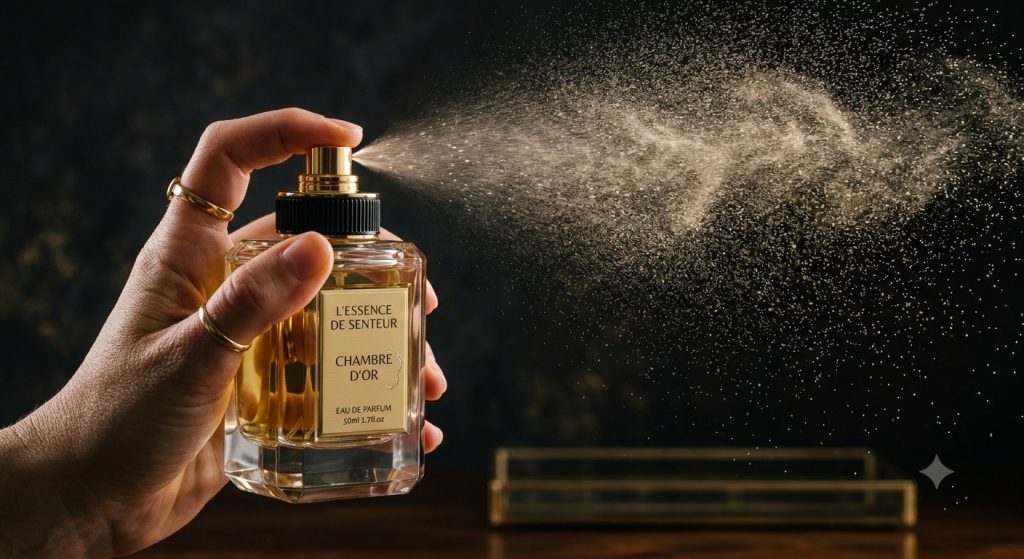
When you first approach a display, your initial tool should always be the paper blotter strip. Spray the perfume onto the paper from a distance of about six inches, let it air-dry for ten seconds, and then take a gentle sniff. This allows the harsh alcohol content to dissipate so you can experience the true top notes.
Write the name of the fragrance on the back of the card immediately. If you skip this step, you will inevitably end up with a pocket full of mystery papers and no idea which scent belongs to which brand. Carry these strips with you as you walk around the mall to see how they evolve over an hour.
The Skin Test Limitation
Once you have narrowed your choices down from the paper strips, it is time to test the frontrunners on your skin. This is a crucial step in learning how to test perfume before you buy. Never test more than two fragrances on your skin at any given time.
Apply one spray of the first scent to your left wrist and one spray of the second scent to your right wrist. If you want to test two more, you can use the inside of your elbows. Anything beyond four sprays will bleed together in the air, completely confusing your nose and ruining your evaluation.
Managing Olfactory Fatigue
Your nose has natural limits. After smelling three or four strong fragrances back-to-back, your olfactory receptors become desensitized. This phenomenon, known as olfactory fatigue, makes everything smell muddy or muted.
To reset your nose, look for small jars of coffee beans often placed on fragrance counters, though a better trick is simply to smell your own clean skin or a wool sleeve. The familiar scent of your own body resets your nasal passages far more effectively than pungent coffee beans ever could.
How to Test Perfume Before You Buy Online
The digital age has completely revolutionized the way we shop for luxury scents. You no longer need to deal with aggressive salespeople to find your next signature scent. Testing perfumes at home has become the preferred method for modern fragrance enthusiasts.
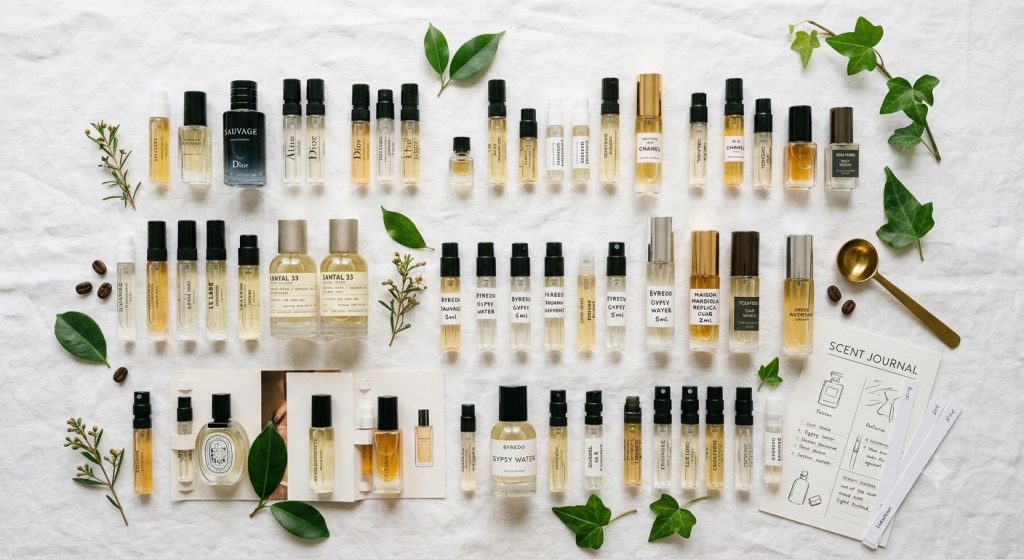
- Purchase Decants from Reputable Sites: Websites like Surrender to Chance, The Perfumed Court, and Scent Split buy authentic, full-sized bottles of designer and niche fragrances and transfer them into tiny glass spray vials. You can buy 1ml or 2ml samples for a fraction of the cost of a full bottle.
- Order Official Brand Discovery Sets: Luxury houses like Maison Francis Kurkdjian, Byredo, and Creed sell official discovery boxes containing mini vials of their bestselling scents. These sets often come with a digital coupon that refunds the cost of the set against a future full-sized purchase.
- Utilize Fragrance Subscription Services: Joining a monthly subscription club allows you to choose an 8ml travel atomizer of a premium scent every 30 days. This gives you roughly 120 sprays, which is more than enough to thoroughly test a perfume before buying a large bottle.
- Leverage Free Samples at Online Checkout: Whenever you purchase cosmetics, skincare, or grooming items online, always select fragrance vials as your free samples at checkout. Over time, you will build a diverse sampling library without spending an extra dime.
Common Perfume Testing Mistakes to Avoid
Even seasoned beauty shoppers fall victim to bad habits at the fragrance counter. Avoiding these common pitfalls will drastically improve your accuracy when evaluating a new scent and save you from making expensive mistakes.
The biggest mistake people make is rubbing their wrists together after applying a perfume. You have likely seen dozens of people do this, but it actually ruins the fragrance. Rubbing creates friction and heat, which crushes the delicate top notes and forces the perfume to skip straight to its base notes, altering the intended scent profile.
Another frequent error is wearing scented body lotions or heavy deodorants on the day you go fragrance shopping. If your skin is already covered in a coconut-vanilla body butter, any perfume you spray on top will mix with that lotion. You will not get an accurate reading of how the perfume smells on its own.
Finally, never buy a perfume based on how it smells on another person. Skin chemistry is deeply influenced by diet, hormone levels, and even stress levels. A perfume that smells like warm, cozy amber on a coworker might turn into a sharp, synthetic mess on your own skin.
The 24-Hour Wear Test Protocol
To truly understand a fragrance, you must put it through a comprehensive wear test. This step-by-step process allows you to evaluate the longevity, projection, and overall wearability of a scent in your real life.
Start by applying the sample to clean, moisturized skin in the morning. Use a fragrance-free lotion, as well-hydrated skin holds onto scent particles much longer than dry skin. Spray the perfume onto your pulse points—the wrists and the base of the neck—where body heat naturally radiates and projects the aroma.
Check in with the scent at three specific intervals throughout the day:
| Time Elapsed | Fragrance Stage | What to Evaluate |
| First 15 Minutes | The Opening | Enjoy the bright, volatile top notes like citrus, mint, or light fruits. |
| 2 to 3 Hours | The Heart | The core identity emerges. Notice the floral, spicy, or green notes. |
| 6+ Hours | The Dry Down | The true base remains. Look for rich woods, musk, vanilla, or resins. |
Pay close attention to how the scent makes you feel during these different stages. Does it complement your mood, or does it start to annoy you by afternoon? A great fragrance should bring you joy from the initial spray until it fades away into a faint skin scent.
Final Recommendations for Smart Shopping
Now that you know exactly how to test perfume before you buy, you can approach your next fragrance purchase with total confidence. Treat sampling as a fun, low-pressure exploration rather than a rushed chore. The journey of discovering how different notes interact with your skin is half the fun of being a fragrance lover.
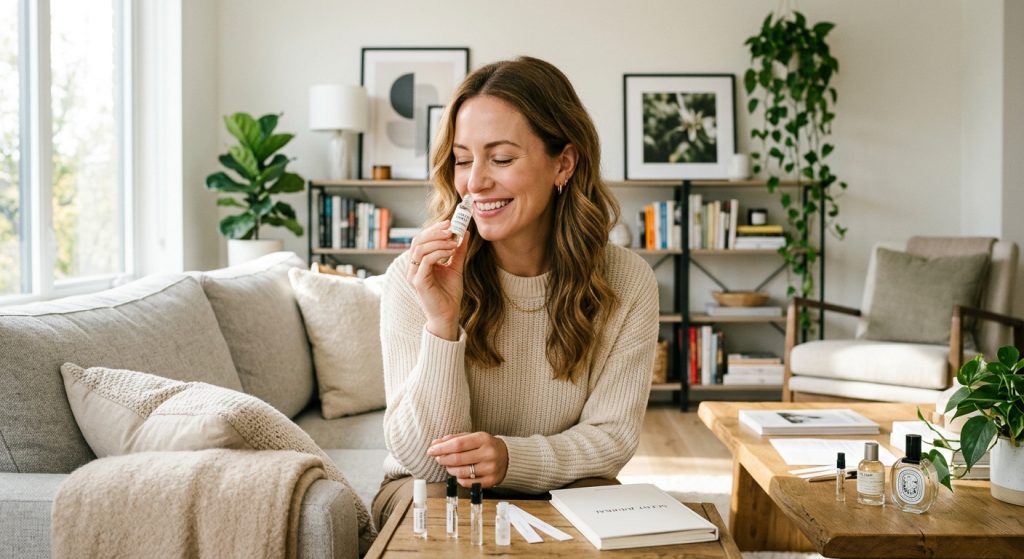
Always keep a small notebook or a digital memo on your phone to track your thoughts on different samples. Note down the brand, the name of the scent, and your simple impressions. Over time, you will start to notice clear patterns in the specific fragrance families and individual notes that consistently work well for you.
Conclusion
Finding a new signature scent should be an exciting, sensory adventure rather than a financial gamble. By taking the time to understand how to test perfume before you buy, you protect your beauty budget and build a curated collection of scents that truly reflect your personality. Whether you explore physical department store counters with paper blotters or order convenient sample decants directly to your doorstep, patience is your best asset. Allow every fragrance the time to tell its full story on your skin before you hand over your credit card. Did you find this helpful? Drop a comment below or share this with a fellow fragrance lover!
Frequently Asked Questions
Q1: How many perfumes can I accurately test in a single day?
A: You can accurately test up to four perfumes on your skin at one time by utilizing your wrists and the inner crooks of your elbows. However, if you are testing on paper blotter strips, you can smell up to six or seven different options before your nose experiences significant olfactory fatigue. Always take short breaks and reset your nasal passages between scents.
Q2: Why does a perfume smell amazing in the store but terrible when I get home?
A: Department stores are filled with a cocktail of floating fragrance particles, heavy lighting, and air conditioning, which distorts your perception. Additionally, you likely only smelled the volatile top notes before making your purchase. Once you get home, the fragrance enters its true dry-down phase, which might clash with your natural skin chemistry or personal environment.
Q3: Where is the best place to buy authentic perfume samples online?
A: The safest places to purchase authentic fragrance samples are official brand websites, which frequently offer curated discovery sets. For niche or hard-to-find scents, independent decanting websites like Scent Split, Surrender to Chance, and MicroPerfumes are excellent, highly trusted choices. These services partition genuine bottles into small, affordable trial vials.
Q4: How can I clear my nose when testing too many fragrances at once?
A: While many department stores provide jars of coffee beans, the best way to clear your nasal passages is to smell something completely neutral. Sniffing your own clean, unperfumed skin or a piece of natural fabric like a cotton shirt or wool sleeve works beautifully. This neutralizes your olfactory receptors and prepares your nose for the next scent profile.
Q5: Can I test perfume accurately by spraying it directly onto my clothes?
A: Testing perfume on clothing tells you how a scent smells on fabric, but it will not give you an accurate picture of how it interacts with your body chemistry. Fabrics hold onto top notes much longer and prevent the perfume from warming up. To know how to test perfume before you buy correctly, always perform your final evaluations directly on your skin.
Q6: What is the difference between an Eau de Toilette and an Eau de Parfum when testing?
A: The main difference lies in the concentration of pure fragrance oils. An Eau de Toilette typically contains 5% to 15% oil and evolves quickly, making it lighter and shorter-lasting. An Eau de Parfum contains 15% to 20% oil, offering a deeper, richer profile that develops more slowly on the skin. Always check the concentration type while you are conducting your wear test.
How to Build a Perfume Collection From Scratch: The Ultimate Beginner’s Guide