

What you’ll learn:
- What a skin scent actually is (and how it differs from a regular perfume)
- Why the “your skin but better” trend blew up on social media
- The key notes and ingredients that create that warm, close-to-skin effect
- How to choose, layer, and apply a skin scent for maximum staying power
Introduction
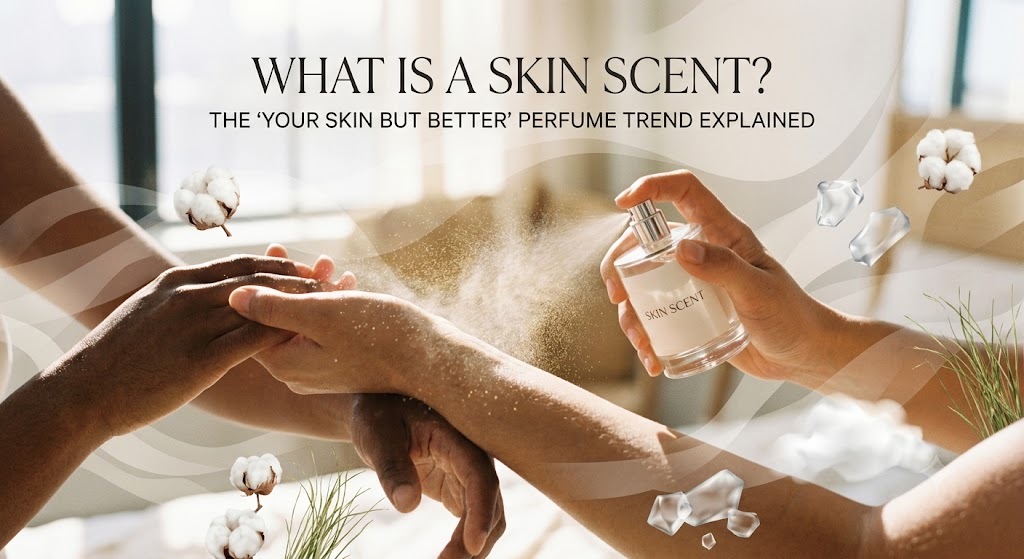
If you’ve spent any time on fragrance TikTok lately, you’ve probably heard someone describe a perfume as smelling like “skin, but better.” That’s a skin scent — and it might be the most misunderstood fragrance category around.
Unlike a bold, room-filling perfume that announces itself the second you walk in, a skin scent sits close to the body, warms up in your skin’s natural chemistry, and reads as an enhanced version of you rather than a cloud of fragrance. It’s subtle, personal, and — for a lot of people — completely addictive once they find the right one.
This trend has quietly reshaped how an entire generation shops for perfume, and it’s worth understanding why. Let’s dive in.
Why the Skin Scent Trend Matters
Skin scents aren’t actually new. Perfumers have been chasing the “second skin” effect for decades, going back to musk-forward classics that were designed to smell like warm, clean skin rather than an obvious perfume.
What’s new is the language around it. Social media gave this style of fragrance a name, and once it had a name, people started actively searching for it instead of stumbling into it by accident.
There’s a real reason this appeals to so many people. Fragrance industry data has repeatedly shown that “your skin but better” and similar musky, ambery styles rank among the most searched fragrance descriptors on platforms like TikTok, driving a measurable spike in sales for musk-forward releases over the past couple of years.
That surge in demand is exactly why brands like Glossier, Kayali, and Maison Margiela have leaned so heavily into this category, releasing musks and ambers specifically marketed as “your skin, elevated.”
What Actually Makes a Perfume a “Skin Scent”
The Notes Behind the Magic
Skin scents lean on a fairly consistent family of ingredients: clean musks, soft ambers, warm woods, and skin-like florals such as iris or heliotrope. These notes don’t compete with your natural body chemistry — they blend into it.
Musk is the real workhorse here. Modern synthetic musks like Habanolide or Muscone give perfumers that soft, powdery, almost skin-like warmth without the heaviness of older animalic musks. This is the ingredient doing most of the “your skin but better” magic.
Ambrette seed, sandalwood, and cashmeran also show up constantly in this category. They add a soft woody-sweet depth that reads as cozy and intimate rather than sharp or synthetic.
Low Sillage, High Intimacy
A true skin scent has intentionally low sillage — meaning it doesn’t project far from your body. That’s not a flaw; it’s the whole point.
This is why skin scents are often described as scents you have to lean in to smell. They reward closeness, which is part of why they feel so personal and even romantic to wearers.
It Reacts Differently on Everyone
Because skin scents are built to interact with your individual skin chemistry, the same bottle can smell noticeably different from person to person. One friend’s bottle of Glossier You might smell peppery and warm, while yours reads sweeter and softer.
This isn’t inconsistency in the formula — it’s the entire appeal. A skin scent is designed to finish the job your own body chemistry starts.
How to Choose and Wear a Skin Scent: Step-by-Step
- Test on skin, not paper. A blotter strip will never tell you how a skin scent actually performs, since the whole effect depends on your natural oils and warmth.
- Wait the full 30 minutes. Skin scents often smell like almost nothing straight out of the bottle. Give the top notes time to burn off before judging it.
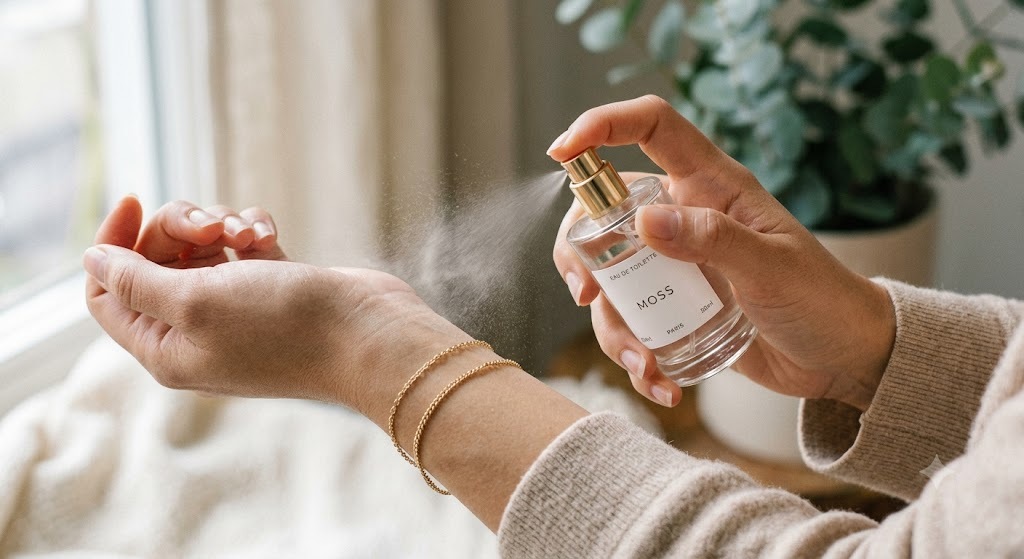
- Apply to pulse points. Wrists, neck, and behind the ears generate the most natural warmth, which helps musk and amber notes bloom properly.
- Layer with an unscented lotion first. Damp, moisturized skin holds fragrance longer, which matters even more with a scent that has low projection to begin with.
- Reapply rather than over-apply. Because skin scents are subtle, it’s tempting to spray heavily. A lighter, more frequent application usually works better than one heavy dose.

Common Mistakes People Make With Skin Scents
Expecting big sillage. If you’re used to bold designer perfumes, a skin scent can feel disappointing at first spray. Judge it after it’s had time to settle, not in the first five minutes.
Buying based on a friend’s review alone. Since skin chemistry changes everything, a rave review from a friend doesn’t guarantee the same result on you. Always test it yourself.
Storing it in a bathroom. Heat and humidity break down delicate musk and amber compounds faster, which is especially noticeable in a category built on subtlety.
Assuming “skin scent” means “boring.” Some of the most complex, well-constructed fragrances on the market are skin scents — the subtlety is a design choice, not a lack of craftsmanship.
Expert Tips for Getting the Most Out of Your Skin Scent
Perfumers often talk about “skin scents” as a compliment to good blending technique, because getting a fragrance to feel skin-like actually takes more precision than building something loud.
One trick worth borrowing from perfume insiders: spray a skin scent onto your hair or a scarf in addition to your pulse points. Hair holds fragrance differently than skin and can extend the wear time noticeably.
Layering two complementary skin scents — like a musk and a soft vanilla — can also build a more personal, one-of-a-kind result without pushing the fragrance into “loud” territory.
Summary: Is a Skin Scent Right for You?
Skin scents aren’t for everyone, and that’s okay. If you want a fragrance people notice across a room, this probably isn’t your category.
But if you’re drawn to something warm, intimate, and uniquely yours, a good skin scent can feel like the most personal thing in your entire routine.

Conclusion
So, what is a skin scent, really? It’s less a specific formula and more a philosophy — fragrance designed to enhance rather than announce.
Between the musk-driven ingredients, the low sillage, and the way it reacts uniquely to your own chemistry, a good skin scent can genuinely feel like the best version of your natural smell.
Whether you’re chasing that “your skin but better” effect for the first time or refining a collection you already love, understanding what makes this category work will help you shop smarter and wear it better.
Did you find this helpful? Drop a comment below or share this with a fellow fragrance lover!
Frequently Asked Questions
Q1: What is a skin scent in perfume terms? A skin scent is a fragrance built to sit close to the body with low projection, using musks, soft ambers, and warm woods that blend with your natural skin chemistry instead of standing apart from it. The goal is a subtle, personal “your skin but better” effect rather than a scent that fills a room.
Q2: Why do skin scents smell different on everyone? Skin scents are designed to interact with your individual body chemistry, oil levels, and skin temperature. Because those factors vary from person to person, the same bottle can bloom sweeter, muskier, or softer depending on who’s wearing it.
Q3: Are skin scents the same as musk perfumes? Not exactly. Most skin scents are musk-forward, but musk is just one ingredient family used to create the effect. Some skin scents lean more on soft ambers, woods, or skin-like florals alongside musk.
Q4: How long do skin scents actually last? Because they’re built for low sillage rather than loud projection, skin scents can feel like they fade faster even when the fragrance is technically still present. Applying to moisturized skin and reapplying every few hours helps extend the wear.
Q5: What’s a good skin scent for beginners? Popular entry points in this category include musk-forward releases from brands like Glossier and Kayali, since they’re widely available for testing and known for a soft, approachable “second skin” effect.
Q6: Can I layer a skin scent with another perfume? Yes, and it’s a popular technique. Layering a skin scent underneath a bolder fragrance can add warmth and depth without overpowering the top scent, since skin scents are designed to blend rather than compete.
Pingback: Best Skin Scents That Just Make You Smell Like You, Only Better - fragrantip
Pingback: Best Tea Perfumes: From Earl Grey to Japanese Sencha - fragrantip