

What you’ll learn:
- Why coffee has become one of perfumery’s favorite gourmand notes
- The difference between “dark roast” coffee perfumes and sweeter latte-style scents
- Specific bottles worth trying, from niche houses to drugstore finds
- How to apply and layer a coffee fragrance so it lasts all day
Introduction
If you linger by the coffee grinder just to breathe in the smell before you even drink a drop, a coffee perfume might be the most “you” fragrance category out there. The best coffee and espresso perfumes capture that same rich, roasted, slightly bitter-sweet aroma and turn it into something you can wear on your skin.
Coffee has quietly become one of the most requested notes in modern gourmand perfumery, showing up everywhere from niche Greek fragrance houses to celebrity-branded scents inspired by pop songs. It’s warm, comforting, a little addictive, and — unlike most gourmand notes — it works for practically anyone, regardless of gender.
In this guide, we’re breaking down the best coffee perfumes on the market right now, what makes each one distinct, and how to pick the right one for your personal taste. Whether you want something that smells like a milky latte or a straight shot of espresso, there’s a bottle for you. Let’s dive in.
Why Coffee Works So Well in Perfume
Coffee sits in a strange, wonderful spot in fragrance families. It’s technically a gourmand note, but it doesn’t behave like vanilla or caramel. Roasted coffee beans bring bitterness, smokiness, and a slightly nutty depth that keeps a fragrance from tipping into pure dessert territory.
That balance is exactly why perfumers love pairing it with other rich materials. Coffee shows up beside rose, cacao, tonka bean, patchouli, and oud in some of the most acclaimed gourmand releases of the past decade, giving those blends an “edge” that pure sweetness can’t provide on its own.
There’s also a sensory-memory angle worth mentioning. Smell is processed by the same part of the brain that handles memory and emotion, which is part of why the scent of coffee feels so immediately comforting to so many people — it’s tied to mornings, cafés, and routine in a way few other scents are.
Fragrance industry data consistently shows gourmand scents as one of the fastest-growing categories in the perfume market over the past several years, and coffee has ridden that wave right alongside vanilla and caramel. It’s no longer a niche curiosity — it’s a mainstream note.
The Best Coffee and Espresso Perfumes to Try
Coffee perfumes generally split into two camps: “absolute coffee” scents where the bean itself is front and center, and “coffee fantasy” blends where coffee plays a supporting role in a bigger composition. Below are standout picks from both categories.
Dark Roast, Espresso-Forward Picks
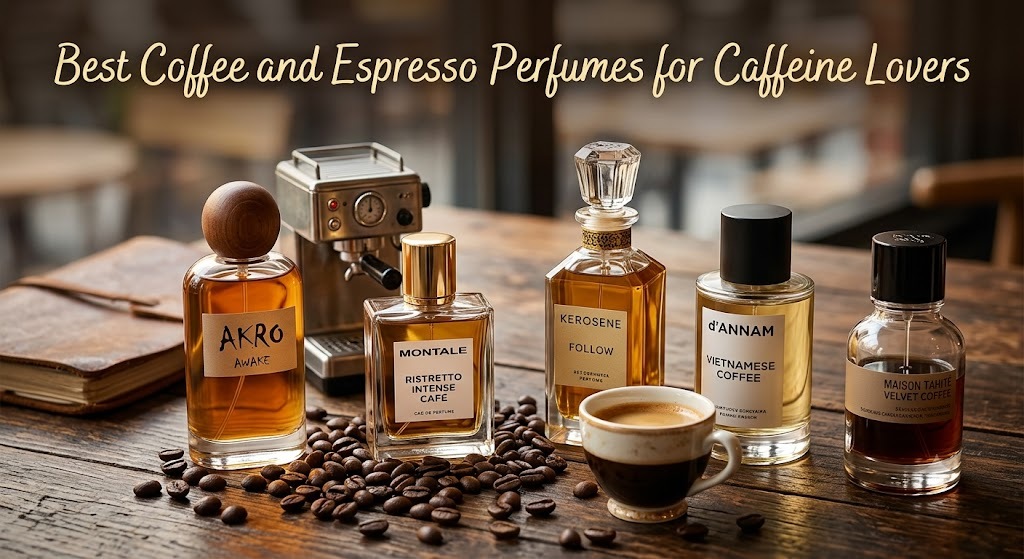
If you want something that smells like an actual shot of espresso, look at niche and indie houses first. Montale’s Intense Café leans into heady rose paired with a bold coffee accord, giving it real presence and staying power — a few sprays is genuinely enough.
For something even more photorealistic, smaller niche brands working with real coffea arabica essential oil (rather than a synthetic coffee accord) tend to produce the most convincing “fresh-ground beans” effect. These bottles often open bitter and slightly grainy before settling into a creamier, more vanilla-tinged drydown.
Mancera’s Aoud Café and similar oud-and-coffee blends take things in a smokier, more resinous direction, layering roasted coffee against dark wood for a scent that feels more evening than morning.
Latte and Cappuccino Style Coffee Perfumes
Not everyone wants a full-strength espresso on their skin, and that’s where milkier, latte-inspired scents come in. These typically soften the coffee note with vanilla, caramel, or a touch of lavender to keep things wearable for daytime and office settings.
Comptoir Sud Pacifique, a French niche house known for affordable, edible-smelling gourmands, has built a reputation on exactly this style — warm, sweet, vanilla-latte fragrances that read as cozy rather than intense.
Kayali’s Café Oud takes a similar creamy-cappuccino approach but folds in oud, bergamot, geranium, and rose for something a bit more layered and grown-up than a straightforward vanilla latte.
Celebrity and Mainstream Coffee Fragrances
Coffee perfume has also gone mainstream in recent years, partly thanks to pop culture. Sabrina Carpenter’s coffee-inspired fragrance leans into a floral espresso twist, mixing espresso bean with jasmine, cocoa powder, whipped cream, and caramel drizzle for something sweeter and more playful than a classic dark-roast scent.
On the more established end, Yves Saint Laurent’s Black Opium remains one of the most iconic coffee-adjacent fragrances on the market, built around a coffee-vanilla-sandalwood combination that’s been a staple in fragrance wardrobes for over a decade.

How to Wear and Apply a Coffee Perfume
Coffee fragrances tend to be rich and long-lasting, so a little restraint goes a long way. Here’s how to get the most out of one:
- Start with one or two sprays. Coffee notes, especially real coffee absolute, project strongly. You can always add more, but you can’t take it back.
- Apply to pulse points. Wrists, the base of the throat, and behind the ears let the fragrance warm naturally against your skin.
- Layer with an unscented lotion first if you have dry skin — it helps the scent develop more smoothly and last longer.
- Save the heaviest coffee scents for cooler months. Dark roast and oud-coffee blends tend to feel more at home in fall and winter than in summer heat.
- Reapply mid-afternoon if needed, especially with lighter latte-style coffee perfumes, which can fade faster than intensely concentrated espresso blends.
Common Mistakes People Make With Coffee Perfumes
Assuming “coffee perfume” means it smells exactly like brewed coffee. Many blends lean more toward roasted-bean bitterness or cocoa-adjacent warmth than an actual cup of drip coffee. Read notes carefully before buying blind.
Overspraying. Because coffee notes are so rich, two or three sprays is usually the ceiling, not the starting point. More isn’t always better here.
Ignoring skin chemistry. Coffee perfumes can smell noticeably different depending on your skin’s natural oils and pH. Always test on skin, not just on a paper card, before committing to a full bottle.
Buying based on hype alone. A fragrance going viral doesn’t guarantee it’ll suit your taste. If possible, order a sample size before investing in a full bottle of any coffee perfume.
Pro Tips From Fragrance Enthusiasts
Seasoned coffee-perfume fans tend to agree on a few things worth knowing before you shop.
First, pay attention to whether a fragrance uses a synthetic coffee accord or real coffee absolute. The latter tends to smell more authentic but usually comes with a higher price tag and shorter shelf stability.
Second, don’t overlook unisex framing. Coffee is one of the most gender-neutral notes in perfumery — you’ll see it worn confidently across the board, so don’t let “cologne” or “perfume” labeling limit your choices.
Finally, consider layering. A coffee fragrance paired with something woody or floral — think sandalwood, rose, or cedar — can round out the scent and make it feel more personal rather than a straightforward gourmand.
Final Recommendations
If you’re new to coffee perfumes, start with a milkier, latte-style scent — it’s the most forgiving and easiest to wear daily. Once you know you love the category, work your way toward the darker, more intense espresso and oud-coffee blends for special occasions or cooler weather.

For those who already know they want maximum coffee impact, a niche bottle built around real coffee absolute is worth the splurge — the difference in authenticity is noticeable from the very first spray.
Conclusion
Coffee perfume isn’t just a passing trend — it’s become a genuine, well-loved category within gourmand fragrance, and for good reason. Whether you gravitate toward a cozy vanilla latte scent or a bold, dark-roast espresso fragrance, there’s a bottle out there that captures exactly what draws you to your morning cup in the first place.
From niche names built on real coffee absolute to mainstream releases inspired by pop culture, the best coffee and espresso perfumes prove that this note has real staying power in the fragrance world. Start with a sample, pay attention to how it develops on your skin, and you’ll likely find your new signature scent hiding somewhere on this list.
Did you find this helpful? Drop a comment below or share this with a fellow fragrance lover!
Frequently Asked Questions
Q1: What is the best coffee perfume for everyday wear? A: Latte-style coffee perfumes with softer notes like vanilla or lavender tend to be the most wearable day-to-day. They keep the coffee note present without overwhelming a room, making them office- and occasion-friendly compared to more intense espresso or oud-coffee blends.
Q2: Do coffee perfumes actually smell like coffee? A: Many do, especially those built around real coffee absolute, but others use coffee more as an accent alongside cocoa, caramel, or vanilla. It’s worth checking the full note list before buying, since “coffee perfume” covers a wide range of intensities and styles.
Q3: Are coffee perfumes unisex? A: Yes, coffee is considered one of the most gender-neutral notes in perfumery. Most coffee-forward fragrances are marketed and worn across the board, regardless of whether the bottle is labeled as a cologne or a perfume.
Q4: How long do coffee perfumes typically last on skin? A: It varies by concentration and formula, but many coffee fragrances, especially eau de parfum versions, last anywhere from five to eight hours. Richer, more concentrated blends can last even longer, sometimes detectable well into the next day.
Q5: What notes pair well with coffee in perfume? A: Coffee blends beautifully with vanilla, cacao, caramel, tonka bean, rose, patchouli, and oud. These pairings either lean into the note’s sweetness for a dessert-like effect or lean into its smokiness for a deeper, more resinous fragrance.
Q6: Is coffee perfume good for warm weather? A: Lighter, milkier coffee scents can work in warmer months, but heavier, dark-roast or oud-coffee blends tend to feel more suited to fall and winter. If you love coffee scents year-round, consider owning one lighter option and one richer option for seasonal rotation.
Pingback: Best Chocolate Perfumes That Are Surprisingly Wearable - fragrantip