


What you’ll learn
- How scent technology differs between burning wax, passive diffusion, and aerosolized mist.
- The distinct longevity, safety, and cost profiles of candles, diffusers, and room sprays.
- Which fragrance format matches your specific room size, lifestyle, and aesthetic.
- Expert styling and placement hacks to maximize scent throw in every corner of your house.
Introduction
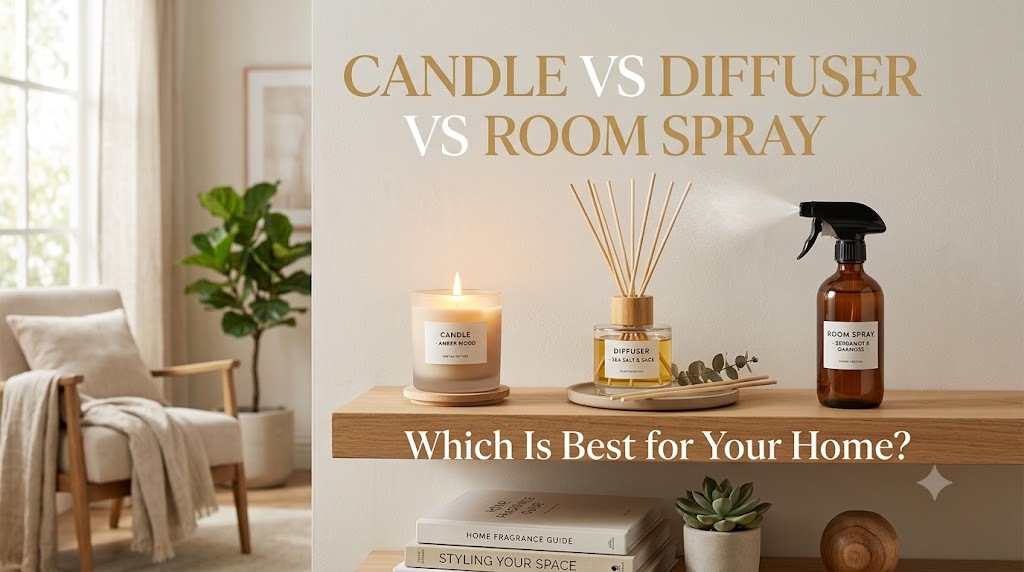
Walking through your front door after a long, grueling day and stepping into a warm, beautifully scented sanctuary is one of life’s simplest, most grounding luxuries. Scent has an immediate, powerful hook on our emotions, instantly shifting our mindset from stressed to serene. Yet, choosing the right medium for that aromatic magic can feel surprisingly overwhelming. When comparing Candle vs Diffuser vs Room Spray, you are not just picking an accessory; you are selecting an entire sensory experience that dictates how your home feels, breathes, and welcomes guests.
With the global home fragrance market expanding rapidly as more people invest in creating cozy, restorative living environments, understanding your options is essential. Every format behaves differently in the air, interacts uniquely with room layouts, and demands varying levels of maintenance. Whether you crave the cozy glow of a flickering wick, the effortless 24/7 reliability of a reed vessel, or the instant gratification of a targeted burst of mist, finding your signature home scent style requires a closer look at how each option functions. Let’s dive in.
The Anatomy of Home Fragrance: Why Your Choice Matters
Choosing how to scent your living space goes far beyond simply picking a pleasant aroma like vanilla or sandalwood. The underlying mechanism you choose affects air quality, scent throw, safety, and financial value over time. Understanding the science of how fragrance travels through a room helps you avoid burning through products that fade too quickly or don’t reach past the hallway.
When heat is applied to wax, volatile organic compounds release rapidly, creating a robust, room-filling cloud. Conversely, capillary action draws liquid up reeds in a passive diffuser, releasing a subtle, continuous whisper of scent over weeks. Room sprays, meanwhile, use mechanical propulsion or trigger pumps to suspend droplets directly in the air for immediate, localized impact. According to home goods industry analytics, consumers increasingly favor hybrid approaches, using diffusers for baseline background aroma and candles for situational ambiance.


Deep Dive: Comparing the Big Three
To settle the Candle vs Diffuser vs Room Spray debate for your specific lifestyle, we need to break down how each format performs across performance metrics, daily convenience, and sensory depth.
Scented Candles
Scented candles are the undisputed champions of cozy ambiance. The combination of a flickering flame and rich aroma creates an unmatched emotional warmth, making them a staple for living rooms and bedrooms during cozy evenings. High-end options crafted by luxury houses like Diptyque or Jo Malone use sophisticated paraffin-soy blends that ensure an even melt pool and a clean, complex scent throw.
However, candles require active supervision. You cannot leave them burning unattended, and they require regular wick trimming to prevent soot buildup and tunneling. Furthermore, their scent throw is temporary; once you blow out the flame, the fragrance lingers only briefly before fading. They work best in spaces where you plan to sit and relax for a designated period, offering a mindful ritual of lighting and extinguishing.
Reed Diffusers
Reed diffusers are the ultimate set-it-and-forget-it home fragrance solution. By placing porous rattan or fiber reeds into a vessel filled with fragrant oil or a glycol ether-based solvent, the liquid travels upward and evaporates cleanly into the surrounding air. Brands like Archipelago Botanicals and Voluspa masterfully engineer these blends to provide continuous, low-maintenance freshness for months at a time.
The primary advantage of a diffuser is consistency. Your entryway or hallway greets you with a welcoming note every single time you walk through the door, with zero fire hazard or electricity required. They are exceptionally safe for households with curious pets or rambunctious children, provided they are placed out of tipping reach. The trade-off is a lack of instant intensity; you cannot easily boost a diffuser’s output if you suddenly need to neutralize strong cooking odors in the kitchen.
Room Sprays
Room sprays deliver instantaneous results. With just one or two pumps of an aerosol or fine mist trigger, a room spray instantly saturates the air with concentrated fragrance molecules. This makes them the absolute best tool for targeted odor control, whether you are clearing out stale cooking smells in the kitchen or refreshing a guest bathroom before visitors arrive.
Modern artisanal room sprays, such as those from Aesop or P.F. Candle Co., utilize high-grade water- or alcohol-based formulas that linger nicely in soft furnishings like curtains, throw pillows, and rugs without leaving heavy oily residue. Because you control when and where they are deployed, a single bottle lasts for months. They do not, however, offer continuous background scent, meaning your home will only smell fresh when you actively apply the spray.
Step-by-Step Guide: Selecting the Right Scent Strategy for Every Room
Every room in your house serves a distinct purpose, meaning the ideal fragrance format changes depending on where you are standing. Here is how to map out a whole-home scenting strategy like an expert.
- Assess the Room’s Primary Function: Determine whether a space needs continuous passive background fragrance (like an entryway) or intense, situational aroma (like a kitchen or dining area).
- Evaluate Airflow and Square Footage: Large open-concept living areas swallow scent quickly. Pair high-ceiling rooms with powerful multi-wick candles or multiple diffusers placed strategically apart.
- Select Your Entryway Hero: Place a high-quality reed diffuser near the front door. It creates an instant olfactory signature that welcomes you home without requiring you to remember to blow out a flame.
- Curate the Living Room Ambience: Keep a luxury scented candle on your coffee table or mantel. Light it during evening downtime to signal to your brain that the workday is officially over.
- Equip Problem Areas with Room Sprays: Keep a sleek room spray bottle discreetly tucked away in the powder room or laundry area for rapid neutralization of stubborn, temporary odors.
- Prioritize Safety in Bedrooms: Opt for a low-maintenance reed diffuser or a timer-controlled cold-air nebulizer in bedrooms to avoid falling asleep while a candle is lit.

Common Mistakes People Make With Home Fragrance
Even seasoned fragrance enthusiasts fall into a few classic traps when trying to keep their homes smelling divine. Avoiding these pitfalls saves you money and protects your indoor air quality.
One major mistake is overloading a small space with competing scents. Putting a heavy vanilla candle, a sweet floral diffuser, and a citrus room spray all in a compact powder room creates an olfactory cacophony that can trigger headaches. Stick to one cohesive scent family—such as clean linens, crisp citrus, or warm woods—throughout interconnected living zones.
Another frequent error is failing to maintain reed diffusers. Over time, dust particles settle into the exposed ends of the reeds, clogging the tiny channels and stopping the oil from evaporating. To fix this, simply flip your reeds once a week using a paper towel to avoid getting oil on your hands or furniture. Finally, never burn a candle down past the final half-inch of wax; overheating the glass container can cause it to crack or shatter on delicate wooden surfaces.
Expert Tips for Maximizing Scent Throw and Longevity
Extracting maximum value and performance from your home fragrance investments separates casual buyers from true connoisseurs. Professional stylists and perfumers use several insider tricks to elevate everyday scent products.
When burning a new candle for the first time, always practice the “memory burn.” Allow the wax to melt completely to the outer edges of the container—usually taking two to three hours—before blowing it out. This prevents ugly tunneling, where the wax burns straight down the middle, wasting valuable product clinging to the glass walls.
For diffusers, placement matters immensely. Avoid putting your diffuser in direct sunlight, on top of hot radiators, or right next to strong air conditioning vents. Excessive heat causes the fragile essential and fragrance oils to evaporate too quickly, draining your bottle in a fraction of its intended lifespan. Instead, place diffusers in high-traffic hallways where natural air currents from walking pass gently circulate the notes naturally. For deeper insight into picking complementary notes, check out our guide on.
Summary and Strategic Takeaways
Navigating the world of Candle vs Diffuser vs Room Spray ultimately comes down to matching the product’s strengths to your daily routine. Candles offer unmatched psychological comfort and ritualistic warmth, perfect for intentional relaxation. Reed diffusers provide effortless, reliable, 24/7 background freshness that requires virtually zero thought. Room sprays deliver immediate, powerful control over sudden odors and fast transformations.
Rather than viewing these three formats as direct competitors, the savviest approach is to treat them as teammates. Use diffusers as your home’s foundation, light candles for evening unwinding, and keep a room spray handy for quick touch-ups. By combining formats thoughtfully, your home will always smell inviting, sophisticated, and uniquely yours.

Conclusion
Finding the perfect way to scent your living space is a deeply personal journey that transforms a physical house into a comforting, emotional home. Whether you lean toward the flickering, cozy glow of a classic wax candle, the steady, quiet reliability of a reed diffuser, or the instant burst of freshness from a fine room spray, each choice adds its own special chapter to your home’s atmosphere. Armed with a clear understanding of performance, maintenance, and strategic placement, you can now curate a sensory experience that delights every person who steps through your door. Did you find this helpful? Drop a comment below or share this with a fellow fragrance lover!
Frequently Asked Questions
Q1: What is the difference between a candle vs diffuser vs room spray for everyday home use? A: Candles provide active, ambient warmth and strong temporary scent through heat. Diffusers offer continuous, passive, 24/7 fragrance via evaporating oils without heat or flame. Room sprays deliver an instant, targeted burst of freshness for immediate odor control, making each option ideal for different lifestyle needs.
Q2: Which home fragrance option lasts the longest? A: Reed diffusers generally last the longest, often providing continuous scent for anywhere from two to six months depending on bottle size and airflow. High-end candles offer dozens of hours of burn time, but require manual lighting, while room sprays last through hundreds of individual pumps depending on usage frequency.
Q3: Are reed diffusers safer than scented candles? A: Yes, reed diffusers are significantly safer because they do not involve an open flame, hot wax, or electricity. This makes them ideal for homes with pets, small children, or for placement in high-traffic hallways and unattended rooms where candles pose a fire risk.
Q4: How can I make my home candles burn longer and cleaner? A: Always trim your candle wick to about one-quarter inch before every single burn to prevent heavy smoke and soot. Additionally, ensure your first burn melts the wax completely to the glass edges to prevent tunneling, and never burn a candle for more than four hours at a time.
Q5: Can I use room spray on furniture and fabrics? A: Many water- and alcohol-based room sprays can be safely misted onto curtains, throw pillows, and rugs to help the scent linger longer. However, always test a small, hidden patch of fabric first to ensure the oils do not cause staining or discoloration on delicate materials like silk or untreated leather.
Q6: Why can’t I smell my reed diffuser anymore? A: If your diffuser stops smelling, dust may have clogged the pores of the reeds, or the oil may have settled. Try carefully flipping your reeds upside down on a paper towel, or replace the reeds entirely with fresh rattan sticks to restore proper capillary action and scent dispersion.
Best Perfumes for Women Over 40 — Sophisticated and Timeless

1 thought on “Candle vs Diffuser vs Room Spray — Which Is Best for Your Home?”