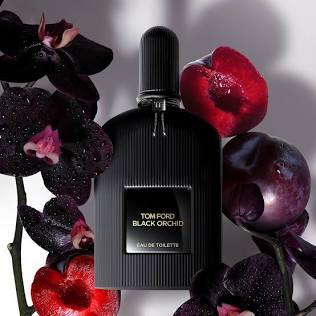
Category: perfume review

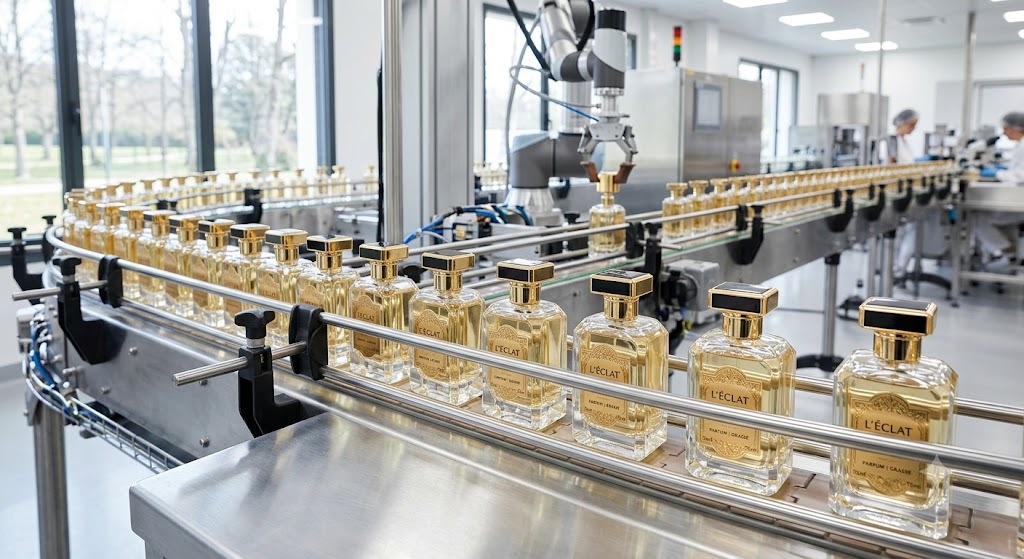
  • How Fragrance Houses Create New Perfumes — Behind the Scenes

    What you’ll learn

    • The secret developmental phases inside elite perfume laboratories
    • How master perfumers (or “noses”) balance rare raw materials and synthetic compounds
    • The meticulous processes of blending, maceration, and quality aging
    • Industry insights into why crafting a single luxury fragrance can take years

    Introduction

    Behind every iconic bottle sitting on your vanity lies a hidden world of quiet laboratories, multi-million dollar extraction technology, and years of artistic trial and error. When you wonder how fragrance houses create new perfumes, you are peeling back the curtain on a secretive, multi-billion-dollar global industry that blends fine art with organic chemistry.

    Long before a luxury scent hits department store shelves or floods social media feeds, it begins as a fleeting emotion, a creative brief, or a sudden inspiration in the mind of a master perfumer. The journey from a raw petal to a polished masterpiece is astonishingly intricate. Let’s dive in.

    The Brief and the Conceptualization Phase

    Every new fragrance project starts with a creative brief. Whether commissioned by a global fashion house like Chanel or an independent niche artisan brand, the brief acts as an artistic compass. It outlines the target demographic, emotional tone, price tier, and desired sensory family—such as a warm, spicy oriental or a crisp, citrus-forward aquatic.

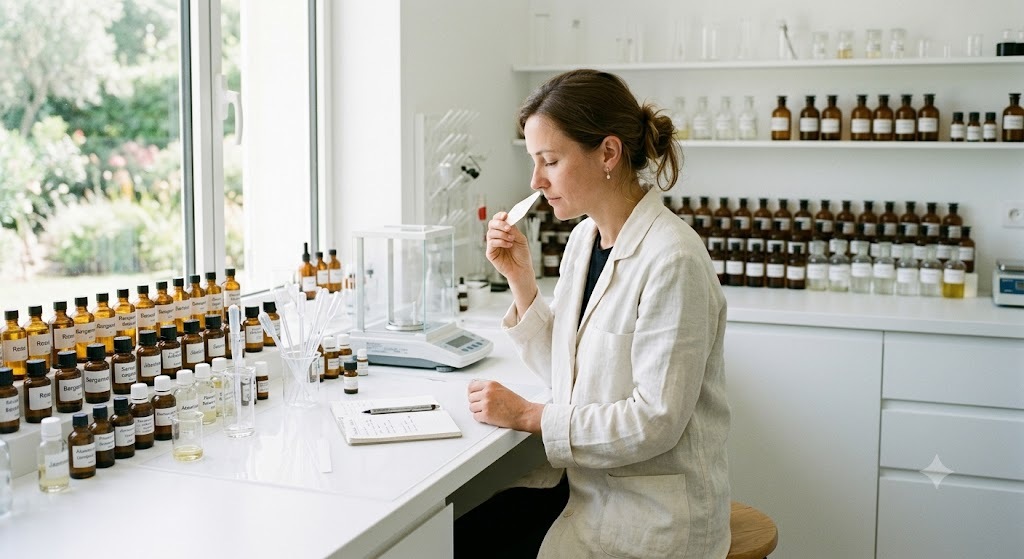
    Perfume executives and marketing teams collaborate closely with fragrance houses, presenting mood boards filled with textures, colors, and memories. Master perfumers—affectionately known in the industry as “noses”—translate these visual and emotional concepts into an invisible olfactory language.
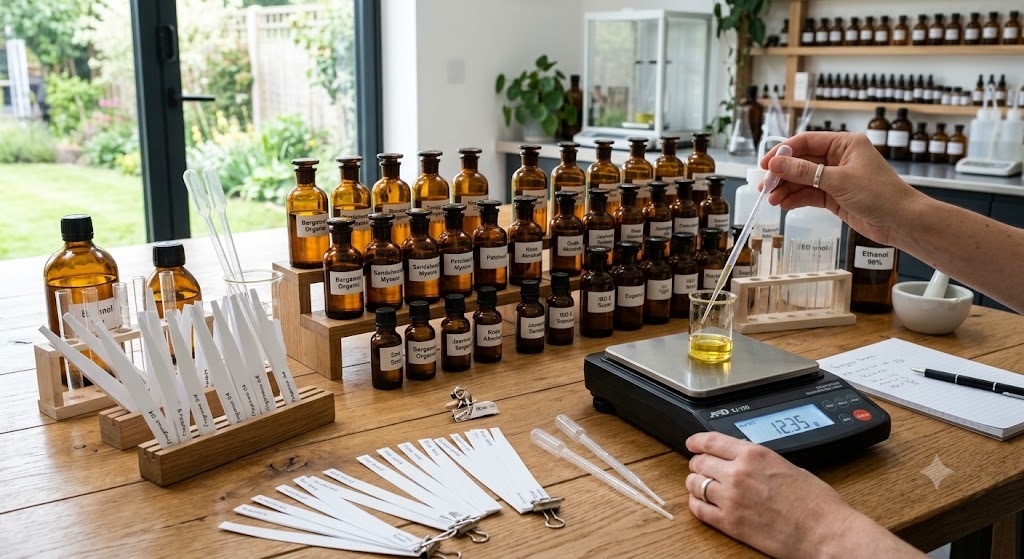
    The Brief and the Conceptualization Phase

    Sourcing and Extracting Raw Materials

    Once the concept is established, the search for raw materials begins. The global perfume market relies heavily on both rare natural extracts and innovative synthetic molecules to achieve depth, longevity, and ethical sustainability.

    Harvesting Nature’s Finest Botanicals

    Natural ingredients remain the beating heart of luxury perfumery. Delicate petals, earthy roots, and rich resins are harvested from around the globe—often hand-picked at precise times of day to capture maximum aromatic intensity. For instance, jasmine flowers must be gathered at dawn before the sun dries out their precious volatile oils.

    Advanced Extraction Techniques

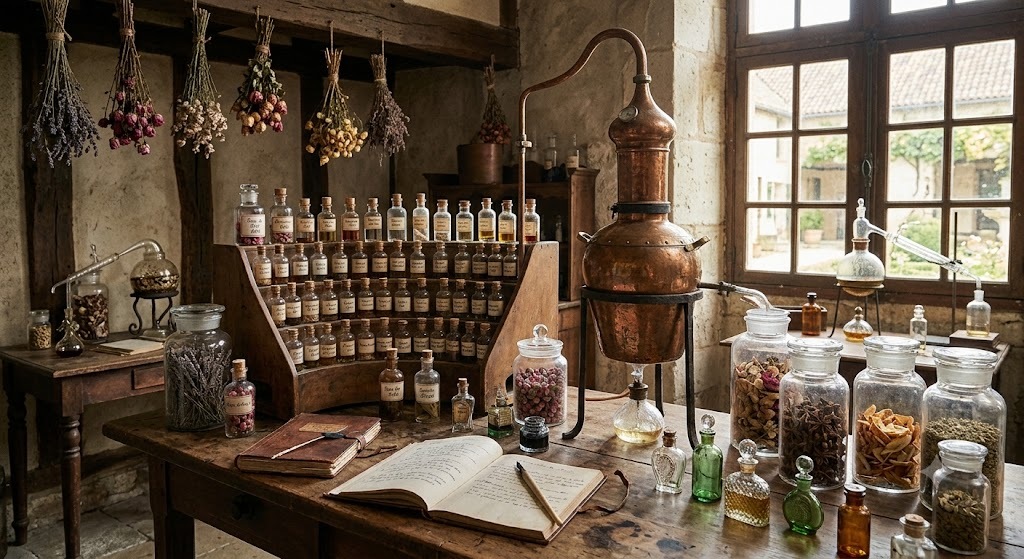
    Extracting the soul of a plant requires specialized chemistry. Traditional methods like steam distillation and solvent extraction pull concentrated oils from raw matter. Modern labs also utilize high-tech “headspace” technology, capturing the aroma molecules of living flowers in nature without ever harming or cutting the plant.

    The Power of Synthetic Molecules

    Not all scents can be harvested naturally—either due to environmental protection laws, cruelty concerns, or plant fragility. Synthetic aroma-chemicals created in laboratories provide sustainable alternatives, introducing crisp ozone, velvety musks, and unique metallic or futuristic accords that expand the perfumer’s palette.

    The Formulation and Blending Process

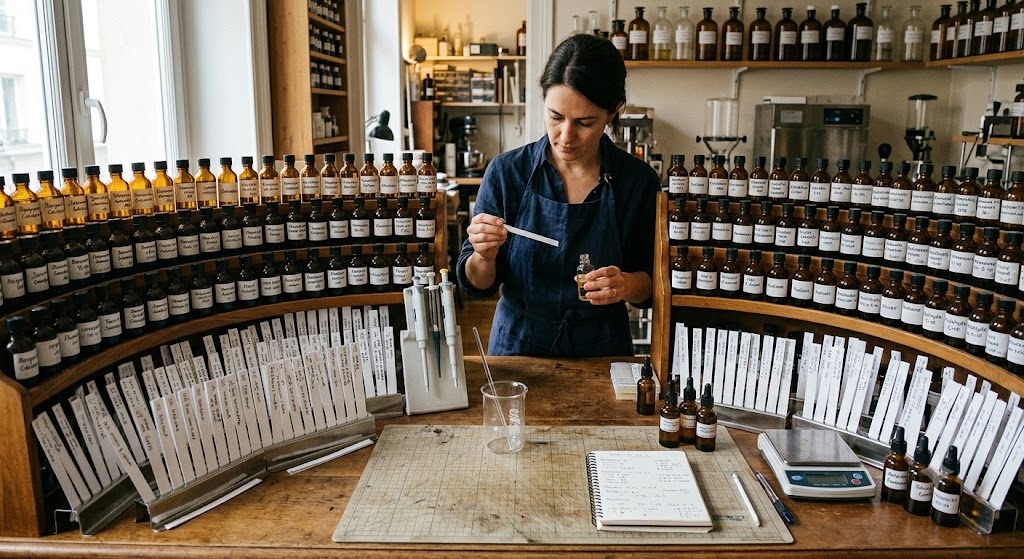
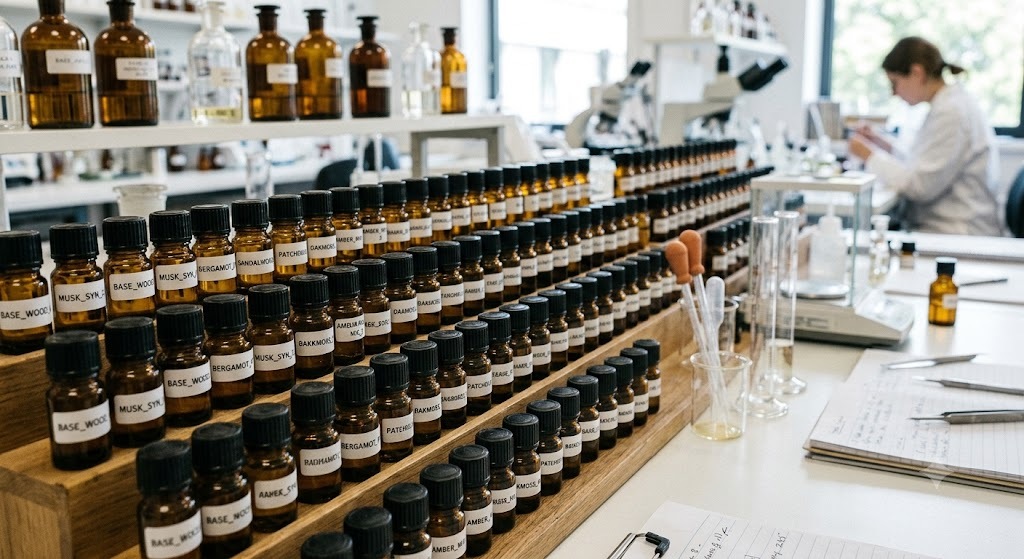
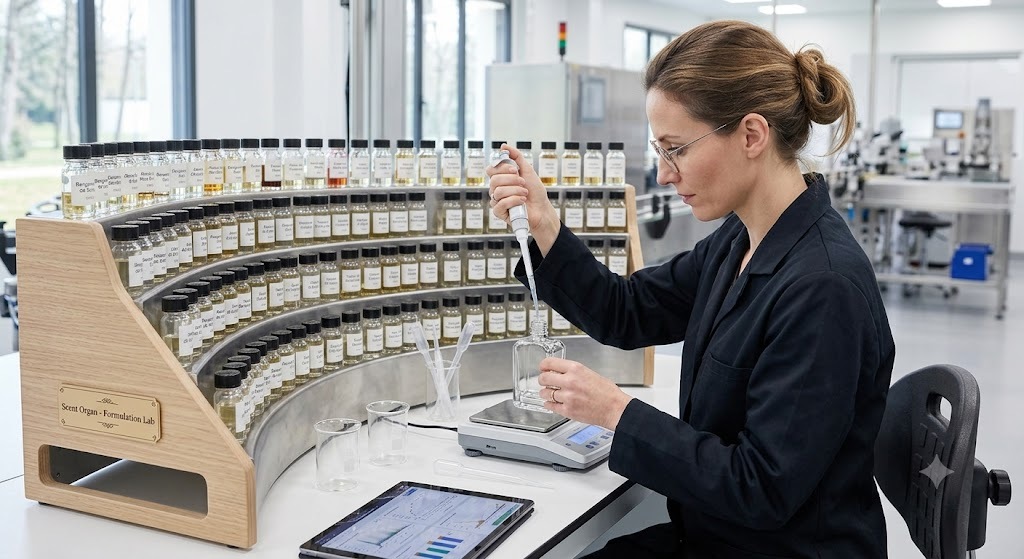
    With raw ingredients gathered, the grueling formulation phase begins. A master perfumer sits at an organ—a tiered semicircular desk holding hundreds of essential oils and aroma compounds—to write the initial formula.

    1. Structuring the Olfactory Pyramid: The perfumer balances top notes (bright citruses and herbs), heart notes (lush florals and fruits), and base notes (deep woods, amber, and resins) to ensure the scent evolves beautifully over time.
    2. Drafting Iterations: A nose may draft anywhere from 50 to over 800 experimental modifications, tweaking micro-percentages of ingredients until the chemical harmony is absolute.
    3. Consumer and Stability Testing: Laboratory batches undergo rigorous stress tests under extreme UV light and temperature variations to ensure the formula does not discolor, degrade, or separate over time.
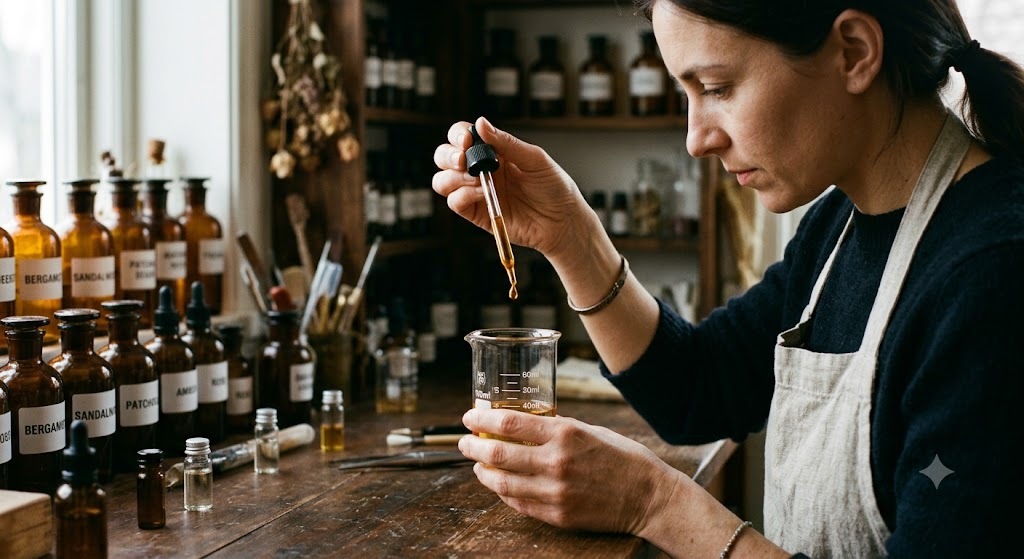
    The Formulation and Blending Process

    Common Misconceptions About Perfume Creation

    The public perception of how commercial scents come to life is often heavily romanticized or misunderstood. Dispelling these myths reveals the true rigor of the craft.

    1: Perfumes Are Invented Overnight by Celebrities

    While many celebrity fragrances carry famous names, the actual formulation is rarely done by the celebrity. Elite houses rely on trained perfumers who spend up to a decade in rigorous apprenticeships mastering thousands of individual scent profiles.

    2: Natural Ingredients Are Always Superior to Synthetics

    A common marketing trick is claiming natural equals better. In reality, synthetic ingredients are often safer, more sustainable, and crucial for protecting endangered species. Furthermore, synthetics provide structural stability that all-natural blends simply cannot maintain.

    3: More Ingredients Always Mean a Better Scent

    Some of the most celebrated perfumes in history rely on minimalist formulas with striking clarity, proving that restraint often outweighs chaotic complexity.

    Aging, Maceration, and Bottling Excellence

    After the formula is finalized, the manufacturing journey enters its final maturation phase. Freshly blended perfume oil is mixed with high-grade cosmetic alcohol and a touch of water. However, it cannot be bottled immediately.

    The mixture must undergo maceration—a resting period where the alcohol and oils fuse together in cool, dark vats for several weeks, months, or even years. This critical aging process softens sharp chemical edges, deepens the notes, and ensures long-lasting luxury performance on skin. Once aged, the liquid is chill-filtered, bottled in UV-protective glass, topped with a weighted cap, and shipped worldwide.

    Summary and Final Industry Takeaways

    The creation of a modern perfume is a magnificent intersection of science, culture, and raw emotion. From initial creative briefs to months of careful aging, fragrance houses treat scent engineering as an elite fine art. Understanding this intricate process changes how you experience every spray on your skin.

    Conclusion

    Exploring how fragrance houses create new perfumes gives us a profound appreciation for the invisible craftsmanship woven into our daily routines. It reminds us that every bottle represents hundreds of hours of human dedication, chemical innovation, and botanical artistry. The next time you mist your favorite signature scent, take a moment to savor the invisible journey it took to reach you.

    Did you find this helpful? Drop a comment below or share this with a fellow fragrance lover!

    Frequently Asked Questions

    Q1: How long does it actually take to create a new perfume? A: Developing a new commercial fragrance typically takes anywhere from six months to two years. Complex luxury or niche projects can require hundreds of experimental modifications and years of testing before the final formula is approved for production.

    Q2: What is the role of a master perfumer or “nose”? A: A master perfumer acts as the artistic and technical director of a scent. They possess an exceptional olfactory memory capable of recognizing thousands of raw materials and possess the technical chemistry skills to blend them into a stable, harmonious formula.

    Q3: Why is alcohol added during perfume creation? A: Cosmetic alcohol acts as a volatile carrier solvent. It dilutes the concentrated essential oils to a safe concentration for skin application and rapidly evaporates upon spraying, lifting the delicate fragrance molecules into the air around you.

    Q4: What is the difference between top, heart, and base notes in formulation? A: Top notes are light, volatile molecules (like citrus) that make the initial impression. Heart notes provide the core character (like florals) as the top fades, while base notes (like woods and musks) are heavy molecules that linger on skin for hours.

    Q5: Why do some perfumes smell different on different people? A: Skin chemistry plays a massive role in fragrance presentation. Factors like skin pH, natural body oils, diet, and ambient body temperature interact with perfume compounds, altering how individual notes project and evaporate.

    Q6: Are all perfume ingredients natural? A: No. Modern perfumery relies heavily on a hybrid palette combining precious natural absolutes with safe, sustainable synthetic molecules. Synthetics are vital for replicating scents that do not yield natural oils or protecting endangered botanical species.

    What Is a Soliflore Perfume and Why Are They Having a Moment?
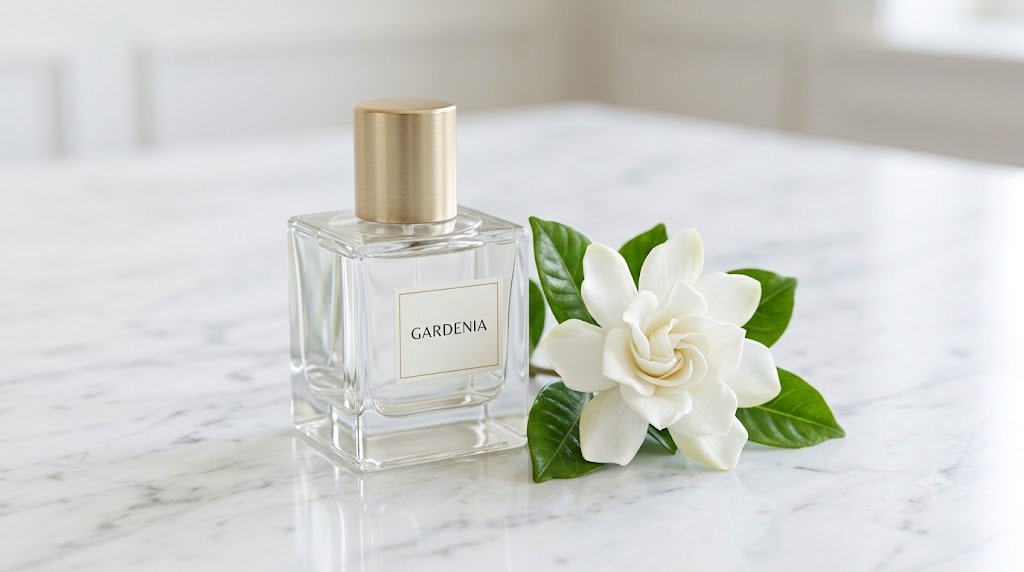
  • What Is a Soliflore Perfume and Why Are They Having a Moment?
    What you’ll learn

    • The definition of a soliflore fragrance and how it differs from complex blends
    • Why single-note perfumes are experiencing a massive modern renaissance
    • How to choose, wear, and layer soliflore scents like a professional
    • Top luxury and niche soliflore perfumes to add to your collection immediately

    Introduction

    Imagine stepping into a sun-drenched greenhouse where every single blossom in the air belongs to just one flower—say, a heavy, velvet-petaled damask rose in full bloom. There are no distracting spices, no competing tropical fruits, and no heavy amber bases hiding beneath the petals. Just pure, unadulterated botanical beauty.

    If you have ever wondered what is a soliflore perfume, you are already stepping into one of the most elegant, minimalist movements in modern fragrance. Derived from the French words for “single” (seul) and “flower” (fleur), a soliflore is a perfume designed to spotlight one specific floral note from top to base.

    While the fragrance industry spent decades pushing mega-blends featuring fifty ingredients or more, noses everywhere are stripping away the noise. Let’s dive in.

    The Art and Origins of Single-Note Fragrances

    To truly appreciate the soliflore, you have to look back at the history of perfumery. Long before chemists synthesized complex aroma-chemicals, early perfumers attempted to bottle the exact scent of nature’s most fleeting blossoms. Recreating a realistic lily-of-the-valley or violet without modern headspace technology was an act of pure alchemy.

    Today, a soliflore is much more than a simple linear extract; it is a masterclass in raw material sourcing and technical restraint. Perfumers use a combination of natural absolutes, high-grade essential oils, and modern captive notes to capture every facet of a flower—from the green, dewy snap of its stem to the honeyed warmth of its fully opened petals.

    The Art and Origins of Single-Note Fragrances

    Why Soliflore Fragrances Are Dominating the Market Today

    The modern fragrance landscape is shifting rapidly. Consumers are experiencing olfactory fatigue from ultra-sweet, sugary gourmands and heavy, room-filling synthetics. Here is why single-note perfumes are having an undeniable moment right now.

    The Craving for Transparency and Simplicity

    Modern buyers care deeply about ingredient transparency, clean beauty aesthetics, and intentional living. A soliflore offers an honest, back-to-basics approach to scent creation. You know exactly what you are smelling, whether it is crisp French lavender, creamy tuberose, or bright orange blossom. This radical simplicity feels refreshing in a crowded marketplace.

    The Rise of Layering and Customization

    Perfume lovers no longer want to smell like everyone else; they want to curate a signature aura. Soliflores serve as the ultimate building blocks in a modern wardrobe. You can wear a pristine jasmine soliflore on its own for effortless daytime elegance, or layer it over a woody base to create a bespoke evening scent that belongs entirely to you.

    Technological Breakthroughs in Extraction

    Creating a soliflore used to mean dealing with flat or harsh representations of delicate flowers. Thanks to advanced headspace technology and green chemistry, modern perfumers can capture the exact chemical signature of a living flower without destroying it in a processing vat. The result? Ultra-realistic floral profiles that smell dewy, fresh, and alive on the skin.

    How to Choose and Wear a Soliflore Perfume

    Incorporating a soliflore into your daily rotation requires a slightly different approach than wearing a traditional multi-layered perfume. Follow these practical steps to get the most out of your single-note bottles.

    1. Identify Your Core Floral Preference: Decide whether you lean toward clean whites (jasmine, tuberose, neroli), powdery florals (violet, iris), or romantic blooms (rose, peony).
    2. Test on Skin, Not Blotters: Soliflores rely heavily on your personal body chemistry to develop. A rose soliflore that smells jammy on a paper strip might turn wonderfully green and crisp on your skin.
    3. Practice Strategic Layering: Apply your soliflore directly after an unscented body lotion or over a light oil base to lock in volatile top notes that typically fade quickly.
    4. Experiment with Combinations: Spray a clean muguet (lily-of-the-valley) on one wrist and a warm vanilla or musk on the other to create a personalized depth that feels multidimensional.

    Common Myths About Soliflore Perfumes

    Despite their growing popularity, several misconceptions still surround single-note fragrances. Clearing these up will help you appreciate their true craftsmanship.

    1: Single-Note Means Simple or Boring

    Many people assume that because a fragrance focuses on only one flower, it lacks complexity. In reality, creating a compelling soliflore is exceptionally difficult. A master perfumer must build illusion and depth using supporting notes—like citrus top notes for sparkle or green stems for realism—so the perfume evolves over time rather than staying flat.

    2: Soliflores Have Terrible Longevity

    Because floral notes are often perceived as light, critics claim they disappear within minutes. While delicate citrus-florals or water lilies fade quickly, soliflores built around indolic white florals like tuberose or heavy resins like rose absolute can easily last all day on skin and fabrics.

    Myth 3: They Can Only Be Worn in the Spring

    While blooming florals feel natural during spring and summer, rich soliflores like dark rose, spicy carnation, or narcotic jasmine carry immense warmth and depth, making them striking and sensual choices for cold autumn and winter nights.

    Expert Tips for Elevating Your Soliflore Experience

    Building a world-class fragrance collection takes time, but mastering soliflores gives you incredible versatility. According to industry data, consumer interest in transparent, single-origin botanical scents has risen steadily over the past few years, driven by niche houses prioritizing sustainable farming.

    When selecting a high-end soliflore, look to legendary houses that specialize in botanical isolation. Iconic examples include Frederic Malle’s Portrait of a Lady (for rose mastery), Diptyque’s Olene (for crisp wisteria and jasmine), or Serge Lutens’ Sa Majesté la Rose.

    For more inspiration on building a versatile fragrance wardrobe, check out our guide on.

    Summary and Final Recommendations

    The soliflore movement represents a return to the pure poetry of perfumery. By stripping away unnecessary additives, these fragrances allow us to connect deeply with individual botanical notes. Whether you want to channel crisp morning greens or sultry evening blooms, adding a high-quality soliflore to your vanity provides unmatched versatility and timeless elegance.

    Summary and Final Recommendations

    Conclusion

    Understanding what is a soliflore perfume opens the door to a more intentional, customizable, and poetic relationship with your fragrance collection. Instead of relying on crowded, pre-packaged scent profiles, you get to celebrate the pure, unmasked beauty of nature’s finest blossoms. Embrace the simplicity, experiment with layering, and let a single note speak volumes.

    Did you find this helpful? Drop a comment below or share this with a fellow fragrance lover!

    Frequently Asked Questions

    Q1: What is a soliflore perfume in simple terms? A: A soliflore perfume is a fragrance built around a single, dominant floral note, such as rose, jasmine, or lavender. Instead of a complex, evolving blend of multiple scent families, a soliflore highlights the pure characteristics of one specific flower from the opening spray down to the final dry-down.

    Q2: Are soliflore perfumes long-lasting? A: Longevity depends entirely on the specific flower used and the concentration of the formula. Heavy, rich flowers like tuberose, rose, and orange blossom tend to last for hours on skin, while lighter, aquatic florals like violet leaf or lily-of-the-valley may require reapplication throughout the day.

    Q3: Can I layer a soliflore perfume with other fragrances? A: Absolutely. Soliflores serve as exceptional layering tools because their clean, focused profiles do not clash with other scents. You can layer a rose soliflore over a woody base or mix jasmine with vanilla to create a custom signature scent unique to you.

    Q4: What are some famous examples of soliflore perfumes? A: Classic and modern examples include Diptyque Olene (focused on wisteria and jasmine), Jo Malone Red Roses, Serge Lutens Sa Majesté la Rose, and Gucci Flora Gorgeous Gardenia. These houses highlight individual petals with remarkable clarity and artistic precision.

    Q5: Do soliflore fragrances smell artificial? A: Not necessarily. While synthetic aroma-chemicals are often used to stabilize volatile floral notes or mimic flowers that cannot yield natural oil (like lily-of-the-valley), high-end niche soliflores utilize advanced extraction methods to smell remarkably dewy, fresh, and true to nature.

    Q6: Are soliflore perfumes only meant for women? A: Fragrance has no gender boundaries. Many soliflores featuring deep rose, earthy iris, or aromatic lavender lean completely unisex, offering an exceptionally sophisticated and grounded aroma that appeals to all perfume enthusiasts regardless of gender.

    Why Do Some Perfumes Give You Headaches? The Real Reason

  • Why Do Some Perfumes Give You Headaches? The Real Reason

    What you’ll learn

    • The specific chemical triggers and aroma compounds responsible for scent-induced migraines.
    • How synthetic fixatives and heavy sweet or musky notes affect your neurological system.
    • Practical strategies to wear your favorite fragrances without triggering physical discomfort.
    • How to distinguish between general olfactory fatigue and true fragrance sensitivity.

    Introduction

    Picture this: You spray on a gorgeous, newly purchased luxury scent, feeling instantly chic and ready to conquer your day. Within twenty minutes, however, a dull, throbbing pressure begins to wrap around your temples. If you have ever found yourself asking Why Do Some Perfumes Give You Headaches, you are certainly not alone in this frustrating experience. Millions of fragrance enthusiasts love exploring complex olfactory art, yet find themselves physically derailed by certain formulations.

    Scents possess a direct, powerful pathway to our brains, but that immediate neurological connection can sometimes trigger adverse physical reactions. Understanding the underlying science behind these reactions transforms how you shop, test, and wear perfumes. Let’s dive in.

    The human sense of smell operates via the olfactory nerve, which sits intimately close to the trigeminal nerve—the primary pathway responsible for transmitting sensation throughout your face, sinuses, and head. When you inhale dense fragrance molecules, they stimulate this complex nerve network. For sensitive individuals, intense chemical inputs can trigger neurogenic inflammation, leading directly to throbbing head pain or a full-blown migraine attack.

    Furthermore, scent sensitivity is deeply tied to individual biology, respiratory health, and environmental conditioning. According to clinical studies on indoor air quality and chemical sensitivities, nearly one-third of the general population reports experiencing health symptoms like migraines or breathing irritation when exposed to scented consumer products. Exploring fragrance sensitivity helps clarify why your body reacts differently to various bottle compositions.

    The Neurological Link Why Certain Scents Trigger Pain

    Chemical Culprits: What Ingredients Spark Headaches?

    The heart of the issue often lies inside the ingredient composition itself. Modern commercial perfumery blends hundreds of natural and synthetic compounds to achieve long-lasting sillage. Let’s break down the main categories responsible for physical discomfort.

    Heavy Synthetic Fixatives and Musks

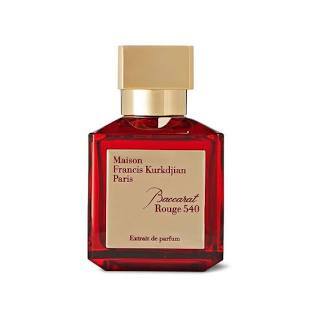
    Many modern designer houses rely heavily on synthetic nitro-musks and polycyclic musks because they anchor volatile top notes to the skin, ensuring the scent lingers for ten or more hours. However, these dense, heavy molecules coat the nasal passages continuously, overstimulating sensory receptors. When a musk-heavy powerhouse like Maison Francis Kurkdjian Baccarat Rouge 540 or Tom Ford Black Orchid projects intensely, the sheer physical weight of the vapor can overload a sensitive neurological system, resulting in a persistent, heavy ache behind the eyes.

    Artificial Aldehydes and Sharp Top Notes

    Aldehydes revolutionized twentieth-century perfumery, giving iconic scents like Chanel No. 5 their sparkling, champagne-like effervescence and soapy clean punch. While brilliant in small doses, sharp top notes can strike the nasal cavity with aggressive velocity. If you are prone to sinus pressure, these bright, piercing chemical bursts often act as an immediate catalyst for frontal headaches, mimicking the sensation of stepping into a heavily chlorinated room or inhaling fresh paint fumes.

    Sweet Gourmands and Heavy Amber Resins

    Syrupy, hyper-sweet compositions featuring notes of ethyl maltol, heavy caramel, spun sugar, and dense vanilla—such as Lancôme La Vie Est Belle—exert a different kind of pressure. The combination of intense sweetness and thick, resinous amber can feel cloying and suffocating in indoor spaces. This olfactory fatigue causes the brain to work overtime processing the persistent sugary profile, rapidly draining your energy and precipitating a dull, nagging tension headache.

    Step-by-Step Guide to Preventing and Managing Scent Headaches

    You do not necessarily have to abandon your entire fragrance collection just because you experience occasional discomfort. Implementing a strategic approach to application and selection makes all the difference.

    1. Shift Your Application Zones: Never spray perfume directly onto your neck, chest, or behind your ears where the vapor rises straight into your nose and sinuses. Instead, apply fragrance exclusively to lower pulse points like your wrists, the backs of your knees, or your ankles.
    2. Reduce Your Overall Spray Count: Often, a headache is simply a symptom of over-application. If you normally use five to six sprays, scale back to a single mist on your wrist or clothing to lower the ambient concentration in your personal air bubble.
    3. Opt for Natural and Clean Formulations: Explore niche houses that prioritize transparent botanical ingredients, organic essential oils, or water-based formulas. Brands focusing on clean beauty standards often omit heavy petroleum-derived fixatives that trigger sensitivities.
    4. Ventilate Indoor Living Spaces: Always apply your fragrances in a well-ventilated room or near an open window. Confined spaces like small bathrooms trap microscopic vapor droplets, forcing you to inhale concentrated chemical clouds.
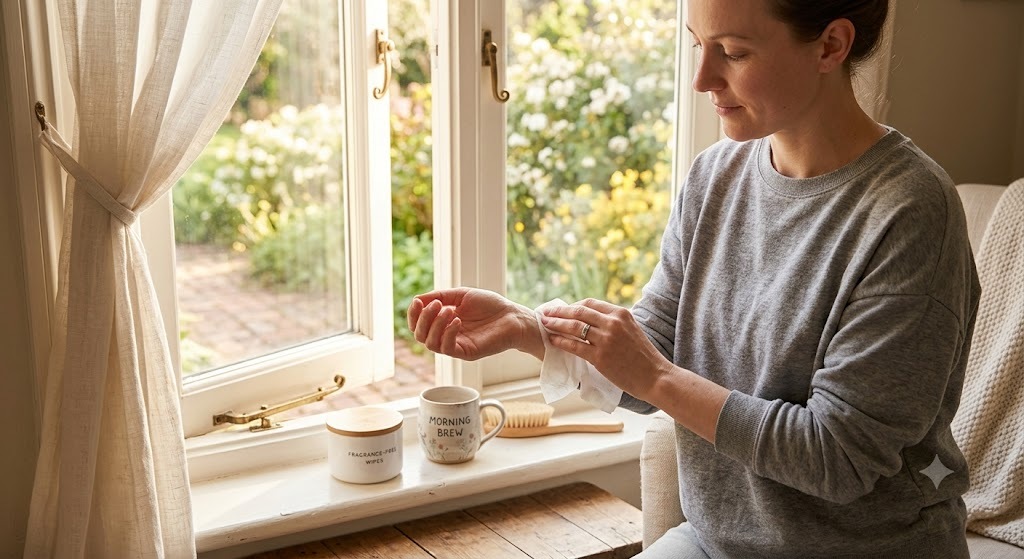
    5. Cleanse and Neutralize Quickly: If a scent begins triggering discomfort, immediately wash the application site with soap and water or wipe it down with an alcohol swab to halt further neurological exposure.
    Step-by-Step Guide to Preventing and Managing Scent Headaches

    Common Mistakes People Make When Testing Fragrances

    Navigating perfume counters or blind-buying bottles online often leads to physical regret. Avoiding these frequent missteps protects both your wallet and your head:

    • Testing Too Many Scents at Once: Spraying five different heavy perfumes across your arms at a department store creates a chaotic chemical cocktail. The brain cannot process competing heavy notes, instantly sparking a stress-induced headache.
    • Ignoring the Scent Evolution: Evaluating a perfume solely by its initial alcohol blast can be misleading. However, failing to monitor how a dense dry-down evolves over three hours can trap you in a heavy musk cloud that lingers long after you leave the store.
    • Assuming Natural Equals Safe: Many people assume botanical or natural essential oils cannot cause headaches. In reality, concentrated natural extracts like pure jasmine absolute, ylang-ylang, or heavy oakmoss contain powerful volatile organic compounds that can trigger migraines just as easily as synthetics.
    • Wearing Heavy Perfumes in Closed Cars: Trapping yourself in a warm, unventilated automobile with a heavy, projecting oriental fragrance is a recipe for instant motion sickness and throbbing head pain.

    Expert Tips for Cultivating a Headache-Friendly Routine

    Curating a comfortable fragrance wardrobe requires mindfulness and professional insight. Understanding how your body responds across different seasons helps you enjoy perfumery without physical compromise. For more guidance on finding balanced everyday options, read our guide on.

    • Embrace Eau de Toilettes and Mists: If Eau de Parfum concentrations feel too heavy, transition to lighter Eau de Toilette concentrations, body mists, or alcohol-free oil-based roll-ons. Oils sit close to the skin without projecting volatile vapors into your breathing space.
    • Track Your Triggers with a Journal: Note the specific notes, houses, and weather conditions on days you experience discomfort. You will likely spot a clear pattern—such as a specific intolerance to synthetic sandalwood or heavy white florals.
    • Hydrate Relentlessly: Dehydration amplifies neurological sensitivity. Drinking a large glass of water before testing or wearing potent perfumes helps stabilize your system against environmental triggers.

    Summary and Final Recommendations

    Experiencing physical discomfort from your favorite scents can feel disheartening, but understanding the root causes puts you back in control. Knowing why do some perfumes give you headaches allows you to navigate the fragrance world with greater awareness, separating heavy chemical culprits from wearable, harmonious profiles. By adjusting your application technique, choosing lighter concentrations, and respecting your body’s personal thresholds, you can indulge your passion for beautiful scents without sacrificing your well-being.

    Conclusion

    Fragrance should always feel like an empowering form of self-expression rather than a physical burden. While chemical sensitivities and dense synthetic fixatives can occasionally turn a gorgeous scent into a migraine trigger, mindful curation changes everything. By identifying your specific triggers and respecting your neurological limits, you can wear wonderful aromas in total comfort.

    Did you find this helpful? Drop a comment below or share this with a fellow fragrance lover!

    Frequently Asked Questions

    Q1: Why do some perfumes give you headaches while others do not? A: Headaches occur when specific chemical compounds, synthetic musks, or heavy aroma molecules overstimulate your trigeminal nerve. Lighter formulations with transparent or natural components often bypass this neurological irritation entirely.

    Q2: Can natural essential oil perfumes still cause migraines? A: Yes. Concentrated natural extracts like jasmine, patchouli, and ylang-ylang contain powerful volatile organic compounds. Natural ingredients can trigger allergic reactions and headaches just as effectively as synthetic laboratory chemicals.

    Q3: How can I stop a perfume headache once it starts? A: Wash the application area immediately with mild soap and water, drink a large glass of water to rehydrate, and move to a well-ventilated, scent-free room. Over-the-counter pain relievers can help if caught early.

    Q4: Are oil-based roll-on perfumes safer for headache sufferers? A: Generally, yes. Oil-based perfumes lack the sharp alcohol carrier base and do not project volatile vapor clouds into the air, keeping the scent close to your skin and reducing inhalation strain.

    Q5: Which specific fragrance notes are the most common headache triggers? A: Heavy sweet gourmands, intense white florals like tuberose and gardenia, sharp aldehydes, and heavy synthetic amber-musk bases are the most frequently reported culprits behind scent-induced migraines.

    Q6: Does spraying perfume on clothes make headaches worse? A: It can. Fabric fibers trap fragrance molecules and slowly release them over many hours or days, maintaining a continuous vapor cloud around your face that can prolong sinus irritation and head pain.

    What Does Perfume Concentration Actually Mean? Full Breakdown

  • The Chemistry of Why Some Scents Last and Others Fade Fast

    What you’ll learn:

    • Why some perfumes disappear within an hour while others linger until bedtime
    • How top, heart, and base notes evaporate at different speeds
    • The role your skin, weather, and fragrance concentration play in longevity
    • Simple, science-backed ways to make any scent last longer

    Introduction

    You spritz your favorite perfume in the morning, and by lunchtime, it’s gone. Meanwhile, your friend’s signature scent seems to follow her into every room, hours after she applied it. If you’ve ever asked why perfume fades fast while another bottle seems to last forever, the answer isn’t luck — it’s chemistry.

    Fragrance is a delicate balance of molecules, each with its own evaporation rate, weight, and relationship with your skin. Understanding that balance changes how you shop, apply, and even store your perfume.

    In this guide, we’re breaking down exactly what happens on a molecular level when perfume meets skin — and why that determines whether your scent lasts three hours or twelve. Let’s dive in.

    Why Fragrance Longevity Actually Matters

    Longevity isn’t just a nice bonus — it’s often the deciding factor between a fragrance you love and one you regret buying. A bottle that fades within an hour can feel like wasted money, especially with niche perfumes often priced well above $150.

    The global fragrance market is projected to surpass $80 billion by the late 2020s, and longevity is consistently one of the top three concerns cited by shoppers before purchase, right alongside scent profile and price.

    Understanding fragrance longevity, sometimes called “scent throw” or “sillage” in perfume circles, helps you choose smarter and get more value from every bottle.

    Why Fragrance Longevity Actually Matters

    The Science Behind How Scents Evaporate

    At the heart of every fragrance is volatility — a fancy word for how quickly a molecule turns from liquid into vapor. This single property explains almost everything about why perfume fades fast or clings to your skin for hours.

    Top, Heart, and Base Notes Explained

    Every fragrance is built in three layers, often called the fragrance pyramid.

    Top notes are the lightest, smallest molecules — think citrus, bergamot, or light herbs. They evaporate almost immediately, which is why your first impression of a perfume fades within 15 to 30 minutes.

    Heart notes, sometimes called middle notes, are heavier compounds like florals or spices. They emerge as the top notes fade and typically last one to three hours, forming the “true” character of the scent.

    Base notes are the heaviest, slowest-evaporating molecules — woods, musks, resins, and amber. These are what you smell hours later, and they’re the main reason some perfumes last well into the evening.

    Molecular Weight Is the Real MVP

    Smaller, lighter molecules like citrus terpenes evaporate quickly because they need less energy to turn into vapor. Heavier molecules like sandalwood or oud compounds have a much higher boiling point, so they release slowly over time.

    This is why a citrus cologne fades fast by design — it’s built almost entirely from top notes with little heavy base material to anchor it.

    Concentration Changes Everything

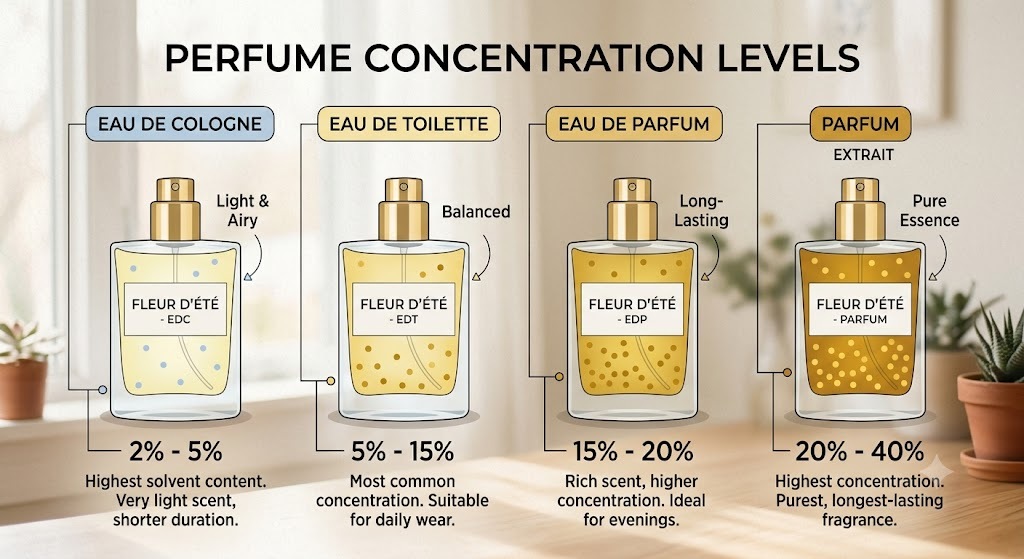
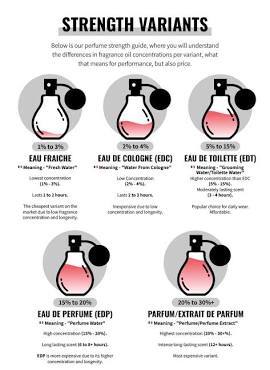
    The percentage of aromatic oils in a bottle massively affects how long it lasts. Eau de cologne typically contains 2–4% oil concentration, eau de toilette sits around 5–15%, and eau de parfum ranges from 15–20%. Pure parfum or extrait de parfum can exceed 20%, which is why a few drops often outlast a full spray of EDT.

    Brands like Chanel and Tom Ford often release the same fragrance in multiple concentrations for exactly this reason — to give wearers control over intensity and staying power.

    Concentration Changes Everything

    How to Make Any Perfume Last Longer

    Even a fast-fading fragrance can be coaxed into lasting longer with the right technique.

    1. Moisturize before spraying. Dry skin has fewer oils to trap fragrance molecules, so scent evaporates faster on parched skin.
    2. Apply to pulse points. Wrists, neck, and behind the ears generate warmth, which helps release the scent gradually rather than all at once.
    3. Don’t rub your wrists together. Rubbing breaks down top-note molecules through friction and heat, causing them to fade faster.
    4. Layer with matching products. Using a scented body lotion or oil underneath creates a base that holds the fragrance longer.
    5. Store perfume away from light and heat. UV exposure and temperature swings degrade fragrance molecules over time, weakening both scent and longevity.
    6. Target hair carefully. Hair holds fragrance beautifully, but alcohol-based sprays can dry out strands, so a light mist from a distance works best.

    Common Mistakes That Make Perfume Fade Faster

    Even fragrance lovers fall into habits that quietly sabotage longevity.

    Spraying only on clothes. Fabric doesn’t hold onto fragrance oils the way warm skin does, so scent dissipates faster and unevenly.

    Storing perfume in the bathroom. Steam and humidity accelerate the breakdown of fragrance molecules, shortening a bottle’s shelf life and daily performance.

    Assuming more sprays equal more longevity. Over-application can actually cause “nose blindness,” where you stop smelling your own perfume even though others still can.

    Ignoring skin type. Oily skin tends to hold fragrance longer, while dry skin causes faster evaporation — a detail most people never adjust for.

    Buying based on the in-store strip alone. Paper testers don’t interact with skin chemistry or body heat, so they can’t accurately predict real-world longevity.

    Expert Tips for Choosing Long-Lasting Fragrances

    If longevity matters most to you, shop with intention. Look for fragrances built around heavy base notes like oud, amber, vanilla, or musk — these compounds naturally resist evaporation.

    Perfumers often add fixatives, ingredients like ambroxan or iso e super, specifically to slow down the release of lighter notes and extend wear time. Fragrances marketed as “extrait” or “parfum” strength are formulated with this longevity in mind from the start.

    Testing on skin — not paper — for at least four hours before buying is the single most reliable way to judge true performance.

    Final Takeaways on Scent Longevity

    Final Takeaways on Scent Longevity

    The difference between a fragrance that fades fast and one that lasts all day comes down to molecular weight, concentration, and how you apply it. Lighter top notes vanish quickly by design, while heavier base notes are built to endure.

    Once you understand this chemistry, you can shop smarter, test more accurately, and get far more wear time out of every bottle you own.

    Conclusion

    Fragrance longevity isn’t magic — it’s molecular science playing out on your skin in real time. From the fleeting brightness of top notes to the slow-burning warmth of base notes, every stage of a perfume’s life is dictated by evaporation rate, concentration, and how you apply it.

    Now that you understand why perfume fades fast on some skin and lingers on others, you can make smarter choices at the counter and get noticeably more mileage from every spray.

    Did you find this helpful? Drop a comment below or share this with a fellow fragrance lover!

    Frequently Asked Questions

    Q1: Why does my perfume fade fast even though it smells strong in the bottle? A: Fragrance smells strongest in the bottle because concentrated vapor is trapped inside. Once sprayed, lighter top-note molecules evaporate quickly, especially on dry skin or in warm weather, which is why the scent seems to disappear faster than expected.

    Q2: Does higher concentration always mean longer-lasting perfume? A: Generally, yes. Eau de parfum and parfum concentrations contain more aromatic oil than eau de toilette or cologne, so they release scent more slowly and last longer, though individual skin chemistry can still cause variation.

    Q3: Why does the same perfume last longer on one person than another? A: Skin pH, oil production, hydration levels, and even diet affect how fragrance molecules bind and evaporate. Oily, well-moisturized skin typically holds scent longer than dry skin.

    Q4: Should I reapply perfume during the day if it fades? A: Light reapplication on pulse points is fine, but layering with a matching lotion beforehand usually extends wear more effectively than repeated spraying.

    Q5: Does storing perfume in the fridge make it last longer on skin? A: Refrigeration can slightly slow ingredient degradation over time, but it won’t change how long the scent lasts once applied to skin — that depends on the fragrance’s own molecular makeup.

    Q6: Are natural perfumes less long-lasting than synthetic ones? A: Often, yes. Many natural essential oils evaporate faster than lab-created fixative molecules like ambroxan, which is why synthetic components are commonly used to extend wear time in modern perfumery.

    What Is Benzyl Alcohol in Perfume — Should You Be Worried?

  • What Does Perfume Concentration Actually Mean? Full Breakdown

    What you’ll learn

    • How fragrance oil concentration impacts scent longevity, projection, and price point.
    • The exact differences between Extrait de Parfum, Eau de Parfum, Eau de Toilette, and Eau de Cologne.
    • Why higher concentration doesn’t always mean a scent smells “stronger” or better.
    • Practical expert tips to pick the right perfume strength for any season, skin type, or occasion.

    Introduction

    Have you ever fallen head over heels for a scent at the department store counter, brought it home, and wondered why it vanished before your morning commute ended? Or perhaps you sprayed a rich, musky fragrance thinking it was light and airy, only to realize you filled the entire elevator with a suffocating cloud of scent?

    Understanding what does perfume concentration actually mean is the ultimate secret to mastering your fragrance wardrobe and getting true value from every single spray. The world of perfumery uses elegant French terms like Eau de Parfum, Eau de Toilette, and Extrait to describe scent strength, but these labels do far more than look sophisticated on a heavy glass bottle.

    At its core, perfume concentration dictates the precise ratio between pure fragrant oils and the carrier alcohol base. This concentration determines how long a scent lingers on your wrists, how far it radiates into the air around you, and how the fragrance notes unfold throughout the day. In this comprehensive breakdown, we will demystify the science, shatter widespread industry myths, and help you shop smarter. Let’s dive in.

    The Science of Scent: Why Fragrance Concentration Matters

    Before you can choose the ideal bottle for your collection, it helps to understand what goes on inside a perfumer’s laboratory. Every fine fragrance is a chemical blend of pure essential oils, aroma compounds, alcohol, and occasionally a small percentage of water. Alcohol acts as the solvent and delivery system: it dissolves the concentrated aromatic oils and evaporates upon contact with the warmth of your skin, lifting the fragrance molecules into the air.

    Why Fragrance Concentration Matters

    The concentration percentage tells you exactly how much pure aromatic extract is dissolved in that alcohol base. A higher percentage of fragrance oil means there is less alcohol to evaporate quickly, leaving a denser layer of scent on your skin. This directly influences three critical performance factors that every perfume enthusiast tracks:

    • Longevity: How many hours the fragrance remains detectable on your skin.
    • Sillage: The trailing scent plume left behind as you move through a room.
    • Projection: How far outward the scent radiates from your pulse points when standing still.

    Understanding these mechanics helps you decode why two bottles from the exact same line can behave completely differently. When you know the secondary details of fragrance formulas—such as how molecular weight affects evaporation rates—you gain total control over your personal scent bubble.

    Decoding the Spectrum: From Extrait to Eau Fraiche

    The fragrance industry categorizes products into distinct tiers based on their oil ratios. Here is the definitive breakdown of every major concentration level available today.

    Extrait de Parfum (Pure Perfume)

    Extrait de Parfum—often referred to simply as Parfum or Pure Extract—represents the pinnacle of luxury perfumery. Boasting a concentration between 20% and 40% fragrant oils, this is the richest, most potent formulation available to consumers. Iconic creations like Chanel No. 5 Parfum or Maison Francis Kurkdjian’s Baccarat Rouge 540 Extrait exemplify this opulent category.

    Because Extrait de Parfum contains a low percentage of alcohol, it does not explode outward with aggressive projection. Instead, it clings closely to the skin, creating an intimate, velvety scent bubble that can last anywhere from 8 to 24 hours. The high concentration of heavy base notes—like warm amber, rich oud, smoky vetiver, and creamy sandalwood—gives it an unmistakable depth.

    Furthermore, Extrait formulations are often gentle on sensitive skin. Alcohol can be drying or irritating for delicate skin types, so the higher ratio of natural and synthetic oils in an Extrait provides a smoother, non-drying application experience.

    Eau de Parfum (EDP)

    Eau de Parfum is widely considered the sweet spot for modern perfume collectors and daily wearers. Containing between 15% and 20% fragrance oil, EDPs deliver exceptional longevity—typically lasting 6 to 8 hours—while maintaining a vibrant, inviting projection. Bestsellers like Tom Ford Black Orchid and Yves Saint Laurent Black Opium owe much of their commercial success to this balanced concentration.

    Eau de Parfum (EDP)

    In an EDP formulation, the heart notes—such as lush jasmine, romantic rose, spicy cinnamon, or juicy peach—take center stage. The alcohol content is calibrated to push these mid-tier notes into the atmosphere, ensuring people notice your fragrance when you walk into a room without overpowering them.

    If you are looking for a versatile fragrance that transitions effortlessly from a busy day at the office to an intimate dinner date, an Eau de Parfum is almost always your safest and most rewarding investment.

    Eau de Toilette (EDT)

    Eau de Toilette is one of the most popular fragrance categories on the market today, featuring an oil concentration between 5% and 15%. The name comes from the French phrase faire sa toilette, which historically referred to the morning ritual of washing and grooming. Famous classics like Dior Sauvage EDT and Chanel Chance Eau Tendre showcase the lively energy of this format.

    Because EDTs contain a higher proportion of alcohol, the initial spray produces a bright, refreshing burst of top notes. Crisp citrus peel, sparkling bergamot, fresh aquatic accords, and green herbal elements shine brightly in an Eau de Toilette. However, because alcohol evaporates rapidly, an EDT generally lasts between 3 to 5 hours on the skin.

    This shorter lifespan makes Eau de Toilette an ideal choice for summer heat, casual outdoor gatherings, daytime errands, or gym workouts where a heavy, lingering scent cloud might feel overwhelming.

    Eau de Cologne (EDC) & Eau Fraiche

    At the lighter end of the spectrum sit Eau de Cologne (2% to 4% oil concentration) and Eau Fraiche (1% to 3% oil concentration). Originating in Cologne, Germany, traditional Colognes were built around invigorating blend of citrus oils like lemon, orange, bergamot, and neroli.

    Eau Fraiche takes lightness a step further by using an aqueous or low-alcohol formula that offers a delicate whisper of scent. Both categories typically last between 1 to 2 hours, making them perfect post-shower splashes or quick midday pick-me-ups.

    Practical Tips: How to Choose the Right Concentration for You

    Choosing the perfect perfume concentration is not just about buying the bottle with the highest percentage. It requires matching the scent strength to your lifestyle, climate, and personal body chemistry.

    How to Choose the Right Concentration for You

    Match Concentration to the Season and Weather

    Temperature plays a dramatic role in how fragrance behaves on your skin. Warm weather causes alcohol and fragrance oils to evaporate at a significantly accelerated pace, while cold winter air slows down evaporation.

    1. Spring & Summer: Opt for Eau de Toilette or Eau Fraiche. Light citrus, aquatic, and green accords thrive in heat without choking out those around you.
    2. Fall & Winter: Reach for Eau de Parfum or Extrait de Parfum. Rich gourmands, heavy spices, and sweet resins need body heat and higher oil concentrations to penetrate crisp winter air.

    Consider the Setting and Occasion

    Where you plan to wear your fragrance should heavily dictate your concentration choice. A cramped airplane cabin or a quiet corporate office demands subtle scent choices, whereas an open-air wedding or evening gala allows for bolder projection.

    1. Workplace & Professional Environments: Stick to lighter Eau de Toilette or crisp Eau de Cologne applications. Keep your scent trail subtle and professional.
    2. Evening Events & Date Nights: Choose Eau de Parfum or Extrait de Parfum for their mysterious, intoxicating warmth and romantic close-contact aura.

    4 Common Myths About Perfume Concentration

    Misconceptions about perfume concentration run rampant in online forums and beauty counters. Let’s set the record straight on four of the biggest myths in the fragrance world.

    1: Higher Concentration Always Means “Better” Quality

    Many consumers assume that an Extrait de Parfum is inherently superior to an Eau de Toilette. In truth, concentration reflects composition—not quality. High-grade raw ingredients like rare Bulgarian Rose or Florentine Orris can be formulated into a breathtaking Eau de Toilette, while synthetic, harsh compounds can be blended into a 30% Extrait. Quality comes from the perfumer’s craft and raw ingredients, not just the oil ratio.

    2: EDP and EDT Versions of the Same Perfume Smell Identical

    This is perhaps the most dangerous trap for buyers. Brands rarely use the exact same recipe when creating the EDP and EDT versions of a fragrance line. Perfumers actively adjust the formula to highlight different facets. For example, the EDT version of a popular cologne might feature extra grapefruit and mint for lightness, while the EDP version introduces patchouli and leather for dark evening intensity. Always test both on your skin before purchasing!

    3: Cologne Is Exclusively for Men

    The term “Cologne” is frequently misused in Western culture—particularly in North America—as a catch-all word for men’s fragrance. Historically and technically, Eau de Cologne refers purely to a specific concentration tier (2%–4% oil) characterized by refreshing citrus and herbal notes. Anyone of any gender can enjoy a invigorating Eau de Cologne on a hot summer afternoon.

    4: Spraying More EDT Equals the Performance of an EDP

    Applying ten sprays of an Eau de Toilette will not turn it into an Eau de Parfum. Doing this simply creates a sharp, synthetic blast of opening alcohol notes that can trigger headaches. Extra sprays increase short-term projection, but because the foundational heavy base oils are absent, the scent will still fade away within a few hours.

    Expert Pro Advice: Maximizing Your Fragrance Performance

    To elevate your fragrance experience, you need to understand how to get the absolute maximum performance out of whatever concentration level you choose.

    Hydrate Your Skin Before Spraying

    Perfume oils require lipid molecules to latch onto. Dry skin acts like a desert sponge, drinking up the alcohol and causing fragrance oils to dissipate prematurely. Apply an unscented lotion, body oil, or a thin dab of petroleum jelly to your pulse points before spraying your favorite Eau de Parfum. Moisturized skin can extend your fragrance’s longevity by up to 50%!

    Spray Strategic Pulse Points (and Clothes)

    Focus application on warm pulse points where blood vessels run close to the skin: the sides of the neck, inner wrists, elbow creases, and behind the knees. Additionally, consider lightly spraying natural fabrics like wool or cotton scarves. Fragrance oils evaporate much slower from textile fibers than from warm skin, allowing light Eau de Toilettes to linger for days on a jacket or sweater.

    Store Your Bottles Correctly

    Even the highest quality Extrait de Parfum will degrade if exposed to its three greatest enemies: heat, direct sunlight, and humidity. Never store your precious bottles on a sunlit vanity or in a steamy bathroom cabinet. Keep your collection inside a cool, dark closet or drawer to preserve the delicate aromatic oil bonds for years to come.

    Fragrance Concentration Comparison: At a Glance

    To simplify your shopping decisions, use this quick reference breakdown whenever you evaluate new additions for your scent collection.

    Concentration LevelFragrance Oil %Average LongevityBest Suited For
    Extrait de Parfum20% – 40%8 to 12+ HoursSpecial occasions, cold weather, intimate settings
    Eau de Parfum (EDP)15% – 20%6 to 8 HoursEveryday luxury, evening wear, signature scents
    Eau de Toilette (EDT)5% – 15%3 to 5 HoursDaytime office wear, warmer weather, casual outings
    Eau de Cologne (EDC)2% – 4%2 to 3 HoursPost-shower refreshes, summer heat, subtle boosts
    Eau Fraiche1% – 3%1 to 2 HoursSensitive skin, casual gym wear, ultra-subtle hints

    Conclusion

    Understanding what does perfume concentration actually mean gives you the ultimate framework to shop smartly, wear scents with confidence, and build a versatile fragrance wardrobe suited for every moment in life. Whether you crave the intimate, velvety richness of an Extrait de Parfum for formal winter galas or the crisp, uplifting splash of an Eau de Toilette on a sun-drenched summer afternoon, matching oil percentages to your environment ensures you always smell extraordinary.

    The journey into fine fragrance is deeply personal and endlessly rewarding. Pay close attention to how different formulas interact with your skin’s unique chemistry, and don’t be afraid to experiment across different concentration levels.

    Did you find this helpful? Drop a comment below sharing your favorite concentration, or share this guide with a fellow fragrance lover!

    Frequently Asked Questions

    Q1: What does perfume concentration actually mean when shopping for cologne?

    A: Perfume concentration refers to the ratio of pure aromatic fragrance oils dissolved in alcohol within the bottle. Higher concentration percentages mean less alcohol, resulting in longer skin longevity, deeper base notes, and a more intimate scent trail. Lower concentrations feature higher alcohol ratios, offering brighter initial projection and a lighter, shorter lifespan.

    Q2: Is Eau de Parfum always better than Eau de Toilette?

    A: No, Eau de Parfum is not inherently better than Eau de Toilette. While EDPs last longer due to higher oil levels (15%–20%), EDTs (5%–15%) offer vibrant top notes and lighter projection that make them superior for hot summer days, casual daytime wear, or office settings where heavy scents can feel suffocating.

    Q3: Why does my perfume fade so quickly even though it is an EDP?

    A: Rapid fading can be caused by dry skin, improper storage, or olfactory fatigue (noseblindness). Dry skin absorbs oils quickly, while heat and light degrade fragrance molecules inside the bottle. Additionally, your brain often blocks out familiar scents after consistent exposure, making you think the fragrance has vanished when others can still smell it.

    Q4: Can I layer an Eau de Toilette with an Eau de Parfum?

    A: Yes! Fragrance layering is an expert technique. Applying a rich Eau de Parfum or Extrait as a dense base, followed by a light spray of a complementary Eau de Toilette, creates incredible complexity. For instance, pairing a woody EDP with a bright citrus EDT gives you both long-lasting depth and immediate fresh projection.

    Q5: How many sprays of Eau de Parfum should I apply?

    A: For an Eau de Parfum, 2 to 4 sprays are usually sufficient. Apply one spray to each side of your neck and one to your inner wrists or chest. Because EDPs carry rich mid and base notes with strong projection, over-applying can overpower surrounding people, especially in enclosed environments like offices or vehicles.

    Q6: Does perfume concentration affect the shelf life of the bottle?

    A: Yes, higher concentration formulas like Extraits and Eau de Parfums generally have a longer shelf life because they contain a smaller proportion of volatile alcohol and higher amounts of stable oil resins. When stored properly in a cool, dark location away from humidity, high-concentration perfumes can maintain their beauty for five to ten years or longer.

    Best Colognes for Men Over 50 — Classic Scents That Age Beautifully

  • What Is Benzyl Alcohol in Perfume — Should You Be Worried?

    What you’ll learn

    • What benzyl alcohol actually is and why perfumers rely on it for complex floral and sweet notes.
    • The exact regulatory limits and safety standards governing its use in global cosmetics and luxury fragrances.
    • How to identify if your skin is sensitive to this ingredient and check your favorite designer bottles.
    • Smart shopping strategies to choose safe, high-performing scents without unnecessary irritation.

    Introduction

    Picture this: you unbox a brand-new, luxury designer bottle, spray that gorgeous initial cloud of crisp citrus and warm amber onto your pulse points, and immediately fall head over heels. Fragrance is pure magic, capturing memories, emotions, and personal style in a single glass bottle. Yet, if you flip over the sleek box and read the fine print ingredients list, you might stumble upon a chemical name that sounds a little intimidating: What Is Benzyl Alcohol in Perfume really, and why is it sitting right next to your favorite natural essential oils?

    When diving into the fascinating world of niche and designer perfumery, understanding what goes onto your skin matters just as much as how the scent evolves through the dry-down. While chemical names can spark unnecessary panic, transparency is your best friend when curating a signature scent wardrobe. Let’s dive in.

    The Chemistry Behind the Scent

    To truly understand what is benzyl alcohol in perfume, we need to look at how modern and traditional perfumery operate behind the scenes. Benzyl alcohol is an aromatic alcohol naturally found in a wide array of plants, flowers, and fruits, including jasmine, hyacinth, ylang-ylang, and even teas and apricots. Because extracting it purely from natural sources is often costly and resource-heavy, perfumers frequently utilize lab-synthesized versions that possess the exact same molecular structure.

    In the global fragrance market, this compound acts as a silent worker. According to data from the International Fragrance Association (IFRA), aromatic alcohols serve foundational roles across thousands of commercial formulations. They stabilize volatile top notes, prevent bacterial growth, and act as incredible blending agents that smooth out sharp edges in complex formulations.

    The Chemistry Behind the Scent

    Why Formulators Love Benzyl Alcohol

    The reason you find this ingredient in everything from fresh aquatic sprays to heavy, gourmand winter perfumes comes down to its incredible versatility. Formulators rely on it for several distinct chemical and sensory reasons that elevate the final product.

    Solvent and Carrier Properties

    Perfume oils are concentrated, thick extracts that do not easily mix uniformly into alcohol and water bases on their own. Benzyl alcohol excels as an organic solvent, dissolving various resinous oils, absolutes, and synthetic aroma chemicals cleanly. This ensures every single spray from your bottle delivers an identical, consistent ratio of notes from the first spritz to the very last drop.

    Scent Profile Enhancer

    Beyond its functional mechanics, this ingredient brings a subtle, pleasant sensory contribution to the composition. It possesses a very faint, mild, sweet-balsamic odor that complements floral accords effortlessly. When you smell the opulent, heady sweetness of a luxury jasmine or gardenia perfume like Dior J’adore or Gucci Bloom, components like this help bridge the gap between heavy florals and lighter citrus notes.

    Preservative and Stabilizer Support

    Modern perfumes contain water, natural extracts, and alcohol, all of which can degrade or breed microbes if left unprotected. While high ethanol content handles most preservation, compounds like this provide secondary antimicrobial support. They safeguard the product’s integrity over years of vanity display, ensuring your expensive juice doesn’t spoil or discolor prematurely.

    How to Check and Manage Your Perfume Exposure

    Navigating fragrance ingredients requires a practical approach rather than blind fear. If you want to wear your favorite scents safely while protecting your skin barrier, follow these actionable steps.

    1. Inspect the Packaging: Turn your perfume boxes around and check the mandatory ingredient disclosure list, typically found near the bottom or side flap.
    2. Look for EU Allergan Declarations: In regions like the European Union, regulations require brands to explicitly list common allergens like benzyl alcohol if they exceed specific thresholds (0.001% in leave-on products, 0.01% in rinse-off).
    3. Perform a Patch Test: Spray a new fragrance onto the inner crook of your elbow instead of your neck or wrists first. Wait 24 hours to monitor for any redness, itching, or contact dermatitis.
    4. Spray on Fabric Instead of Skin: If you know you have reactive skin, spray your favorite juice onto your scarf, jacket lining, or collar instead of bare pulse points to enjoy the sillage without direct dermal contact.
    How to Check and Manage Your Perfume Exposure

    Common Myths About Fragrance Chemicals

    The beauty community is filled with well-meaning misinformation regarding synthetic and natural chemicals. Let’s clear up some widespread misconceptions.

    One persistent myth claims that any chemical name ending in “-ol” is a drying, harsh rubbing alcohol that will instantly strip your skin. In reality, chemical naming conventions in organic chemistry cover thousands of distinct molecules; aromatic alcohols like benzyl alcohol function entirely differently on skin compared to denatured ethanol or isopropyl alcohol.

    Another frequent misconception is that “natural equals completely safe while synthetic equals toxic.” Poison ivy and natural essential oils like citrus bergamot can cause severe contact dermatitis or phototoxicity, whereas strictly controlled lab-created ingredients are often purified and tested rigorously for safety under strict international guidelines.

    Expert Tips for Fragrance Safety

    Building a sophisticated perfume collection means prioritizing both sensory pleasure and skin health. Experienced fragrance enthusiasts know that moderation and proper storage are key to avoiding unwanted reactions.

    Always store your fragrance bottles in cool, dark environments away from direct sunlight and bathroom humidity. Heat and UV rays break down aromatic compounds over time, causing delicate molecules to oxidize and potentially turn irritating to sensitive skin types. If you want to explore more about maintaining your collection, check out our guide on.

    Furthermore, remember that concentration matters. Eau de Parfum and Extrait concentrations contain higher percentages of aromatic compounds and carrier substances than light Eau de Colognes or body mists, meaning sensitive individuals should apply them more sparingly.

    Summary and Final Takeaway

    Understanding what is benzyl alcohol in perfume empowers you to make informed, confident choices about the products you spray on your body every day. Far from being a hidden toxin, it is a well-researched, highly functional ingredient utilized by master perfumers to ensure stability, smooth blending, and gorgeous floral nuances.

    While individuals with known contact allergies should exercise caution and patch-test new purchases, the average fragrance lover can enjoy their favorite luxury and niche scents safely and worry-free.

    Summary and Final Takeaway

    Conclusion

    Stepping into the intricate world of perfumery opens up an exciting sensory journey filled with art, chemistry, and history. Knowing what goes into your favorite bottles lets you appreciate the craftsmanship even more deeply. Armed with the facts about common ingredients, you can build a stunning, diverse scent wardrobe with complete peace of mind. Did you find this helpful? Drop a comment below or share this with a fellow fragrance lover!

    Frequently Asked Questions

    Q1: What is benzyl alcohol in perfume used for? A: Benzyl alcohol is a multi-functional ingredient used primarily as a solvent to dissolve concentrated perfume oils, a preservative booster to maintain formula stability, and a fixative that subtly enhances sweet floral notes like jasmine and ylang-ylang.

    Q2: Is benzyl alcohol safe for sensitive skin? A: For most people, it is entirely safe in the low concentrations found in fine fragrances. However, it is a recognized EU fragrance allergen, meaning individuals with specific chemical sensitivities or eczema may experience mild contact dermatitis and should always patch-test first.

    Q3: Is benzyl alcohol the same thing as rubbing alcohol? A: No. While both belong to the alcohol family in chemistry, rubbing alcohol is typically isopropyl or denatured ethanol used for disinfection and quick evaporation, whereas benzyl alcohol is an aromatic alcohol with a pleasant, faint balsamic scent.

    Q4: Why do brands have to list benzyl alcohol on perfume labels? A: Regulatory bodies, such as the European Union cosmetics regulations, require manufacturers to explicitly list specific known contact allergens on product packaging so consumers with sensitivities can make informed purchasing decisions.

    Q5: Can I find perfumes that are completely free of benzyl alcohol? A: Yes, many clean beauty brands and specialty houses formulate specifically without synthetic or restricted fragrance allergens, often utilizing simplified formulas or 100% natural botanical isolates, though you must always check individual brand ingredient disclosures.

    Q6: Does natural perfume contain benzyl alcohol? A: Yes, naturally. Benzyl alcohol occurs organically in many high-end natural raw materials used in perfumery, including absolute oils extracted from jasmine, hyacinth, neroli, and various fruits, meaning even natural perfumes can feature it naturally.

    Best Perfumes for College Girls on a Budget

  • Natural vs Synthetic Fragrance Ingredients — Which Is Better?

    What you’ll learn

    • The fundamental chemical and sourcing differences between natural and synthetic notes
    • How longevity, projection, and skin safety compare across both categories
    • Why modern perfumery relies on a harmonious blend of botanical extracts and lab-created molecules
    • How to choose the right fragrance style for your personal skin chemistry and lifestyle

    Introduction (150–200 words)

    Spray a bottle of luxury perfume on your pulse points, and you enter a magical world crafted from thousands of hidden components. The debate surrounding natural vs synthetic fragrance ingredients sparks passionate arguments among perfumers, clean beauty advocates, and everyday fragrance lovers alike. You might assume that 100% natural oils always reign supreme over modern laboratory creations, but the reality of modern perfumery is far more nuanced, fascinating, and complex than mere marketing labels suggest.

    Behind every gorgeous bottle sits a meticulous balancing act between Earth’s ancient botanicals and cutting-edge aroma chemistry. Understanding what actually goes into your favorite eau de parfum changes how you shop, wear, and appreciate scent forever. Whether you crave the dewy green rush of freshly crushed rose petals or the hyper-realistic warmth of clean laundry and ambergris, knowing your ingredients empowers smarter choices. Let’s dive in.

    The Evolution of Modern Perfumery

    For centuries, humanity relied exclusively on Mother Nature to bottle beauty. Ancient Egyptians infused oils with lotus flowers, resins, and myrrh, while traditional French perfumers harvested fields of lavender and jasmine under the Mediterranean sun. However, the perfume industry revolutionized forever in the late 19th century with the synthesis of molecules like coumarin and vanillin. This monumental shift broke the physical limits of botanical extraction, allowing perfumers to capture scents that refuse to yield essential oils naturally, such as lily of the valley, lilac, and fresh sea air.

    Today, the fragrance industry generates billions of dollars annually, relying heavily on aroma chemistry to maintain consistency, protect endangered ecosystems, and lower production costs. According to market data from the global fragrance sector, over 90% of modern commercial formulations incorporate synthetic compounds alongside natural extracts. This fusion prevents environmental over-harvesting—such as the near-extinction of Indian sandalwood—while unlocking breathtaking creative dimensions that raw nature alone could never achieve.

    The Evolution of Modern Perfumery

    Comparing Natural and Synthetic Fragrance Ingredients

    Evaluating botanical extracts versus laboratory-created molecules requires a close look at how each category performs on the skin, impacts the environment, and shapes scent profiles.

    Scent Complexity and Evolution

    Natural ingredients feature complex, living profiles composed of hundreds of individual chemical compounds. When you spray a pure rose absolute, it shifts, breathes, and evolves on your skin across several hours, revealing subtle green, honeyed, and spicy nuances. Synthetics, by contrast, isolate specific target molecules. While individual aroma chemicals can smell linear or sharp on their own, master perfumers use them to build architectural stability, anchoring volatile top notes so your favorite citrus splash actually lingers past lunch.

    Longevity and Projection

    Physics dictates that natural molecules are often heavy and volatile, meaning zesty top notes like bergamot or lemon evaporate rapidly in warm weather. Synthetic fixatives and heavy aroma molecules—like Iso E Super, Ambroxan, or Hedione—project massively and cling to fabric for days. If you demand beast-mode performance from your signature scent, synthetics usually deliver superior staying power compared to delicate, purely botanical formulations that require frequent reapplication.

    Safety, Allergies, and Skin Chemistry

    A common misconception dictates that natural automatically equals safe, while synthetic means toxic. In reality, botanical essential oils contain powerful, complex allergens like linalool, geraniol, and eugenol, which frequently trigger contact dermatitis or sensitivity in delicate skin types. Reputable synthetic ingredients, regulated rigorously by organizations like IFRA (International Fragrance Association), undergo intense safety testing to ensure purity, stability, and minimized allergen profiles for sensitive wearers.

    How to Choose the Right Fragrance Profile for You

    Navigating the vast landscape of niche and designer perfumes becomes effortless when you adopt a strategic approach to ingredient selection based on your personal values, skin type, and wearing habits.

    1. Assess your skin sensitivity: If you experience frequent rashes or eczema flare-ups from traditional perfumes, explore hypoallergenic synthetic formulas or certified organic botanical perfumes featuring minimal allergen listings.
    2. Define your performance needs: If you want a subtle, aromatherapy-style skin scent that fades gracefully by afternoon, lean toward natural botanical oils. If you require 12-hour office longevity, seek out modern molecular compositions.
    3. Examine brand transparency: Look for niche houses like Le Labo, Byredo, or clean brands like Henry Rose that clearly disclose their ingredient sourcing, allergen filtering, and safety compliance standards.
    4. Test on skin, not paper: Spray potential choices directly onto your pulse points and wait at least two hours. Notice how natural notes melt into your unique skin chemistry compared to high-projection synthetic blends.
    5. Consider environmental impact: Recognize that while synthetics save endangered plants, certain petro-derived molecules lack biodegradability. Look for upcycled synthetic ingredients produced via green chemistry.
    How to Choose the Right Fragrance Profile for You

    Common Myths About Perfume Ingredients

    Misinformation runs rampant in the beauty community regarding what goes into a fragrance bottle. Let’s debunk the most persistent myths surrounding natural vs synthetic fragrance ingredients.

    The first major myth claims that natural perfumes are always eco-friendly. Harvesting millions of delicate blossoms to produce a tiny fraction of pure essential oil can actually demand staggering amounts of land, water, and labor, sometimes rivaling the environmental footprint of efficient laboratory synthesis.

    Another widespread fallacy states that synthetic fragrances are entirely composed of toxic chemicals. Every substance on Earth—including pure water and organic lavender oil—consists of chemicals. Well-designed aroma molecules undergo extensive toxicological screening, and many clean synthetic ingredients are actually bio-derived through biotechnology and fermentation rather than crude oil refining.

    Finally, many believe that expensive perfumes contain 100% natural oils while cheap ones use synthetics. Price points reflect brand marketing, luxury packaging, and rare botanical sourcing, but even the world’s most expensive Maison Francis Kurkdjian or Tom Ford masterpieces rely heavily on masterclass synthetic chemistry to achieve their iconic sillage and texture.

    Expert Tips for Building a Balanced Fragrance Wardrobe

    Curating a well-rounded fragrance collection means embracing the best of both worlds rather than choosing strict ideological sides. Master perfumers treat natural and synthetic ingredients like colors on an artist’s palette, blending rich botanicals with clean synthetics to achieve harmony, depth, and character.

    Look for fragrances that highlight innovative green chemistry. Modern biotechnology now allows scientists to engineer identical natural molecules using yeast fermentation or sugarcane conversion, bypassing both destructive harvesting and petroleum reliance. For instance, sustainable vanillin or patchouli alternatives offer the exact luxurious profile of the natural plant without harming fragile rainforest ecosystems or local farming communities.

    When storing your collection, keep both natural and synthetic-heavy bottles away from direct sunlight and fluctuating temperatures. Natural oils degrade rapidly when exposed to heat, while complex synthetic structures can break down over time, altering the top notes of your favorite investment bottles. For deeper insights into preservation, explore our guide on.

    Summary and Final Recommendations

    The ongoing debate over natural vs synthetic fragrance ingredients does not feature a single winner, because both styles serve distinct purposes in the art of perfumery. Naturals offer unmatched organic richness, soulful complexity, and a direct connection to botanical history. Synthetics provide incredible longevity, safety precision, environmental protection, and boundless creative horizons.

    Embracing a balanced fragrance wardrobe allows you to enjoy the sparkling, dewy realism of a botanical citrus morning spray alongside the warm, magnetic amber-wood projection of a sophisticated evening synthetic masterpiece. Let your personal skin chemistry, lifestyle, and olfactory cravings guide your next bottle purchase.

    Summary and Final Recommendations

    Conclusion

    Exploring the intricate balance between Earth-derived botanicals and laboratory-crafted molecules transforms perfume appreciation from a casual habit into an art form. Understanding the unique strengths of natural vs synthetic fragrance ingredients ensures you make informed, confident choices that align with your skin sensitivity, performance expectations, and personal ethics. Whether you fall in love with raw essential oils or revolutionary aroma chemistry, the right scent should always make you feel confident, beautiful, and uniquely yourself.

    Did you find this helpful? Drop a comment below or share this with a fellow fragrance lover!

    Frequently Asked Questions

    Q1: What is the main difference between natural vs synthetic fragrance ingredients? A: Natural ingredients are extracted directly from plants, flowers, wood, and resins using methods like distillation or expression, offering complex, evolving scent profiles. Synthetic ingredients are created or isolated in a laboratory by chemists, providing hyper-consistent smells, superior longevity, and notes that cannot be extracted naturally, such as lily of the valley or aquatic accords.

    Q2: Are synthetic fragrances toxic to wear on the skin? A: Not inherently. Reputable fragrance houses must comply with strict safety guidelines set by the International Fragrance Association (IFRA). While any chemical—natural or synthetic—can cause localized irritation or allergic reactions in sensitive individuals, government-regulated synthetic ingredients undergo rigorous dermatological testing to ensure they are safe for public consumer use.

    Q3: Do natural perfumes last longer than synthetic perfumes? A: Generally, no. Natural essential oils tend to evaporate much faster because they lack the heavy, stable molecular structures found in modern synthetic fixatives. Synthetic ingredients like Iso E Super or Ambroxan are specifically engineered to anchor a perfume to your skin and clothing, offering significantly stronger projection and all-day longevity.

    Q4: Why do some people prefer clean or all-natural perfumes? A: Many consumers prefer natural or clean formulas to avoid specific synthetic allergens, phthalates, or artificial colorants. Others appreciate the aromatherapy benefits of pure botanical essential oils and prefer supporting sustainable, organic farming practices used to harvest traditional perfume crops like French lavender and Grasse rose.

    Q5: Are expensive designer perfumes made entirely of natural ingredients? A: No. High-end and luxury perfumes almost always combine high-grade natural extracts with advanced synthetics. Even the most prestigious niche fragrance houses rely on synthetic aroma chemicals to add stability, enhance sillage, protect endangered species from over-harvesting, and replicate notes that do not yield natural essential oils.

    Q6: How can I tell if a perfume uses natural or synthetic ingredients? A: Check the brand’s official website, ingredient disclosure policy, or packaging details. Brands emphasizing natural ingredients will usually highlight certifications like organic, ISO 9235 compliance, or specific botanical percentages. However, all commercial perfumes legally list generic terms like “Parfum” or “Fragrance” on the outer box to protect proprietary trade formulas.

    Best Colognes for College Guys: The Ultimate 2026 Campus Guide

  • What Is a Perfumer? Meet the “Nose” Behind Your Favorite Scent

    What you’ll learn:

    • What is a perfumer and what this rare job actually involves day to day
    • How someone trains to become a “nose” in the fragrance industry
    • The step-by-step process a perfumer follows to build a scent from scratch
    • Common myths about this career and what separates a great perfumer from a good one

    Introduction

    Have you ever sprayed a perfume and felt instantly transported somewhere — a summer garden, a candlelit dinner, your grandmother’s kitchen? That reaction didn’t happen by accident. Somewhere behind that bottle sits a highly trained professional whose entire career is built around one extraordinary skill: the ability to smell.

    So what is a perfumer, exactly? A perfumer, often called a “nose” (or “le nez” in the fragrance capital of Grasse, France), is a specialist trained to identify, memorize, and combine thousands of individual scent materials into a single, balanced fragrance. It’s part science, part art, and almost entirely invisible to the public.

    Fewer than 500 people worldwide currently hold the title of master perfumer, making it one of the rarest specialized careers in the beauty industry. Curious how someone actually gets there — and what the job looks like once they do? Let’s dive in.

    Why the Perfumer’s Role Matters So Much

    Most shoppers can name their favorite fragrance brand, but almost none can name the person who created it. That anonymity is part of the industry’s culture, yet it hides just how much influence a single perfumer has over what an entire generation associates with luxury, romance, or confidence.

    A perfumer doesn’t just mix pleasant smells together. They’re responsible for translating an abstract creative brief — sometimes as vague as “make it feel like optimism” — into a physical formula made of dozens, sometimes hundreds, of raw materials.

    Why the Perfumer's Role Matters So Much

    This is also where the fragrance industry career path becomes relevant. Behind every recognizable eau de parfum on a department store shelf is a formula that took, on average, one to three years to finalize. Some iconic scents took even longer.

    The Making of a Nose: Training and Skill

    It Starts With an Extraordinary Memory

    Contrary to popular belief, perfumers aren’t born with superhuman noses. What they do have is an exceptionally trained scent memory, built through years of daily practice smelling and re-smelling raw materials until each one is instantly recognizable.

    A working perfumer typically memorizes the exact scent profile of 1,500 to 3,000 individual raw materials — from rose absolute and sandalwood to synthetic molecules like Iso E Super. That’s not casual familiarity; it’s recall on demand, the way a musician recognizes a note the instant it’s played.

    Most perfumers train at specialized schools such as ISIPCA in Versailles or through in-house apprenticeship programs at major fragrance houses like Givaudan, Firmenich, or IFF. These programs can take six to seven years to complete before someone is trusted to create a commercial formula alone.

    Chemistry Knowledge Is Non-Negotiable

    A nose also needs a working understanding of organic chemistry. Fragrance materials interact, evaporate at different speeds, and can shift dramatically when combined — a beautiful note in isolation might turn harsh or muddy next to another ingredient.

    Perfumers study how molecular weight affects a material’s volatility, which determines whether it becomes a top note (bright, fast-evaporating, like citrus), a heart note (the fragrance’s core identity, like florals or spices), or a base note (heavy, slow-releasing, like musk or woods).

    This scientific foundation is what separates hobbyist blending from professional perfumery. Anyone can combine two nice-smelling oils. Building a formula that stays balanced for eight hours on skin, in humidity, in cold weather, and across different skin chemistries takes real technical mastery.

    Creative Vision Ties It All Together

    Technical skill alone doesn’t make a great perfumer — vision does. The best noses in the industry, past legends like Jean-Claude Ellena or contemporary talents like Alberto Morillas, are known for signature styles that feel unmistakably theirs, the same way a novelist has a distinct voice.

    This creative instinct is what allows a perfumer to take a brief like “a modern take on tuberose” and produce something genuinely new rather than derivative. It’s the difference between a technician and an artist working in scent.

    How a Perfume Actually Gets Made: The Perfumer’s Process

    Understanding what is a perfumer becomes much clearer once you see the actual workflow behind a launch. Here’s a simplified version of how it typically unfolds:

    1. The brief — A brand or client shares a concept, target demographic, and sometimes a mood board or reference scent.
    2. Formula sketching — The perfumer creates several initial formulas, often 10 to 30 different directions, using a mix of natural extracts and synthetic aromachemicals.
    3. Smelling and refining — Each version is tested on paper blotters and skin, then adjusted. This stage alone can involve hundreds of tiny formula tweaks.
    4. Stability and safety testing — Chemists test how the formula holds up under heat, light, and time, and confirm it meets IFRA (International Fragrance Association) safety standards.
    5. Client approval rounds — The brand reviews finalists, often narrowing hundreds of iterations down to one final formula.
    6. Production scaling — The approved formula is scaled from a small lab batch to mass production without losing its character.
    The Perfumer's Process

    Common Myths About Perfumers, Debunked

    Misunderstandings about this job are everywhere, mostly thanks to movies and marketing copy. Here are the ones worth clearing up.

    Perfumers only use natural ingredients. In reality, most modern fragrances rely heavily on synthetic molecules, which allow for scents that don’t exist in nature — like a “clean linen” or “blue sky” accord — plus far more consistency and sustainability than naturals alone could offer.

    A great nose means never losing your sense of smell. Perfumers get colds, allergies, and off days just like everyone else. Professionals often work around this with strict routines, avoiding strong-smelling foods, fragranced products, and even certain toothpaste before formulating.

    Anyone with a good sense of smell can become a perfumer. Natural sensitivity helps, but the job is closer to a decade of specialized training than a party trick. It’s a discipline, not a gift alone.

    One person creates a perfume from start to finish, alone. Most commercial fragrances involve a lead perfumer plus evaluators, chemists, and marketing input shaping the final formula together.

    Pro Insight: What Separates a Good Nose From a Great One

    Talk to anyone inside the fragrance industry and a theme emerges quickly: technical skill can be taught, but restraint often can’t. Junior perfumers tend to overcomplicate formulas, piling on materials to chase complexity.

    The most respected noses are known instead for editing — knowing exactly which three or four materials can carry an entire composition, and having the confidence to leave the rest out. That restraint is often what turns a “nice” fragrance into an iconic one.

    Another underrated skill: business fluency. A perfumer today isn’t just working in a lab — they’re collaborating with marketing teams, understanding regional scent preferences, and staying aware of cost constraints per raw material, since some naturals like oud or orris root can cost more than gold by weight.

    Final Takeaway: A Career Built on an Invisible Skill

    So, what is a perfumer at its core? Someone who has turned one of our most overlooked senses into a precise, expressive craft — part chemist, part artist, part storyteller.

    It’s a career built on thousands of hours of quiet, repetitive training, in service of a moment most people never think twice about: that first spray, that instant hit of memory or mood.

    A Career Built on an Invisible Skill

    The next time a scent stops you in your tracks, remember there’s a nose behind it who spent years — sometimes decades — learning exactly how to make that happen.

    Conclusion

    Understanding what is a perfumer gives you a whole new appreciation for the bottle sitting on your dresser. It’s not just marketing and packaging — it’s years of trained memory, chemistry, and creative instinct distilled into a few milliliters of liquid.

    Whether you’re a fragrance enthusiast or just perfume-curious, knowing the craft behind the scent adds a layer of meaning to something as simple as your daily spritz.

    Did you find this helpful? Drop a comment below or share this with a fellow fragrance lover!

    Frequently Asked Questions

    Q1: What is a perfumer and what do they actually do all day? A perfumer is a trained specialist who creates fragrance formulas by combining raw materials into balanced compositions. Their day typically involves smelling and testing dozens of formula variations, adjusting ratios, meeting with brand teams, and reviewing safety and stability data before a scent goes to production.

    Q2: How long does it take to become a professional perfumer? Most perfumers train for six to seven years, either through specialized schools like ISIPCA or in-house apprenticeships at major fragrance houses. Even after formal training, it often takes several more years of mentorship before someone leads their own commercial formula.

    Q3: Do perfumers really memorize thousands of scents? Yes. Working perfumers typically memorize 1,500 to 3,000 individual raw materials by scent alone, recalling each one’s character, strength, and how it behaves when blended with others.

    Q4: Is “nose” an official job title in the fragrance industry? “Nose” is an informal but widely used industry nickname for a perfumer, especially common in Grasse, France, historically considered the birthplace of modern perfumery. Formally, the job title is usually “perfumer” or “master perfumer.”

    Q5: Can perfumers lose their sense of smell over time? It can happen, though most protect their noses carefully by avoiding strong scents, certain foods, and fragranced products before working. Temporary loss from illness or allergies is common and simply requires pausing formulation work.

    Q6: Do perfumers only use natural ingredients like flowers and oils? No — most modern perfumes rely heavily on synthetic molecules alongside naturals. Synthetics allow for greater consistency, sustainability, and entirely new scent effects that don’t exist in nature, like an airy “ozonic” or “clean cotton” note.

    How Perfume Is Actually Made — From Ingredients to Bottle

  • How Perfume Is Actually Made — From Ingredients to Bottle

    What you’ll learn

    • The fascinating journey of raw botanicals converting into luxury liquid gold.
    • How master perfumers extract natural scents and engineer synthetic aroma molecules.
    • The intricate steps of blending, aging, and stabilizing high-end fragrances.
    • Essential tips for recognizing quality craftsmanship when shopping for your next signature scent.

    Introduction

    Have you ever sprayed your favorite fragrance and wondered how perfume is actually made behind the scenes? That single mist on your wrist is the culmination of years of craftsmanship, centuries of tradition, and cutting-edge chemistry. In fact, a single bottle of luxury perfume often contains hundreds of individual natural and synthetic ingredients sourced from every corner of the globe.

    From the sun-drenched jasmine fields of Grasse, France, to high-tech research laboratories, the perfume making process is an extraordinary blend of art and science. Raw flowers, woods, resins, and lab-synthesized molecules go through meticulous extraction, secret formulation, precise alcohol dilution, and months of aging.

    Understanding the mechanics of scent construction transforms how you appreciate every spritz. It alters the way you shop, apply, and care for your personal collection. Let’s dive in.

    The Fascinating History and Science Behind Perfumery

    Before exploring modern production lines, it helps to understand why crafting fine fragrance requires such immense precision. Perfumery is an ancient craft, dating back over 4,000 years to ancient Mesopotamia and Egypt, where people burned aromatics during sacred rituals. Today, the global perfume market is a multibillion-dollar industry driven by both passion and rigorous scientific innovation.

    Modern scent creation bridges the gap between raw botanical harvesting and advanced molecular chemistry. Perfumers, often referred to as “Noses,” must memorize thousands of unique scent profiles. They understand how these raw materials interact with ambient humidity, skin chemistry, and temperature variations over time.

    The Fascinating History and Science Behind Perfumery

    The Scent Creation Journey: Step-by-Step

    The real alchemy of fine fragrance relies on four distinct development stages. Every step requires absolute patience, technical mastery, and uncompromising quality control.

    Sourcing and Harvest of Raw Materials

    Everything begins in the field. Natural perfumery relies on thousands of flowers, fruits, spices, leaves, resins, and woods. Sourcing these items is often a race against time and climate.

    For instance, May Rose (Rosa centifolia) flowers in Grasse must be hand-picked in the early morning hours when their delicate essential oils are most concentrated, before the afternoon heat dissipates their aroma. It takes roughly 3,500 pounds of hand-gathered roses to yield just one single pound of pure rose essential oil. This incredible labor intensity explains why natural plant oils command such premium prices on the global market.

    Extracting the Pure Scent Concentrates

    Once harvested, raw botanicals must immediately release their aromatic compounds. Perfume houses utilize several distinct extraction methods depending on the delicate nature of the plant material:

    • Steam Distillation: The raw materials pass through boiling water and hot steam. The aromatic steam rises into a condenser coil, cools down, and separates into pure water and raw essential oil. This technique works brilliantly for hardy materials like lavender, cedarwood, and sandalwood.
    • Solvent Extraction: Delicate blooms like jasmine, tuberose, and orange blossom cannot withstand intense steam heat. Instead, workers submerge them in chemical solvents such as hexane. The solvent dissolves the aromatic compounds and waxes, leaving behind a waxy substance called a “concrete.” A secondary alcohol wash then clarifies this material into a highly concentrated liquid known as an “absolute.”
    • Expression (Cold Pressing): Reserved almost exclusively for citrus peels like bergamot, lemon, grapefruit, and mandarin. The peels are mechanically squeezed to yield fresh, zesty essential oils without applying heat.
    • CO2 Extraction: A modern, sustainable method that utilizes supercritical carbon dioxide under high pressure. This gentle process yields an extraordinarily pure extract that preserves the exact living scent profile of the original botanical.

    Synthetic Molecules and Modern Aroma Chemistry

    While natural extracts provide richness and soul, synthetic ingredients form the backbone of modern structural perfumery. Developed in the late 19th century, synthetic molecules revolutionized the industry by offering consistency, sustainability, and creative possibilities that nature cannot match.

    Without synthetic chemistry, classic perfumes like Chanel No. 5—famous for its sparkling burst of synthetic aliphatic aldehydes—would simply not exist. Synthetics allow perfumers to capture notes that cannot be extracted naturally, such as fresh sea breeze, wet rain, peach, lily of the valley, or soft musk. Additionally, lab-created alternatives protect endangered species by replacing natural deer musk, ambergris, and Indian sandalwood.

    Formulating, Blending, and Aging the Liquid Gold

    Once the perfumer secures raw oils, absolutes, and synthetic aroma compounds, the delicate task of balancing the liquid composition begins.

    Formulating, Blending, and Aging the Liquid Gold
    1. The Olfactory Pyramid Composition: A master perfumer blends ingredients based on evaporation rates. Top notes (citrus, light fruits) evaporate within 15 minutes to give a strong first impression. Heart notes (florals, spices) emerge next, forming the core identity for several hours. Base notes (vanilla, amber, woods, musks) feature large, heavy molecules that linger on the skin for eight hours or longer.
    2. Alcohol Dilution: The pure scent blend (known as the fragrance oil concentrate) is mixed with high-grade, neutral ethyl alcohol and a small amount of distilled water. The ratio of raw concentrate to alcohol dictates the strength: Extrait de Parfum (20–30% concentrate), Eau de Parfum (15–20%), and Eau de Toilette (5–15%).
    3. Maceration and Aging: Newly blended perfume needs rest. The mixture sits undisturbed in cool, dark, temperature-controlled stainless steel tanks for four to eight weeks. During this crucial maceration period, chemical bonds form between the disparate aromatic compounds, smoothing out harsh edges and harmonizing the overall profile.
    4. Chilling and Filtration: Once properly aged, the perfume batch is chilled to near-freezing temperatures and passed through fine paper filters. This removes lingering waxes or botanical resins, ensuring the liquid stays crystal clear inside the bottle.

    Myths and Common Misconceptions About Perfume Making

    Understanding how perfume is actually made helps clear up common myths floating around the beauty world.

    • 1: Synthetic ingredients mean low quality. In reality, high-end synthetic molecules are often more expensive and complex to manufacture than natural essential oils. They grant fine fragrances their remarkable longevity and projection.
    • 2: All natural perfumes are safer for your skin. Raw natural botanicals contain hundreds of complex chemical components that frequently trigger contact dermatitis and skin allergies. Synthetic ingredients are rigorously tested for dermatological safety.
    • 3: Color determines strength. The visual hue of perfume usually comes from natural raw materials (like deep oakmoss or rich vanilla) or added cosmetic dyes. Color strength has very little relation to scent concentration or longevity.

    Pro Advice: How to Test and Preserve Craft Fragrances

    Now that you appreciate the delicate alchemy inside each bottle, you can protect your investment and evaluate scents like an industry professional.

    • Store Away from Heat and Sunlight: UV light and sudden temperature shifts break chemical bonds within the perfume structure, turning your fresh citrus sour and darkening the liquid. Keep your bottles in a cool drawer or their original box rather than on a warm bathroom counter.
    • Allow the Dry-Down: Never judge a fragrance from the initial spray on a paper tester card. Give the alcohol two minutes to flash off, and monitor how the heart and base notes develop on your skin over four to six hours.
    • Avoid Rubbing Your Wrists: Friction generates physical heat, which breaks down delicate top-note molecules like bergamot and neroli prematurely. Spray cleanly and let the mist dry down naturally.

    For more deep dives on extending the shelf life of your favorite scents, check out our comprehensive guide on proper perfume storage techniques on FragrantTip.com.

    From Mass Production to High-End Niche Bottling

    The final stage of the journey takes place on high-speed, automated bottling lines, or via careful hand-filling in boutique artisan ateliers. Glass bottles undergo thorough air-cleansing before receiving liquid, followed by hydraulic crimping of the spray pump mechanism to guarantee an airtight seal.

    From Mass Production to High-End Niche Bottling

    Visual presentation plays a massive role in luxury branding. From weighted magnetic caps to heavy crystal flacons, the exterior design honors the hundreds of hours spent perfecting the liquid inside. Once packaged and sealed, your favorite perfume begins its final journey to boutique shelves worldwide.

    Conclusion

    Understanding how perfume is actually made sheds light on the incredible effort packed into every single drop. From hand-picking delicate rose petals at dawn to spending months fine-tuning balance in quiet laboratories, perfumery remains one of humanity’s most poetic unions of art, science, and nature. Next time you reach for your signature scent, take a brief moment to inhale deeply and appreciate the complex journey from harvest to bottle.

    Did you find this helpful? Drop a comment below or share this with a fellow fragrance lover!

    Frequently Asked Questions

    Q1: How perfume is actually made using natural ingredients versus lab synthetics?

    A: Natural ingredients are harvested from plants and extracted through steam distillation, solvent extraction, or cold pressing. Synthetic ingredients are engineered in laboratories using organic chemistry. Modern perfumery combines both methods: naturals provide rich depth and nuance, while synthetics offer structural stability, unique notes, and impressive longevity.

    Q2: How long does the entire perfume making process take from start to finish?

    A: Development usually takes anywhere from six months to two full years. Formulating the initial scent structure requires hundreds of test iterations by the perfumer. Once the formula is locked in, the physical blending, alcohol maceration, chilling, filtering, and bottling stages take an additional two to three months.

    Q3: Why are luxury perfumes so expensive?

    A: The high cost reflects labor-intensive raw material harvesting, expensive extraction processes, top-tier perfumer talent, and lengthy aging requirements. Additionally, custom glass bottle manufacturing, elegant packaging, strict quality control, and international safety compliance add to total production overhead.

    Q4: What is maceration in perfume making and why is it important?

    A: Maceration is the aging process where pure fragrance oil blends sit diluted in alcohol in cool, dark tanks for several weeks. This step allows diverse chemical compounds to interact, settle, and fuse together, resulting in a smoother, harmonious scent profile that will not break down easily over time.

    Q5: Can I make high-quality perfume at home?

    A: Yes, you can craft simple artisan perfumes at home using carrier oils or high-proof neutral grain alcohol mixed with essential oils and aroma compounds. However, achieving the complex layering, safe dermatological balance, and long-lasting projection of commercial fine fragrances requires specialized chemistry equipment and precise raw materials.

    Q6: What makes a perfume last longer on the skin?

    A: Longevity depends heavily on the concentration of perfume oil versus alcohol, as well as the heavy base notes used in the formulation—such as amber, musk, vanilla, and woods. Well-hydrated skin also retains perfume molecules far better than dry skin.

    Best Unisex Perfumes Couples Can Share in 2026

  • Best Unisex Perfumes Couples Can Share in 2026

    What you’ll learn

    • How body chemistry transforms the exact same perfume into two distinct signature scents on different people.
    • The top-rated luxury gender-neutral fragrances dominating the beauty and lifestyle space in 2026.
    • Strategic layering techniques to customize shared bottles so both partners get a unique olfactory profile.
    • Practical buying advice to split your fragrance budget while expanding your shared olfactory wardrobe.

    Introduction

    Imagine opening your vanity cabinet and finding a single, exquisite glass bottle that both you and your partner reach for every morning. Searching for the best unisex perfumes couples can share is one of the smartest ways to elevate your daily routine while doubling your fragrance wardrobe for half the price.

    Shared fragrances are no longer a niche trend—they are redefining modern perfumery. Industry data reveals that over 45% of niche fragrance launches now drop the binary “for men” or “for women” label entirely, focusing instead on artistic composition and raw emotional appeal.

    When you share a bottle, something remarkable happens. Because human skin pH, moisture levels, and natural pheromones vary wildly, the exact same splash of sandalwood or amber will smell crisp and resinous on one person, yet velvety, sweet, and intimate on another. Sharing a signature scent creates a subtle visual and sensory connection without feeling like matching outfits.

    Whether you lean toward vibrant Mediterranean citrus, dark rich leather, or cozy gourmand vanilla, shared scents offer endless versatility. Let’s dive in.

    Why Shared Fragrances Are Redefining Modern Romance

    Before picking your next bottle, it helps to understand why gender-neutral scents are having such a massive resurgence right now. Historically, fragrance gender categories were largely marketing inventions created by 20th-century department stores. Prior to the mid-1900s, floral waters, musks, and aromatic woods were worn indiscriminately by anyone who appreciated rich craftsmanship.

    Today, perfume enthusiasts care far more about note profiles, longevity, and sillage than arbitrary gender labels. Sharing a bottle with your partner introduces an element of quiet intimacy. You experience how the top notes evolve on your skin during your morning commute, while noticing how those same middle notes settle into a warm, comforting aura on your partner by evening.

    Economically, investing in high-end niche perfumery makes far more sense when both of you get daily mileage out of the purchase. Instead of buying two separate $300 designer bottles that sit half-full on a dresser, couples can pool their budget into ultra-premium extracts, artisanal houses, and rare ingredient concentrations that deliver outstanding performance and unique dry-downs.

    Why Shared Fragrances Are Redefining Modern Romance

    Top Gender-Neutral Scents Worth Sharing Right Now

    Finding the best unisex perfumes couples love requires evaluating notes that bridge the gap between fresh accessibility and deep, sensual complexity. Here are the standout unisex compositions making waves across the fragrance world.

    Maison Francis Kurkdjian Baccarat Rouge 540

    Baccarat Rouge 540 remains an absolute titan in the world of shared luxury fragrances. Created by master perfumer Francis Kurkdjian, this fragrance relies on an airy yet intense blend of Egyptian jasmine, saffron, cedarwood, and warm ambergris.

    What makes it ideal for couples is its unique molecular behavior on skin. On warmer skin types, the caramelized amber note shines with a radiant, sweet warmth. On cooler skin types, the woody cedar and metallic saffron facets take center stage, giving off a crisp, sophisticated vibe. It boasts incredible projection and leaves a intoxicating trail that commands attention in any room.

    Le Labo Santal 33

    Few fragrances have achieved the legendary status of Le Labo Santal 33. Built around Australian sandalwood, papyrus, cedarwood, cardamom, violet, and iris, this scent captures a rugged yet refined spirit that works effortlessly on anyone.

    Le Labo Santal 33

    On men, the dry papyrus and spicy cardamom often read as clean, smoky, and architectural. On women, the powdery violet and creamy sandalwood melt into a soft, leather-accented aura that feels impossibly chic. It is durable, recognizable, and thrives in cool crisp weather or formal evening settings.

    Byredo Gypsy Water

    If you and your partner prefer subtle, intimate fragrances over booming room-fillers, Byredo Gypsy Water is a dream match. Opening with fresh bergamot, lemon, pepper, and juniper berries, it quickly transitions into a soft heart of pine needles and incense before settling on a base of vanilla, amber, and sandalwood.

    Byredo Gypsy Water

    The magic of Gypsy Water lies in its effortless skin-like quality. It does not overpower; instead, it creates a clean, woody-citrus whisper that feels like putting on a cozy cashmere sweater. It is ideal for casual weekend dates, office environments, and intimate cozy nights at home.

    Tom Ford Black Orchid

    For couples who gravitate toward drama, intrigue, and dark sensuality, Tom Ford Black Orchid is the ultimate power scent. Rich with black truffle, ylang-ylang, black currant, dark chocolate, patchouli, and vetiver, this fragrance leans boldly into mystery.

    Tom Ford Black Orchid

    While originally launched targeting women, men quickly adopted Black Orchid for its heavy, earthy patchouli base and dark spice matrix. It demands confidence and pairs best with evening wear, cold winter nights, and romantic anniversary dinners where you both want to leave a memorable impression.

    How to Choose the Perfect Shared Bottle with Your Partner

    Selecting a single fragrance that satisfies two distinct personalities and skin chemistry profiles requires a thoughtful approach. Follow these practical steps to ensure your shared investment turns into a staple you both adore.

    1. Test Exclusively on Skin, Never Paper Cards Smelling a paper blotter only reveals how top notes behave on inanimate cellulose. Spray the candidate fragrance directly onto your wrist and your partner’s wrist simultaneously, then walk around for at least four hours to track how the heart and base notes evolve on both of you.
    2. Identify Common Accord Preferences Start by listing fragrance families you both enjoy. If one partner loves sweet gourmands while the other prefers sharp aquatic citrus, aim for middle-ground bridges like warm amber-citrus or woody-vanilla blends that incorporate elements from both preferences.
    3. Account for Seasonal Versatility If you plan to share a single primary bottle year-round, target balanced concentration types—such as an Eau de Parfum (EDP) with mixed notes of bergamot, vetiver, and soft musk—that perform smoothly across spring heat and winter chill.
    4. Buy Travel Atomizers for On-the-Go Convenience Sharing one 100ml bottle does not mean you have to be in the same room to use it. Decant your shared perfume into portable glass travel sprayers so both of you can carry your signature scent anywhere, whether on business trips or daily gym runs.

    Common Mistakes Couples Make When Sharing Perfume

    Even fragrance enthusiasts occasionally run into friction when sharing bottles. Avoiding these frequent missteps will save you money and ensure both of you enjoy your collection to the fullest.

    • Assuming Equal Performance on Both Bodies: Skin hydration, diet, and pore density alter how fast volatile top notes evaporate. If a fragrance disappears on your skin in three hours but lasts eight hours on your partner, don’t throw away the bottle—simply apply an unscented moisturizer to your pulse points before spraying.
    • Over-Spraying High-Projection Extraits: Niche unisex extracts like Maison Francis Kurkdjian or Montale carry intense oil concentrations. Two sprays might smell divine on one person, while four sprays on their partner might overwhelm an entire room. Calibrate your spray counts individually.
    • Storing Bottles on Bathroom Countertops: Humidity and thermal shifts from hot showers degrade delicate aroma molecules like citrus, jasmine, and rose within months. Keep your shared bottle inside a dark, temperature-stable bedroom drawer or display shelf away from direct sunlight.

    Expert Tips to Customize Your Shared Signature Scent

    If you want to take your fragrance game further, consider using your shared bottle as a base for custom fragrance layering. Layering allows both partners to wear the exact same core unisex scent while tweaking the final outcome to match individual tastes.

    For example, if you share a heavy sandalwood juice like Le Labo Santal 33, one partner can layer a bright single-note bergamot spray on top for an uplifting morning pop. The other partner can layer a single-note vanilla oil underneath to deepen the rich, cozy resinous tones for evening dates.

    You can explore our detailed guide on. on FragrantTip.com to master note harmonies, spray positioning, and concentration ratios without clashing notes.

    The Ultimate Recommendation for Shared Perfume Success

    Investing in shared fragrances is one of the most rewarding sensory experiences a couple can cultivate. It encourages collaboration, streamlines your vanity counter, and unlocks high-end niche perfumery without inflating your household budget.

    If you are just beginning your shared fragrance journey, start with versatile, crowd-pleasing profiles featuring sandalwood, amber, bergamot, or soft musk. Brands like Le Labo, Byredo, Maison Francis Kurkdjian, and Tom Ford have mastered gender-neutral balance, giving both partners a luxurious scent profile that feels uniquely tailored every time it touches the skin.

    Conclusion

    Finding the best unisex perfumes couples can share opens up an exciting world of luxury, bonding, and endless fragrance experimentation. By selecting well-crafted gender-neutral bottles, you elevate your daily sensory ritual while getting twice the value from every spray. Pay attention to how different notes react with your individual skin chemistries, practice smart layering techniques, and protect your precious bottles from heat and light.

    Did you find this helpful? Drop a comment below or share this with a fellow fragrance lover!

    Frequently Asked Questions

    Q1: What makes a perfume truly unisex for couples?

    A: A unisex perfume balances traditionally masculine notes (such as cedarwood, vetiver, tobacco, and leather) with traditionally feminine notes (like jasmine, vanilla, rose, and peach). Perfumers craft gender-neutral scents around harmonious accords that adapt dynamically to individual skin chemistry, allowing the bottle to suit any wearer regardless of gender.

    Q2: Will the best unisex perfumes couples share smell identical on both partners?

    A: No, they will not smell identical. Factors like natural skin pH, moisture levels, body temperature, and sebum production alter how fragrance notes evaporate. The top notes might feel similar initially, but the dry-down phase usually reveals distinct nuance, making the fragrance uniquely yours while retaining a shared character.

    Q3: How many sprays of shared perfume should we apply?

    A: Spray count depends on fragrance concentration and projection strength. For lighter Eau de Toilette (EDT) or fresh citrus profiles, 3 to 4 sprays work well. For heavy Eau de Parfum (EDP) or concentrated Extraits featuring oud, amber, or heavy spices, 1 to 2 sprays on pulse points are usually sufficient.

    Q4: Are expensive niche fragrances worth it when buying a shared bottle?

    A: Yes, investing in high-end niche fragrances often yields better value when shared. Niche formulations typically use higher concentrations of natural essential oils and aroma compounds, providing superior longevity, smoother transitions between notes, and a more complex dry-down experience that both partners can enjoy daily.

    Q5: Can floral perfumes be worn as unisex scents by couples?

    A: Absolutely. Modern perfumery frequently incorporates bold florals like rose, iris, and tuberoses into unisex blends by grounding them with dark woods, smoked incense, or spicy pepper. When paired with earthy base notes, floral accords take on a sophisticated, unisex character that smells stunning on anyone.

    Q6: How should couples store their shared fragrance bottles to preserve shelf life?

    A: Keep your shared fragrance bottles in a cool, dark, and dry environment—such as a bedroom closet or dresser drawer. Avoid storing perfumes on bathroom counters or windowsill displays, as high humidity, sudden temperature fluctuations, and direct sunlight break down volatile perfume oils over time.

    Best Perfumes for Petite Women — Light but Lasting