

What you’ll learn
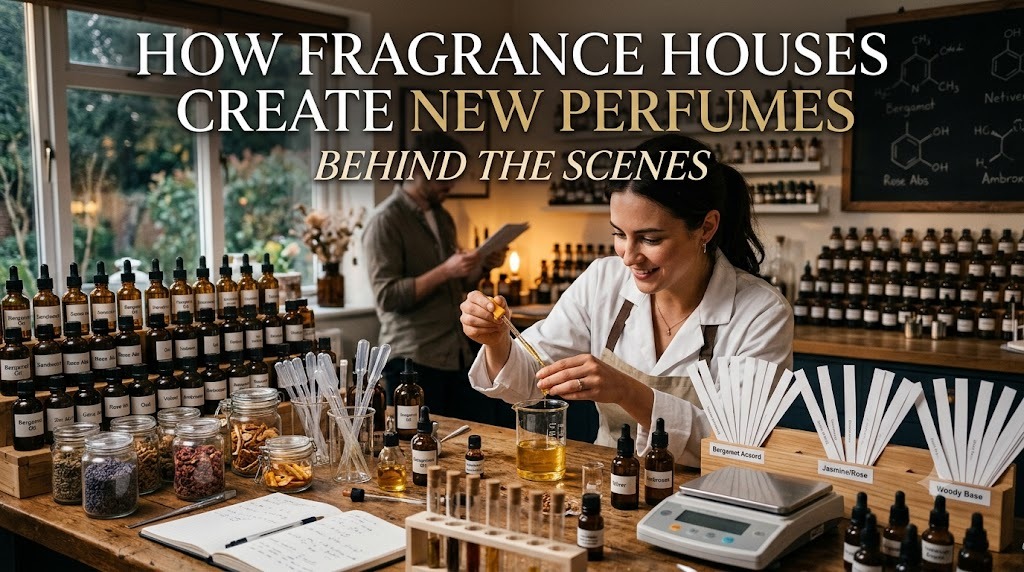
- The secret developmental phases inside elite perfume laboratories
- How master perfumers (or “noses”) balance rare raw materials and synthetic compounds
- The meticulous processes of blending, maceration, and quality aging
- Industry insights into why crafting a single luxury fragrance can take years
Introduction
Behind every iconic bottle sitting on your vanity lies a hidden world of quiet laboratories, multi-million dollar extraction technology, and years of artistic trial and error. When you wonder how fragrance houses create new perfumes, you are peeling back the curtain on a secretive, multi-billion-dollar global industry that blends fine art with organic chemistry.
Long before a luxury scent hits department store shelves or floods social media feeds, it begins as a fleeting emotion, a creative brief, or a sudden inspiration in the mind of a master perfumer. The journey from a raw petal to a polished masterpiece is astonishingly intricate. Let’s dive in.
The Brief and the Conceptualization Phase
Every new fragrance project starts with a creative brief. Whether commissioned by a global fashion house like Chanel or an independent niche artisan brand, the brief acts as an artistic compass. It outlines the target demographic, emotional tone, price tier, and desired sensory family—such as a warm, spicy oriental or a crisp, citrus-forward aquatic.
Perfume executives and marketing teams collaborate closely with fragrance houses, presenting mood boards filled with textures, colors, and memories. Master perfumers—affectionately known in the industry as “noses”—translate these visual and emotional concepts into an invisible olfactory language.
Sourcing and Extracting Raw Materials
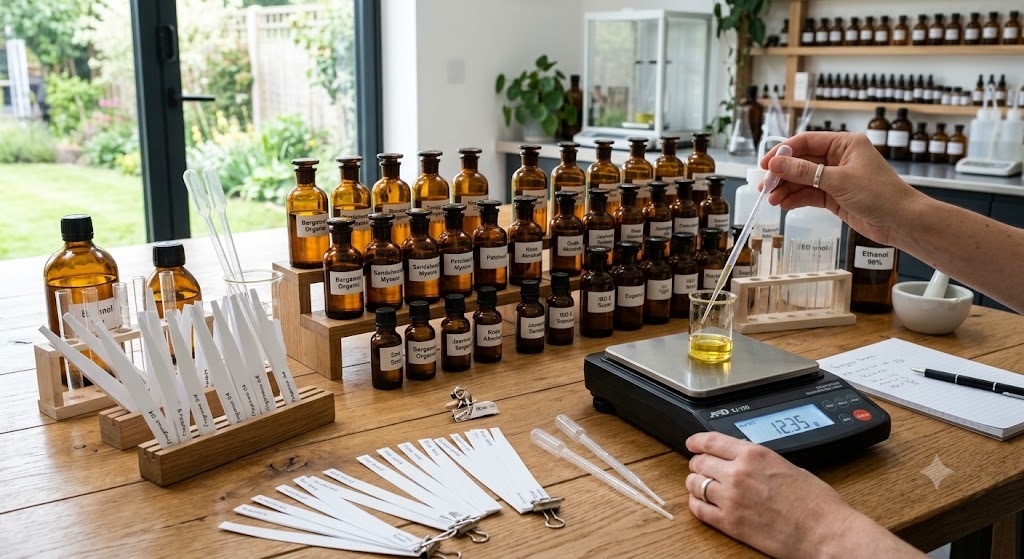
Once the concept is established, the search for raw materials begins. The global perfume market relies heavily on both rare natural extracts and innovative synthetic molecules to achieve depth, longevity, and ethical sustainability.
Harvesting Nature’s Finest Botanicals
Natural ingredients remain the beating heart of luxury perfumery. Delicate petals, earthy roots, and rich resins are harvested from around the globe—often hand-picked at precise times of day to capture maximum aromatic intensity. For instance, jasmine flowers must be gathered at dawn before the sun dries out their precious volatile oils.
Advanced Extraction Techniques
Extracting the soul of a plant requires specialized chemistry. Traditional methods like steam distillation and solvent extraction pull concentrated oils from raw matter. Modern labs also utilize high-tech “headspace” technology, capturing the aroma molecules of living flowers in nature without ever harming or cutting the plant.
The Power of Synthetic Molecules
Not all scents can be harvested naturally—either due to environmental protection laws, cruelty concerns, or plant fragility. Synthetic aroma-chemicals created in laboratories provide sustainable alternatives, introducing crisp ozone, velvety musks, and unique metallic or futuristic accords that expand the perfumer’s palette.
The Formulation and Blending Process
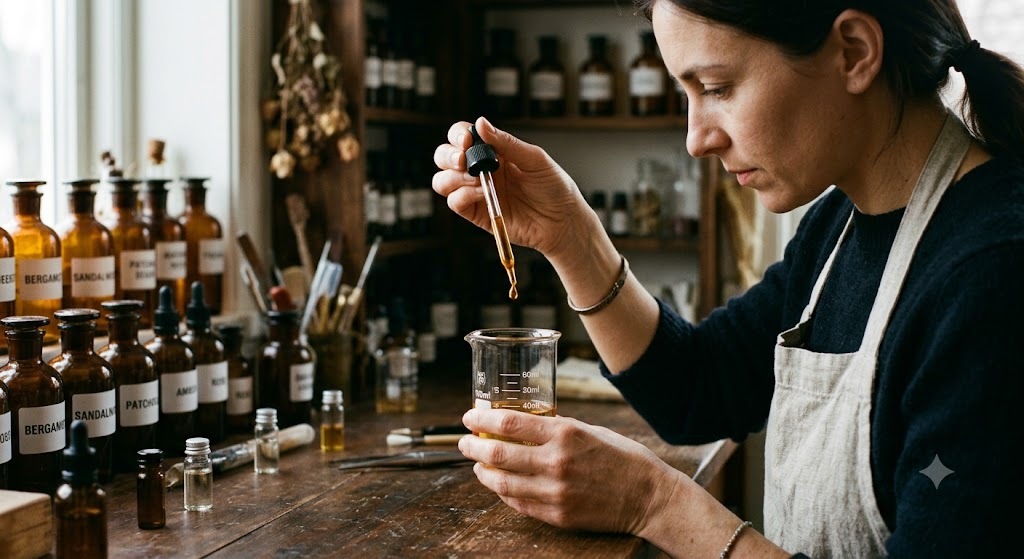
With raw ingredients gathered, the grueling formulation phase begins. A master perfumer sits at an organ—a tiered semicircular desk holding hundreds of essential oils and aroma compounds—to write the initial formula.
- Structuring the Olfactory Pyramid: The perfumer balances top notes (bright citruses and herbs), heart notes (lush florals and fruits), and base notes (deep woods, amber, and resins) to ensure the scent evolves beautifully over time.
- Drafting Iterations: A nose may draft anywhere from 50 to over 800 experimental modifications, tweaking micro-percentages of ingredients until the chemical harmony is absolute.
- Consumer and Stability Testing: Laboratory batches undergo rigorous stress tests under extreme UV light and temperature variations to ensure the formula does not discolor, degrade, or separate over time.
Common Misconceptions About Perfume Creation
The public perception of how commercial scents come to life is often heavily romanticized or misunderstood. Dispelling these myths reveals the true rigor of the craft.
1: Perfumes Are Invented Overnight by Celebrities
While many celebrity fragrances carry famous names, the actual formulation is rarely done by the celebrity. Elite houses rely on trained perfumers who spend up to a decade in rigorous apprenticeships mastering thousands of individual scent profiles.
2: Natural Ingredients Are Always Superior to Synthetics
A common marketing trick is claiming natural equals better. In reality, synthetic ingredients are often safer, more sustainable, and crucial for protecting endangered species. Furthermore, synthetics provide structural stability that all-natural blends simply cannot maintain.
3: More Ingredients Always Mean a Better Scent
Some of the most celebrated perfumes in history rely on minimalist formulas with striking clarity, proving that restraint often outweighs chaotic complexity.
Aging, Maceration, and Bottling Excellence
After the formula is finalized, the manufacturing journey enters its final maturation phase. Freshly blended perfume oil is mixed with high-grade cosmetic alcohol and a touch of water. However, it cannot be bottled immediately.
The mixture must undergo maceration—a resting period where the alcohol and oils fuse together in cool, dark vats for several weeks, months, or even years. This critical aging process softens sharp chemical edges, deepens the notes, and ensures long-lasting luxury performance on skin. Once aged, the liquid is chill-filtered, bottled in UV-protective glass, topped with a weighted cap, and shipped worldwide.
Summary and Final Industry Takeaways
The creation of a modern perfume is a magnificent intersection of science, culture, and raw emotion. From initial creative briefs to months of careful aging, fragrance houses treat scent engineering as an elite fine art. Understanding this intricate process changes how you experience every spray on your skin.
Conclusion
Exploring how fragrance houses create new perfumes gives us a profound appreciation for the invisible craftsmanship woven into our daily routines. It reminds us that every bottle represents hundreds of hours of human dedication, chemical innovation, and botanical artistry. The next time you mist your favorite signature scent, take a moment to savor the invisible journey it took to reach you.
Did you find this helpful? Drop a comment below or share this with a fellow fragrance lover!
Frequently Asked Questions
Q1: How long does it actually take to create a new perfume? A: Developing a new commercial fragrance typically takes anywhere from six months to two years. Complex luxury or niche projects can require hundreds of experimental modifications and years of testing before the final formula is approved for production.
Q2: What is the role of a master perfumer or “nose”? A: A master perfumer acts as the artistic and technical director of a scent. They possess an exceptional olfactory memory capable of recognizing thousands of raw materials and possess the technical chemistry skills to blend them into a stable, harmonious formula.
Q3: Why is alcohol added during perfume creation? A: Cosmetic alcohol acts as a volatile carrier solvent. It dilutes the concentrated essential oils to a safe concentration for skin application and rapidly evaporates upon spraying, lifting the delicate fragrance molecules into the air around you.
Q4: What is the difference between top, heart, and base notes in formulation? A: Top notes are light, volatile molecules (like citrus) that make the initial impression. Heart notes provide the core character (like florals) as the top fades, while base notes (like woods and musks) are heavy molecules that linger on skin for hours.
Q5: Why do some perfumes smell different on different people? A: Skin chemistry plays a massive role in fragrance presentation. Factors like skin pH, natural body oils, diet, and ambient body temperature interact with perfume compounds, altering how individual notes project and evaporate.
Q6: Are all perfume ingredients natural? A: No. Modern perfumery relies heavily on a hybrid palette combining precious natural absolutes with safe, sustainable synthetic molecules. Synthetics are vital for replicating scents that do not yield natural oils or protecting endangered botanical species.
What Is a Soliflore Perfume and Why Are They Having a Moment?
Pingback: Best Scented Body Lotions That Layer Beautifully With Perfume - fragrantip