


What you’ll learn
- How to “read” a fragrance description like a perfumer would
- The sampling strategy that saves you from expensive mistakes
- Which notes tend to translate well (and badly) from screen to skin
- Red flags that separate trustworthy fragrance retailers from risky ones
Introduction
Buying perfume online without smelling it first can feel like ordering a steak by reading the menu photo — you’re trusting a description to deliver an experience. Yet more fragrance shoppers are doing exactly this every year, skipping the department store counter entirely.
The truth is, you don’t need a nose stuck in a bottle to make a smart choice. You need to know how to read the clues a listing gives you: notes, concentration, longevity claims, and reviews that actually mean something.
This guide breaks down the exact process fragrance enthusiasts use to buy blind and still end up loving what lands on their doorstep. No guesswork, no regret purchases sitting in a drawer.
Let’s dive in.
Why Online Perfume Shopping Is Booming (And Why It’s Tricky)
The global fragrance market has been steadily shifting online, with industry data showing prestige fragrance sales growing faster through e-commerce than through traditional brick-and-mortar counters in recent years. Convenience, wider selection, and better pricing all play a role.
But here’s the catch: fragrance is arguably the most sensory product category there is. Unlike a sweater or a phone case, you genuinely cannot verify the core product experience before checkout.
That’s where fragrance shopping tips become essential — not to replace your nose, but to give you enough information to predict what your nose would say if it could be there.
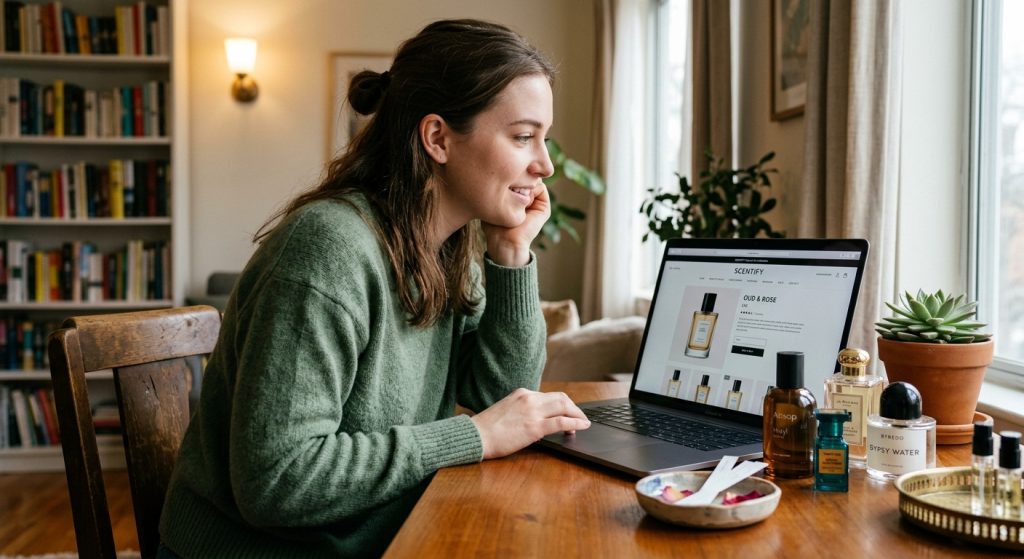
The good news? Perfume notes, concentration levels, and brand reputation follow fairly predictable patterns once you know what to look for. You’re not shooting in the dark — you’re pattern-matching.
How to Choose Perfume Online: The Core Method
This is where the real work happens. Learning how to choose perfume online comes down to three skills: reading notes correctly, understanding concentration, and interpreting reviews with a critical eye.
Learn to Read Fragrance Notes Like a Recipe
Every perfume listing breaks its scent into top, heart, and base notes — think of it as a recipe card rather than a finished dish description.
Top notes are what you smell in the first 15 minutes: usually citrus, light florals, or aromatic herbs. They’re vivid but fleeting, so don’t judge a whole fragrance by them alone.
Heart notes emerge over the next hour and represent the “true” character of the scent — florals like jasmine and rose, spices, or fruity accords typically live here. Base notes (musk, woods, amber, vanilla) are what lingers for hours and what you’ll actually smell on your sweater the next day.
Understand What Concentration Actually Means
Eau de toilette, eau de parfum, and parfum aren’t just marketing terms — they indicate the percentage of aromatic compounds in the bottle, which directly affects strength and longevity.
Eau de toilette typically sits around 5–15% concentration and lasts 3–5 hours. Eau de parfum runs 15–20% and can last 5–8 hours. Parfum or extrait de parfum, the strongest, often exceeds 20% and can last well beyond 8 hours.
If a listing doesn’t specify concentration, that’s worth noting as a small red flag — reputable sellers are usually specific about this detail.
Decode Reviews for Real Signal, Not Noise
Skip reviews that just say “smells amazing!!” and hunt for ones that mention specific comparisons, projection, and longevity on the reviewer’s skin.
A review noting “similar to Bleu de Chanel but sweeter, lasted 6 hours on me” tells you far more than a five-star rating with no detail. Look for patterns across multiple reviews rather than trusting any single one.
Practical Tips: Your Step-by-Step Buying Process
Here’s the exact sequence to follow when you’re ready to buy perfume online without smelling it first.
- Start with a scent family you already know you like. If you love Chanel No. 5, look for other aldehydic florals rather than jumping to something totally unfamiliar.
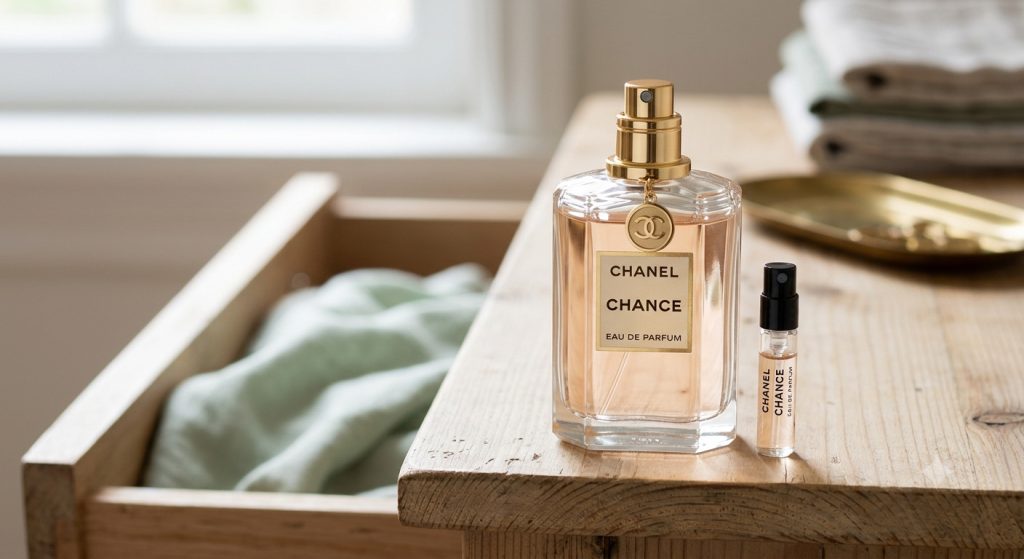
- Order a sample or discovery set before committing to a full bottle. Retailers like Sephora, FragranceNet, and Scentbird all offer sample sizes specifically for this reason.
- Check the brand’s official site for the official notes list. Third-party sellers sometimes copy incomplete or outdated note breakdowns.
- Cross-reference on a fragrance community site. Fragrantica is widely used by enthusiasts to compare notes, longevity ratings, and seasonal recommendations.
- Read the return policy before you buy. A seller confident in their product usually allows returns on unopened, and sometimes even lightly used, bottles.
- Buy travel-size first if no sample exists. A 10ml bottle is a far smaller gamble than committing to 100ml.
Common Mistakes People Make Buying Perfume Online
1: Judging a scent purely by its top notes. The opening spray is not the whole story — wait for the drydown before deciding you hate it.
2: Ignoring skin chemistry entirely. The same fragrance can smell different on different people because of skin pH, diet, and even hormone levels — a listing description is an average, not a guarantee.
3: Buying from unverified third-party sellers for “too good to be true” prices. Counterfeit fragrances are a real problem in the resale market, and they often smell noticeably off compared to authentic bottles.
4: Skipping the sample stage to save a few dollars. A $5–15 sample set is far cheaper than a $120 bottle you never wear.
5: Assuming a beloved celebrity or influencer scent will work the same way on you. Notes react differently on every person; social proof is a starting point, not a guarantee.
Expert Tips for Smarter Online Fragrance Shopping
Seasoned fragrance collectors tend to build a “scent profile” over time — a mental (or literal) list of notes, houses, and concentrations that have consistently worked for them.
Pay attention to which base notes you gravitate toward across multiple fragrances you already own. If you notice you consistently love vanilla and sandalwood bases, you can predict with real confidence that a new fragrance built around those notes will likely work too.
Seasonality matters more than most shoppers realize. Heavier, warmer fragrances with amber, oud, or spice tend to perform better in cooler months, while lighter citrus and aquatic notes shine in warmer weather.
Weather and humidity also affect projection — a fragrance that feels overwhelming in a humid climate might feel much lighter and more manageable somewhere drier.
Final Recommendations: Buying Perfume Online With Confidence
Buying perfume sight unseen (or rather, scent unsmelled) doesn’t have to be a gamble. With the right approach, it can actually be more informed than a rushed counter spray-and-sniff.
Start small with samples, learn to read notes as a structure rather than a guarantee, and lean on detailed reviews and fragrance communities for a second opinion.
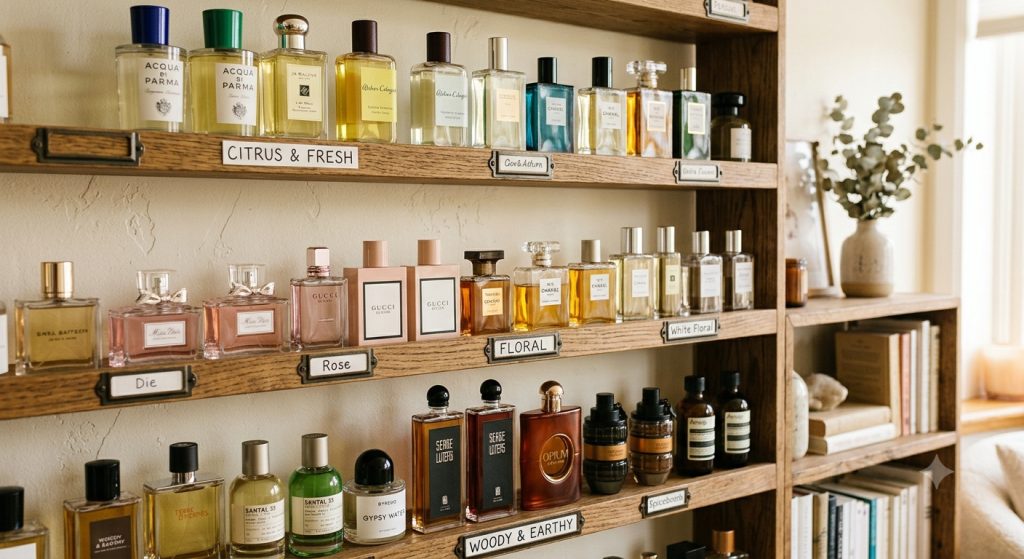
Over time, you’ll build the same instinct a longtime collector has — the ability to look at a notes list and know, with reasonable confidence, whether it belongs in your collection.
Conclusion
Learning how to buy perfume online without smelling it first really comes down to becoming a better reader — of notes, concentrations, and honest reviews — rather than relying on guesswork.
Start with samples, trust patterns over single reviews, and give every fragrance the full time it needs to develop on your skin before judging it.
The perfect bottle is out there, and you don’t need a department store counter to find it.
Did you find this helpful? Drop a comment below or share this with a fellow fragrance lover!
Frequently Asked Questions
Q1: Is it safe to buy perfume online without smelling it first? Yes, as long as you buy from reputable retailers or official brand sites and start with samples. Checking return policies and cross-referencing notes on fragrance community sites significantly reduces the risk of an unwanted purchase.
Q2: How can I tell if an online perfume listing is accurate? Compare the notes listed against the official brand website, and look for detailed customer reviews that mention longevity and comparisons to other known scents rather than vague praise.
Q3: What’s the best way to test a fragrance without a store visit? Order a sample vial or discovery set first. Most major fragrance retailers offer these specifically so shoppers can test before committing to a full bottle.
Q4: Why does the same perfume smell different on different people? Individual skin chemistry, including pH balance, diet, and hormones, interacts with fragrance oils differently, which is why the same bottle can smell slightly different from person to person.
Q5: How do I avoid counterfeit perfumes when shopping online? Stick to authorized retailers, official brand websites, or well-established marketplaces with verified seller programs. Prices that seem far below market value are a common warning sign of counterfeits.
Q6: Does eau de toilette or eau de parfum last longer? Eau de parfum generally lasts longer than eau de toilette because it contains a higher concentration of aromatic compounds, typically translating to several more hours of wear time.