What you’ll learn
- How to instantly identify fragrance concentrations and performance levels.
- The hidden meaning behind the period-after-opening (PAO) and batch symbols.
- Ways to decode legal ingredient lists to understand what goes onto your skin.
- How to spot genuine luxury bottles versus cheap counterfeit fragrances.
Introduction
Have you ever stared at a gorgeous crystal fragrance flacon on your vanity and wondered what all those tiny symbols on the bottom actually mean? Learning how to read a perfume bottle is like unlocking a secret language spoken by master perfumers and luxury houses alike. Every single line of text, numbers, and iconography stamped onto that glass contains vital information designed to protect your skin, your wallet, and your overall sensory experience.
When you purchase a high-end fragrance from brands like Chanel, Tom Ford, or Creed, you are not just buying scented alcohol. You are investing in a complex, carefully regulated chemical formulation wrapped in an artful presentation. Sadly, most people simply unbox their new scent, toss the cardboard packaging into the recycling bin, and spray away without ever understanding the crucial data printed right under their noses.
By taking just a few moments to look at the fine print, you can dramatically elevate your fragrance journey. You will discover exactly how long your juice will remain fresh, how to maximize its projection, and how to verify that your hard-earned money went toward an authentic product. Let us dive into the fascinating world of fragrance labels and decode your collection today.
Why Learning How to Read a Perfume Bottle Matters
Before we break down the individual components of a fragrance label, we must understand why this skill is so essential for modern consumers. The global fragrance market is massive, generating over $50 billion annually, which makes it a prime target for counterfeiters and gray-market distributors. If you do not know how to read a perfume bottle, you could easily fall victim to sophisticated scams or inadvertently use expired products that irritate your skin.
Furthermore, fragrance labels act as a roadmap for performance expectations. Perfume houses use standardized terminology to communicate how a scent will behave once it leaves the atomizer. Understanding this language prevents buyer’s remorse, helping you choose the perfect scent for hot summer days, formal evening events, or cozy nights by the fireplace.
Decoding the Front of the Bottle: Name, Brand, and Concentration
The front of your perfume bottle serves as its public face, displaying the brand identity and the artistic concept behind the scent. However, it also holds the most critical indicator of how long the fragrance will last on your skin. Perfume houses categorize their creations based on the ratio of pure fragrance oils to alcohol and water.
Understanding Concentration Terms
The most prominent descriptor on any bottle is its concentration, usually written in French. You will typically see Eau de Cologne (EDC), Eau de Toilette (EDT), Eau de Parfum (EDP), or Parfum (sometimes called Extrait de Parfum). These words are not just fancy marketing jargon; they dictate the percentage of aromatic compounds mixed into the bottle.
An Eau de Toilette generally contains between 5% and 15% aromatic oils, making it light, fresh, and perfect for daytime wear. Conversely, an Eau de Parfum boasts a richer 15% to 20% concentration, offering a deeper, more robust experience that can easily linger for eight hours or more. The rarest and most expensive category, pure Parfum, can reach up to 40% concentration, delivering an intense, intimate scent trail that radiates warmth.
Volume and Sizing Measurements
Look closely at the front or lower base of your bottle, and you will notice two distinct volume measurements. The first is metric, listed in milliliters (ml), which is the standard liquid measurement globally. The second is the imperial system, represented as “fl. oz.” or fluid ounces, which is heavily utilized in the United States luxury market.
A standard full-size perfume bottle typically measures 100 ml, which translates directly to 3.4 fluid ounces. Travel sprays and purse formats often come in 10 ml or 30 ml (1.0 fl. oz.) variations. Knowing these common conversions at a glance helps you calculate the true value per milliliter when comparing prices across different retailers.
The Estimated Sign (e)
Have you ever noticed a small, lowercase “e” symbol sitting right next to the fluid ounce or milliliter declaration? This is the official European Union “estimated sign” or quantité estimée. Its inclusion guarantees that the automated bottling machinery filled the container to the exact volume stated on the label, within highly strict legal margins of error.
When you see that little “e” on a bottle of Dior or Yves Saint Laurent, it acts as a regulatory stamp of compliance. It assures you that you are getting every single drop of precious fluid you paid for. If a bottle claims to be a luxury European import but completely lacks this symbol on its outer packaging or bottle base, your counterfeiting radar should immediately go on high alert.
The Hidden Details on the Base: Batch Codes and Regulatory Symbols
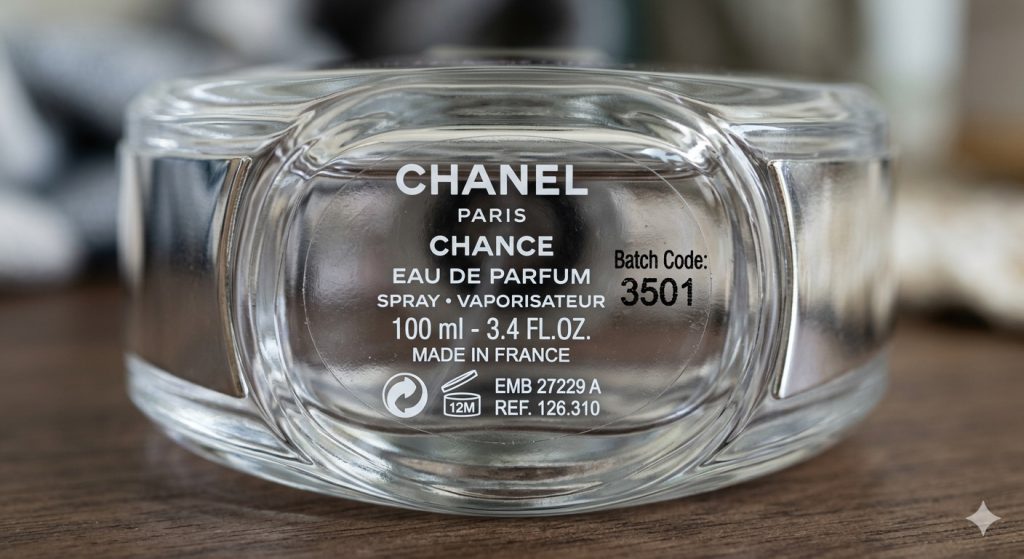
To find the most technical data, you need to flip your perfume container upside down. The base of the glass usually features either a high-quality clear sticker or a direct laser-etched engraving. This area is a goldmine of information for anyone learning how to read a perfume bottle properly.
Tracking the Elusive Batch Code
The batch code is an alphanumeric sequence of numbers and letters stamped, printed, or etched onto the bottle base. Unlike the barcode, which is identical for every single bottle of that specific scent line, the batch code changes with every manufacturing run. This code is your ultimate tool for verifying authenticity and determining the exact production date of your fragrance.
You can enter this unique string into specialized online databases like CheckFresh or Cosmetic Calculator to see exactly when and where your specific bottle rolled off the assembly line. If the batch code on the bottom of the glass does not perfectly match the code pressed into the cardboard box, you are likely holding a counterfeit product or a mismatched gray-market return.
The Period After Opening (PAO) Symbol
Look for a tiny graphic that resembles an open cosmetic jar with a number followed by the letter “M” inside or next to it. This is the Period After Opening (PAO) symbol, a crucial indicator of product freshness. For example, a stamp reading “24M” means the manufacturer guarantees the perfume will retain its optimal quality for 24 months after your very first spray.
Because high-quality perfumes contain high percentages of alcohol, which acts as a natural preservative, many scents can easily last five to ten years if stored correctly. However, once oxygen enters the bottle via the pump mechanism, the delicate top notes—especially bright citrus and fresh aldehyde accords—will slowly begin to oxidize and degrade over the timeframe indicated by the PAO symbol.
Environmental and Safety Icons
You will also spot several universal safety symbols huddled together on the base sticker. A small flame icon serves as a stark reminder that perfume is highly flammable due to its alcohol base, meaning you should never store your collection near open flames, radiators, or extreme heat sources.
Another frequent sight is the Green Dot symbol, featuring two interlocking arrows forming a circle. This icon does not necessarily mean the bottle itself is made from recycled materials; rather, it signifies that the perfume brand financially contributes to national packaging recovery and recycling systems.
Step-by-Step Guide to Reading an Ingredient List
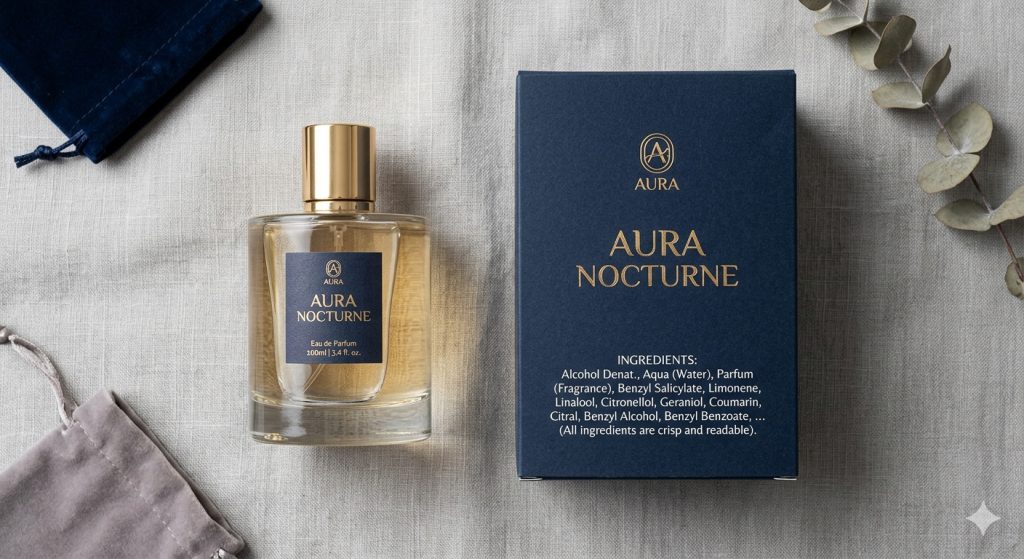
The actual glass bottle rarely has enough surface area to list every single chemical compound, so regulations dictate that the full ingredient deck must appear on the outer cardboard box. Learning how to skim this list like a professional allows you to spot potential allergens and appreciate the composition of your scent.
- Check the Prime Solvent: The very first ingredient listed on almost every bottle is Alcohol Denat. (denatured alcohol). This is the carrier fluid that dilutes the heavy oils and evaporates quickly off your skin, lifting the scent molecules into the air.
- Locate the Aqua: Water (Aqua) always follows close behind alcohol. It softens the formulation, slows down the evaporation rate, and prevents the alcohol from drying out your skin too aggressively.
- Identify the Core Fragrance Compound: Look for the word Parfum or Fragrance. This single word represents a proprietary, legally protected cocktail of hundreds of synthetic aroma chemicals and natural essential oils that give the perfume its unique olfactory identity.
- Scan for Chemical Sunscreens: Ingredients like Ethylhexyl Methoxycinnamate or Butyl Methoxydibenzoylmethane are frequently added to the mix. These compounds act as chemical sunscreens, preventing UV light from shifting the color or altering the smell of the liquid inside clear glass bottles.
- Review the Listed Allergens: At the very end of the list, you will notice a string of complex chemical names like Limonene, Linalool, Citral, Geraniol, or Coumarin. These are naturally occurring components of essential oils that international regulatory bodies require brands to list individually to protect consumers with specific contact allergies.
Common Mistakes People Make When Inspecting Perfume Bottles
One of the biggest mistakes fragrance enthusiasts make is confusing the batch code with the barcode. A barcode is a retail inventory tracking tool that remains completely static for that specific product size across the globe. Scanning a barcode will only tell you the name of the product, whereas inspecting the unique batch code provides the actual history of that specific physical item.
Another widespread misconception revolves around the country of origin statement. Seeing “Made in France” or “Made in Italy” printed beautifully on the glass is a wonderful sign of heritage, but it does not mean every single ingredient was sourced from that region. The global perfume trade sources exquisite vetiver from Haiti, warm sandalwood from Australia, and delicate jasmine from Egypt, blending them together in centralized European laboratories.
Finally, do not panic if your favorite signature scent suddenly lists a slightly altered ingredient sequence than a bottle you purchased five years ago. Perfume houses constantly update their formulations to comply with evolving safety guidelines from the International Fragrance Association (IFRA). Reading the bottle keeps you informed of these subtle industry shifts.
Pro Tips for Using Label Info to Protect Your Collection
Now that you know how to read a perfume bottle, you can use this insider knowledge to preserve the lifespan of your investment. If your bottle features a short PAO date, or if it contains heavy percentages of volatile citrus oils like bergamot, lemon, or grapefruit, you must take extra precautions with its storage environment.
Never store your precious bottles on a sunlit windowsill or inside a damp, humid bathroom. The constant temperature fluctuations and harsh light exposure will rapidly break down the delicate chemical bonds within the juice, causing your expensive Eau de Parfum to smell sour, metallic, or intensely like rubbing alcohol long before its official expiration date arrives.
Expert Insight: If you buy a vintage bottle that completely lacks a modern batch code or PAO symbol, look closely at the manufacturer’s address. Short zip codes or the inclusion of words like “Infi” or “Ref” can help specialized fragrance historians pin down the exact decade the bottle was produced.
For advanced collectors, keeping a digital log of your bottles’ batch codes is a fantastic habit. If you ever decide to sell or trade a piece from your collection on online enthusiast forums, providing a clear photograph of a verified, clean batch code instantly builds trust and validates the premium market value of your item.
Summary of Key Fragrance Label Elements
Mastering the art of analyzing your fragrance packaging ensures you get the absolute most out of every single spray. To help you memorize the most vital elements we covered today, we have organized the key components into a quick-reference summary table.
| Label Element | Typical Location | Primary Purpose | Why It Matters To You |
| Concentration (EDT/EDP) | Front of Bottle | Indicates fragrance oil percentage | Predicts the longevity and projection on skin |
| Batch Code | Base of Bottle / Etched | Identifies specific factory run | Verifies authenticity and exact age of juice |
| PAO Symbol (e.g., 24M) | Base of Bottle | Sets freshness expiration timeline | Tells you how long the top notes stay pristine |
| Fluid Ounces / ML | Front or Base | Declares total liquid volume | Helps calculate price value per milliliter |
| Allergen Deck | Back of Outer Box | Lists mandatory potential irritants | Protects sensitive skin from allergic reactions |
Conclusion
Understanding how to read a perfume bottle transforms you from a casual consumer into a truly savvy fragrance connoisseur. The labels, numbers, and geometric icons stamped onto your favorite scents are not there to distract from the aesthetic beauty of the glass design; rather, they serve as an open book detailing the quality, safety, and history of the luxury liquid inside.
The next time you reach for your signature scent or get ready to unbox a brand-new olfactory treasure, turn the bottle over and spend a moment admiring the technical data waiting to be read. You will protect your skin, secure your investments, and appreciate the incredible craftsmanship of the perfume world on a much deeper level.
Did you find this helpful? Drop a comment below or share this with a fellow fragrance lover!
Frequently Asked Questions
Q1: Can a perfume still be safely used if it is past the date on its PAO symbol?
A: Yes, absolutely. The Period After Opening (PAO) symbol is a regulatory guideline for peak quality, not a hard expiration date like you find on milk. Because perfumes contain high levels of alcohol, they rarely spoil in a way that becomes dangerous. If the liquid looks clear, hasn’t separated, and still smells wonderful, you can continue to wear it safely.
Q2: Why do some perfume bottles have the batch code printed on the glass while others have it on a sticker?
A: This variation depends entirely on the design choices and manufacturing capabilities of the specific fragrance house. Elite luxury brands like Chanel often etch the code directly into the glass with a laser for a seamless look. Other houses prefer printing the code onto a high-quality transparent base label to keep manufacturing lines moving efficiently.
Q3: What should I do if my perfume bottle doesn’t have a batch code anywhere on it?
A: If you purchased the item from a major, authorized department store, the code might simply be incredibly faint, hidden under a design element, or printed in a clear ink that requires UV light to see. However, if you purchased it from an unverified online marketplace, a completely missing batch code is a major red flag indicating a counterfeit product.
Q4: Does the fl oz meaning change depending on whether the perfume was made in the US or Europe?
A: The fundamental measurement remains virtually identical. While the United States uses the US fluid ounce (approx. 29.57 ml) and the United Kingdom historically used the imperial fluid ounce (approx. 28.41 ml), the global fragrance industry standardizes its packaging so that a 3.4 fl. oz. bottle universally corresponds directly to a standard 100 ml volume.
Q5: Why are fragrance allergens listed on the box but missing from the actual perfume bottle?
A: Global cosmetic labeling laws require consumer allergen lists to be completely legible at the point of sale. Because perfume bottles are often highly stylized, curved, or too small to fit a long list of chemical compounds neatly, regulatory agencies allow brands to print the extensive ingredient deck exclusively on the flat surface of the outer cardboard box instead.
Q6: Can heat cause the text or labels on a perfume bottle to peel away or fade over time?
A: Yes, intense heat and humidity can destroy labels. Direct sunlight emits UV rays that degrade printing inks, while bathroom humidity can dissolve the adhesives holding base stickers in place. Storing your bottles in a cool, dark wardrobe preserves both the beautiful physical condition of the labels and the delicate chemical balance of the fragrance liquid inside.
Leave a Reply