

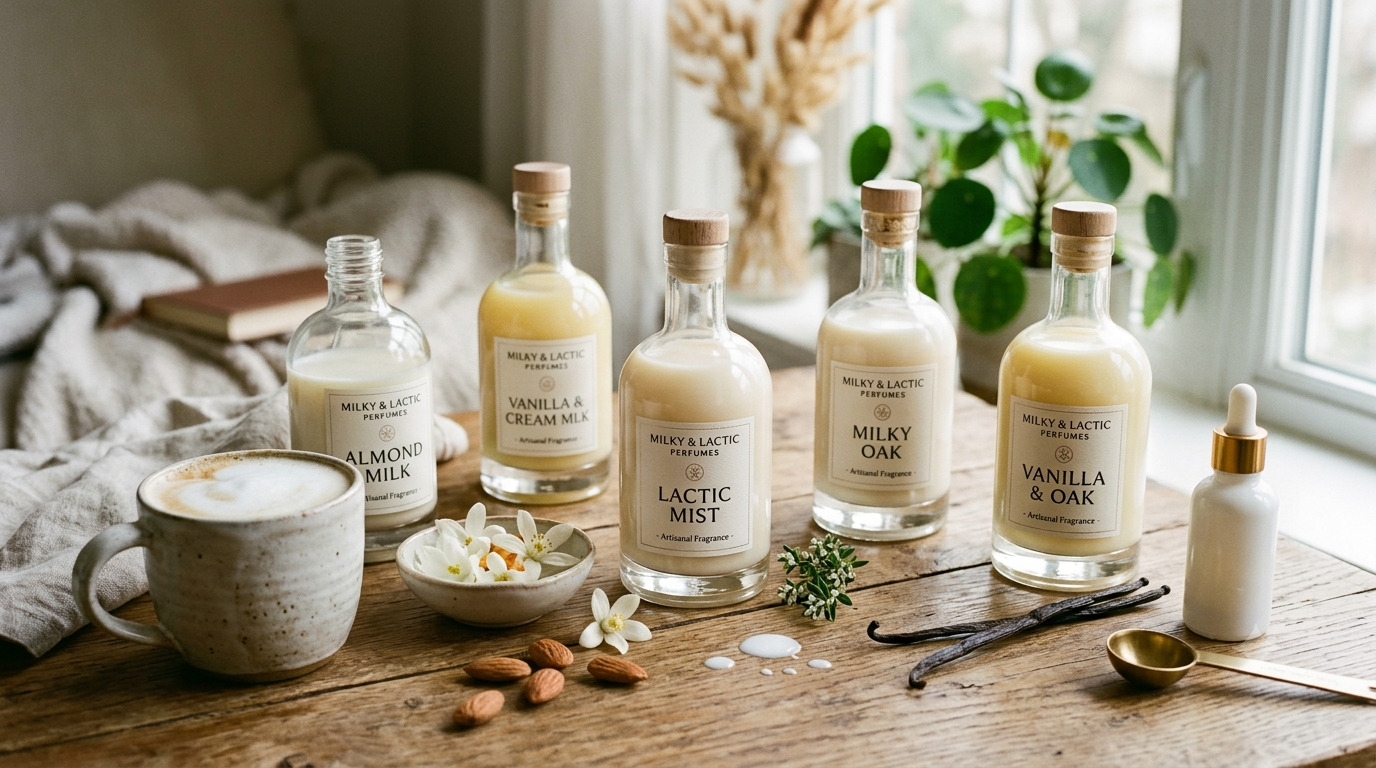
What you’ll learn:
- Why milky and lactic perfumes became 2026’s biggest fragrance trend
- The science and ingredients behind that “skin-like” creamy effect
- How to wear lactonic scents without smelling like dessert
- Common mistakes to avoid and expert-level layering tips
Introduction
Milky and lactic perfumes have quietly taken over vanity tables and TikTok feeds heading into 2026, and if you’ve noticed your favorite influencers smelling suspiciously like warm cream lately, you’re not imagining it.
This isn’t your grandmother’s gourmand vanilla. Lactic perfumes lean into something subtler: the soft, skin-warm scent of milk, rice powder, and bare skin after a shower. It’s comforting, slightly sensual, and surprisingly versatile.
Walk into any niche fragrance boutique right now and you’ll likely smell at least one bottle built around this exact note. Why now? Part of it is fatigue with sharp, synthetic “clean girl” musks. Part of it is a genuine craving for warmth and softness in scent.
Whatever the reason, milky and lactic perfumes aren’t a passing TikTok blip. Let’s dive in.
Why Milky Scents Are Having a Moment
Fragrance trends usually move in cycles, swinging between bold and minimal, sweet and sharp. The current pivot toward lactonic, creamy compositions follows several years dominated by ozonic “clean” musks and loud fruity gourmands.
Industry data backs this up. According to fragrance market research, the global perfume industry has grown steadily into a market worth tens of billions of dollars annually, with niche and “skin scent” categories among the fastest-growing segments in recent years.
Milky perfumes sit at an interesting intersection. They’re comforting like a gourmand but restrained like a skin scent, which makes them appealing to people who find vanilla too sweet and white musk too sterile.

Brands like Maison Margiela, Diptyque, and Kayali have all released scents in recent years that lean into rice milk, oat milk, or coconut-cream accords, signaling that perfume houses see real staying power here, not just a fleeting moment.
The Heart of the Trend: What Makes a Perfume “Milky”
Understanding the building blocks of a lactonic fragrance helps you shop smarter and avoid scents that smell more like spoiled dairy than soft skin.
Lactones: The Real MVP Ingredient
Lactones are the aromachemical family responsible for that creamy, almost coconut-and-peach-skin effect. Massoia lactone in particular is famous for delivering a buttery, milky warmth without adding actual sweetness.
Perfumers often pair massoia with sandalwood or cashmeran to round out the creaminess and keep it from tipping into “candy” territory.
This is why a well-blended lactonic perfume reads as soft and skin-like rather than overtly sweet, even though lactones technically belong to a sweet-adjacent chemical family.
Rice, Oat, and Coconut Milk Accords
Beyond lactones, perfumers increasingly reach for rice powder and oat milk accords to build texture. These notes add a slightly starchy, comforting softness reminiscent of fresh laundry or a baby’s skin.
Coconut milk accords show up frequently too, offering a tropical creaminess that pairs beautifully with white florals like tuberose or jasmine sambac.
Together, these ingredients create the signature “blurred” effect milky perfumes are known for, where you can’t quite pinpoint a single note, just an overall sense of warmth.
Musk as the Supporting Player
Almost every milky perfume leans on a clean musk base to extend wear time and add that final “fresh skin” quality.
Ambrette seed musk is a favorite here because it’s naturally soft and slightly nutty, complementing lactonic notes without competing for attention.
The result is a fragrance that feels intimate, projecting just enough to be noticed up close without filling an entire room.
How to Wear Milky & Lactic Perfumes: A Step-by-Step Guide
- Apply to clean, slightly damp skin. Milky scents bloom best on freshly washed, moisturized skin, since lactones interact with natural skin oils.
- Spray pulse points sparingly. A little goes a long way. Start with one or two sprays on wrists and neck.
- Layer with an unscented lotion first. This helps the fragrance sit closer to skin for that intimate, “your skin but better” effect.
- Avoid stacking with heavy florals. Pair milky scents with light citrus or soft woods instead, so the creaminess stays the star.
- Reapply lightly midday if needed. Lactonic notes are naturally soft-spoken and tend to fade faster than heavier orientals.

Common Mistakes People Make With Milky Perfumes
Mistake 1: Over-spraying. Because lactonic scents are subtle, people often apply too much, which can tip a soft creamy note into something cloying or slightly sour.
Mistake 2: Expecting big projection. These are intimate scents by design. If you want a fragrance that fills a room, a milky perfume isn’t the right pick.
Mistake 3: Pairing with heavy vanilla gourmands. Layering two sweet, creamy fragrances often muddies both instead of enhancing either one.
Mistake 4: Storing bottles in sunlight or heat. Lactones can degrade faster than more stable notes like woods or musks, so proper storage matters more here than with many other fragrance families.
Expert Tips for Choosing Your First Milky Perfume
If you’re new to the category, start with something balanced rather than an intensely lactonic niche release.
A perfume that blends massoia or coconut milk accords with a light musk base, rather than leaning entirely into dairy-like notes, gives you an easier entry point.
Testing on skin matters more here than with most fragrance families. Lactonic notes interact heavily with individual body chemistry, so a scent that smells gorgeous on a friend may read differently on you.
Patience also pays off. Give a milky fragrance at least 20–30 minutes to settle before judging it, since the opening can smell sharper or more “milk-forward” than the eventual dry-down.
Final Recommendation: Is the Milky Perfume Trend Worth Trying?
If you’ve grown tired of either overly sweet gourmands or sharp clean musks, a milky lactic perfume might be exactly the bridge you’ve been missing.
The trend isn’t about smelling like literal milk. It’s about capturing that warm, just-out-of-the-shower comfort that reads as effortlessly intimate rather than performative.
Start small, sample before committing to a full bottle, and pay attention to how the scent evolves on your specific skin over a few hours.
Conclusion
Milky and lactic perfumes have earned their spot as one of the defining fragrance trends of 2026, offering a softer, skin-close alternative to louder sweet or clean scents.
Whether you’re drawn to rice milk accords, massoia lactone warmth, or a gentle musky base, there’s likely a milky perfume that fits your personal style.
The best way to find yours is simple: sample widely, apply sparingly, and give each scent time to settle on your skin before deciding.
Did you find this helpful? Drop a comment below or share this with a fellow fragrance lover!
Frequently Asked Questions
Q1: What does a milky or lactic perfume actually smell like? A: Milky perfumes smell soft, creamy, and skin-like, often compared to warm milk, rice powder, or freshly washed skin. They’re typically built around lactones and musks rather than overt sweetness, so they read as comforting rather than dessert-like.
Q2: Are milky perfumes the same as vanilla perfumes? A: No. Vanilla perfumes are usually sweeter and more dessert-forward, while milky perfumes focus on a creamy, skin-like softness using lactones, rice or oat milk accords, and musk, often with little to no actual vanilla in the formula.
Q3: Do milky perfumes last as long as other fragrance types? A: Generally, milky and lactic perfumes have moderate longevity since lactonic notes tend to fade faster than heavier woods or resins. Layering with an unscented lotion or a matching body cream can help extend wear time.
Q4: What’s a good starter fragrance if I want to try this trend? A: Look for a perfume that blends massoia or coconut milk accords with a light musk base rather than an intensely lactonic niche release. This gives a gentler introduction before exploring bolder, more concentrated milky scents.
Q5: Can milky perfumes work for everyday or office wear? A: Yes, and they’re actually ideal for it. Because lactonic scents project softly and sit close to skin, they’re well suited to office settings or anywhere a strong, room-filling fragrance would feel inappropriate.
Q6: Why do milky perfumes smell different on different people? A: Lactonic notes interact strongly with individual skin chemistry, oil levels, and even diet, so the same bottle can smell noticeably different from person to person. Always test on your own skin and wait at least 20–30 minutes before judging the scent.

Pingback: Gender-Neutral Perfumes — Best Unisex Fragrances in 2026 - Fragrantip
Pingback: TikTok Made Me Buy It — Best Viral Perfumes of 2026 - Fragrantip