

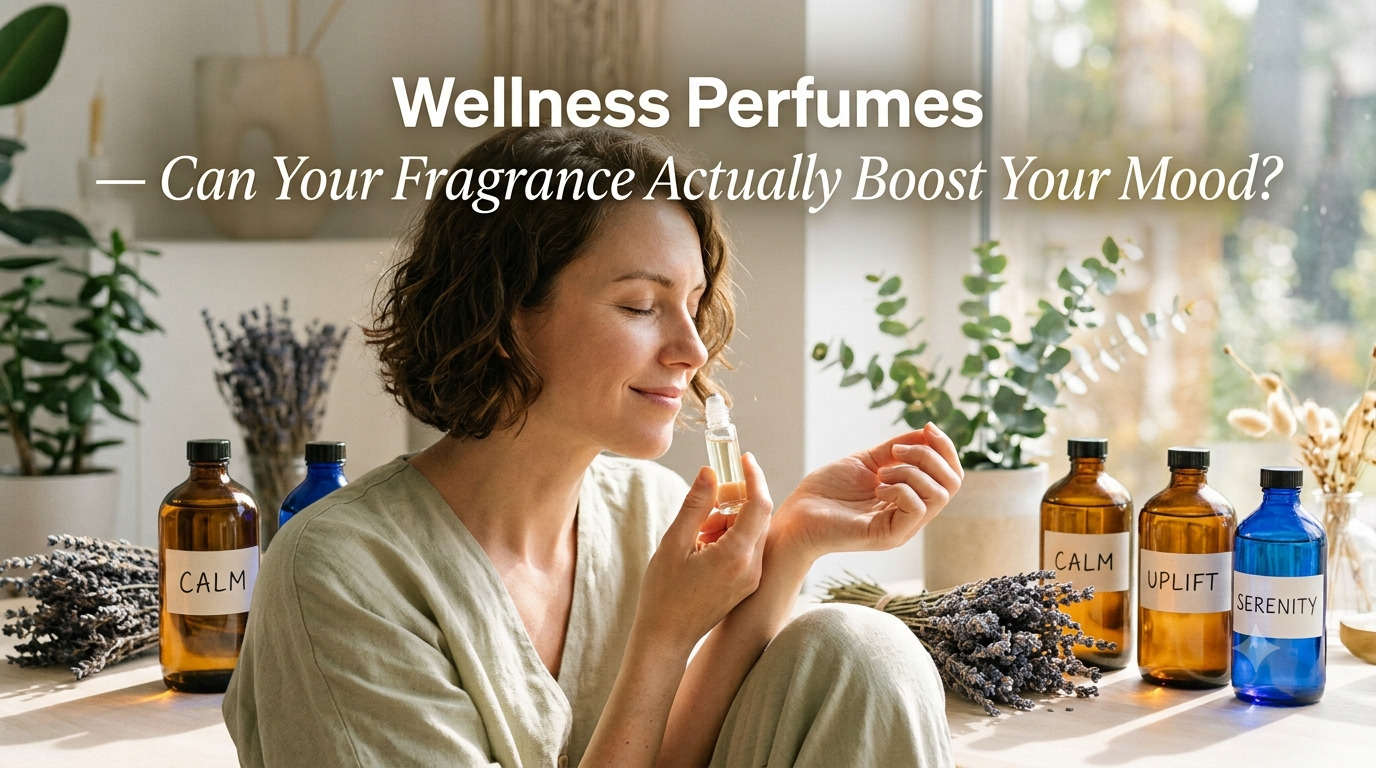
What you’ll learn:
- Why scent is so tightly linked to emotion and memory
- Which fragrance notes are most associated with calm, energy, or comfort
- How to build a simple “scent wardrobe” for different moods
- The mistakes people make when trying to use fragrance for wellbeing
Introduction
Wellness perfumes have quietly become one of the fastest-growing categories in fragrance, and it’s not hard to see why. After a stressful meeting, a single spritz of something warm and woody can feel like a small reset button. But is that feeling real, or just a pleasant placebo?
The truth sits somewhere in between, and it’s more interesting than either extreme. Scent doesn’t just sit on your skin — it travels a uniquely short path straight into the emotional centers of your brain.
That means the right fragrance really can shift how you feel, even if it can’t replace therapy, sleep, or a walk outside. Let’s dive in.
Why This Matters: The Real Connection Between Scent and Emotion
Smell is the only one of our five senses with a direct line to the limbic system, the part of the brain responsible for emotion and memory. Sound, sight, and touch all get routed through a relay station called the thalamus first. Smell skips that step entirely.
This is why a single whiff of a fragrance can instantly transport you back to a specific moment — your grandmother’s kitchen, a childhood summer, an old relationship — faster than almost any other sensory trigger. Researchers have long pointed to this direct olfactory-limbic pathway as the biological basis for why scent and mood feel so inseparable.
This is exactly what the wellness perfume movement is built on. Brands aren’t claiming fragrance can cure anxiety or replace medical care. They’re leaning into something more modest and more believable: that certain scents are reliably associated with relaxation, focus, or comfort, and that wearing them intentionally can become a small daily ritual.
Brands like Maison Margiela’s Replica line, Le Labo, and Aesop have all built loyal followings around exactly this idea — fragrance as a mood-setting tool, not just a finishing touch.
The Main Educational Content: How Different Notes Affect Mood
Not all fragrance notes are created equal when it comes to emotional impact. Some genuinely tend to soothe, others energize, and a few are strongly associated with comfort and security. Understanding these categories is the first step to using wellness perfumes effectively.
Calming Notes: Lavender, Sandalwood, and Chamomile
Lavender is probably the most studied scent in the relaxation space, and for good reason. Its soft, herbaceous, slightly powdery profile is consistently described as calming across cultures, which is part of why it shows up in everything from sleep sprays to spa diffusers.
Sandalwood brings a creamy, warm, almost milky woodiness that tends to slow people down rather than energize them. It’s often paired with lavender in wellness-focused blends precisely because the two soften and round each other out.
Chamomile, with its apple-like sweetness, adds a gentle, cozy layer that reads as comforting rather than stimulating. Together, these three form the backbone of most “calm” or “sleep” fragrance collections you’ll find on shelves today.
Energizing Notes: Citrus, Mint, and Ginger
If lavender is the wind-down note, citrus is the wake-up call. Bergamot, grapefruit, and sweet orange all share a bright, sparkling quality that tends to feel refreshing rather than relaxing.
Mint and eucalyptus add a cooling, almost crisp sharpness that many people associate with mental clarity — think of how instinctively reviving a whiff of peppermint feels on a sluggish afternoon.
Ginger and pink pepper bring warmth with an edge, a little spicy kick that keeps citrus-heavy blends from feeling one-dimensional. This combination shows up constantly in “energy” or “focus” perfumes marketed for morning wear or pre-workout use.
Comforting Notes: Vanilla, Amber, and Musk
Then there’s the category built purely around emotional security. Vanilla is sweet, warm, and almost universally nostalgic — it’s one of the few notes that reads as comforting to nearly everyone, regardless of cultural background.
Amber adds resinous warmth and depth, the kind of scent that feels like being wrapped in a blanket. Musk, especially the soft, skin-like “clean musk” used in modern perfumery, adds an intimate closeness that makes a fragrance feel personal rather than performative.
This trio dominates what the industry now calls “skin scent” wellness perfumes — fragrances designed to smell like a warmer, better version of your own skin rather than an obvious statement.
Practical Tips: How to Build a Mood-Based Scent Wardrobe
Building a fragrance routine around mood doesn’t require a huge collection. Here’s a simple way to start.
- Pick one calming scent for evenings or stressful moments — something lavender or sandalwood-forward, like Jo Malone’s Sage & Sea Salt or a basic lavender essential oil roll-on.
- Pick one energizing scent for mornings or workouts — a citrus-mint combination works well here.
- Pick one comfort scent for low-energy or anxious days — vanilla or amber blends are reliable go-tos.
- Apply intentionally, not habitually. Pause before spraying and actually notice the scent for a few seconds rather than rushing past it.
- Pair the scent with a ritual, like a deep breath or a short walk, so your brain starts associating the fragrance with that calming or energizing action.
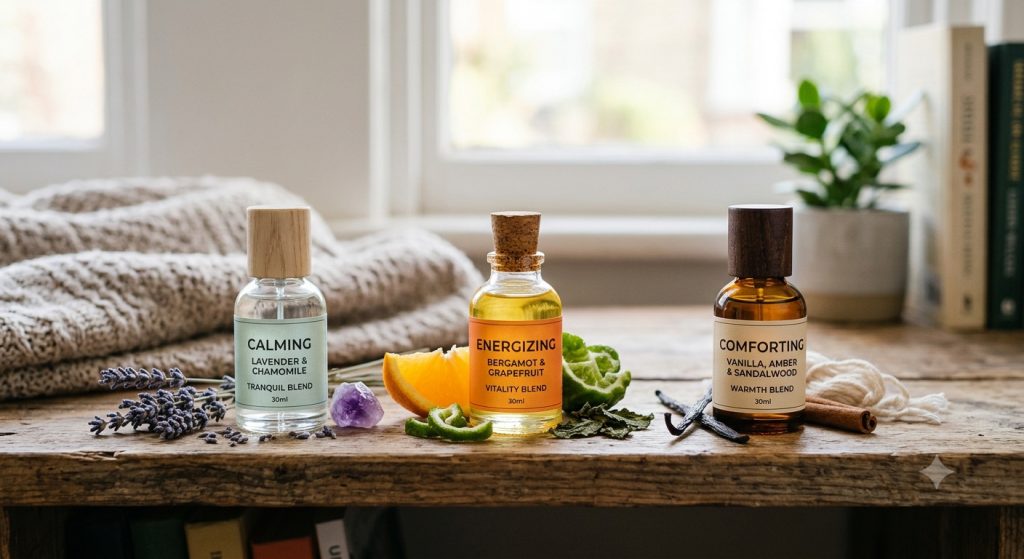
Over time, this pairing is what makes wellness perfumes genuinely effective. The scent becomes a trigger, almost like a Pavlovian shortcut to the state you’re trying to reach.
Common Mistakes People Make With Wellness Perfumes
Even with good intentions, it’s easy to undercut the benefits of a mood-based fragrance routine.
Mistake 1: Wearing too many scents at once. Layering five different “wellness” products — lotion, candle, perfume, room spray — can create an overwhelming, muddled smell that does the opposite of calming you down.
Mistake 2: Expecting instant, dramatic results. Fragrance is a gentle mood influencer, not a switch. Treating it like a cure for anxiety or depression sets unrealistic expectations and ignores genuine mental health needs.
Mistake 3: Buying based on marketing alone. A bottle labeled “calm” with a heavy spicy or sweet profile might not actually feel calming to you personally. Scent response is partly universal and partly individual.
Mistake 4: Never testing scents on skin first. A fragrance can smell completely different in the bottle versus on your own body chemistry, so testing matters more than trusting the label.
Expert Tips for Choosing the Right Wellness Fragrance
Fragrance experts generally agree on a few things that separate a thoughtful wellness routine from a gimmick.
First, simplicity wins. A perfume with three or four well-balanced notes tends to feel more grounding than a complex, twelve-note composition that’s constantly shifting.
Second, concentration matters. Eau de parfum and parfum concentrations last longer and project a soft, steady scent throughout the day, which matters if you’re using fragrance as an ongoing emotional anchor rather than a one-time spritz.
Third, consistency builds the effect. Wearing the same calming scent regularly — rather than rotating constantly — is what allows your brain to form a strong association between that smell and the feeling of relaxation.
Summary: Should You Try Wellness Perfumes?
Wellness perfumes aren’t magic, but they’re not nonsense either. The science behind scent and emotion is real, well-documented, and worth taking seriously.
Used thoughtfully, fragrance can become a genuinely useful part of a broader self-care routine, alongside sleep, movement, and connection with people you care about.
The key is realistic expectations and a little experimentation to find what actually works for your own nose and your own life.
Conclusion
So, can wellness perfumes really boost your mood? The honest answer is yes, in a real but modest way. Scent has a direct path to the emotional centers of your brain, and the right notes — lavender for calm, citrus for energy, vanilla for comfort — can genuinely shift how you feel in the moment.
Wellness perfumes work best as one small piece of a larger self-care puzzle, not a standalone fix. Start with one scent for one mood, wear it intentionally, and let the association build over time.
Did you find this helpful? Drop a comment below or share this with a fellow fragrance lover!
Frequently Asked Questions
Q1: Can wellness perfumes really reduce stress or anxiety? A: They can help in a modest, supportive way. Scents like lavender and sandalwood are reliably associated with relaxation because smell connects directly to the brain’s emotional centers. They’re not a substitute for professional care, but they can be a calming addition to a daily routine.
Q2: What is the best scent for calming anxiety? A: Lavender is the most widely recommended option, often paired with sandalwood or chamomile for a softer, rounder effect. Look for fragrances where these notes are prominent rather than buried under sweeter or sharper accents.
Q3: Are wellness perfumes different from regular perfumes? A: Not chemically — they’re still traditional perfumes. The difference is intentional formulation around specific moods, using note combinations chosen for their calming, energizing, or comforting associations rather than purely for novelty or trend.
Q4: How long does it take for a scent-mood association to build? A: It varies, but consistently pairing a specific scent with a specific activity or feeling for a few weeks tends to strengthen the association meaningfully. The key is repetition and intentional pairing, not a single use.
Q5: Can fragrance help with sleep? A: Many people find that lavender or chamomile-based scents, worn or diffused before bed, support a more relaxed wind-down routine. It works best alongside good sleep habits like a consistent bedtime and reduced screen time.
Q6: Is it bad to wear the same wellness perfume every day? A: Not at all. Wearing the same calming or energizing scent consistently is actually recommended, since it helps your brain build a stronger, more reliable association between that fragrance and the mood you’re aiming for.

Pingback: Top 10 Long-Lasting Zara Perfumes: Your Ultimate Guide to Budget Sensation - Fragrantip