
What you’ll learn:
- What makes Arabian perfumes different from Western fragrances
- The key ingredients behind that rich, long-lasting Middle Eastern scent profile
- How to choose your first bottle without feeling overwhelmed
- Common mistakes American buyers make when shopping for these fragrances
Introduction
Arabian perfumes have a way of announcing themselves before you even see the person wearing them. That deep, resinous trail of oud drifting through a room, or the honeyed warmth of a rose-and-amber blend, is unlike anything you’ll find on a typical American department store counter.
If you’ve ever caught a whiff of something intoxicating on a stranger and thought, “what is that?” — there’s a good chance it was a Middle Eastern fragrance.
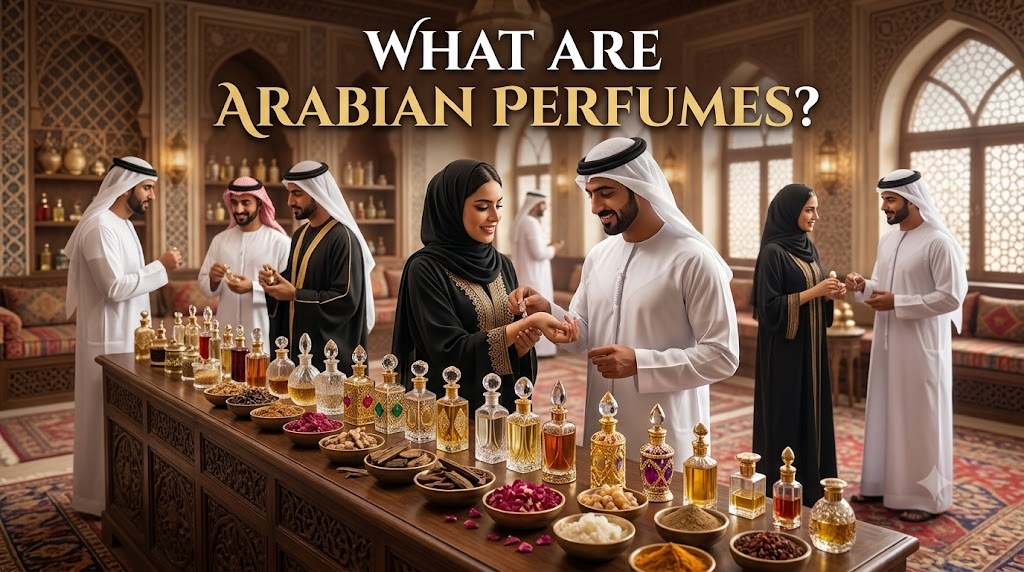
This guide breaks down exactly what Arabian perfumes are, why they smell so different from Western colognes, and how a first-time buyer in the U.S. can shop for one with confidence. We’ll cover the ingredients, the traditions behind them, and practical tips so you don’t end up overwhelmed in your first perfume souk or online store.
Let’s dive in.
Why Arabian Perfumery Is Different
Western perfumery leans heavily on alcohol-based sprays designed to be light, fresh, and office-appropriate. Arabian perfumery comes from a completely different tradition — one built around oil-based concentrates, layering, and scents meant to last from morning prayers to late-night gatherings.
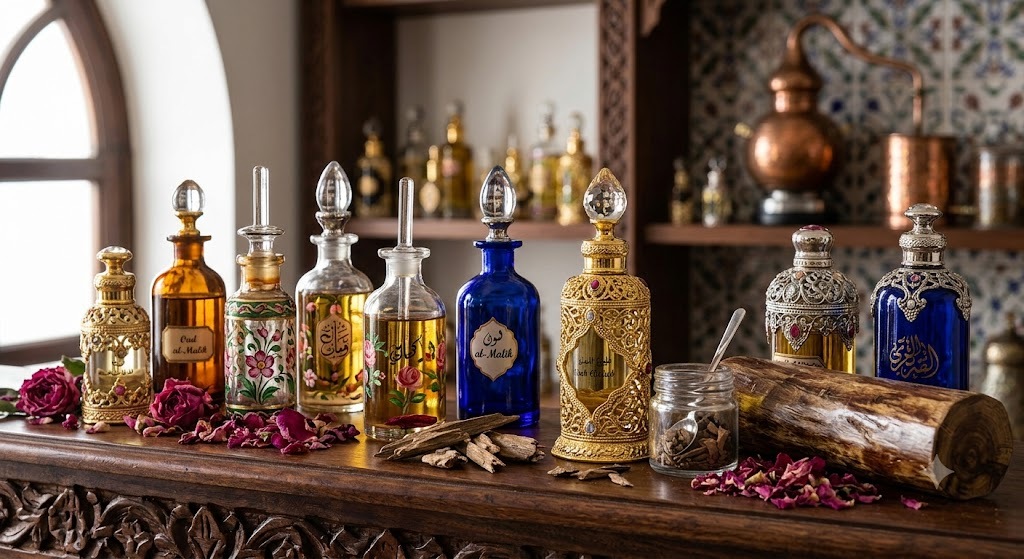
The region’s perfume culture goes back over a thousand years, shaped by trade routes that carried resins, woods, and spices between Arabia, India, and East Africa. That history is why a single bottle of Arabian perfume can smell like it’s telling a story — smoky oud, sweet dates, warm musk, and floral rose all at once.
A defining feature is oud (also called agarwood), a resin formed inside certain trees when they’re infected by a specific mold. It’s rare, labor-intensive to harvest, and one of the most expensive raw materials in the fragrance industry — some grades sell for thousands of dollars per kilogram. That scarcity is part of why oud-based perfumes carry a reputation for luxury.
The Building Blocks of an Arabian Fragrance
Understanding Arabian perfumery starts with knowing its core ingredients. Unlike many Western fragrances that chase a single “clean” accord, Middle Eastern scents are built to be layered, complex, and deeply sensory.
Oud (Agarwood)
Oud is the backbone of countless Arabian perfumes. It smells woody, smoky, and slightly animalic — a scent that’s polarizing at first but grows on almost everyone who gives it a fair chance.
Brands like Ajmal, Amouage, and Rasasi have built entire product lines around oud, and even Western houses like Tom Ford and Yves Saint Laurent now offer their own oud-inspired releases to meet growing demand.
If you’re new to oud, start with a blended version rather than a pure oud oil — the raw material can be intense for a first-timer.
Attar (Traditional Perfume Oil)
Attar refers to concentrated, alcohol-free perfume oil, traditionally distilled using steam and natural bases like sandalwood oil. Because there’s no alcohol to evaporate quickly, attars tend to develop slowly on skin and last far longer than a typical spray.
Rose attar, in particular, is a staple across the Gulf region, often blended with saffron, musk, or amber for extra depth.
Bakhoor and Incense Notes
Many Arabian perfumes are inspired by bakhoor — scented wood chips burned during gatherings and celebrations. That smoky, incense-like quality you notice in fragrances like Amouage’s Interlude or Ajmal’s Dahn Al Oudh comes directly from this tradition.
It’s part of why Arabian perfumes can smell “warm” even when they contain no literal heat-related notes — the association with burning wood and resin creates that sensation.
How to Choose Your First Arabian Perfume: A Step-by-Step Guide
Shopping for your first bottle doesn’t need to be intimidating. Follow these steps to find something you’ll actually love wearing.
- Start with a blended oud, not a pure oil. Pure oud oil is intense and expensive. A blended eau de parfum with oud as a supporting note is a gentler introduction.
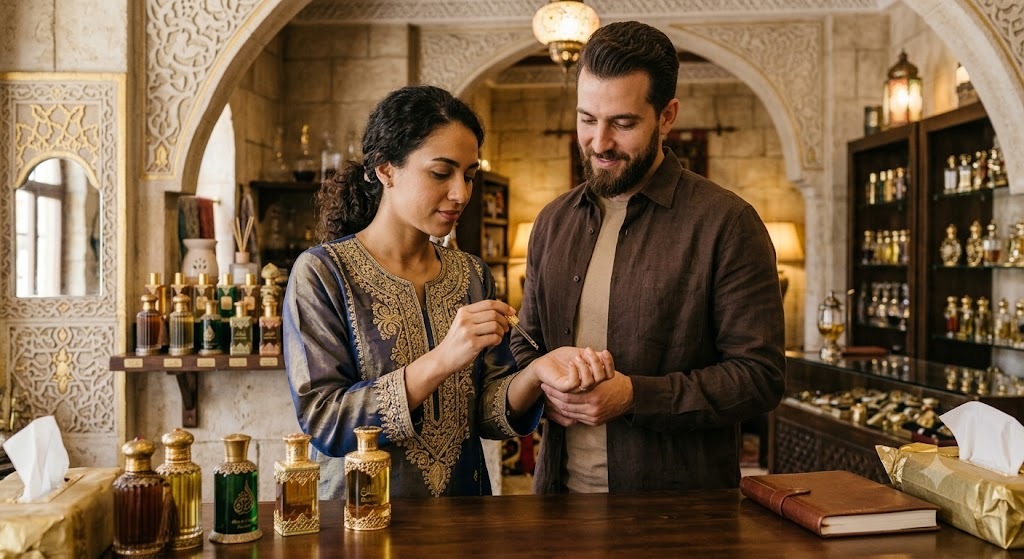
- Test on skin, not paper. Arabian perfumes evolve dramatically over several hours. A paper strip only shows you the opening — the real character comes out on skin.
- Wait at least 30 minutes before judging. These fragrances are built to unfold slowly. The first five minutes rarely represent the full scent.
- Look for rose, saffron, or amber if you want something approachable. These notes soften the smokiness of oud and are easier for a beginner nose to enjoy.
- Buy travel or decant sizes first. Reputable retailers like Ajmal, Rasasi, and Swiss Arabian often sell smaller sizes — a smart way to test before committing to a full bottle.
- Check the concentration. Many Arabian perfumes are sold as pure perfume oil or extrait de parfum, meaning they’re far more concentrated than a typical Western eau de toilette — a little goes a long way.
Common Mistakes American Buyers Make
Even fragrance lovers stumble the first time they explore this category. Here are the mistakes worth avoiding.
Applying too much. Because these perfumes are so concentrated, a few drops or a light dab is usually enough. Spraying it like a typical Western cologne can quickly become overwhelming in an enclosed space like an office or car.
Judging it in the first minute. Arabian perfumes are famous for their dry-down — the way they smell hours after application, not immediately after spraying.
Assuming “Arabian perfume” means one single scent. The category spans everything from bright, citrusy attars to deep, smoky oud blends. There’s enormous range, so one bad first impression shouldn’t turn you off the whole category.
Buying only from unfamiliar online sellers. Because pure oud is expensive, counterfeit and diluted versions are common. Sticking to established brands or authorized retailers helps you avoid disappointment.
Ignoring skin chemistry. A fragrance that smells incredible on a friend might shift completely on your own skin due to natural oils and pH. Always test personally before buying a full bottle.
Pro Tips From Fragrance Enthusiasts
Longtime collectors of Arabian perfumes tend to share a few pieces of advice that rarely make it into beginner guides.
Layering is part of the tradition — many wearers combine a lighter attar with a heavier oud-based perfume for a custom result. Start simple, but don’t be afraid to experiment once you understand your base notes.
Storage matters more than people expect. Oud and attar oils are sensitive to heat and light, so keeping bottles in a cool, dark place preserves their character far longer than leaving them on a sunny windowsill.
Price isn’t always a reliable quality signal in this category. Some of the most beloved attars come from smaller, family-run houses in the UAE or Saudi Arabia rather than big international names — it’s worth exploring beyond the most heavily marketed brands.
Final Recommendation: Where to Start
If you’re brand new to Arabian perfumery, the easiest entry points are a rose-oud blend or a lightly musky attar. These give you the signature depth of the category without the intensity of a pure oud oil.
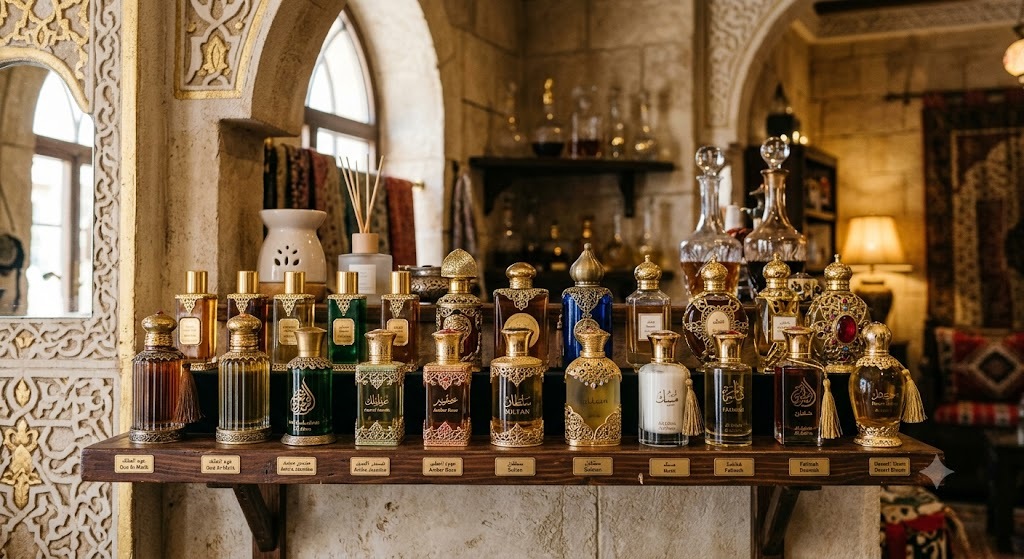
From there, let your nose guide you. Some people fall in love with smoky, resinous scents right away; others prefer the sweeter, floral side of the tradition. Both are equally “authentic” — Arabian perfumery has always been about personal expression as much as tradition.
Conclusion
Arabian perfumes offer something genuinely different from what most American shoppers grew up with — richer, longer-lasting, and rooted in a fragrance tradition centuries in the making. Once you understand the role of oud, attar, and bakhoor, shopping for your first bottle becomes a lot less intimidating and a lot more exciting.
Start small, test on skin, and give each scent time to unfold before deciding it’s not for you. With a little patience, Arabian perfumes can become one of the most rewarding discoveries in your fragrance collection.
Did you find this helpful? Drop a comment below or share this with a fellow fragrance lover!
Frequently Asked Questions
Q1: What makes Arabian perfumes smell different from Western perfumes? A: Arabian perfumes typically use oil-based concentrates rather than alcohol, and lean on ingredients like oud, attar, and bakhoor-inspired smoky notes. This gives them a richer, longer-lasting, and warmer character compared to lighter, alcohol-based Western fragrances.
Q2: Is oud the same thing as Arabian perfume? A: Not exactly. Oud is one key ingredient used widely in Arabian perfumery, but the category also includes rose attars, musk blends, and citrus-forward scents that contain little or no oud at all.
Q3: How long do Arabian perfumes typically last on skin? A: Because they’re often highly concentrated oils, many Arabian perfumes last 8 hours or longer, with some oud-based blends still noticeable the next day on clothing or hair.
Q4: Are Arabian perfumes safe to wear every day? A: Yes, though because they’re concentrated, it’s best to apply lightly — a small dab on pulse points is usually enough for daily wear without overwhelming those around you.
Q5: Where can American buyers purchase authentic Arabian perfumes? A: Established brands like Ajmal, Rasasi, Swiss Arabian, and Amouage sell through authorized retailers and their own official websites, which helps buyers avoid counterfeit or diluted products common with unverified sellers.
Q6: Do Arabian perfumes work well in warm American climates? A: Generally yes. Many of these fragrances were developed for hot Gulf climates, so notes like oud, amber, and musk tend to hold up well in summer heat, though lighter attars can be a good pick for especially humid regions.
What Is a Soliflore Perfume and Why Are They Having a Moment?