


What you’ll learn
- Why synthetic fragrances trigger redness, contact dermatitis, and severe skin irritation.
- How to spot the hidden, undisclosed ingredients masked under the legal “fragrance” loophole.
- The top clean, hypoallergenic brands making luxurious, skin-safe scent profiles.
- Practical strategies to apply and wear clean perfume without causing a reactive flare-up.
Introduction
Finding your signature scent should feel like an act of luxury, but for anyone dealing with highly reactive skin, it often feels more like walking through a minefield. You spritz a beautifully curated blend of warm vanilla or fresh citrus, only to find your wrist breaking out in a red, itchy rash less than twenty minutes later. If this sounds familiar, it is time to reassess what is hidden inside those heavy glass bottles and switch to the best toxin-free perfumes available today.
Traditional designer scents rely heavily on complex synthetic fixatives, hidden phthalates, and aggressive alcohol bases that continuously strip your skin barrier of its natural moisture. When these harsh compounds settle onto your skin, they can spark immediate allergic reactions or chronic contact dermatitis. Transitioning to a cleaner, non-toxic fragrance wardrobe allows you to enjoy rich, intoxicating, and multi-layered olfactory profiles without compromising your skin’s health. Let’s dive in.
Why Traditional Perfumes Irritate Sensitive Skin
To understand why switching to the best toxin-free perfumes is a game-changer, we must first look at how conventional perfumes are formulated. The global fragrance market relies on thousands of synthetic aroma chemicals to ensure a scent smells identical from batch to batch and lasts for days on clothes. According to data from the Environmental Working Group (EWG), the average conventional perfume contains dozens of hidden chemicals that never appear on the ingredient label due to trade secret protection laws.
This legal loophole allows brands to list a single vague word—”fragrance” or “parfum”—to represent an unregulated cocktail of ingredients. For individuals with sensitive skin, eczema, or rosacea, this lack of transparency poses a massive issue. Common structural ingredients like diethyl phthalate, which brands use to make scents last longer, act as known skin sensitizers and endocrine disruptors.
When applied directly to hot pulse points, these synthetic molecules break down rapidly and penetrate the skin barrier, triggering an immediate immune response that results in inflammation, burning, and hives. Clean, non-toxic perfumery eliminates these industrial fixatives completely, prioritizing ingredient safety, full disclosure, and skin-friendly carriers.
Applying fragrance to highly reactive pulse points. Source: Healthline
Essential Components of a Clean Scent Portfolio
Navigating the world of clean fragrances requires knowing exactly what goes into a high-quality, non-toxic bottle. Clean perfumery does not mean a perfume is boring or weak; rather, it represents a conscious shift toward using safer synthetic molecules alongside responsibly sourced botanical extracts.
Botanical Oils and Absolute Extracts
The true backbone of traditional, natural perfumery rests on pure botanical oils, concretes, and absolute extracts. These are derived directly from physical plant matter—such as steam-distilled rose petals, cold-pressed bergamot rinds, or CO2-extracted vanilla beans. Because these ingredients come straight from nature, they possess a multi-faceted complexity that synthetic components simply cannot mimic perfectly.
When you wear a perfume rich in natural botanical oils, the scent behaves like a living entity on your skin. It responds directly to your unique body chemistry, warming up slowly and changing subtly over several hours. This ensures that your fragrance smells entirely personal to you, developing a soft, powdery, or earthy undertone that feels completely organic.
Safe Synthetic Aroma Molecules
A common myth in the beauty community is that the best toxin-free perfumes must always be 100% natural. In reality, pure essential oils can occasionally be highly irritating to ultra-sensitive skin types; raw oakmoss, unrefined citrus oils, and certain tree resins are notorious for triggering allergic reactions. This is where safe synthetic molecules come to the rescue.
Conscious clean fragrance brands utilize lab-created, bio-identical molecules that are rigorously screened for human and environmental safety. These safe synthetics are engineered to be entirely hypoallergenic, omitting the specific allergens found in natural counterparts. By blending clean synthetics with gentle botanicals, perfumers create stunning notes of fresh linen, warm musk, and marine accords that are entirely safe for reactive skin.
Skin-Softening Carrier Bases
Conventional perfumes utilize denatured alcohol (often listed as alcohol denat.), which contains chemical denaturants designed to make the alcohol unpalatable. This specific type of alcohol dries out the epidermis rapidly, compromising your skin barrier and leaving it highly vulnerable to irritation.
The best toxin-free perfumes opt for high-grade organic sugarcane alcohol, organic grape alcohol, or rich, skin-conditioning oil bases like jojoba or fractionated coconut oil. These clean alternative carriers do not sting or dry out the skin surface upon application. Instead, they provide a smooth, nourishing foundation that seals the fragrance molecules to your skin, helping the scent last longer naturally.
Pure botanical extracts used in clean fragrance formulation. Source: Mahadi Perfumes
Step-by-Step Guide to Safely Patch Testing a New Perfume
Introducing any new product to an easily irritated skin barrier requires patience and precision. Even when an item is explicitly marketed as clean, hypoallergenic, or non-toxic, you should always conduct a controlled patch test at home before spraying it liberally across your neck and chest.
1
Acquire a small discovery vial
Prerequisite step
1.Acquire a small discovery vial:Prerequisite step.
Avoid buying a full-sized luxury bottle immediately. Purchase a small, travel-sized tester or sample vial so you can evaluate the formulation over multiple days without financial commitment.
2
Apply to a discreet testing zone
Day 1 morning
2.Apply to a discreet testing zone:Day 1 morning.
Place a single, small dab or half-spray of the perfume onto a clean patch of skin on your inner forearm or the crook of your elbow. These areas feature thin skin that mimics the reactivity of your neck.
3
Monitor the skin for 24 hours
Observation window
3.Monitor the skin for 24 hours:Observation window.
Leave the testing zone uncovered and avoid washing the area for a full day. Check the spot periodically for signs of a negative reaction, including swelling, localized heat, itching, or redness.
4
Reapply to check for delayed reactivity
Day 2 morning
4.Reapply to check for delayed reactivity:Day 2 morning.
Some contact allergies take time to manifest. Reapply another small dab to the exact same spot on the second day to confirm your immune system does not show delayed sensitivity to the ingredients.
Common Myths About Toxin-Free Fragrances
As clean beauty grows in popularity, several misconceptions continue to confuse consumers looking for the best toxin-free perfumes. Debunking these myths makes it easier to find a scent that performs beautifully without irritating your skin.
The Longevity Myth: A common piece of misinformation is that clean, non-toxic perfumes fade away within an hour of application. While it is true that clean fragrances avoid synthetic phthalates, modern clean perfumers use safe, heavy base notes like natural vetiver, patchouli, amber, and bio-identical musks to anchor lighter top notes, providing impressive longevity.
Another widespread myth is that “natural” always equals “hypallergic.” As mentioned earlier, raw, unrefined essential oils can contain natural allergens that prompt a strong skin reaction. True skin-safe, non-toxic perfumery focuses on selecting ingredients based on safety profiles rather than just their origin, resulting in formulations that are far gentler than random kitchen-blended essential oils.
Pro Tips for Making Clean Perfume Last All Day
Because clean formulas lack aggressive synthetic fixatives, you can use a few smart application techniques to maximize their lifespan without irritating your skin.
- Moisturize the skin first: Fragrance molecules bind to lipids. Applying a fragrance-free, rich body lotion or a touch of pure jojoba oil to your skin before spraying creates an ideal structural anchor for your perfume.
- Spray your clothing instead: If your skin is going through an active eczema or rosacea flare-up, avoid skin application entirely. Spray the mist onto the hem of your shirt, your scarf, or your jacket liner to enjoy the aroma safely.
- Do not rub your wrists together: Friction creates localized heat that breaks down delicate top notes like citrus and light florals prematurely, shortening the lifespan of your clean scent.
When exploring different options, look for brands that focus on transparency, like those highlighted in our guide to clean personal care standards. Understanding how ingredients are sourced gives you total confidence in your daily routine.
Top Brand Recommendations for Sensitive Skin
When shopping for the best toxin-free perfumes, looking for brands that value total ingredient disclosure helps ensure a safe, luxurious experience.
| Clean Fragrance Brand | Signature Scent Profile | Best Carrier Base Type |
|---|---|---|
| 7 Virtues | Warm vanilla, rich amber, exotic spices | Organic sugarcane alcohol base |
| Henry Rose | Fresh marine, soft powdery musk, crisp woods | 100% transparent EWG-verified synthetics |
| Skylar | Sweet gourmand, bright uplifting citrus | Hypoallergenic, free of 1300+ questionable ingredients |
| By Rosie Jane | Earthy, minimalist, clean everyday skin scents | Multi-use nourishing fragrance oil options |
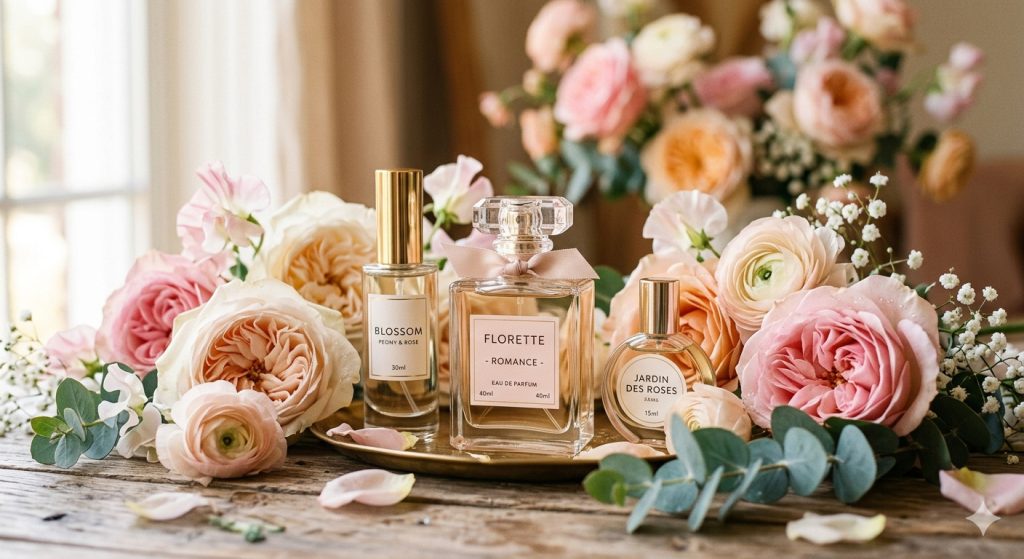
Modern clean perfume houses focusing on total ingredient transparency. Source: Organic Beauty Lover
Conclusion
Finding a luxurious fragrance shouldn’t require compromising the health of your skin barrier. By learning to look past vague labels and choosing the best toxin-free perfumes, you can easily curate a stunning scent collection that feels amazing to wear. Focus on brands that prioritize transparent labeling, use safe synthetic blends, and utilize nourishing carrier bases. Your skin will thank you for making the switch to clean beauty.
Did you find this helpful? Drop a comment below or share this with a fellow fragrance lover!
Frequently Asked Questions
Q1: What actually makes a perfume qualify as toxin-free?
A: A perfume is considered toxin-free when it is formulated without known harmful chemicals like diethyl phthalates, parabens, formaldehydes, and synthetic dyes. These brands practice full disclosure, listing every single aroma molecule on the packaging rather than hiding them under the generic term “fragrance,” ensuring the product is safe for sensitive individuals.
Q2: Can I wear the best toxin-free perfumes if I suffer from severe eczema?
A: Yes, you can absolutely enjoy clean perfumes if you have eczema, but you should take a few precautions. Opt for oil-based rollerballs instead of alcohol-based sprays, as alcohol can dry out an already compromised skin barrier. Alternatively, apply your fragrance to outer layers of clothing to enjoy the scent safely.
Q3: Why do conventional perfumes cause headaches and skin redness?
A: Conventional perfumes rely heavily on synthetic petroleum-derived chemicals, cheap industrial solvents, and hidden phthalates. These harsh ingredients can cause immediate contact dermatitis on the skin and irritate the respiratory tract when inhaled, frequently resulting in stubborn tension headaches, dizziness, and localized skin inflammation.
Q4: Do clean, non-toxic perfumes expire faster than regular perfumes?
A: Clean perfumes may have a slightly shorter shelf life because they avoid aggressive synthetic preservatives. A typical non-toxic bottle remains completely fresh and stable for 12 to 24 months. To maximize its shelf life, store your bottle in a cool, dark drawer rather than a damp bathroom.
Q5: What is the difference between clean synthetics and natural ingredients?
A: Natural ingredients are derived directly from plants via distillation or pressing, while clean synthetics are carefully structured in a laboratory environment. Clean synthetics are uniquely engineered to be entirely free of the natural allergens often found in plants, making them incredibly stable and gentle for highly reactive skin.
Q6: Are oil-based perfumes better for sensitive skin types than sprays?
A: Oil-based perfumes are generally much better for sensitive skin. They substitute drying denatured alcohol with nourishing carrier bases like jojoba oil or coconut oil. This keeps the skin hydrated while releasing the fragrance notes gradually over time through your natural body heat.
Pingback: What Are Phthalate-Free Perfumes — and Why Should You Care? - fragrantip
Pingback: 12 Best Lavender Perfumes for Sleep and Relaxation - fragrantip