


What you’ll learn
- Why Paris became closely associated with luxury fragrance and French perfumery
- How royal courts, fashion, and luxury craftsmanship shaped the city’s perfume culture
- Why Grasse remains essential to French fragrance history even though Paris became its global showcase
- How houses such as Guerlain and CHANEL helped define modern perfume
Introduction
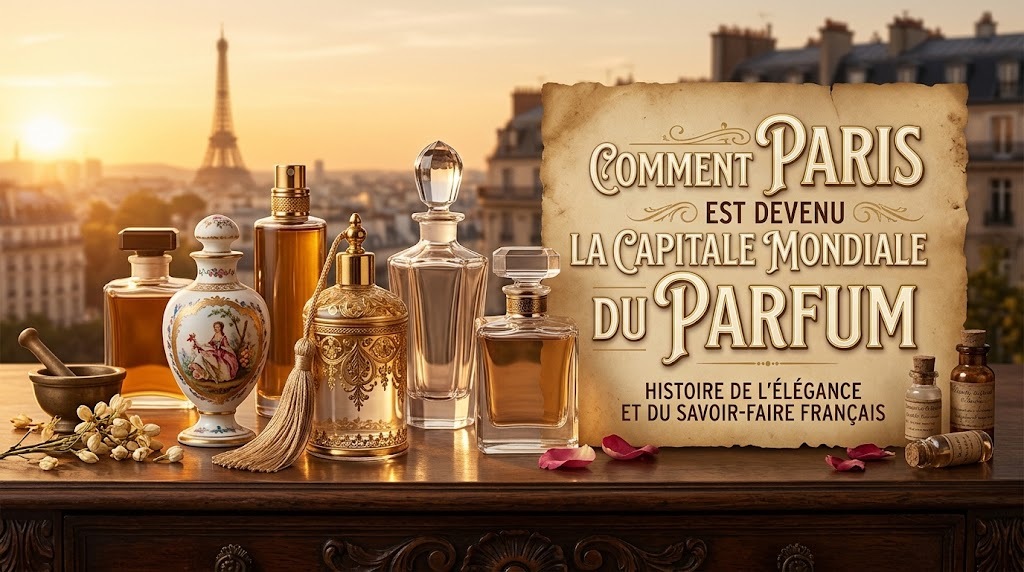
How Paris Became the Perfume Capital is a story that begins long before the modern perfume counter. Walk through Paris today and fragrance seems woven into the city: elegant boutiques, historic maisons, beautiful glass bottles, and the warm, powdery scent drifting from a department-store beauty hall. Yet Paris did not simply wake up one morning and become the world’s perfume capital.
Its reputation developed over centuries.
France’s royal courts helped turn fragrance into a symbol of refinement, while Paris provided the fashion, commerce, luxury craftsmanship, and wealthy clientele needed to transform perfume into a major cultural product. At the same time, Grasse in southern France became famous for cultivating and processing fragrant flowers and other raw materials.
That distinction matters. Grasse became a crucial production center and home of generations of perfumers, while Paris became the place where fragrance, fashion, luxury, design, and international prestige came together.
From Louis XIV and the “perfumed court” of the eighteenth century to Guerlain’s Paris boutique and CHANEL N°5, the history is remarkably rich.
So, how did all these pieces fit together?
Let’s dive in.
Why Paris Became So Important to Perfume History
Paris’s relationship with perfume grew alongside its reputation as Europe’s great center of fashion, luxury, art, and culture.
During the seventeenth and eighteenth centuries, fragrance was not limited to modern-style bottles of eau de parfum. Scented products could include powders, pomades, gloves, soaps, scented containers, and other beauty accessories.
The Musée du Parfum Fragonard notes that under Louis XIV, aristocrats and members of the bourgeoisie enthusiastically embraced perfumed products and elaborate perfume objects. By the eighteenth century, perfume could be decanted from larger bottles into small, jewel-like flasks designed to be beautiful as well as functional.
Paris was perfectly positioned to benefit from this culture.
The city attracted wealthy customers, skilled artisans, merchants, artists, fashion makers, and members of the European elite. Luxury goods were increasingly connected with personal identity and social status.
Even the streets of Paris contributed to the story. In eighteenth-century Paris, fashionable shopping areas such as the rue Saint-Honoré were destinations where customers could browse luxury goods and interact with specialized merchants.
Paris and the rise of luxury culture
Perfume became especially powerful because it could combine several forms of luxury at once.
There was the fragrance itself: citrusy, floral, musky, powdery, woody, or spicy. Then came the bottle, packaging, presentation, and retail experience.
That combination eventually became one of the defining characteristics of French fragrance.
However, there is an important historical correction worth making: Paris did not single-handedly create French perfumery.
Grasse played an enormous role.
Grasse’s favorable Mediterranean climate supported the cultivation of fragrant plants, including jasmine, rose, tuberose, and lavender. The town initially became known for tanning and glove making before gradually specializing in perfumery. By the eighteenth century, perfume had become its principal activity.


The Making of the French Perfume Tradition
The story becomes clearer when we separate three forces: raw materials, craftsmanship, and luxury culture.
Royal Courts Made Fragrance Aspirational
Royal influence helped fragrance acquire an aura of sophistication.
Louis XV’s court became known as the “perfumed court,” and scented products were deeply connected with elite beauty and personal presentation. Fragrance was not simply something pleasant to wear. It formed part of a larger world of grooming, clothing, cosmetics, hair styling, and decorative objects.
This mattered because trends established among elites could spread outward.
As fragrance became associated with elegance, consumers had more reasons to seek scented products. Perfumers therefore had an opportunity to move beyond basic odor masking and develop increasingly sophisticated products.
The culture surrounding perfume also encouraged creativity.
A perfume container could resemble jewelry. A scented case could become an art object. A powder box or flacon could communicate taste and wealth before the fragrance was even applied.
In other words, fragrance became an experience.
Grasse Supplied the Floral Heart of French Perfumery
If Paris supplied much of the glamour, Grasse supplied an important part of the botanical foundation.
The transformation of Grasse is fascinating. The city developed a successful tanning industry during the Middle Ages and later became associated with perfumed leather and gloves. Its climate, however, also proved highly suitable for aromatic plants.
Over time, local cultivation expanded.
Jasmine, rose, tuberose, and lavender became important parts of the regional landscape. The region also developed expertise in extracting and processing fragrant materials.
The relationship between Paris and Grasse therefore became complementary rather than competitive.
A perfume could be imagined, branded, packaged, and sold through a Parisian luxury house while relying on expertise and ingredients connected to southern France.
That partnership helped create the broader idea of French perfumery.
Parisian Perfume Houses Turned Scent Into a Luxury Business
The nineteenth century brought another major change: professional perfume houses became increasingly important.
One of the most influential examples is Guerlain.
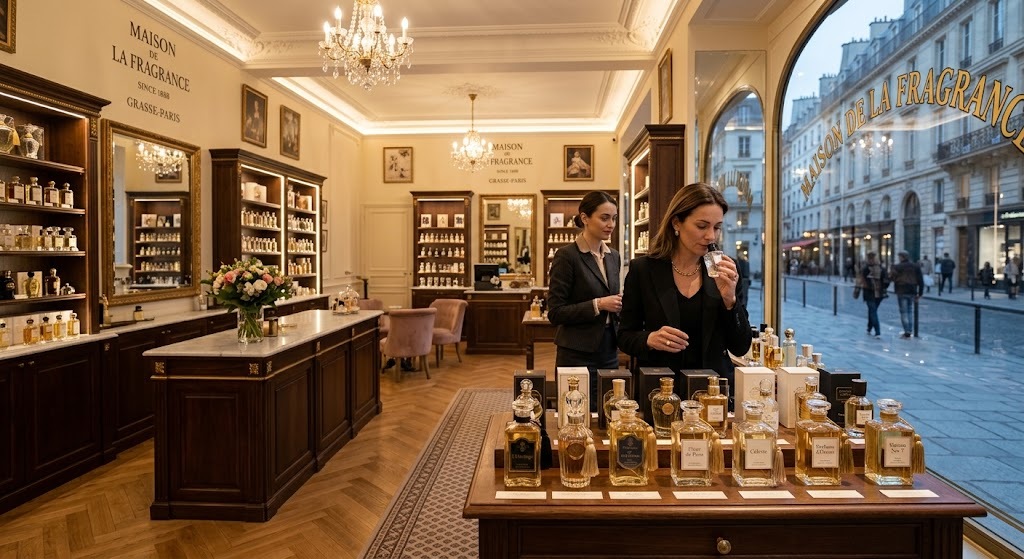
Pierre-François-Pascal Guerlain opened his first Paris boutique on rue de Rivoli in 1828. According to the house’s own historical record, the boutique quickly attracted Parisian high society and wealthy British visitors interested in creams, makeup, and fragrances.
That detail reveals something important about Paris.
The city was not merely producing fragrance. It was creating a luxury environment in which fragrance could become part of a complete lifestyle.
Guerlain later created Eau de Cologne Impériale for Empress Eugénie in 1853, earning the title of official perfumer to the emperor. The fragrance was presented in an elaborate bottle featuring the imperial bee motif.
Perfume, fashion, royalty, craftsmanship, and branding were beginning to merge.
That combination would become one of Paris’s greatest cultural exports.
How Paris Built Its Global Perfume Reputation
Paris’s perfume dominance did not happen through one invention. It developed through a sequence of cultural and commercial changes.
Here is the simplest way to understand the process.
1. Royal and aristocratic demand created prestige
When perfume became fashionable among Europe’s elites, French fragrance acquired an association with refinement.
Paris benefited because it was already a center of court culture, luxury retail, fashion, and artistic production.
2. Luxury craftsmanship raised the value of fragrance
Perfume bottles became objects of design rather than simple containers.
Glassmakers, decorators, designers, and perfume houses all contributed to the final product. This allowed fragrance to compete in the broader luxury market.
3. Paris connected perfume with fashion
This was perhaps the most important development for modern fragrance.
Paris became synonymous with haute couture, and eventually fashion designers realized that perfume could extend a fashion house’s identity beyond clothing.
CHANEL provides one of the clearest examples.
Gabrielle Chanel launched CHANEL N°5 in 1921 in collaboration with perfumer Ernest Beaux. CHANEL describes it as the first perfume created by a couturier, and its abstract composition and minimalist bottle helped challenge conventional ideas about what a perfume could represent.
Suddenly, a perfume could carry the identity of a fashion house.
The bottle became recognizable.
The name became memorable.
The fragrance became part of a broader cultural image.
4. International customers carried the Parisian image abroad
Paris attracted travelers, designers, artists, wealthy shoppers, and visitors from around the world.
A perfume purchased in Paris could therefore become a souvenir of French elegance.
This helped reinforce a powerful association:
Paris = fashion = luxury = fragrance.
And the cycle continued.
More luxury houses established themselves in Paris. More visitors encountered French fragrance. More consumers around the world associated French perfume with sophistication.
Common Myths About Paris and Perfume
The phrase “perfume capital of the world” sounds simple, but the history is more complicated.
1: Paris invented perfume
No.
Perfume is thousands of years old and developed across multiple ancient civilizations. The history of perfumery includes cultures from the ancient Mediterranean and Near East, as well as later European traditions.
Paris’s achievement was different.
It helped transform fragrance into a highly visible luxury art and international commercial culture.
2: Everything in French perfume comes from Paris
Not at all.
Grasse remains one of the most important traditional centers of French perfumery. Its flower cultivation, raw-material expertise, and generations of perfumers form a major part of France’s fragrance heritage.
Think of the relationship this way:
Grasse helps provide the botanical heritage. Paris helps provide the luxury stage.
The reality is more interconnected than the simple “Paris versus Grasse” story suggests.
3: French perfume became famous only because of marketing
Marketing certainly mattered, but it was only one piece of the puzzle.
French fragrance benefited from centuries of craftsmanship, luxury retail, artistic design, raw-material expertise, fashion, and international trade.
The bottle, brand, formula, story, and shopping experience all contribute to a perfume’s identity.
4: Parisian perfume is always floral and powdery
French perfumery is much broader.
Some classic fragrances emphasize citrus, woods, leather, amber, spices, vanilla, mosses, or aromatic herbs. Modern French houses also explore fresh, transparent, musky, gourmand, and unconventional styles.
That diversity is part of what keeps French perfumery relevant.
Expert Tips for Understanding Parisian Perfume History
If you want to appreciate French fragrance more deeply, don’t begin by memorizing hundreds of perfume names.
Instead, learn to recognize the cultural connections behind them.
Follow the house, not just the bottle
When you discover a fragrance from Guerlain, CHANEL, or another historic house, look into the house’s origins.
Ask:
- When was it founded?
- Where did the founder work?
- Which perfumers shaped its identity?
- Which fragrances became milestones?
- How did fashion or culture influence its creations?
For example, Guerlain’s Paris story reaches back to 1828, giving the house nearly two centuries of history.
Pay attention to presentation
Next time you see a classic French fragrance, look beyond the liquid.
Study the bottle shape.
Notice the label.
Consider the color, cap, box, and typography.
Parisian fragrance history is also a history of luxury design.
CHANEL N°5 is a perfect example. Its bottle deliberately moved away from the highly ornamental presentation common in its era and embraced a much more restrained design.
Learn the Paris–Grasse connection
This is one of the most useful lessons for anyone interested in French perfumery.
Paris represents the cultural and luxury side of the story, while Grasse represents an essential center of traditional perfume-making expertise and fragrant raw materials.
Understanding both places gives you a more accurate picture than treating Paris as the entire French perfume industry.
Follow the fragrance through time
Try sampling fragrances from different eras.
Compare an old-fashioned powdery floral style with a modern woody fragrance. Then explore a citrusy eau de cologne, a rich amber, or a green aromatic composition.
You’ll quickly notice that “French perfume” is not one smell.
It is a tradition of experimentation.
Why Paris Still Deserves Its Perfume Reputation
Paris remains powerful because its perfume identity has evolved rather than disappeared.
The city continues to connect fragrance with fashion, architecture, art, luxury retail, travel, and personal style.
Historic houses maintain flagship boutiques and heritage collections, while newer brands reinterpret French perfumery for modern consumers.
The economic importance of French fragrance also remains substantial.
In 2024, French cosmetics exports reached €22.5 billion, according to the French Federation for Beauty Companies (FEBEA). Perfumes accounted for €8 billion of those exports, representing about 35% of total French cosmetics exports, and perfume exports had more than doubled over five years.
That statistic puts the cultural reputation into perspective.
French perfume is not simply a romantic historical idea. It remains a major international business.
At the same time, Paris continues to benefit from something difficult to measure: symbolism.
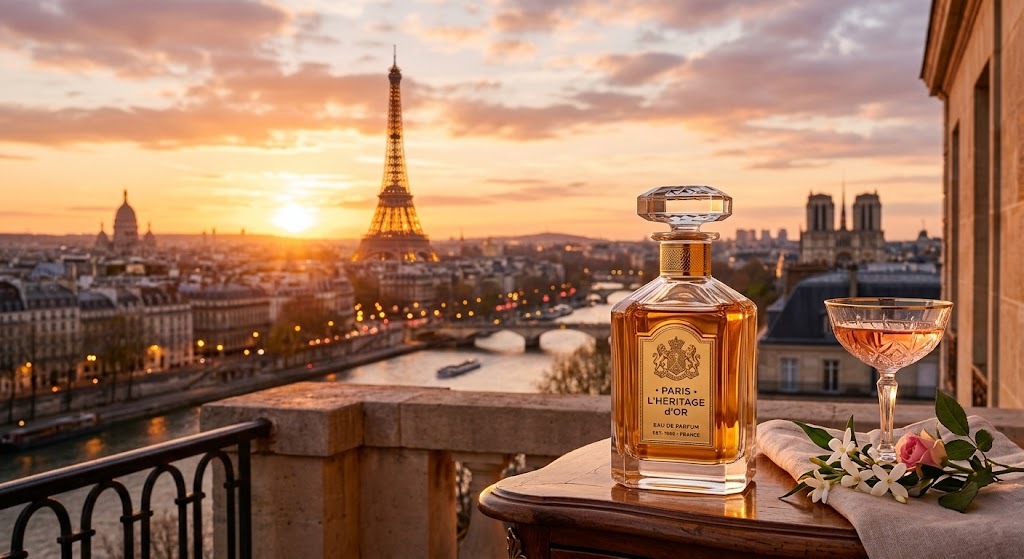
A fragrance bought in Paris can feel like more than a beauty purchase. It can represent craftsmanship, memory, travel, fashion, and French style in a single bottle.
Conclusion
The story of How Paris Became the Perfume Capital is really a story about connection.
Paris brought together fashion, luxury, craftsmanship, influential customers, creative talent, and international commerce. Meanwhile, Grasse developed extraordinary expertise in flowers, fragrant materials, and traditional perfumery.
Over the centuries, these traditions reinforced one another.
Guerlain helped establish the model of the prestigious Parisian perfume house in the nineteenth century. CHANEL later showed how a fashion designer could transform fragrance into a global cultural icon. Today, French perfume remains one of the country’s most recognizable luxury exports.
So, when you smell a classic French fragrance, you’re experiencing more than a pleasant blend of citrus, flowers, woods, musk, or vanilla. You’re encountering a piece of cultural history.
That is why Paris still feels inseparable from the world of perfume.
Did you find this helpful? Drop a comment below or share this with a fellow fragrance lover!
Frequently Asked Questions
Q1: How did Paris become the perfume capital of the world?
Paris became known as the perfume capital through a combination of royal influence, luxury craftsmanship, fashion, retail, and international tourism. Fragrance became closely associated with French elegance, while Parisian perfume houses developed strong global reputations. Grasse also played a crucial role by developing expertise in flowers and perfume raw materials. Together, these traditions helped establish France as a global fragrance leader.
Q2: Is Paris or Grasse the true perfume capital of France?
Both cities are important, but they represent different parts of French perfumery. Grasse is famous for its traditional perfume-making heritage, flower cultivation, and raw materials. Paris became the international showcase for luxury fragrance through fashion houses, boutiques, designers, and major perfume brands. Calling Paris the perfume capital reflects its cultural and commercial influence, while Grasse remains essential to the craft itself.
Q3: What perfume house was founded in Paris in 1828?
Guerlain was founded in Paris in 1828 by Pierre-François-Pascal Guerlain. He opened his first boutique on rue de Rivoli, where the house became associated with fragrances and other luxury beauty products. Guerlain later created Eau de Cologne Impériale for Empress Eugénie in 1853, strengthening the brand’s prestigious position.
Q4: Why is CHANEL N°5 important to perfume history?
CHANEL N°5, launched in 1921, helped redefine the relationship between fashion and fragrance. Gabrielle Chanel worked with perfumer Ernest Beaux to create the fragrance, and CHANEL describes it as the first perfume created by a couturier. Its abstract floral-aldehydic character and minimalist bottle helped establish a new model for fashion-house perfumes.
Q5: What role did Grasse play in French perfume history?
Grasse became an important center of perfumery after developing from a tanning and glove-making town into a specialist fragrance region. Its Mediterranean climate supported the cultivation of aromatic plants such as jasmine, rose, tuberose, and lavender. By the eighteenth century, perfumery had become a central activity in the area, and Grasse developed a lasting reputation for perfume expertise.
Q6: Is French perfume still important today?
Yes. French fragrance remains a major part of the global luxury and cosmetics market. According to FEBEA, French perfume exports reached €8 billion in 2024, while total French cosmetics exports reached €22.5 billion. Perfume exports had more than doubled over the previous five years, showing that French fragrance remains commercially significant as well as culturally influential.
