


What you’ll learn:
- Why the TikTok perfume industry boom happened so fast — and why it isn’t slowing down
- How #PerfumeTok turned unknown niche brands into overnight sellouts
- The biggest myths about “TikTok perfumes” that fragrance lovers still believe
- Practical tips for finding your next signature scent without falling for hype
Introduction
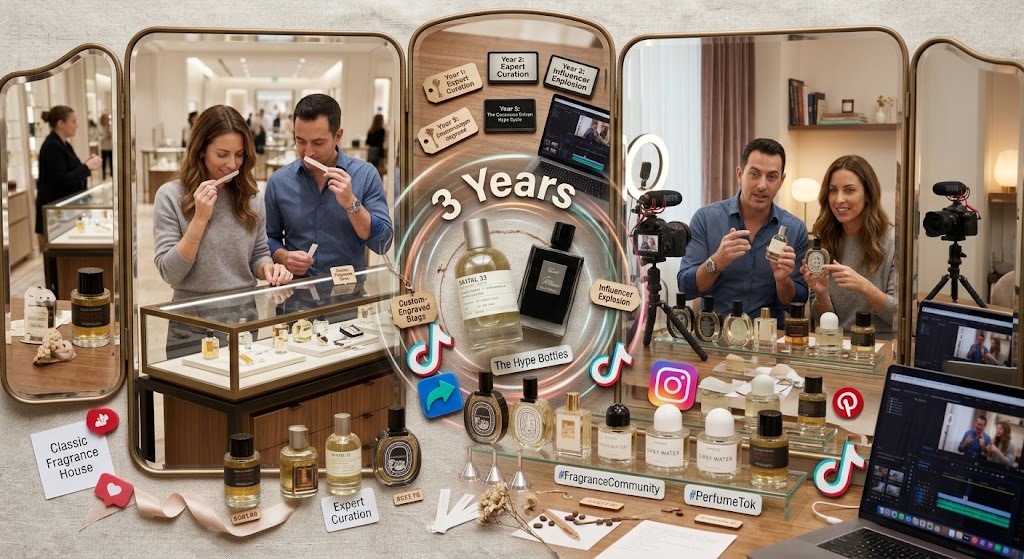
Three years ago, most people bought perfume the old-fashioned way: wandering through a department store, spritzing a few testers, and asking a sales associate for help. Today, a huge chunk of fragrance shoppers make their decisions after watching a fifteen-second video. That shift is the TikTok perfume industry story in a nutshell, and it has rewritten the rules for everyone from massive luxury houses to one-person indie perfumeries.
I’ve watched this unfold in real time, both as a fragrance obsessive and as someone who writes about scent for a living. What started as a niche corner of the app — people sniffing bottles on camera and rating them out of ten — turned into one of the most powerful marketing forces the beauty world has ever seen.
Bottles sold out in hours. Discontinued scents got resurrected. Entire brands were built almost exclusively on video shares. If you’ve wondered how a single app managed to reshape an industry that’s existed for centuries, you’re in the right place. Let’s dive in.
Why This Matters: The Rise of #PerfumeTok
To understand how big this shift really is, it helps to look at the numbers. The global fragrance market was valued at roughly $50 billion in recent years, and industry analysts have repeatedly pointed to social video platforms as one of the fastest-growing discovery channels for beauty purchases, alongside traditional retail and word of mouth.
TikTok didn’t just add another advertising channel to that ecosystem. It changed the actual decision-making process. Scent, by nature, is impossible to convey through a screen — you can’t smell a video. Yet creators found workarounds: describing notes in vivid, relatable language, filming reactions, comparing dupes side by side, and building entire personas around fragrance expertise.
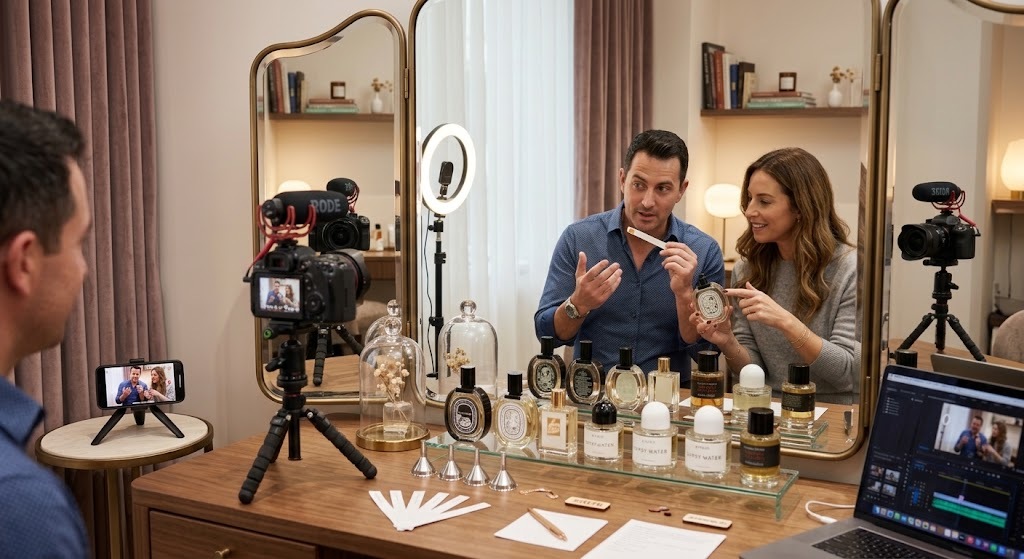
That combination of authenticity and sensory storytelling is exactly what makes the TikTok perfume industry phenomenon so different from a magazine ad or a celebrity endorsement. It feels like a friend’s recommendation, even when millions of people are watching.
The Main Ways TikTok Reshaped Fragrance
1: Micro-Influencers Became More Powerful Than Celebrities
For decades, fragrance marketing leaned on A-list celebrity faces — think classic campaigns fronted by movie stars and pop icons. TikTok flipped that model. A creator with 40,000 followers and a genuine passion for niche scents could move more product than a six-figure celebrity campaign, simply because their audience trusted their nose.
Brands noticed fast. Smaller fragrance houses like Kayali, DedCool, and Phlur leaned into creator partnerships instead of traditional ad buys, and it paid off in a way traditional marketing rarely could match for the cost.
The lesson for the industry was simple: relatability now beats star power, at least when it comes to convincing someone to click “add to cart” on a $150 bottle they’ve never smelled.
2: “Dupe Culture” Exploded
Perfume dupes — cheaper fragrances designed to smell similar to expensive originals — existed long before TikTok. But the app turned dupe-hunting into a genre of its own. Videos comparing a $300 niche release to a $20 alternative regularly rack up millions of views.
This shifted consumer expectations across the board. Shoppers started walking into stores armed with screenshots and comparison charts, asking associates point-blank whether a dupe was “really that close.” Some brands leaned into it playfully; others pushed back hard against comparisons they felt undervalued their formulas.
Either way, dupe content changed how people justify a fragrance purchase. Price is no longer the automatic proxy for quality it once was — at least not in the minds of TikTok-savvy shoppers.
3: Discontinued and Niche Scents Got a Second Life
Perhaps the most fascinating trend is how TikTok resurrected fragrances that brands had all but forgotten. When a single viral video praised a discontinued Bath & Body Works scent or an under-the-radar Jean Paul Gaultier release, resale prices on platforms like eBay sometimes spiked within days.
Brands took note and began reissuing fan-favorite scents specifically because of TikTok demand — something that would have been unthinkable in the pre-social-media fragrance world, where reformulation decisions moved at a glacial, boardroom pace.
Practical Tips: How to Navigate Perfume Shopping in the TikTok Era
If you’re trying to buy fragrance smartly in this new landscape, a few habits go a long way.
- Read past the hook. A dramatic reaction video is entertainment first, information second. Look for creators who describe actual notes and longevity, not just facial expressions.
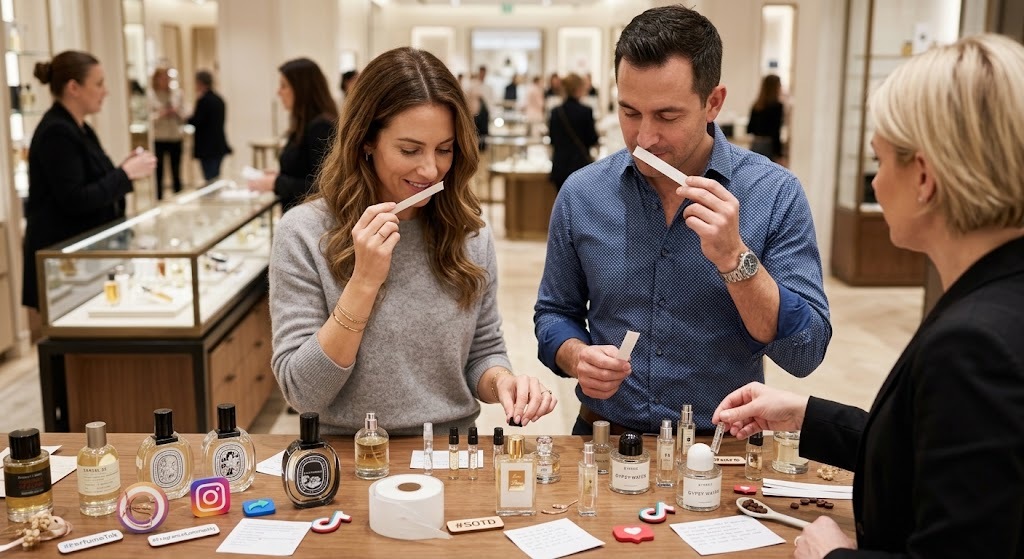
- Sample before you commit. Skin chemistry changes everything. A scent that smells incredible on a creator’s wrist may develop completely differently on yours.
- Check multiple sources. If five different creators describe a fragrance the same way, that’s a much stronger signal than one glowing review.
- Watch for paid partnerships. Sponsored content isn’t inherently dishonest, but it’s worth knowing when a recommendation is compensated.
- Give it time. Trends move fast. Waiting a few weeks after a viral spike often means better availability and a clearer picture of whether people still love it once the hype settles.
Common Mistakes and Myths About TikTok Perfumes
“If it’s viral, it must be good.” Virality measures engagement, not quality. Plenty of fragrances trend because they’re polarizing or unusual, not necessarily because they’re well-made.
“Dupes are always identical.” Even close dupes typically use different ingredients and concentrations, which affects how a scent projects and how long it lasts on skin.
Buying based on a single 15-second clip. Fragrance is a full experience that unfolds over hours, moving through top, heart, and base notes. A short video can only ever capture a sliver of that.
Ignoring longevity and sillage discussions. Viral videos tend to emphasize the opening spray, but how a scent wears over six or eight hours matters far more for everyday enjoyment.
Expert Tips for Building a Collection Beyond the Hype
After years of following fragrance trends closely, my best advice is to treat TikTok as a discovery tool, not a decision-maker. Use it to build a list of scents you’re curious about, then do the old-fashioned legwork: sample strips, wear tests, and honest conversations with retail staff who know their catalog inside and out.
It’s also worth following a mix of creator types — some who focus on luxury houses, others who specialize in budget-friendly finds, and a few “nose” enthusiasts who talk formulation and note breakdowns in depth. That variety keeps your perspective balanced instead of algorithm-driven.
The Bigger Picture: What This Means for Fragrance’s Future
The TikTok perfume industry effect isn’t a passing fad — it’s a structural shift in how scent gets discovered, discussed, and sold. Brands now build content strategy into product launches from day one, sending early samples to creators months before a public release.
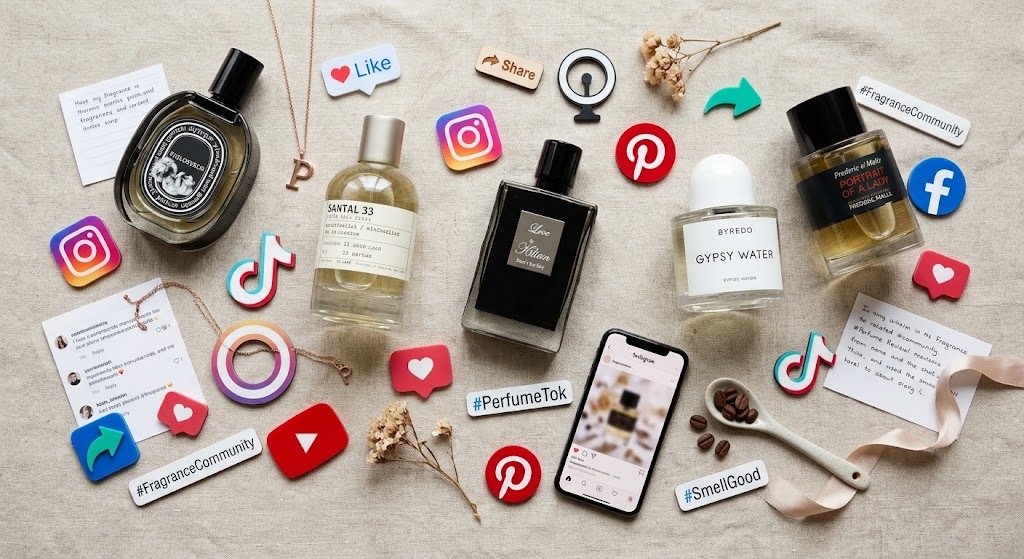
At the same time, the fundamentals of great fragrance haven’t changed. Quality ingredients, skilled perfumers, and scents that genuinely make people feel good will always matter more than a trending sound or a clever video hook. TikTok simply gave those qualities a louder megaphone — and occasionally, a very loud one for things that don’t deserve it.
Conclusion
In just three years, the TikTok perfume industry has gone from a curious subculture to a dominant force shaping what we buy, wear, and talk about. Micro-influencers replaced celebrity ad campaigns, dupe culture rewired how we think about value, and forgotten scents found new life through viral moments no marketing department could have predicted.
None of that changes the joy of finding a fragrance that feels like you. Use the trends as inspiration, not gospel, and you’ll come away with a collection you genuinely love, hype or no hype.
Did you find this helpful? Drop a comment below or share this with a fellow fragrance lover!
Frequently Asked Questions
Q1: How did TikTok become such a big part of the perfume industry? A: TikTok’s short-video format let creators describe scents through relatable, sensory storytelling, which built trust faster than traditional ads. Brands responded by shifting marketing budgets toward creator partnerships, accelerating the platform’s influence across the entire fragrance industry.
Q2: Are TikTok-famous perfumes actually good quality? A: It varies. Virality reflects how shareable or dramatic a video is, not necessarily how well a fragrance is formulated. Some viral scents are genuinely excellent, while others trend for novelty. Always sample before assuming a viral scent will suit you.
Q3: What are perfume “dupes,” and are they worth buying? A: Dupes are affordable fragrances designed to resemble pricier originals. They can be a great budget option, but formulas, longevity, and skin performance often differ from the original, so manage expectations rather than expecting an exact match.
Q4: Why do some discontinued perfumes suddenly become popular again? A: A single viral video can spark massive renewed interest in an overlooked or discontinued scent, driving up resale demand almost overnight. Some brands have even reissued fragrances specifically because of this kind of social media momentum.
Q5: How can I avoid impulse-buying perfume because of a trend? A: Give yourself a waiting period after seeing a viral video, and try to get a physical sample before purchasing a full bottle. Skin chemistry varies widely, so what smells incredible in a video may wear differently on you.
Q6: Is TikTok a reliable place to learn about fragrance? A: It’s a great starting point for discovery, but it works best paired with in-person testing and input from multiple sources. Treat TikTok as inspiration for what to try, not the final word on what to buy.
