What you’ll learn
- The exact mechanics behind how perfume notes evaporate and change on your skin over time.
- How to identify top, middle, and base notes like a professional fragrance evaluator.
- Practical tips for choosing perfumes based on your favorite fragrance families and scent profiles.
- The most common mistakes people make when buying perfume and how to avoid them.
Introduction
Have you ever sprayed a beautiful perfume at a boutique, fallen instantly in love with its bright citrus opening, and bought it on the spot, only to find that it smells completely different two hours later? You are not alone. This scent transformation happens because of a beautiful, evolving structure known as the perfume pyramid. To truly understand how a perfume behaves, you must first ask yourself: what are fragrance notes?
At their core, fragrance notes are the individual aromatic ingredients that blend together to create a finished perfume. Much like a musical composition relies on a sequence of distinct musical notes to create a harmony, a bottle of perfume relies on a carefully timed release of different scents. These individual layers unfold in a predictable sequence, shifting and morphing as the liquid reacts with the air and your body heat.
Understanding this aromatic journey completely changes the way you shop for and experience scents. Instead of feeling confused by a changing aroma, you can learn to anticipate and appreciate the transition. Let’s dive in.
The Science and Art Behind the Olfactory Pyramid
To grasp the true definition of what are fragrance notes, it helps to look at the intersection of chemistry and artistry. Perfumers, often referred to as “Noses,” do not just mix pleasant liquids together randomly. They carefully analyze the molecular weight and volatility of every single ingredient they use. Volatility refers to how quickly a substance transforms from a liquid into a gas and evaporates into the air.
The global fragrance market is massive, valued at over $50 billion annually, and a huge portion of that industry relies on perfecting this exact chemistry. When a perfume formula is created, ingredients with smaller, lighter molecules evaporate almost instantly. Meanwhile, heavy, complex molecules cling to the skin for hours or even days.
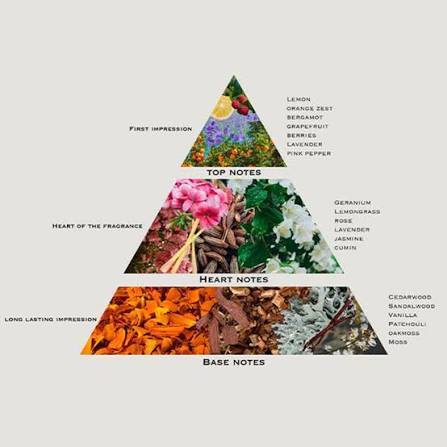
This natural difference in evaporation speeds creates the traditional three-tiered structure known as the olfactory pyramid. By arranging ingredients based on their volatility, perfumers ensure that a fragrance tells a beautiful story from the first spray until the final fade. Without this structural harmony, a perfume would either disappear in minutes or smell overwhelmingly heavy right from the start.
Deconstructing the Layers: Top, Middle, and Base Notes
Every traditional perfume contains three distinct layers, each serving a specific purpose in the lifecycle of the scent. To truly understand what are fragrance notes, we need to break down these three tiers and explore how they interact with your senses throughout the day.
The Top Notes (The First Impression)
Top notes, also known as head notes, form the topmost layer of the olfactory pyramid. These are the scents you perceive immediately upon spraying a perfume. Because they consist of small, light molecules, they are highly volatile and evaporate within the first 10 to 15 minutes of application. Their primary purpose is to make a striking first impression and lure you into the fragrance narrative.
Common examples of top notes include bright citrus fruits like bergamot, lemon, and grapefruit, as well as light herbs like mint and basil. Think of the sharp, energizing opening of Chanel Chance Eau Fraîche or the zesty splash of Jo Malone Lime Basil & Mandarin. These ingredients deliver a burst of fresh energy that commands attention, but they quickly step aside to reveal the deeper layers waiting underneath.
The Middle Notes (The Heart of the Scent)
As the initial flash of the top notes begins to dissipate, the middle notes emerge to take center stage. Often called the heart notes, this layer makes up the core personality of the fragrance, accounting for roughly 40% to 80% of the total scent volume. Heart notes are more complex and full-bodied than top notes, typically lasting anywhere from two to four hours on the skin.
The middle notes serve as a crucial transitional bridge, smoothing out the departure of the sharp top notes while preparing your senses for the heavy base. This layer typically features lush florals, rich fruits, and warm spices. Iconic perfumes like Dior J’adore showcase a dominant heart of jasmine and rose, creating a deeply memorable, sophisticated, and romantic experience that defines the wearer’s presence.
The Base Notes (The Lasting Impression)
The final layer to reveal itself is the base notes. These notes consist of the heaviest, most complex molecules with the lowest volatility, meaning they evaporate incredibly slowly. Base notes begin to mingle with the heart notes after about 30 minutes, but they truly shine after the middle notes have faded, lingering on the skin for six hours, twelve hours, or even multiple days on clothing.
Base notes give a fragrance its depth, longevity, and warmth. They anchor the entire composition to your skin. Common examples include rich woods like sandalwood and cedar, sweet vanilla, earthy patchouli, and sensual white musk. The deeply addictive quality of Tom Ford Tobacco Vanille or YSL Black Opium relies heavily on these rich, dense base notes to create an intoxicating, unforgettable trail.
How to Identify Scent Families and Notes Like a Pro
Now that you can answer the question of what are fragrance notes, you can use that knowledge to classify scents into distinct fragrance families. The fragrance world organizes these notes into a visual tool called the Fragrance Wheel, which helps group similar aromatic ingredients together. Recognizing these families makes it much easier to predict whether you will enjoy a perfume before you even smell it.
- The Fresh Family: This group is dominated by bright, energetic top notes. Look for subcategories like citrus (lemon, mandarin), green (crushed leaves, galbanum), and aquatic or marine notes that mimic a fresh ocean breeze.
- The Floral Family: By far the most popular category, florals heavily dominate the heart notes of modern perfumery. This family ranges from single note classics like lavender or lily of the valley to complex, powdery bouquets of peony, tuberose, and gardenia.
- The Oriental or Spicy Family: This family focuses on rich, warm, and exotic notes that bridge the heart and base layers. Common ingredients include warm cinnamon, clove, vanilla, amber, and resinous incense, creating an aura of luxury and mystery.
- The Woody Family: Anchored firmly in the base notes, this category features dry, earthy, and comforting aromas. Think of smoky vetiver, rich patchouli, creamy sandalwood, and sharp cedarwood, which provide a solid, sophisticated foundation.

Common Myths and Misconceptions About Perfume Notes
The world of perfumery is surrounded by mystery, which frequently leads to confusion for shoppers. One of the biggest myths is that a perfume note is the exact same thing as a natural ingredient. In reality, when a perfume lists a note like “amber” or “sea salt,” these are often artistic accords created in a laboratory using synthetic molecules, as amber resin itself cannot be distilled into oil. Synthetic notes allow perfumers to create ethical, sustainable, and highly stable scents that do not harm endangered plants or animals.
Another massive misconception is that expensive perfumes only use base notes so they last longer. Longevity does not depend on the price tag; it depends purely on the concentration of the oils and the molecular structure of the ingredients chosen. A luxury citrus cologne will always fade faster than an affordable vanilla perfume because citrus molecules are physically incapable of clinging to the skin the way heavy vanilla molecules do.
Finally, many people believe that a fragrance will smell identical on every person who wears it. This is completely false. Your unique skin chemistry, dictated by your skin’s natural oil levels, pH balance, body temperature, and even your diet, interacts directly with the chemical structure of the perfume notes. A woody base note that smells sweet on your best friend might turn sharply masculine or dry on your own skin.
Expert Tips for Sampling and Buying Perfume
Navigating a department store beauty counter can easily overload your senses, making it difficult to figure out what are fragrance notes in a specific bottle. To get the absolute most out of your next shopping trip, you need to slow down the process and test like an industry insider. Never rush into buying a bottle based solely on the first spray, or you risk falling victim to buyer’s remorse when the heart notes take over later.
First, always spray the perfume onto a paper blotter strip initially. Wave it gently through the air for a few seconds to let the harsh alcohol carrier evaporate, then take a light sniff. If you love that initial impression, write the name of the perfume on the card and tuck it into your bag. Wait at least 30 minutes before sniffing the card again to check how the middle notes are developing.
If you still love the fragrance after it transitions to the heart, it is time for the ultimate test: your skin. Apply a single spray to your wrist or the back of your hand. Do not rub your wrists together, as the friction generates heat that can prematurely break down the delicate top notes, altering the intended scent path. Walk away from the store and wear the scent for a full day to evaluate the true performance of the base notes.
If you want to dive even deeper into specific scent profiles and discover hidden gems, check out our comprehensive guide on [how to build a seasonal fragrance wardrobe] to match your notes to the changing weather.
Summary of the Fragrance Note Lifespan
To make your fragrance journey effortless, we have summarized the core characteristics of the three note layers in a quick, easy-to-read reference table below.
| Note Layer | Volatility / Evaporation Speed | Average Lifespan on Skin | Common Scent Characteristics | Key Examples |
| Top Notes | Very High (Evaporates rapidly) | 5 to 15 minutes | Sharp, bright, fresh, uplifting | Bergamot, Lemon, Grapefruit, Mint, Basil |
| Middle Notes | Medium (Moderate evaporation) | 2 to 4 hours | Full-bodied, well-rounded, expressive | Jasmine, Rose, Tuberose, Cinnamon, Nutmeg |
| Base Notes | Low (Evaporates incredibly slowly) | 6 to 24+ hours | Deep, warm, rich, heavy, grounding | Sandalwood, Cedarwood, Vanilla, Amber, Musk |
Conclusion
Stepping into the world of perfumery reveals an incredible blend of creative artistry and precise organic chemistry. By learning the answer to what are fragrance notes, you unlock a brand-new way to experience your favorite scents. You no longer just wear a perfume; you watch an aromatic story unfold beautifully on your skin from morning until evening.
The next time you look for a signature scent, remember to look past the initial splash of the top notes. Give the heart and base layers the time they need to truly show their true colors. Happy hunting on your fragrance journey!
Did you find this helpful? Drop a comment below or share this with a fellow fragrance lover!
Frequently Asked Questions
Q1: What are fragrance notes and why do they change over time?
A: Fragrance notes are the individual scent ingredients that make up a perfume composition. They change over time because different ingredients have different molecular weights and evaporation rates. Light notes like citrus evaporate within minutes, while heavy notes like woods and vanilla linger for many hours.
Q2: Why does my perfume smell different on me than on my friend?
A: This happens because of your individual skin chemistry. Factors like your skin’s hydration levels, natural oils, pH balance, and body temperature interact directly with the perfume notes, causing certain ingredients to project more prominently or fade faster on different people.
Q3: What does “linear fragrance” mean?
A: A linear fragrance is a perfume designed to smell exactly the same from the moment you first spray it until it completely fades off your skin. It does not follow the traditional top, middle, and base note pyramid structure, making it highly predictable.
Q4: How can I make my perfume’s base notes last longer?
A: To extend longevity, apply your perfume onto well-moisturized skin or over an unscented lotion, as dry skin absorbs perfume oils quickly. Spraying your pulse points and letting the fragrance air-dry without rubbing will also help preserve the scent structure.
Q5: What is the difference between Eau de Parfum and Eau de Toilette?
A: The main difference is the concentration of pure fragrance oils. Eau de Parfum typically contains 15% to 20% oil concentration, giving it stronger heart and base notes that last longer. Eau de Toilette contains 5% to 15% concentration, leaning more heavily on bright, fresh top notes.
Q6: Can synthetic fragrance notes be higher quality than natural ones?
A: Yes, absolutely. Synthetic notes are often engineered to provide better longevity, safety, and stability than natural oils. Furthermore, synthetics allow perfumers to recreate scents that cannot be naturally extracted, such as crisp ocean air, soft cotton, or protected animal musks.
How to Apply Perfume the Right Way (Most People Get This Wrong)
Leave a Reply