

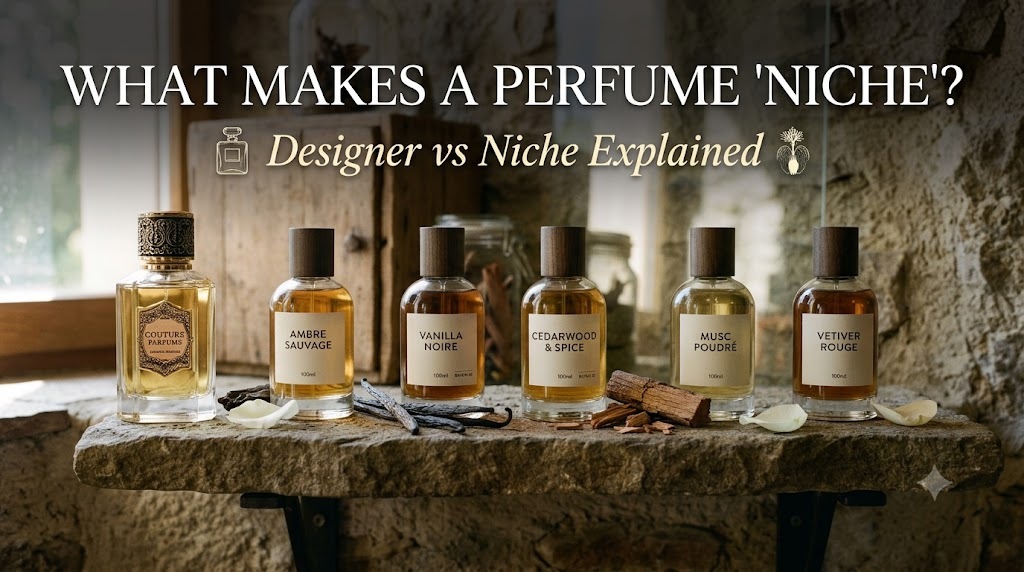
What you’ll learn
- The core differences in philosophy, production, and distribution between designer and artisanal houses.
- The specific creative ingredients and artistic standards that define the luxury boutique fragrance industry.
- Practical tips on how to sample, select, and purchase your very first artisanal bottle without wasting money.
- How to spot common myths surrounding price, quality, and longevity in the luxury scent market.
Introduction
Walking into a high-end department store exposes you to a dizzying wall of shimmering glass bottles. You see the massive, familiar fashion logos gleaming under bright lights, but tucked away in a quiet corner lies an entirely different world of mysterious bottles. If you have ever wondered what makes a perfume “Niche” compared to these mass-market giants, you are not alone. The global fragrance market is shifting rapidly as consumers seek out highly individualistic identities over corporate trends.
Understanding this distinction completely transforms how you shop for, wear, and appreciate your personal scent collection. It shifts your perspective from merely buying a consumer product to collecting wearable art. Let’s dive in.
What Makes a Perfume “Niche”: The Evolution of Fragrance
To understand what makes a perfume “Niche” today, we must first look at how the modern fragrance landscape split into two distinct ecosystems. Decades ago, most commercial perfumes came from historic houses dedicated entirely to the art of scent, or elite French fashion designers who used perfume as an accessible entry point to their brand.
Over time, global luxury conglomerates acquired many classic brands, optimizing formulas to appeal to millions of people simultaneously. This mass-market evolution left a void for consumers who desired complexity, storytelling, and rare ingredients.
The artisanal movement emerged as a direct rebellion against this commercial homogenization. Instead of relying on multi-million dollar marketing campaigns and celebrity faces, boutique houses focused entirely on the liquid inside the bottle. Today, this sector represents the fastest-growing segment of the multi-billion dollar global fragrance industry, driven by an audience hungry for personal expression.
Decoding the Core Differences: Designer vs Niche
The debate between mainstream and boutique scents goes far beyond the price tag on the box. To truly answer what makes a perfume “Niche,” we have to analyze the creative freedom, production scale, and distribution methods that separate these two worlds.
The House Philosophy and Creative Control
Mainstream houses operate primarily as fashion or beauty brands first, and fragrance houses second. When a major fashion house launches a new scent, the process begins with extensive market research, focus groups, and rigid corporate briefs. The corporate goal is maximum global appeal to ensure a strong return on investment.
Artisanal houses operate on an entirely different philosophy. They are founded by independent perfumers or creative directors who prioritize artistic expression over commercial viability. The perfumer receives total creative freedom to explore complex themes, historical eras, or deeply personal memories without corporate interference.
Ingredient Quality and Olfactory Artistry
Mainstream scents rely heavily on cost-effective, synthetic aroma chemicals engineered to smell clean, pleasant, and highly familiar to the average consumer. These compositions often lean on crowd-pleasing notes like bright citrus, clean synthetic musks, and sugary vanillas that perform consistently across diverse demographic groups.
Boutique perfumery celebrates rare, natural, and sometimes polarizing ingredients. Think of sustainably sourced Indian sandalwood, precious Laotian oud, absolute jasmine from Grasse, or smoky Haitian vetiver. These houses allow the natural complexities of these materials to shine, resulting in dynamic compositions that evolve beautifully on the skin over several hours.
Production Scale and Selective Distribution
You can find mainstream juices in almost every airport duty-free shop, department store, and cosmetics chain worldwide. Millions of bottles roll off automated assembly lines every single year to meet massive global demand.
Boutique houses deliberately restrict their production runs, often blending and bottling their juices in small batches. You will only find them in select luxury boutiques, specialized perfume shops, or directly through the brand’s website. This selective distribution preserves the exclusivity and mystique of the brand.
How to Identify an Authentic Niche Fragrance
Identifying these hidden gems requires looking past the brand name and examining how the product presents itself to the world. Here is a practical checklist to help you spot a true boutique creation.
- The Brand Story Focus: Check the website and packaging. Authentic houses focus heavily on the inspiration behind the scent, the specific perfumer who created it, or the raw origins of the ingredients, rather than relying on a Hollywood celebrity endorsement.
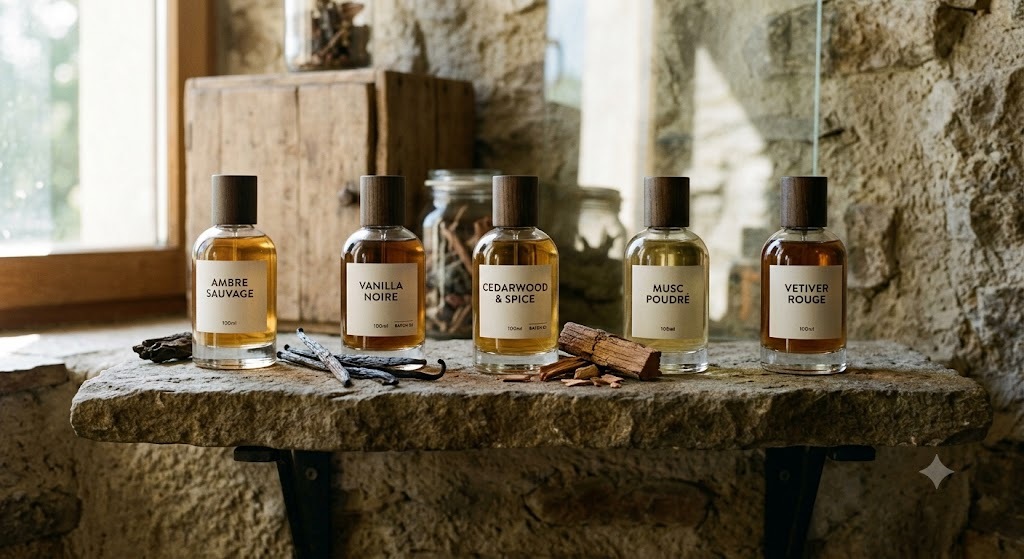
- Uniform Bottle Architecture: Boutique houses often use the exact same bottle design across their entire collection. This deliberate choice proves that the brand invests its budget into the quality of the juice rather than custom, gimmicky glass molds for every single release.
- Absence of Mass Advertising: You will rarely see these brands on giant city billboards or television commercials during prime-time broadcasts. They rely almost entirely on word-of-mouth, editorial reviews, and fragrance community discussions.
- Unconventional Scent Profiles: A true boutique scent will rarely smell like everything else on the mall counter. It might mimic the scent of rain on dry earth, an old library filled with leather-bound books, or a smoky campfire in a pine forest.
- Independent Ownership Structures: While some corporate giants have purchased independent labels recently, true artisanal brands maintain independent operational control over their formulas and creative concepts.

Common Myths About Luxury and Boutique Perfumes
As the popularity of independent fragrance houses grows, several misconceptions have taken root within the beauty community. Debunking these myths will help you make smarter purchasing decisions.
- Myth 1: Boutique Perfumes Always Last Longer. Longevity depends entirely on the molecular weight of the ingredients used, not the category of the brand. A natural, high-end citrus scent will always evaporate faster than a heavy, synthetic amber base, regardless of who made it.
- Myth 2: Higher Prices Equal Better Smell. Price in this industry reflects small-batch production costs, rare ingredients, and limited distribution, not an objective guarantee that you will love the scent profile.
- Myth 3: They Only Use Natural Ingredients. Totally natural perfumes often smell muddy and fade within an hour. The best artisanal creators combine rare naturals with cutting-edge, expensive synthetic molecules to create projection, stability, and unique artistic effects.
- Myth 4: Niche Scents Are Too Strange for Daily Wear. While some avant-garde creations are challenging, many boutique houses specialize in incredibly wearable, clean, and elegant daily scents that simply smell more refined than mainstream options.
Pro Tips for Navigating the Boutique Scent World
Stepping into this specialized world can feel overwhelming to your nose and your wallet if you do not have a clear strategy.
Pro Tip: Never buy a boutique bottle blind based solely on internet reviews. These complex juices react dramatically with your unique skin chemistry, meaning a scent that smells heavenly on a reviewer could smell completely different on you.
Before investing in a full bottle, explore the FragrantTip Guide to Decoding Fragrance Notes to understand your personal preferences. Always purchase small 2ml sample vials online first. Wear a sample for at least three full days to see how the top, heart, and base notes unfold across morning, noon, and night. Look for dedicated discovery sets offered directly by houses like Maison Francis Kurkdjian, Byredo, or Creed, which often credit the cost of the sampler pack toward a future full-bottle purchase.
Finding Your Signature Artisanal Identity
Ultimately, choosing a boutique fragrance is an intimate journey of self-discovery and personal branding. These creations allow you to move away from matching the crowd and move toward expressing your internal world through an invisible, olfactory aura.

Whether you fall in love with a dark, resinous incense juice or a ethereal, powdery iris creation, you are choosing a scent that tells a story. Take your time, trust your own nose over fleeting social media trends, and enjoy the beautiful process of curation.
Conclusion
Uncovering what makes a perfume “Niche” reveals a world built on uncompromised artistic freedom, rare ingredients, and authentic storytelling. While designer scents certainly have a reliable place in any modern wardrobe, boutique perfumes offer an extraordinary avenue for true self-expression. By shifting your focus toward small-batch houses, you open yourself up to unforgettable sensory journeys that linger long after you leave the room.
Did you find this helpful? Drop a comment below or share this with a fellow fragrance lover!
Frequently Asked Questions
Q1: What makes a perfume niche instead of designer?
A: A perfume is considered niche when it is produced by a house dedicated exclusively to fragrance, rather than a fashion or cosmetics giant. These brands focus on artistic freedom, unique scent profiles, limited distribution channels, and small-batch production rather than mass-market appeal and celebrity-driven advertising campaigns.
Q2: Why are independent boutique fragrances so expensive?
A: The higher price tag reflects smaller economies of scale, premium packaging, independent sourcing of rare raw materials, and the absence of mass manufacturing discounts. Furthermore, these houses invest heavily in high concentrations of pure perfume oils and compensation for world-class independent perfumers.
Q3: Do niche perfumes last longer on the skin?
A: Not necessarily. Longevity is dictated entirely by the chemical structure of the ingredients rather than the brand’s classification. Heavy base notes like oud, amber, patchouli, and vanilla naturally cling to the skin for many hours, whereas delicate top notes like bergamot, neroli, and marine accords evaporate quickly.
Q4: Where can I safely buy authentic niche perfumes?
A: You can safely purchase them directly from the official brand websites, authorized luxury department stores, or specialized boutique fragrance retailers. Avoid third-party discount websites or unverified online marketplaces, as the high value of these boutique bottles makes them frequent targets for counterfeit operations.
Q5: Can beginners wear complex artisanal scents?
A: Absolutely. While some avant-garde houses create highly unusual or challenging scent profiles, many independent brands offer incredibly accessible, smooth, and beautiful compositions. Beginners should look for discovery sets featuring fresh, woody, or soft floral profiles before exploring complex leathery or animalic creations.
Q6: What does the term “indie perfume” mean compared to niche?
A: While both operate outside the mainstream market, indie brands are typically owned, operated, and formulated by the actual perfumer in their own private studio. Niche houses are also independent but often hire external master perfumers and utilize established boutique manufacturing facilities to produce their commercial lines.
The History of Chanel No. 5 — The World’s Most Famous Perfume
Pingback: Why Does Your Perfume Smell Different After a Few Hours? - fragrantip