

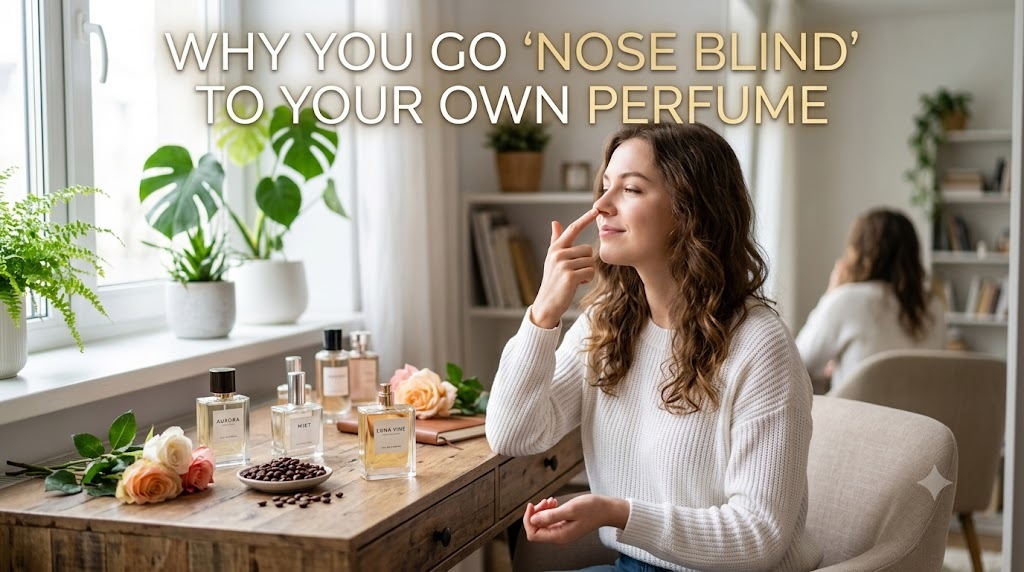
What you’ll learn
- The biological reason your brain suddenly blocks out your favorite luxury scents.
- How to distinguish between true olfactory fatigue and a weak, poor-performing fragrance.
- Seven actionable, expert-approved strategies to immediately reset your sense of smell.
- Daily habits that prevent fragrance habituation and maximize your signature scent.
Introduction
You get dressed, apply a few generous spritzes of your favorite luxury perfume, and head out the door feeling incredibly confident. But within just an hour, you realize something highly frustrating: you can no longer smell a single trace of your fragrance. You might wonder if the juice evaporated into thin air, or if you accidentally purchased a counterfeit bottle that lacks staying power.
Before you rush back to the department store to demand a full refund, you need to understand the concept of sensory adaptation. In almost all cases, the fragrance is still performing beautifully, and the people around you can easily perceive it. The real culprit behind this disappearing act is a fascinating evolutionary survival mechanism occurring inside your own mind.
Understanding why you go “nose blind” to your own perfume allows you to take full control of your sensory experiences. By learning how your olfactory system interacts with complex scent molecules, you can easily train your nose to enjoy your collection all day long. Let’s dive in.
Why You Go “Nose Blind” to Your Own Perfume: The Science of Olfactory Fatigue
To solve this frustrating phenomenon, we must first look at the biological architecture of human scent perception. Olfactory fatigue, commonly known as nose blindness, is a temporary, natural inability to distinguish a particular odor after prolonged exposure. This happens because your brain prioritizes novel environmental changes over static, familiar stimuli.
When you first apply a perfume, thousands of volatile scent molecules flood your nasal cavity, binding directly to your olfactory receptors. These receptors instantly fire electrical signals along the olfactory nerve directly to your brain’s limbic system, registering the aroma as a fresh sensory input.
However, your brain quickly classifies this continuous stream of identical scent data as safe, non-threatening background noise. To keep your senses clear for new, potentially hazardous environmental odors like smoke or spoiled food, the brain intentionally dampens its response to the perfume. Consequently, your receptors stop firing signals for that specific molecular structure, causing the scent to effectively vanish from your conscious awareness.
Decoding the Biological Triggers of Sensory Adaptation
Your olfactory system is an incredibly complex network that processes thousands of unique environmental signals every single minute. When you introduce a complex, high-quality fragrance into this mix, your body reacts with a highly sophisticated filtering process designed to protect your cognitive processing limits.
The Role of Receptor Saturation
Receptor saturation occurs when the physical binding sites inside your nasal passages become completely occupied by specific fragrance compounds. Heavy, persistent base notes like rich Indonesian patchouli, sweet Madagascar vanilla, and dense synthetic musks possess large molecular structures that cling tightly to these receptors.
Because these heavy molecules take a long time to detach and dissipate, your receptors remain constantly stimulated without a break. When these receptors are continuously blocked, they lose their ability to send new, fresh signals to the brain, leaving you completely unable to perceive the underlying sweetness or warmth of your signature blend.
Central Nervous System Filtering
While receptor saturation happens directly in your nose, the actual filtering process occurs deep within the brain’s olfactory cortex. Think of your central nervous system as a highly efficient email spam filter that constantly scans your sensory input.
The first time a scent enters your system, the brain treats it as an important, high-priority notification. But when that exact same scent profile persists for hours without changing, the internal spam filter simply flags the information as redundant. The brain deliberately suppresses your conscious awareness of the aroma, even though the physical molecules are actively entering your nose with every breath you take.
### The Impact of Fragrance Concentration
The specific concentration of your perfume plays a massive role in how rapidly your brain initiates this sensory shutdown. Highly concentrated formulas, such as an Extrait de Parfum or a heavy Eau de Parfum, load your skin with a massive percentage of pure fragrance oils.
While you might assume a stronger concentration guarantees all-day personal enjoyment, the opposite is frequently true. The intense, relentless projection of a high-concentration blend like Maison Francis Kurkdjian’s Baccarat Rouge 540 can overwhelm your olfactory system within mere minutes, triggering an ultra-fast path to complete nose blindness.
7 Practical Ways to Reset Your Sense of Smell
Fortunately, you do not have to live in a state of perpetual fragrance sensory deprivation. By implementing a few strategic habits, you can effectively bypass your brain’s automatic filtering systems and experience your collection with total clarity.
- Rotate Your Fragrance Wardrobe Regularly: Avoid wearing the exact same signature scent for more than three consecutive days. By constantly switching between wildly different fragrance families—such as moving from a zesty citrus floral to a deep, smoky oud—you prevent your brain from habituating to a single molecular profile.
- Spritz Further Away From Your Face: Avoid spraying perfume directly onto your neck, throat, or chest, as these zones sit right beneath your nostrils and provide a continuous, suffocating cloud of scent. Instead, focus your applications on your wrists, the backs of your knees, or the outer lower bend of your elbows to allow the aroma to waft gently into your personal space.
- Utilize the Neutralizing Power of Wool: If you find your nose failing mid-day, take a deep breath into a clean, unfragranced wool garment like a sweater or scarf. Natural wool fibers contain lanolin, which helps absorb and neutralize lingering fragrance molecules trapped in your nasal passages, offering a quick sensory reset.
- Inhale Clean Human Skin: One of the easiest ways to recalibrate your olfactory system is to smell an unperfumed area of your own clean skin, such as the crook of your bare elbow. Your brain recognizes your own natural body odor as the ultimate baseline “zero,” which instantly clears out competing scent signals.
- Expose Yourself to Fresh Air: Step completely out of the environment where you applied your perfume and spend five to ten minutes walking briskly outdoors in the fresh air. The rapid air circulation helps clear away lingering airborne molecules, giving your saturated nasal receptors a much-needed chance to clear out.
- Hydrate Your System and Your Skin: Drinking plenty of water keeps your mucous membranes properly hydrated, which maximizes the efficiency of your olfactory receptors. Additionally, applying a fragrance-free moisturizer before spraying your perfume prevents dry skin from rapidly absorbing the oil matrix, leading to a smoother, less overwhelming scent release.
- Smell Whole Coffee Beans Judiciously: While high-end perfume boutiques frequently display jars of coffee beans to clear your nose, use this trick sparingly. The strong, familiar aroma of coffee provides a powerful temporary distraction for your brain, but excessive sniffing can easily contribute to overall sensory overload.
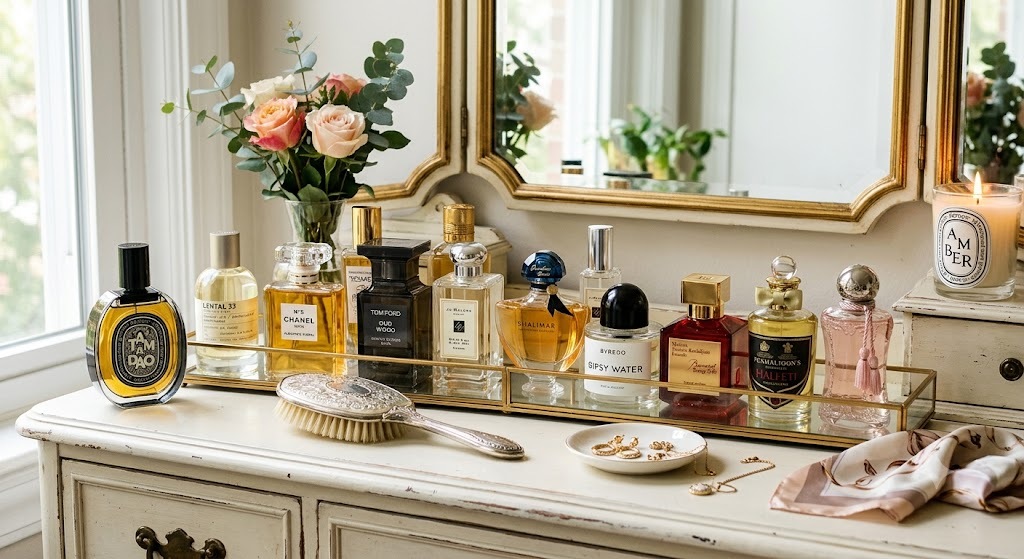
Common Mistakes That Accelerate Nose Blindness
Many passionate fragrance enthusiasts unintentionally accelerate their own olfactory fatigue by practicing incorrect application habits. Recognizing these common errors can instantly save your luxury bottles from being wastefully oversprayed.
The single biggest mistake people make is overspraying out of sheer panic. When you can no longer smell your perfume, your immediate gut reaction is often to apply four or five additional sprays to force the scent back into your awareness. Unfortunately, this aggressive overcompensation floods your receptors even further, causing your brain to lock down its sensory defenses even tighter.
Another pervasive error is applying perfume directly to dry, parched skin. Dry skin lacking moisture causes the top notes of a fragrance to flash off incredibly fast, leaving a dense, concentrated blast of heavy base notes to hit your nose all at once. This sudden, unbalanced spike in aromatic intensity quickly overpowers your senses and triggers immediate nose blindness.
Finally, many people fall into the trap of aggressively rubbing their wrists together after application. This friction generates localized heat that prematurely shatters the delicate, volatile top notes like bergamot, pear, or lavender. By destroying these light introductory notes, you force your nose to skip right to the heavy, dense base elements, accelerating the onset of olfactory fatigue.
Pro Tips to Maximize Scent Longevity Safely
Building an authentic, high-performing fragrance routine requires a strategic understanding of environmental variables and application mechanics. To get the most out of your collection without exhausting your senses, you must master the art of ambient diffusion.
Try spraying your favorite scent onto the lining of your clothing or the ends of your hair rather than directly onto your warm skin. Fabrics and hair fibers hold onto fragrance molecules much more loosely than human skin does, and they do not emit the constant body heat that drives rapid scent evaporation. This results in a slower, more metered release of the fragrance throughout the day, which keeps your brain interested without triggering a sensory shutdown.
Additionally, pay close attention to the seasonal environment around you. High summer heat and soaring humidity levels cause perfume oils to volatilize at an incredibly accelerated rate, expanding your scent bubble drastically. If you choose to wear a heavy, resinous winter fragrance during a hot summer day, you are practically guaranteed to experience instant nose blindness due to the sheer volume of scent molecules filling the hot air.
If you are eager to learn more about optimizing your collection for maximum performance, check out our comprehensive guide on [how to properly store your collection to prevent scent degradation]. Keeping your bottles protected from heat and direct sunlight ensures the raw ingredients maintain their original, balanced evaporation timeline.
Summary of Olfactory Health and Fragrance Management
Experiencing sensory adaptation is not a sign that your perfume is defective, nor does it mean your sense of smell is permanently damaged. It is simply proof that your marvelous human biology is functioning exactly the way nature intended to protect your focus.
| Strategy Component | Actionable Habit | Target Biological Benefit |
| Application Spot | Move sprays away from your neck to wrists or knees | Prevents constant, direct sensory bombardment |
| Routine Variety | Swap fragrance profiles every few days | Keeps the brain’s filtering network active and alert |
| Reset Technique | Inhale clean wool or bare, unperfumed skin | Instantly clears saturated nasal receptors |
| Skin Preparation | Apply unscented lotion prior to fragrance application | Slows down the evaporation of intense base molecules |

Conclusion
Understanding why you go “nose blind” to your own perfume completely shifts the way you interact with the beautiful world of perfumery. Instead of feeling frustrated by a disappearing scent cloud, you can now recognize olfactory fatigue as a helpful, built-in biological mechanism. By shifting your application spots, rotating your favorite bottles, and practicing simple nasal resets, you can fully enjoy every single nuance of your luxury collection.
Did you find this helpful? Drop a comment below or share this with a fellow fragrance lover who constantly complains that their perfume doesn’t last!
Frequently Asked Questions
Q1: Why do I go nose blind to my own perfume so much faster than other people do?
A: You adapt to your own perfume rapidly because your nose is positioned directly above the application points on your skin. Because you move through the world inside your own personal scent bubble, your brain receives a continuous, unwavering stream of the same fragrance molecules, forcing it to filter out the aroma as background noise to keep your senses clear.
Q2: Does nose blindness mean that my expensive perfume is actually a low-quality fake?
A: Not at all. In fact, high-quality luxury perfumes containing high concentrations of pure essential oils and complex synthetic molecules often trigger nose blindness much faster than cheap, watered-down body splashes. The sheer richness and weight of premium ingredients saturate your olfactory receptors quickly, causing your brain to initiate its sensory filtering system early.
Q3: Can using coffee beans really reset my nose when testing out multiple perfumes?
A: Coffee beans provide a strong, robust alternative aroma that can temporarily disrupt your brain’s fixation on a specific perfume molecule. However, coffee is also a complex olfactory stimulant that can add to your total sensory load. For the absolute best results, smelling clean human skin or raw, unperfumed wool is a far more effective palette cleanser.
Q4: How long does it typically take for my sense of smell to fully recover from olfactory fatigue?
A: For most casual everyday wearers, a standard olfactory reset takes anywhere from ten to thirty minutes away from the scent source. If you step out into the fresh outdoor air or rest your nose against unperfumed skin, your receptors will clear quickly. However, severe habituation from wearing one single scent for months may take several days of total fragrance abstinence to resolve.
Q5: Will spraying my perfume exclusively on my clothes prevent me from going nose blind?
A: Yes, applying perfume to clothing can significantly reduce the speed of nose blindness. Fabric fibers do not warm up the perfume oils the way your skin does, which slows down the overall evaporation process. The scent releases in smaller, subtle waves as you move, keeping your brain from tuning out the fragrance entirely.
Q6: Are there specific perfume notes that are more likely to cause rapid nose blindness?
A: Heavy, dense molecules such as synthetic white musks, ambroxan, iso e super, vanillin, and thick resins are the primary causes of rapid nose blindness. These large molecules bond intensely to your olfactory receptors and refuse to leave quickly, keeping the receptor site continuously occupied and accelerating the onset of sensory fatigue.

Pingback: Best Pistachio Perfumes in 2026 — The Trend That Exploded Overnight - fragrantip