



What you’ll learn
- How ancient kings used sacred oils and resins to project raw power and divinity
- The dramatic shift from unisex floral scents to hyper-masculine woody notes
- How the invention of Eau de Cologne completely changed daily male grooming forever
- The modern revival of niche, genderless, and artisanal perfumery for men
Introduction
Imagine stepping back into ancient Babylon or walking through the gilded halls of Versailles. You wouldn’t smell crisp laundered cotton or synthetic citrus. Instead, you would encounter dense clouds of burned frankincense, heavy animalic musk, and rich crushed spices.
The Fascinating History of Men and their relationship with aromatic oils spans over five thousand years of human culture. Today, spraying on a signature scent feels like a routine finishing touch before heading out the door. Historically, applying rare aromatics was a solemn declaration of spiritual purity, royal status, and physical strength.
For thousands of years, men wore scents not to hide, but to command respect, attract romantic partners, and honor sacred rituals. The evolution of masculine fragrance reflects broader shifts in trade routes, social hierarchies, and industrial technology. Let’s dive in.
Ancient Origins: When Fragrance Was the Ultimate Power Symbol
Long before luxury brands designed sleek glass bottles, perfume belonged to high priests, pharaohs, and conquering warriors. In ancient civilizations, scent was far more than a cosmetic choice. It represented a tangible bridge to the divine and an unmistakable display of immense wealth.
In ancient Mesopotamia and Egypt, extractors squeezed precious oils from resins, barks, and crushed flowers. Wearing these aromatic blends required extraordinary riches. When a ruler entered a crowded court, his fragrance announced his arrival long before he came into view.


Egyptian Pharaohs and Sacred Resins
In ancient Egypt, scent held immense spiritual weight. Priests crafted elaborate blends like Kyphi, a complex mixture containing myrrh, frankincense, broom, and cinnamon. Men of nobility slathered their skin with scented pomades made from animal fats infused with cardamom and lotus.
Pharaohs applied these heavy oils to protect their skin against the harsh desert sun while asserting their sacred authority. To smell like frankincense was to smell like the gods themselves, creating an aura of divine right that awed common citizens.
Greco-Roman Athletes and Bathhouse Culture
The ancient Greeks refined fragrance production by liquidating botanicals in heavy plant oils like olive and sesame. Greek male athletes coated their muscles with aromatic unguents before public games to protect their skin and celebrate physical perfection.
The Romans took this obsession even further during the height of their empire. Roman men drenched themselves in floral waters after spent hours in public bathhouses. Officers in Roman legions even scented their military banners before marching into battle to boost morale and intimidate enemies.
H3: Mesopotamian Chemistry and Early Distillation
Mesopotamia produced Tapputi-Belatekallim, history’s first recorded perfume chemist, around 1200 BCE. Using primitive stills, Mesopotamian artisans processed myrrh, balsam, and resinous sap for royal households.
Men in these early cities used aromatics to signify political dominance. Applying imported oils proved that a ruler maintained active trade routes stretching from the Indian subcontinent to the Mediterranean coastline.
The Golden Age of Eastern Perfumery and Trade Routes
While Europe entered the Middle Ages, fragrance arts flourished across Asia and the Middle East. Islamic scholars perfected liquid extraction, creating crystal-clear floral hydrosols and dense essential oils that traveled along ancient trade routes.
Eastern cultures never viewed fragrance as inherently gendered. Men and women alike indulged in rich, heavy aromatics like ambergris, natural musk, and rare woods. These decadent ingredients eventually made their way westward, altering European tastes forever.
Persian Innovations in Steam Distillation
The Persian physician and chemist Ibn Sina (Avicenna) revolutionized perfumery in the 10th century by inventing steam distillation. This groundbreaking process extracted delicate essential oils from flowers without burning the plant material.
Persian noblemen embraced rose water and botanical extracts, using them to scent their beards, garments, and palace fountains. This technical breakthrough laid the foundation for modern fine fragrance creation.
The Spice Route and Rare Resins
As merchant caravans crossed the Silk Road, they carried precious aromatic cargo to wealthy male patrons across Asia and Europe. Indian sandalwood, Arabian frankincense, and Southeast Asian agarwood (oud) became prized commodities among male aristocrats.
Men applied these concentrated oils directly to their pulse points. A single drop of authentic agarwood oil offered a deep, smoky aroma that lingered on silk garments for days at a time.
The Islamic Golden Age and Musk Culture
During the Islamic Golden Age, natural musk derived from the musk deer became the gold standard of luxury. Chemists blended musk into the mortar of mosques so the structures would release a warm, sweet scent when heated by the sun.
Men carried small, ornate brass boxes containing solid musk compounds to apply throughout the day. This rich, warm aroma came to symbolize hospitality, spiritual cleanlines, and high social standing.
The European Renaissance and the Scented Aristocracy
During the Renaissance, perfume returned to Western Europe with incredible force. European royalty embraced heavy aromatics, but not entirely for aesthetic reasons. Cities were dense, sanitation was primitive, and people believed bad air (miasma) carried deadly diseases.
For European noblemen, wearing intense scents served a dual purpose. It masked ambient foul odors while acting as an invisible shield against illness. Perfume became an essential accessory for any gentleman navigating courtly life.

The Scented Courts of Europe
King Louis XIV of France ran what historians call “the perfumed court.” The king demanded a different scent for every day of the week, insisting that court servants spray his palace rooms with rose water and marjoram.
Aristocratic men spent fortunes on scented leather gloves, boots, and doublets. Master tanners in Grasse, France, treated raw hides with lavender and clove oils to mask the harsh stench of tanning chemicals, unintentionally launching the modern French perfume industry.
Pomanders and Disease Protection
To ward off the plague and general filth, noblemen carried pomanders—hollow, orb-shaped metal containers filled with spices, dried flowers, and ambergris. Men wore these metallic spheres on chains around their necks or belts.
When walking through filthy city streets, a gentleman would raise the pomander to his nose. Smelling sweet spices wasn’t just a matter of personal comfort; it was widely considered a life-saving medical precaution.
Renaissance Grooming Protocols
Men’s grooming protocols grew increasingly elaborate during the 16th and 17th centuries. Courtly etiquette dictated that gentlemen apply scented powders to their hair and wigs while rubbing botanical ointments into their skin.
Popular ingredients for men during this period included civet, ambergris, rosemary, and iris root. These heavy, complex blends created a warm, powdered aura that projected extreme wealth and refined taste.H2: The Invention of Eau de Cologne: A Masculine Revolution
The early 18th century marked a massive turning point in masculine grooming. Men began moving away from suffocating, animalic scents toward bright, uplifting compositions that felt clean and invigorating.
This shift was driven by a single revolutionary invention created in Germany by an Italian perfumer: Eau de Cologne. This light blend changed how men approached personal hygiene forever.
Johann Maria Farina and the Cologne Breakthrough
In 1709, Italian perfumer Johann Maria Farina created a spirit-based fragrance in Cologne, Germany. Farina wrote that his scent reminded him of an Italian spring morning, featuring notes of mountain narcissus, sweet orange, lemons, and pink grapefruit.
Unlike thick oil compounds, Farina’s alcohol-based creation was light, refreshing, and evaporated cleanly on the skin. It offered an immediate burst of citrus that delighted European men tired of heavy musk.
Napoleon Bonaparte’s Fragrance Obsession
Emperor Napoleon Bonaparte was famously obsessed with Farina’s Farina Eau de Cologne. Historical records show that Napoleon went through up to forty bottles of cologne every single month, pouring it over his neck, shoulders, and head.
Napoleon even commissioned a special slim bottle designed to slide inside his leather riding boots. For Napoleon and his officers, cologne wasn’t a delicate indulgence—it was a crisp, daily ritual that refreshed the mind during exhausting military campaigns.
The Transition to Fresh, Herbal Notes
Eau de Cologne established a lasting connection between men’s grooming and citrus-herbal fragrance profiles. Notes like bergamot, neroli, rosemary, thyme, and lemon became the global standard for masculine cleanliness.
This era permanently shifted European preferences away from dense, floral-animalic oils toward crisp, botanical liquids that felt hygienic, professional, and understated.
The 20th Century: Mass Production and Modern Masculinity
The 20th century brought synthetic chemistry, mass manufacturing, and targeted modern marketing to the fragrance world. Perfume shifted from an exclusive luxury for kings into an accessible everyday grooming product for all men.
As the fragrance industry expanded, perfumers began aggressively dividing scents by gender. Marketing campaigns created clear boundaries around what a modern man should smell like, birthing iconic olfactory categories.
The Rise of the Fougere Family
In 1882, Houbigant launched Fougère Royale, creating a brand-new fragrance family that defined male perfumery for over a century. “Fougère” (French for fern-like) blended fresh lavender, oakmoss, coumarin, and earthy woods.
This scent profile smelled clean, green, earthy, and distinctly outdoorsy. It provided men with a acceptable middle ground: refined enough for office settings, yet rugged enough to feel undeniably masculine.
Post-WWII Aftershaves and Daily Rituals
After World War II, returning soldiers brought European grooming habits back home. Companies began producing affordable alcohol-based aftershaves infused with spice, cedar, and leather notes.
Brands like Old Spice, Aqua Velva, and Brut made scented grooming products an everyday necessity for working-class men. Applying a splash of stinging aftershave after a morning razor shave became an iconic rite of passage.
The Designer Powerhouses of the 1980s and 1990s
The late 20th century saw the rise of designer fragrance powerhouses. The 1980s favored bold, aggressive scents packed with heavy patchouli, oakmoss, and leather, matching the decade’s corporate ambition.
The 1990s swung back toward fresh, minimalist aquatic scents. Marine notes, crisp citrus, and clean synthetic accords dominated the market, allowing men to smell clean without overwhelming a room.
5 Historic Fragrance Eras Every Modern Man Should Know
To understand modern colognes, it helps to see how scent notes shifted across major historical periods:
- Ancient Egypt (3000 BCE – 30 BCE)
- Primary Notes: Myrrh, frankincense, cardamom, lotus, cinnamon
- Primary Format: Thick animal-fat unguents and scented oils
- The Islamic Golden Age (8th – 14th Century)
- Primary Notes: Pure rose water, natural musk, ambergris, agarwood (oud)
- Primary Format: Hydro-distilled floral waters and concentrated oils
- 18th Century Enlightenment (1700s)
- Primary Notes: Bergamot, lemon, neroli, rosemary, lavender
- Primary Format: Alcohol-based Eau de Cologne
- Mid-20th Century (1950s – 1980s)
- Primary Notes: Oakmoss, vetiver, leather, tobacco, patchouli
- Primary Format: Splash aftershaves and concentrated Eau de Toilette
- The Modern Era (2000s – Present)
- Primary Notes: Woody amber, saffron, spicy gourmands, clean musks
- Primary Format: High-concentration Eau de Parfum and Parfum extraits
Common Myths About Men’s Fragrance History
Misconceptions about fragrance history persist in pop culture. Clearing up these common myths reveals how fluid scent preferences really are across history.
1: Real Men Historically Didn’t Wear Fragrance
Many modern men assume that wearing perfume is a relatively recent, overly delicate habit. History proves the exact opposite: the most celebrated warriors, kings, and leaders across ancient empires were fanatical about aromatics.
Far from being seen as unmasculine, wearing rare scents was a direct display of wealth, military conquest, and physical vitality.
2: Floral Notes Were Always Reserved for Women
The idea that flowers are strictly for women is a modern marketing invention from the mid-20th century. Historical French, Persian, and Roman noblemen routinely wore heavy rose, violet, and jasmine extracts without second thought.
Even today, luxury Oriental and Middle Eastern colognes feature rich rose and iris notes prominently alongside dark woods and leather.
3: Ancient Perfumes Were Primitive and Unpleasant
It’s easy to assume ancient scents were crude or muddy, but historical records show incredible sophistication. Master perfumers in Egypt and Persia spent decades perfecting complex extraction methods that produced remarkably pure scents.
These early artisans understood base notes, fixatives, and top notes long before modern chemistry explained the science behind them.
Pro Tips: How to Apply Scent Like a Historical Gentleman
Drawing inspiration from The Fascinating History of Men and their grooming rituals can drastically elevate your personal fragrance routine today.
- Layer Your Fragrance Profile: Follow the ancient Egyptian method by applying a subtle, scented body lotion or oil right after showering before spraying your cologne.
- Target Body Heat Points: Just as Renaissance lords applied aromatics to their warm pulse points, spray your inner wrists, lower neck, and warm chest area.
- Match Scents to the Season: Use light, citrusy Eau de Cologne blends during hot summer months, and save dense, resinous woods and amber for cold winter nights.
- Never Rub Your Wrists Together: Rubbing crushed delicate top-note molecules, altering the intended scent evolution. Spray, let it dry naturally, and enjoy the progression.
- Invest in High Concentration: Choose an Eau de Parfum (EDP) or Extrait de Parfum over cheap body sprays. Higher oil concentrations last longer and age gracefully on skin.
The Modern Resurgence of Men’s Niche Perfumery
Today, men are moving away from generic mass-market colognes in favor of unique, artisanal fragrances. The modern man views fragrance not as an afterthought, but as an invisible extension of his personal style and identity.
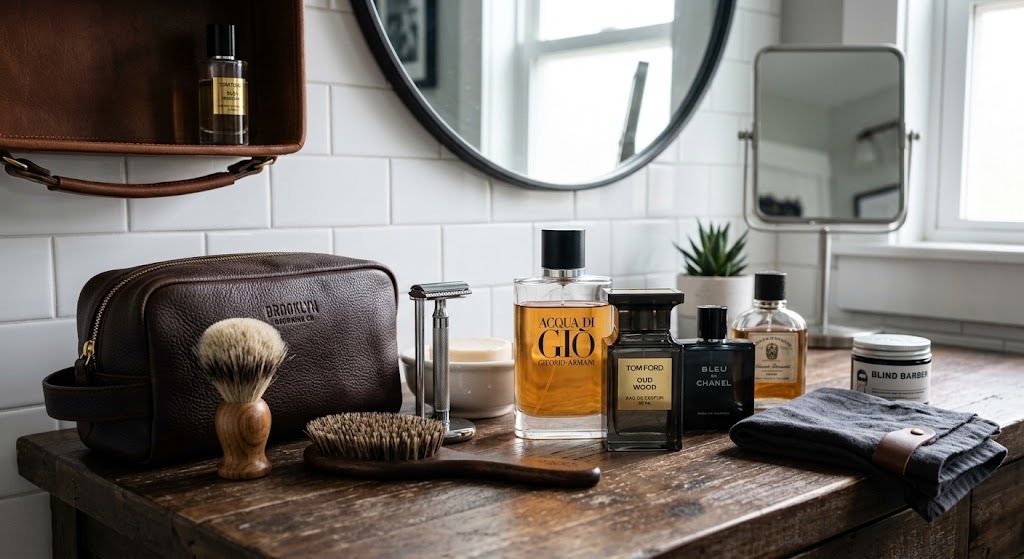
Niche perfumery houses are breaking traditional rules by resurrecting ancient ingredients like raw oud, frankincense, civet, and ambergris. Gender neutral fragrance collections are skyrocketing as men embrace complex floral, spicy, and resinous compositions once again.
Modern perfumery has come full circle. Just like the kings and scholars of antiquity, today’s gentleman uses scent to tell a story, project quiet confidence, and make an unforgettable impression on the world around him.
Conclusion
Understanding The Fascinating History of Men and perfume reminds us that scent is far more than an artificial cosmetic. From the resinous incense of Egyptian pharaohs to the crisp citrus splashes of Napoleon’s army, fragrance has always served as an expression of strength, sophistication, and self-care.
When you apply your favorite cologne tomorrow morning, you aren’t just engaging in a routine grooming task—you are participating in a timeless ritual shared by kings, warriors, and gentlemen across thousands of years. Fragrance remains one of the most immediate ways to express your unique identity without saying a single word.
Did you find this history helpful? Drop a comment below with your favorite classic scent notes, or share this article with a fellow fragrance lover!
Frequently Asked Questions
Q1: What is the oldest recorded men’s fragrance in history?
A: The oldest known manufactured fragrance family linked to male grooming is Eau de Cologne, famously crafted by Johann Maria Farina in 1709. However, ancient men applied perfumed oils like frankincense, myrrh, and cedarwood extracts as far back as 3000 BCE in ancient Mesopotamia and Egypt.
Q2: Why did ancient men prefer such heavy, strong perfume notes?
A: Ancient men favored rich, dense ingredients like frankincense, myrrh, musk, and animal fats because they lasted longer in hot climates. Furthermore, these rare raw materials were extremely expensive, making heavy scents an immediate status symbol of supreme wealth, political power, and divine favor.
Q3: When did society start dividing perfumes into “men’s” and “women’s” categories?
A: Scent gender divisions became widespread in the early-to-mid 20th century. Industrial synthetic chemistry allowed companies to mass-market fragrance to the public. To sell more products, advertisers created strict gender profiles, marketing fresh, woody, or smoky scents to men while reserving sweet florals for women.
Q4: What is the difference between Eau de Cologne, Eau de Toilette, and Eau de Parfum?
A: The difference lies entirely in fragrance oil concentration. Eau de Cologne contains 2% to 4% fragrance oil and lasts about two hours. Eau de Toilette features 5% to 15% oil, lasting four to six hours. Eau de Parfum contains 15% to 20% oil concentration, lasting eight hours or more.
Q5: Did medieval knights and European soldiers actually wear cologne into battle?
A: Yes, historical records show that ancient Roman legions, medieval knights, and French officers routinely scented their armor, banners, and skin before military campaigns. They used aromatic oils and early colognes to boost morale, intimidate enemies with an aura of prestige, and mask foul battlefield odors.
Q6: Can modern men wear fragrances that contain floral notes like rose or iris?
A: Absolutely. Men have worn floral notes for thousands of years. Historically, rose, violet, and iris were staples of masculine perfumery across Asia, Europe, and the Middle East. Modern niche colognes frequently pair floral accords with dark woods, leather, and spices to create sophisticated masculine profiles.
