Category: perfume review

  • What Is Orris Root? The Expensive Iris Ingredient Explained

    What you’ll learn

    • Why orris root is one of the most expensive raw materials in the global fragrance industry.
    • The fascinating, multi-year botanical process required to transform raw iris rhizomes into luxurious orris butter.
    • What orris root actually smells like and how perfumers use its powdery, violet-like aroma.
    • Iconic luxury fragrances that feature orris root as a star note.

    Introduction

    Imagine holding a simple, dried gray root that smells faintly like stale flour, only to watch it transform over years into a buttery, powdery treasure worth more than its weight in gold. What is orris root, you might wonder, and why do master perfumers treat this humble botanical with such absolute reverence? If you have ever smelled a high-end luxury perfume that possesses an intoxicating, velvety, violet-kissed powderiness that feels utterly timeless, you have likely crossed paths with orris.

    In a world dominated by synthetic aromachemicals and mass-produced scents, orris remains a stunning testament to patience, tradition, and uncompromising luxury. It bridges the gap between earthy rawness and sophisticated elegance, captivating fragrance collectors for centuries. Whether you are building your niche collection or simply curious about what makes your favorite designer scent smell so plush, understanding this ingredient changes everything. Let’s dive in.

    The Anatomy of Luxury: Why Orris Root Matters

    To truly appreciate why orris commands such a high price tag, we must look beyond the gleaming glass bottle on your vanity and examine the earth. Orris root is not actually a root in the botanical sense; it refers to the dried rhizomes (underground stems) of specific iris species, primarily Iris pallida, Iris germanica, and Iris florentina. Native to the sun-drenched hills of Tuscany, Italy, these majestic purple and white flowers produce underground treasures that require an astonishing amount of time and human labor before they are ready for the perfume organ.

    Statistically speaking, the fragrance industry regards orris butter as liquid luxury. It can take up to three to five years just to grow the plants, followed by another three to five years of curing the rhizomes in dark, dry storehouses. During this slow aging process, iron-free chemical compounds called irones develop, creating that signature violet-like, creamy scent profile. When finally steam-distilled or solvent-extracted, one ton of iris rhizomes yields a mere two kilograms of precious orris butter. This scarcity explains why natural orris can cost tens of thousands of dollars per kilogram, rivaling precious metals.

    The Anatomy of Luxury Why Orris Root Matters

    From Dirt to Bottle: The Orris Production Journey

    The transformation of an iris rhizome into a masterpiece of perfumery is an art form rooted in agricultural dedication. Understanding the distinct phases of this journey highlights why perfumers cherish natural orris so deeply.

    Cultivation and Harvesting in Tuscany

    The journey begins in the mineral-rich soils of Italy, particularly around Florence, where the climate provides ideal growing conditions. Farmers plant iris rhizomes by hand in neat rows across rolling hillsides. The plants grow green, sword-like leaves and stunning blossoms, but the real magic happens entirely underground.

    For three full years, the plants absorb nutrients from the Italian soil without any harvest. Once the plants reach maturity, local farmers carefully dig up the rhizomes by hand to avoid damaging their structural integrity. Workers then meticulously clean, peel, and trim the roots, stripping away the outer bark because only the inner core holds the valuable aromatic compounds.

    The Crucial Curing and Aging Process

    Freshly peeled iris rhizomes actually smell quite harsh, green, and unappealing—resembling raw potato or damp wood. To unlock their legendary fragrance, the peeled rhizomes enter a mandatory aging phase. Workers spread them out across shaded, well-ventilated drying racks in darkened storehouses for a minimum of three years, though some premium batches age for up to five years.

    During this slow drying period, enzymatic reactions break down complex chemical structures, synthesizing high concentrations of irones. Without this lengthy waiting period, the characteristic powdery, violet-like aroma simply will not emerge. Patience is the ultimate currency when dealing with high-grade botanical ingredients.

    Extraction and Orris Butter Production

    Once the aging process is complete, technicians grind the rock-hard dried rhizomes into a fine powder. This powder undergoes either solvent extraction or steam distillation to yield orris concrete or orris absolute.

    Further processing removes unwanted plant waxes, resulting in orris butter—a thick, pale yellow, highly concentrated solid paste at room temperature. This buttery extract melts seamlessly into alcohol and fragrance oils, imparting a rich, cosmetic, rooty, and unmistakably elegant texture that synthetic alternatives struggle to replicate authentically.

    How to Experience Orris Root in Modern Perfumery

    If you want to experience the magic of orris root firsthand, you need to know how to spot it in fragrance compositions and wear it effectively. Because natural orris is exceptionally expensive, many modern formulations combine natural orris butter with high-quality synthetic irones to achieve balance and longevity. Here is how you can incorporate orris-centric fragrances into your daily rotation.

    1. Identify the Note Profile: Look for fragrances described as “powdery,” “rooty,” “carrot-like,” or “velvety iris” in fragrance reviews. Orris often bridges floral top notes and woody base notes, providing a smooth transition.
    2. Apply to Pulse Points: Because orris butter possesses a dense, buttery molecular weight, spray it onto warm pulse points like your neck, wrists, or the crook of your elbow to help body heat melt and diffuse the velvety notes.
    3. Layer with Woods or Musks: Orris pairs brilliantly with clean white musks, creamy sandalwood, and rich cedarwood. Layering a simple woody fragrance with an orris-dominant scent creates a sophisticated, bespoke signature aura.
    4. Allow for Skin Chemistry Development: Give an orris fragrance at least twenty minutes to settle on your skin. The opening can sometimes feel sharp or starchy, but the dry-down melts into a warm, skin-like cosmetic powder.
    5. Store Away From Light: Keep your luxury iris and orris bottles in a cool, dark drawer to protect the delicate natural compounds from heat degradation and oxidation.
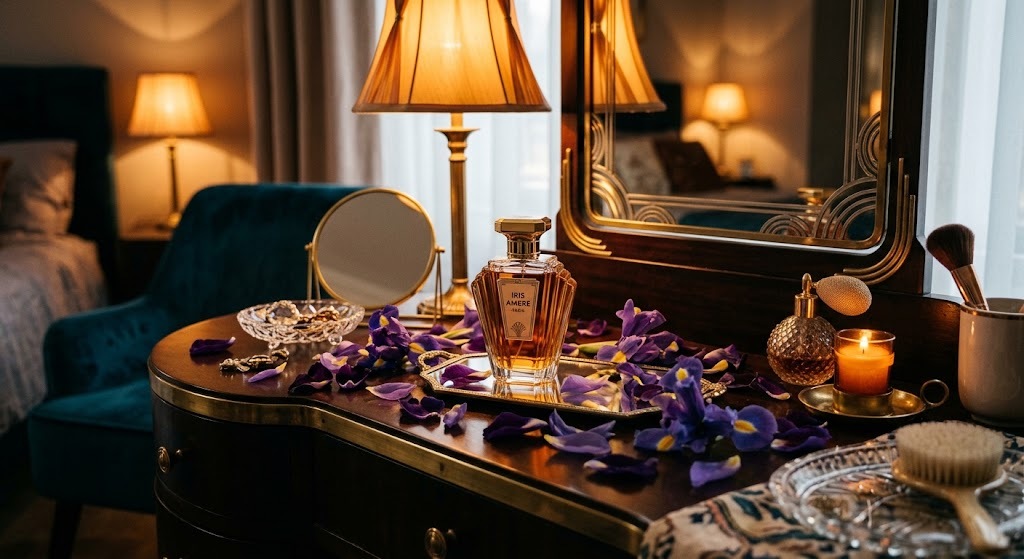
    How to Experience Orris Root in Modern Perfumery

    Common Mistakes People Make With Orris Fragrances

    Fragrance enthusiasts often make avoidable errors when exploring iris and orris scents, leading to disappointment or misjudged purchases. Avoiding these pitfalls ensures a much more rewarding olfactory experience.

    The single biggest mistake is judging an orris fragrance entirely from the opening spray. Natural orris contains complex starchy and earthy facets that can initially smell damp, rooty, or reminiscent of raw root vegetables. Novice buyers often mistake this earthy opening for a flaw, scrubbing the fragrance off before it evolves. If you wait patiently, that initial earthiness melts away, revealing a luxurious, makeup-like powder and buttery floral elegance.

    Another frequent misstep is over-applying heavy orris compositions in hot summer weather. While light iris colognes work well in warmth, dense orris-and-amber formulations can feel suffocating in high humidity. Reserve your richest orris masterpieces for cooler autumn and winter days when the notes can project cleanly without overwhelming your senses. Finally, do not assume that every fragrance labeled “Iris” contains natural orris root; many budget-friendly options rely exclusively on synthetic ionones, which lack the rich, buttery depth of the genuine article.

    Expert Tips and Pro Advice for Fragrance Collectors

    Building a fragrance collection that honors historic raw materials requires a discerning eye and a deep appreciation for craftsmanship. Master perfumers often utilize orris not as a loud focal point, but as a fixative and blender that rounds out harsh edges in complex formulas. When evaluating a niche perfume, check the ingredient breakdown or brand manifesto to see if they source their orris sustainably from Florentine cooperatives.

    For further reading on how perfumers source rare botanicals around the globe, check out our deep-dive guide on.

    When testing orris perfumes, apply them to untreated skin rather than paper blotters. Paper strips fail to capture how natural orris butter interacts with human skin oils, which catalyze the rich, cosmetic facets of the note. True connoisseurs also appreciate vintage formulations, where high concentrations of natural orris butter offer an intoxicating, vintage lipstick accord that modern reformulations sometimes tone down for contemporary tastes.

    Summary and Final Recommendations

    Orris root stands as a monument to patience, luxury, and agricultural heritage in the modern perfume landscape. From the sun-warmed hills of Tuscany to the meticulous aging storehouses and the sophisticated alchemy of master perfumers, every drop of orris butter tells a story of time well spent. Whether you are drawn to its velvety, cosmetic powderiness or its grounding, earthy warmth, adding an orris-forward masterpiece to your collection elevates your entire fragrance wardrobe.

    Embrace the slow burn of its evolution, invest in quality compositions that honor the natural ingredient, and let the timeless elegance of iris transform your daily scent ritual.

    Conclusion

    Understanding what orris root is opens the door to a deeper appreciation of the artistry hidden inside every perfume bottle. It reminds us that true luxury cannot be rushed—it takes years of earth, sun, and human dedication to create something truly unforgettable. Next time you catch a whiff of a velvety, powdery scent that makes you feel instantly put-together and elegant, you will know the remarkable botanical journey behind it.

    Did you find this helpful? Drop a comment below or share this with a fellow fragrance lover!

    Frequently Asked Questions

    Q1: What is orris root and where does it come from in perfume? A: Orris root is the dried rhizome of specific iris species, primarily cultivated in Tuscany, Italy. In perfumery, it serves as a luxurious, highly prized raw material known for imparting a rich, powdery, buttery, and violet-like aroma that anchors complex fragrance compositions with unmatched elegance.

    Q2: Why is orris root so expensive compared to other fragrance ingredients? A: Orris is expensive due to the immense labor and time required for its production. The iris plants must grow for three years before harvest, and their rhizomes require an additional three to five years of curing in dry storehouses. Furthermore, one ton of roots yields only a tiny fraction of orris butter.

    Q3: What does orris root actually smell like on the skin? A: Natural orris root features a multi-faceted scent profile. Initially earthy, starchy, and slightly root-like, it quickly transforms into a rich, velvety, cosmetic powder reminiscent of high-end vintage lipstick, with subtle nuances of cool violet flowers and warm wood.

    Q4: Is orris root the same thing as iris flower in a fragrance pyramid? A: Not quite. Iris flowers themselves are practically odorless and do not yield essential oils. When perfumers list “iris” or “orris” in a fragrance pyramid, they are almost always referring to extracts derived from the underground rhizomes of the iris plant.

    Q5: Which iconic perfumes feature orris root as a prominent note? A: Several legendary fragrances highlight orris root, including Chanel No. 19, Frederic Malle Iris Poudre, Dior Homme (known for its prominent iris-leather accord), Guerlain L’Heure Bleue, and Prada Infusion d’Iris. These scents showcase the remarkable versatility and sophistication of the note.

    Q6: Can synthetic alternatives replace natural orris root entirely? A: While synthetic compounds like alpha-ionone and beta-ionone successfully mimic the violet and powdery facets of iris, they lack the profound depth, creamy texture, and complex woody-earthy undertones found in authentic, aged natural orris butter.

    The Anatomy of Luxury: Why Orris Root Matters

  • What Is Benzyl Benzoate and Should You Avoid It in Perfume?

    What you’ll learn

    • What benzyl benzoate is and why perfumers use it extensively across luxury and niche fragrances.
    • The truth behind fragrance allergies, skin sensitivities, and regulatory standards.
    • How to identify benzyl benzoate on ingredient labels and choose safe scents.
    • Practical tips for wearing your favorite fragrances without irritation.

    Introduction

    Imagine spritzing your signature woody-floral scent across your pulse points, instantly enveloping yourself in a cloud of velvety musk, bright bergamot, and rich amber. It feels luxurious, grounding, and completely effortless. Yet, if you flip over the sleek glass bottle to read the fine print on the back, you might spot a long list of unfamiliar chemical names. Among them is a common ingredient found in countless formulations, from artisanal extraits de parfum to commercial department store icons.

    Understanding what goes onto our skin has never been more important for modern fragrance enthusiasts. As clean beauty trends grow and ingredient transparency takes center stage, terms like benzyl benzoate frequently spark curiosity, confusion, and caution. Is it a harmful synthetic additive you need to purge from your vanity, or is it an essential, safe fixative that keeps your beloved juices performing at their absolute best? Let’s dive in.

    What Is Benzyl Benzoate and Why Do Perfumers Love It?

    To understand this multifaceted ingredient, we need to look beyond the chemistry textbook and into the perfumer’s lab. At its core, benzyl benzoate is an organic compound that occurs naturally in various balsams and plant oils—such as Peru balsam, tolu balsam, jasmine, ylang-ylang, and cinnamon. However, the version used in modern commercial perfumery is frequently synthesized in a laboratory to ensure consistent purity, sustainability, and ethical sourcing.

    In the fragrance industry, benzyl benzoate serves two main purposes: it acts as an exceptional solvent and a powerful fixative. Perfume oils and aromatic resins are often thick, sticky, and difficult to blend smoothly into alcohol bases. Benzyl benzoate acts as the ultimate bridge, dissolving these dense materials seamlessly. Furthermore, as a fixative, it slows down the evaporation rate of volatile top and heart notes, ensuring that your crisp citrus or delicate floral accords linger on your skin for hours longer. Without it, many complex fragrances would fade within minutes.

    What Is Benzyl Benzoate and Why Do Perfumers Love It

    Safety, Skin Sensitivities, and Regulatory Standards

    When evaluating any cosmetic ingredient, safety is the number one priority for discerning consumers. Because scent formulation is a delicate art backed by strict global science, regulatory bodies continuously review safety data to protect the public.

    Regulatory Limits and IFRA Guidelines

    The International Fragrance Association (IFRA) sets rigorous, science-backed standards for the safe use of fragrance ingredients worldwide. For benzyl benzoate, IFRA establishes strict concentration limits depending on the product category—such as fine fragrances, rinse-off products, or cosmetics applied to sensitive areas. These thresholds ensure that everyday exposure remains well below levels that could trigger adverse skin reactions. Regulatory oversight means that commercially available perfumes from reputable brands comply with strict safety parameters.

    Natural Occurrence vs. Synthetic Additives

    A common misconception in clean beauty circles is that naturally derived ingredients are automatically safer than synthetic ones. Interestingly, benzyl benzoate occurs naturally in many classic floral extracts that have been used for centuries, including tuberose, hyacinth, and carnation. Whether it is extracted from natural botanical absolutes or synthesized identically in a lab, the chemical molecule remains identical. Your skin reacts to the substance itself, regardless of its origin story, making proper dilution and formulation expertise crucial.

    Who Needs to Exercise Caution?

    While the vast majority of fragrance lovers wear benzyl benzoate daily without a second thought, certain individuals require extra mindfulness. Those with existing contact dermatitis, eczema, or compromised skin barriers may find that certain aromatic compounds cause redness or mild itching. If you have historically sensitive skin, understanding your personal triggers is far more effective than blindly avoiding broad categories of ingredients. Patch testing new niche acquisitions on your inner elbow can save you from unexpected flare-ups.

    How to Identify and Navigate Benzyl Benzoate in Your Collection

    Navigating fragrance ingredient lists can feel like reading a foreign language. Building confidence in label reading empowers you to make informed purchases that align with your personal wellness goals and skin tolerance.

    1. Check the Ingredient Declaration: Flip your perfume boxes or check manufacturer websites. In the European Union and many other global markets, regulatory laws require brands to list potential fragrance allergens—including benzyl benzoate—individually on the outer packaging if they exceed specific threshold percentages (typically 0.001% for leave-on products and 0.01% for rinse-off products).
    2. Review Brand Transparency Pages: Modern indie and niche houses like Le Labo, Byredo, and Maison Francis Kurkdjian often provide detailed compositional breakdowns or allergen disclosures upon request, helping consumers make educated choices.
    3. Perform a Patch Test: When introducing a new high-projection fragrance to your rotation, spray a tiny amount onto your inner wrist or elbow crease. Wait 24 hours to monitor for any delayed redness, warmth, or irritation before wearing it fully on your neck or clothes.
    4. Consider Alternative Application Methods: If you experience mild sensitivities but refuse to part with your favorite scent, try spraying your clothes, scarf, or hairbrush instead of applying the perfume directly onto bare, freshly washed skin.
    How to Identify and Navigate Benzyl Benzoate in Your Collection

    Common Myths About Perfume Allergies and Ingredients

    The internet is filled with conflicting advice regarding cosmetic chemistry, often leading to unnecessary panic among beauty enthusiasts. Let’s separate fact from fiction regarding fragrance components.

    One pervasive myth is that all synthetic chemicals in perfume are toxic or endocrine-disrupting disruptors. In reality, modern analytical chemistry allows perfumers to isolate and test specific compounds rigorously. Benzyl benzoate has been studied extensively for decades. While it is classified as a contact allergen for a small percentage of the population—placing it on mandatory labeling lists—it is far from the hazardous chemical bogeyman often portrayed on social media.

    Another misconception is that choosing “all-natural” perfumes completely eliminates the risk of skin irritation. In truth, natural essential oils and plant absolutes often contain complex cocktails of dozens of natural aromatic compounds, some of which (like linalool, limonene, and natural benzyl benzoate) are potent skin sensitizers. Synthetic isolation often removes unwanted impurities, creating a cleaner, more predictable profile for sensitive skin types.

    Expert Tips for Building a Skin-Friendly Fragrance Wardrobe

    Curating a stunning perfume collection doesn’t mean sacrificing your skin health. By applying expert knowledge, you can enjoy rich, complex oriental, gourmand, and floral creations safely.

    • Layer with Unscented Lotions: Apply a hydrating, fragrance-free body lotion before spraying your perfume. A well-moisturized skin barrier absorbs alcohol and aromatic compounds more gently, reducing the likelihood of irritation while boosting longevity.
    • Rotate Your Scents: Avoid wearing the exact same high-concentration formulation on the exact same spot of skin every single day. Rotating through your wardrobe gives your skin micro-breaks from repetitive exposure.
    • Store Properly: Keep your bottles away from direct sunlight and extreme heat. Degraded fragrance oils can alter chemically over time, occasionally developing oxidized compounds that increase skin sensitivity.

    Summary and Final Recommendations

    Ultimately, benzyl benzoate is a foundational, highly effective tool in the art of modern perfumery. It guarantees that our favorite scents maintain their structural integrity, rich depth, and impressive lasting power on skin and fabric. While it is a recognized contact allergen for a small minority of sensitive individuals, it poses very little risk to the general population when formulated within strict international safety guidelines.

    You do not need to automatically purge every bottle containing this ingredient from your collection. Instead, approach your fragrance journey with mindful awareness, listen to your skin’s unique signals, and enjoy the beautiful olfactory artistry that makes collecting perfume such a rewarding passion.

    Summary and Final Recommendations

    Conclusion

    Navigating the complex world of fragrance ingredients can feel overwhelming at first glance, but education remains your greatest superpower. Understanding components like benzyl benzoate allows you to appreciate the intricate science and artistry required to bottle your favorite memories and moods. Whether you lean toward crisp aquatic splashes, cozy vanilla gourmands, or opulent white florals, knowing what touches your skin helps you curate a safer, more enjoyable collection.

    Did you find this helpful? Drop a comment below or share this with a fellow fragrance lover!

    Frequently Asked Questions

    Q1: What is benzyl benzoate and should you avoid it in perfume? A: Benzyl benzoate is a widely used organic compound and solvent in perfumery that helps blend oils and extend longevity. Unless you have diagnosed skin sensitivities or contact dermatitis triggered by this specific ingredient, you do not need to avoid it, as it is strictly regulated and safe for the vast majority of users.

    Q2: Is benzyl benzoate natural or synthetic? A: It can be both. Benzyl benzoate occurs naturally in various plants, balsams, and essential oils like jasmine and ylang-ylang. However, the version used in commercial perfumery is frequently synthesized in a laboratory to ensure consistent quality, ethical sourcing, and environmental sustainability.

    Q3: Can benzyl benzoate cause allergic reactions on the skin? A: Yes, it is classified as a recognized contact allergen by regulatory agencies like the European Union and IFRA. While it can cause mild skin irritation, redness, or contact dermatitis in a small percentage of sensitive individuals, most people experience no adverse effects whatsoever.

    Q4: How do I know if my perfume contains benzyl benzoate? A: You can check the ingredient disclosure list printed on the outer packaging of your perfume box. Regulatory standards require brands to list potential fragrance allergens individually if they exceed specific threshold percentages in leave-on cosmetic products.

    Q5: Are clean beauty perfumes completely free of benzyl benzoate? A: Not necessarily. Even many certified clean or natural perfume brands utilize plant-derived absolutes and essential oils that naturally contain benzyl benzoate. True allergen-free perfumes require entirely synthetic, specially engineered hypoallergenic fragrance compounds.

    Q6: What can I do if my skin is sensitive to certain perfume ingredients? A: If you experience sensitivity, try spraying your perfume onto your clothes, scarf, or hair rather than applying it directly to bare skin. Additionally, performing a 24-hour patch test on your inner elbow before wearing a new fragrance can help prevent unexpected irritation.

    What Is Coumarin in Perfume — Is It Safe?

  • What Is Coumarin in Perfume — Is It Safe?

    What you’ll learn

    • The fascinating natural origins of coumarin and its signature scent profile.
    • How coumarin transformed modern perfumery from Fougère Royale to iconic gourmand fragrances.
    • The truth about safety regulations, allergen potential, and IFRA standards.
    • How to spot coumarin on your perfume ingredients list and smart tips for sensitive skin.

    Introduction

    Have you ever spritzed a luxury cologne or rich winter perfume and caught a whiff of sweet, freshly mown hay blended with creamy vanilla and warm almond? You are likely smelling one of the most foundational compounds in fragrance history. So, what is coumarin in perfume, and why does it appear on the back of almost every designer fragrance box?

    This aromatic organic compound bridges the gap between sweet gourmand comfort and herbal freshness. While it gives your favorite perfumes an undeniable warmth, rumors about toxicity, liver health, and skin allergies have left many fragrance lovers wondering if it is actually safe to wear.

    Understanding what goes onto your skin helps you curate a bottle collection that is both captivating and safe. Let’s dive in.

    The Origins of Coumarin and Its History in Fragrance

    To truly understand coumarin, we have to travel back to 1820, when French chemist A. Vogel first isolated the compound from the South American tonka bean (Dipteryx odorata). The word “coumarin” actually derives from coumarou, the Tupi-Guarani name for the tonka tree.

    In nature, coumarin acts as a natural chemical defense mechanism for plants. When grass is freshly cut or dried, enzymes break down precursor molecules to release coumarin, yielding that nostalgic, sun-baked straw aroma we all recognize on a summer afternoon.

    In 1868, English chemist William Henry Perkin synthesized coumarin in a laboratory, making it one of the very first synthetic aroma chemicals ever created. This breakthroughs democratized luxury fragrance.

    Paul Parquet famously used synthetic coumarin in 1882 to create Houbigant’s Fougère Royale, effectively birthing the entire “Fougère” (fern-like) fragrance family that still dominates men’s fragrance aisles today.

    The Origins of Coumarin and Its History in Fragrance

    What Does Coumarin Smell Like and How Is It Used?

    If you ask a perfumer to describe coumarin, they will tell you it is a master shape-shifter. It rarely acts as a loud standalone note; instead, it provides a lush, structural backbone that lifts other notes.

    The Scent Profile: Sweet Hay, Vanilla, and Warm Almond

    Coumarin possesses a multifaceted scent profile. At its core, it smells like warm, sweet, dried grass or clover mixed with distinct notes of vanilla, toasted almond, and a touch of dark tobacco.

    It lacks the sugary intensity of pure vanillin. Instead, it offers a drier, more aromatic sweetness with a subtle nutty undertone that prevents fragrances from feeling cloying.

    The Role of Coumarin in Fougère and Gourmand Scents

    In traditional Fougère compositions, coumarin is the essential third pillar alongside lavender and oakmoss. The sharp, aromatic freshness of lavender contrasts brilliantly with the warm, powdery sweetness of coumarin beneath it.

    In modern gourmand and oriental perfumes, perfumers pair coumarin with amber, sandalwood, and spices like cinnamon. It adds a smooth, velvety texture that rounds out harsh citrus openings and bridges bright top notes with dark base notes.

    Natural Extraction vs. Synthetic Synthesis

    While coumarin occurs naturally in tonka beans, sweet woodruff, bison grass, and cassia cinnamon, harvest yields are often unpredictable and expensive. Natural tonka bean extract can contain up to 1-3% coumarin by dry weight.

    Today, over 90% of the coumarin used in commercial perfumery is nature-identical synthetic coumarin. This ensures absolute batch consistency, lowers production costs, and eliminates natural plant impurities that could trigger unpredictable skin reactions.

    Is Coumarin in Perfume Safe for Your Skin?

    Safety concerns around coumarin usually stem from dietary studies rather than topical application. When consumed orally in massive doses, coumarin caused liver toxicity in rodent laboratory studies during the mid-20th century, which led the U.S. FDA to ban whole tonka beans in food products in 1954.

    However, topical application on your skin is an entirely different story. Your skin acts as a protective barrier, and the human body metabolizes small amounts of dermally absorbed coumarin very differently than rats do.

    The International Fragrance Association (IFRA) rigorously tests aroma chemicals to establish strict safe concentration limits. Under current IFRA guidelines, coumarin is restricted to safe maximum thresholds (typically between 0.1% and 1.5% depending on whether the product is a leave-on lotion, eau de parfum, or rinse-off soap).

    For the general public, wearing perfumes containing coumarin within IFRA limits poses no risk of systemic toxicity or liver damage.

    Is Coumarin in Perfume Safe for Your Skin

    Common Myths About Coumarin Debunked

    Misinformation spreads quickly in online beauty circles. Let’s set the record straight on a few prevalent myths surrounding this classic fragrance component.

    • 1: Coumarin in perfume acts as a blood thinner.Fact: People often confuse coumarin with Coumadin (warfarin), a prescription anticoagulant drug. Warfarin is derived from dicoumarol (a modified derivative produced by fungi on moldy sweet clover), not standard coumarin. Spraying coumarin perfume will not thin your blood.
    • 2: “Natural” tonka bean extract is safer than synthetic coumarin.Fact: Natural botanical extracts contain dozens of uncontrolled trace compounds, terpenes, and potential allergens. Pure synthetic coumarin is chemically identical to the natural molecule but free from wild botanical variations, making it actually more predictable and safer for sensitive skin.
    • 3: Coumarin causes cancer.Fact: Comprehensive toxicology reviews by the European Scientific Committee on Consumer Safety (SCCS) have repeatedly concluded that coumarin is non-genotoxic and non-carcinogenic at consumer exposure levels.

    How to Spot Coumarin and Navigate Skin Sensitivities

    If you suffer from contact dermatitis or eczema, you might need to keep a closer eye on your bottle labels.

    In the European Union and many global cosmetic markets, regulations require manufacturers to explicitly list 26 known fragrance allergens on the packaging if their concentration exceeds 0.001% in leave-on products. Coumarin is on this list.

    If you turn over a box of Jean Paul Gaultier Le Male, Tom Ford Tobacco Vanille, or Chanel Allure Homme, you will see COUMARIN printed right near the end of the ingredients list alongside Linalool and Limonene.

    If you suspect you have an allergy to coumarin:

    1. Perform a Patch Test: Spray a small amount of fragrance onto the inside of your elbow and wait 24 to 48 hours to check for redness, itching, or swelling.
    2. Apply to Clothes: Spray your perfume exclusively on your clothing collars or hair rather than direct skin to enjoy the sillage without dermal contact.
    3. Opt for Hypoallergenic Lines: Look for fragrance brands specifically formulated without listed EU allergens.

    Why Coumarin Remains a Perfumer’s Best Friend

    Despite regulatory scrutiny, coumarin isn’t going anywhere. It serves as an exceptional fixative—a material that slows down the evaporation rate of volatile top notes like bergamot, lemon, and lavender, making your fragrance last longer on skin.

    Its ability to soften sharp edges, add rich warmth, and impart a cozy, nostalgic aroma ensures that perfumers will continue relying on this 19th-century invention for centuries to come.

    Conclusion

    So, what is coumarin in perfume? It is an indispensable aroma compound that delivers the cozy warmth of sweet hay, almond, and vanilla to our favorite scents. Thanks to rigorous global oversight from IFRA and scientific safety panels, coumarin is completely safe for the vast majority of fragrance lovers. Unless you have a specific diagnosed contact allergy, you can spray your favorite tonka-rich perfumes with absolute peace of mind.

    Did you find this breakdown helpful? Drop a comment below with your favorite tonka bean or coumarin perfume, or share this article with a fellow fragrance lover!

    Frequently Asked Questions

    Q1: What is coumarin in perfume and what does it smell like?

    A: Coumarin is a naturally occurring organic compound found in tonka beans and sweet grass, though it is often synthesized for cosmetics. It smells like warm, sweet, freshly cut hay combined with notes of vanilla, toasted almond, and a touch of woody tobacco.

    Q2: Is coumarin in perfume safe to wear every day?

    A: Yes, coumarin in perfume is safe for daily wear. The International Fragrance Association (IFRA) strictly limits its concentration in commercial products to levels well below those that could cause adverse health effects or systemic toxicity.

    Q3: Can coumarin cause skin irritation or allergic reactions?

    A: While safe for most people, coumarin is a recognized fragrance allergen. It can cause mild contact dermatitis (redness, itching, or small bumps) in individuals with specific skin sensitivities. Always check ingredient labels if you have sensitive skin.

    Q4: Is coumarin the same thing as the blood thinner Coumadin?

    A: No, coumarin is not the blood-thinning drug Coumadin (warfarin). While their names sound similar and share a chemical root, topical coumarin in perfume does not enter the bloodstream in amounts that affect blood clotting or liver function.

    Q5: Why is coumarin banned in food but allowed in perfume?

    A: The FDA banned coumarin as a direct food additive in 1954 due to liver toxicity observed in animal test subjects consuming high oral doses. However, topical absorption through skin from perfume is minimal, making it completely safe under regulated cosmetic limits.

    Q6: Which famous perfumes contain high amounts of coumarin?

    A: Iconic fragrances rich in coumarin include Houbigant Fougère Royale, Jean Paul Gaultier Le Male, Tom Ford Tobacco Vanille, Guerlain Shalimar, and Yves Saint Laurent La Nuit de L’Homme.

    How to Build a Fragrance Wardrobe From Scratch on Any Budget

  • What Is Hedione? The Jasmine Molecule That Makes Perfumes Sensual

    What you’ll learn

    • The science behind Hedione and why perfumers call it “luminous jasmine”
    • How Hedione acts as a scent multiplier to boost projection and longevity
    • Which iconic perfumes rely on this molecule to create irresistible charm
    • Practical ways to layer and choose fragrances rich in Hedione

    Introduction

    Have you ever walked past someone and caught a trail of perfume so airy, warm, and inviting that you had to turn around? That captivating effect isn’t just luck. It is often the work of a single secret ingredient working quietly behind the scenes.

    Meet Hedione—the jasmine molecule that makes perfumes sensual, radiant, and utterly unforgettable.

    Known chemically as methyl dihydrojasmonate, this synthetic masterpiece revolutionized modern perfumery in the late 20th century. While natural jasmine oil can feel heavy or indolic, Hedione offers a fresh, transparent floral breeze with smooth citrus undertones.

    It doesn’t just add scent; it transforms every other note in a fragrance bottle. By lifting heavy florals and softening sharp musks, it creates a golden halo of aroma around the wearer.

    Whether you are a casual fragrance enthusiast or a dedicated scent collector, understanding this magical note will completely change how you shop for perfumes. Let’s dive in.

    The Origins of Hedione and Why It Changed Perfumery Forever

    To understand why this ingredient dominates modern perfumery, we have to travel back to 1957. Scientists at the Swiss flavor and fragrance giant Firmenich were analyzing the delicate chemical structure of natural jasmine blossom.

    During their research, chemist Édouard Demole isolated methyl dihydrojasmonate. Firmenich patented the compound under the trade name Hedione, derived from the Greek word hedone, meaning pleasure or delight.

    At first, perfumers were hesitant. The molecule itself does not smell like a intense blast of crushed petals. Instead, it has a subtle, dew-drenched aroma reminiscent of jasmine tea, green lemon, and fresh morning air.

    Everything changed in 1966 when master perfumer Edmond Roudnitska used Hedione in Christian Dior’s Eau Sauvage. By dosing the fragrance with roughly 2% Hedione, Roudnitska created an unprecedented citrus-floral aura that captured international acclaim.

    Today, Hedione is one of the most widely used aroma chemicals in the world. Industry estimates suggest it appears in over 60% of modern fine fragrances across all scent families.

    The Origins of Hedione and Why It Changed Perfumery Forever

    How Hedione Transforms Scent: The Science of Sensuality

    The Radiant Halo Effect (Diffusion and Projection)

    In perfumery, projection refers to how far a scent radiates from your skin into the air around you. Heavy notes like vanilla, amber, and patchouli often stay close to the skin.

    Hedione acts like a scent amplifier. When added to a formula, it increases the volatility of other notes, pushing them outward without making the perfume feel harsh or overwhelming.

    It creates what perfumers refer to as “aeration.” Think of it as adding bubbles to syrup—it turns a dense, heavy oil blend into an effervescent cloud that floats effortlessly.

    The Behavioral Chemistry of Attraction

    Beyond traditional olfactory aesthetics, Hedione holds a fascinating place in human neuroscience. A landmark 2015 study conducted by researchers at Ruhr-University Bochum in Germany revealed groundbreaking findings about scent perception.

    The study showed that Hedione activates a specific limbic region in the human brain associated with hormone release and emotional processing. Unlike standard floral notes, Hedione specifically stimulated the VN1R1 receptor.

    This chemical interaction triggers feelings of warmth, familiarity, and subconscious attraction. It turns a standard floral composition into an intimate, magnetic skin scent.

    The Ultimate Blending Agent

    Raw essential oils can sometimes clash. Rose can overpower violet, while cedarwood can drown out citrus top notes.

    Hedione acts as a diplomatic mediator inside the bottle. It binds disparate ingredients together, smoothing over rough edges and filling in empty spaces between top, heart, and base notes.

    Because it possesses almost no heavy color or dark undertones of its own, it leaves the primary notes crisp, clean, and radiant from the initial spray down to the dry-down.

    5 Iconic Fragrances That Showcase Hedione

    If you want to experience the power of the jasmine molecule that makes perfumes sensual, look no further than these masterwork creations:

    1. Christian Dior — Eau Sauvage (1966): The perfume that started the revolution. A crisp blend of lemon, rosemary, and 2% Hedione that defined men’s luxury grooming.
    2. Maison Francis Kurkdjian — Baccarat Rouge 540 (2015): This global sensation relies heavily on Hedione paired with Ambroxan and ethyl maltol to produce its famous airy, spun-sugar aura.
    3. Chanel — No. 19 (1970): Hedione lifts the iris and galbanum notes in this classic green floral, preventing the earthy roots from feeling overly dense.
    4. CK One — Calvin Klein (1994): The quintessential 90s unisex scent used Hedione to blend bergamot, green tea, and translucent florals into a universal skin freshener.
    5. Parfums de Marly — Delina (2017): Modern fruity-floral elegance at its finest, where Hedione expands the crisp lychee and turkish rose heart for hours of trail projection.
    5 Iconic Fragrances That Showcase Hedione

    Common Misconceptions About Synthetic Molecules in Perfume

    1: Natural Ingredients Are Always Superior to Synthetics

    Many consumers assume natural oils are inherently better quality than synthetic aroma chemicals. In reality, high-end perfumery relies on both. Natural jasmine extract costs thousands of dollars per kilo and can trigger skin sensitivities. Hedione provides a clean, stable, and hypoallergenic alternative that enhances natural materials rather than replacing them.

    2: Hedione Smells Like Pure Jasmine Oil

    While derived from research into jasmine, pure Hedione does not smell like a dense bouquet of flowers. If you smell pure Hedione on a blotter strip, you will detect a sheer, watery, lemon-jasmonic haze. It shines brightest when interacting with other notes.

    3: Synthetic Notes Ruin Scent Longevity

    Some believe synthetic molecules evaporate too quickly. Hedione, however, is a heart-to-base note with remarkable tenacity. It stays on clothes and skin for over 8 to 12 hours, maintaining the freshness of top notes long after they would normally fade.

    Expert Tips to Maximize Your Perfume’s Aura

    Building an impressive scent trail requires a bit of technique. Here is how you can use Hedione-rich scents to your advantage:

    • Apply to Warm Pulse Points: Target your neck, inner elbows, and the back of your knees. Body heat activates Hedione’s diffusive properties.
    • Layer with Pure Musks: Combine a Hedione-heavy floral with a clean white musk oil. The molecule will lift the musk, creating a customized “your skin but better” scent signature.
    • Spray Clothes Lightly: Natural fabrics like cotton and cashmere hold Hedione molecules longer than skin, giving you subtle wafts throughout the day.
    • Don’t Rub Your Wrists: Friction crushes the delicate top note structure. Spray your perfume and let it dry naturally to preserve its airy radiance.

    Summary of Why Hedione Belongs in Your Collection

    Fragrance is more than just smelling nice; it is an invisible extension of your personality. Hedione revolutionized the perfume industry by offering perfumers a tool to craft light, glowing, and sensual compositions.

    From vintage masterpieces like Dior’s Eau Sauvage to modern icons like MFK’s Baccarat Rouge 540, this remarkable ingredient continues to define how modern luxury smells.

    By seeking out scents featuring this luminous jasmine derivative, you ensure your fragrance doesn’t just sit flat on your skin—it breathes, projects, and enchants everyone in your path.

    Conclusion

    Understanding perfume ingredients opens up a whole new world of olfactory appreciation. The jasmine molecule that makes perfumes sensual is proof that science and art can come together to create pure magic in a bottle. Next time you catch a mysterious, glowing floral trail in public, you will know exactly which molecule is casting the spell.

    Did you find this helpful? Drop a comment below or share this with a fellow fragrance lover!

    Frequently Asked Questions

    Q1: What does Hedione smell like on its own?

    A: On its own, Hedione has a very light, transparent floral scent. It smells like a blend of fresh green jasmine petals, morning dew, and a slight touch of lemon zest. It is appreciated more for its airy radiance than a heavy perfume aroma.

    Q2: Is Hedione safe for sensitive skin?

    A: Yes, Hedione (methyl dihydrojasmonate) is widely considered very safe and has a exceptionally low risk of skin sensitization. It is thoroughly tested and regulated by IFRA (International Fragrance Association) guidelines.

    Q3: Is the jasmine molecule that makes perfumes sensual used in men’s fragrances?

    A: Absolutely. Ever since its debut in Dior’s Eau Sauvage in 1966, Hedione has been a core component in men’s cologne, providing fresh lift to citrus, woody, and aquatic compositions.

    Q4: How does Hedione differ from natural jasmine extract?

    A: Natural jasmine extract is dark, thick, indolic, and intensely sweet. Hedione is clear, sheer, fresh, and watery, giving perfumers a way to add floral brightness without adding heavy sweetness.

    Q5: Can Hedione make perfumes last longer?

    A: Yes. While it acts primarily as a diffuser to improve projection, Hedione also acts as a subtle fixative that anchors lighter top notes like bergamot and grapefruit to your skin for longer periods.

    Q6: How can I tell if a perfume contains Hedione?

    A: Fragrance brands rarely list raw chemical names on the box. Look for notes like “luminous jasmine,” “transparent florals,” “solar notes,” or “radiant jasmine.” If a perfume feels noticeably airy and diffusive, it almost certainly contains Hedione.

    The 5 Perfumes Every Woman Should Own — A Complete Wardrobe

  • The Minimalist Fragrance Wardrobe — 3 Bottles That Cover Everything

    What you’ll learn

    • How to curate a capsule perfume collection using only three versatile bottles.
    • The exact scent profiles needed to cover everyday wear, professional settings, and romantic evenings.
    • Why building a minimalist fragrance wardrobe saves money and reduces decision fatigue.
    • Expert tips on layering and preserving your favorite luxury niche perfumes.

    Introduction

    Picture this: your morning routine is moving along smoothly until you reach for your perfume shelf. You stand frozen before an overwhelming sea of twenty different bottles, gorgeous crystal flacons, and colorful juice colors. Suddenly, picking a scent feels like an impossible task. If you want to streamline your routine without sacrificing your signature style, the minimalist fragrance wardrobe is the ultimate solution.

    Building a streamlined collection changes everything. Instead of owning dozens of perfumes that collect dust, you carefully select three powerhouse bottles that handle any scenario life throws your way. The perfume industry has long pushed the idea of endless accumulation, but true elegance lies in curation and intentionality. By trimming the excess, you begin to truly appreciate the nuance, longevity, and development of high-quality formulations on your skin. Let’s dive in.

    Why a Capsule Approach to Perfume Works

    The concept of a capsule wardrobe has revolutionized fashion, and applying the exact same philosophy to fragrance delivers immediate benefits. Market research shows that the average fragrance enthusiast wears less than twenty percent of their collection regularly, leaving the rest abandoned on dark vanity trays. Transitioning to the minimalist fragrance wardrobe eliminates that clutter and centers your focus on absolute perfection rather than sheer quantity.

    When you limit your collection to three meticulously chosen scents, you develop an intimate olfactory identity. People begin to associate you with a distinct, memorable aroma rather than a chaotic blend of whatever you sprayed on a whim. Furthermore, higher-end luxury and niche perfumes often demand a significant financial investment. Allocating your budget toward three extraordinary, high-performance bottles yields far better quality than buying ten mediocre, fleeting body mists or designer flankers.

    Why a Capsule Approach to Perfume Works

    The Three-Bottle Formula for Every Occasion

    The secret to a successful capsule collection is balancing versatility, contrast, and performance. You do not need a scent for every single weather fluctuation or micro-occasion. Instead, you need three distinct pillars that can be worn alone or cleverly layered.

    Bottle One — The Everyday Fresh and Clean Signature

    Your first bottle is your daily armor. This is the scent you reach for when you are running weekend errands, working from a coffee shop, or heading to the gym. It needs to be approachable, uplifting, and completely non-offensive to people in close quarters.

    Look for bright citrus notes, crisp green tea, clean white musks, or airy aquatic accords. Think of fragrances like Maison Francis Kurkdjian Aqua Universalis or Byredo Blanche. These compositions mimic the clean comfort of freshly laundered linen drying in a spring breeze. They project softly, leaving a subtle, inviting aura rather than filling an entire room.

    This daily driver forms the backbone of your routine. It requires zero thought to apply and instantly makes you feel polished, awake, and ready to tackle mundane tasks with effortless style.

    Bottle Two — The Professional Powerhouse and Transition Scent

    Your second bottle bridges the gap between casual daytime wear and polished professional settings. This scent demands respect in boardrooms, client meetings, or formal academic environments. It communicates competence, warmth, and quiet confidence without shouting for attention.

    Ideal profiles for this category lean toward refined woody notes, sophisticated iris, soft spices, or elegant aromatic herbs. Masterpieces like Hermès H24 or Chanel Le Lion offer incredible depth through cedarwood, vetiver, and subtle amber touches. This bottle also seamlessly transitions into an elevated evening option when you want something grounded and sophisticated for a casual dinner.

    Having a dedicated professional fragrance shifts your psychological state. The moment you spray it, your brain switches into focus mode, providing a subtle aromatic anchor for productivity and success.

    Bottle Three — The Alluring Evening and Special Occasion Statement

    Your third and final bottle is the showstopper. This is your heavy hitter, reserved for date nights, winter galas, weddings, and moments when you want to leave an unforgettable impression. It thrives in cooler temperatures and evening heat, wrapping you in a rich, enveloping warmth.

    This category embraces decadent gourmands, smoky resins, deep vanillas, rich leather, and dark orientals. Iconic creations like Tom Ford Noir Extreme or Yves Saint Laurent Black Opium shine here. These scents feature massive longevity and rich sillage, developing gorgeously over hours as they interact with your body heat.

    By keeping this bold option in your rotation, you ensure that your evening outings feel distinct from your Monday morning meetings, establishing a clear sensory boundary between work and play.

    Step-by-Step Guide to Curating Your Trio

    Selecting your three bottles requires a methodical approach. Follow these four steps to build a customized lineup that matches your chemistry and lifestyle.

    1. Audit your current collection: Spray your existing perfumes on blotters and your skin. Identify the three bottles you reach for most frequently and note their dominant scent families.
    2. Identify your lifestyle gaps: Evaluate your weekly schedule. If you work from home, your everyday fresh scent might take priority over a formal office fragrance.
    3. Test for longevity and projection: A minimalist wardrobe relies on performance. Ensure your chosen trio features exceptional longevity so you do not need to reapply constantly throughout the day.
    4. Experiment with simple layering: Test how your fresh daytime scent layers with your rich evening vanilla. A minimalist wardrobe often doubles in size when you discover unique layering combinations.
    Step-by-Step Guide to Curating Your Trio

    Common Mistakes People Make When Downsizing

    Downsizing a massive collection can feel daunting, and many enthusiasts stumble into common psychological traps along the way. Recognizing these pitfalls keeps your curation process smooth and intentional.

    The first major mistake is holding onto fragrances purely for sentimental reasons or nostalgic packaging. A perfume that sat unloved for three years will not magically become your favorite just because the bottle looks gorgeous on a shelf. Let go of what you do not actively wear.

    Another frequent error is choosing three perfumes from the exact same scent family. If all three of your bottles are heavy sweet vanillas, you will lack versatility for warm summer afternoons. Balance is everything; aim for structural contrast across your trio.

    Finally, do not buy blind bottles simply because a reviewer online praised them. Skin chemistry remains completely unique. What smells like rich sandalwood on a content creator might turn sharp and sour on your skin. Always sample extensively before committing to a full-sized bottle.

    Expert Tips for Maximizing Your Three Bottles

    Owning fewer bottles means you will use your favorite juices faster, making proper storage and application techniques vital for maintaining their integrity over time.

    Keep your fragrance wardrobe away from direct sunlight, high humidity, and extreme temperature fluctuations. Storing your bottles inside a cool, dark drawer or closet preserves the top notes and prevents premature oxidation.

    Maximize your investment by applying fragrance to well-moisturized skin. Unscented body oils or matching lotions create a barrier that holds volatile aromatic molecules in place, extending your perfume’s performance by hours.

    To learn more about optimizing your collection and finding hidden scent profiles, check out our guide on. Applying these expert maintenance habits ensures your capsule selection smells vibrant and pristine from the very first spray to the final drop.

    Final Summary for the Mindful Fragrance Lover

    Curating the minimalist fragrance wardrobe is an exercise in intentional luxury. By stripping away the noise of endless consumerism, you return to the pure joy of wearing and appreciating scent.

    Three carefully chosen bottles—a fresh everyday scent, a polished professional worker, and a captivating evening statement—cover every possible chapter of your life. This streamlined approach saves money, reduces morning decision fatigue, and ensures that every single spray feels deliberate, special, and uniquely yours.

    Final Summary for the Mindful Fragrance Lover

    Conclusion

    Embracing a streamlined collection changes your entire relationship with personal fragrance. Instead of feeling overwhelmed by endless options, you cultivate a signature presence that people remember and cherish. The minimalist fragrance wardrobe proves that when it comes to perfume, quality, intention, and versatility will always outweigh sheer volume.

    Did you find this helpful? Drop a comment below or share this with a fellow fragrance lover!

    Frequently Asked Questions

    Q1: What is the core concept behind the minimalist fragrance wardrobe? A: It is a curated capsule collection of just three versatile, high-performing perfume bottles designed to cover every season, mood, and occasion without clutter or decision fatigue.

    Q2: Can I wear my evening perfume during the day? A: Yes, you can wear any fragrance whenever you like, but heavy oriental or gourmand evening scents can sometimes feel overpowering in warm weather or tight professional spaces.

    Q3: How often should I replace the bottles in my capsule collection? A: High-quality perfumes stored away from heat and light can last anywhere from three to five years or even longer. You only need to replace them once the juice empties or if the top notes turn sour.

    Q4: How do I choose between niche and designer perfumes for my trio? A: Choose based on personal preference and budget. Niche perfumes often offer unique, complex storytelling and high-end ingredients, while designer scents provide reliable, crowd-pleasing performance.

    Q5: Can I add a fourth seasonal scent if I live in an extreme climate? A: While three is the ideal sweet spot for true minimalism, adding a dedicated high-summer or deep-winter exception is completely fine if your local climate demands extreme seasonal shifts.

    Q6: What is the best way to test a fragrance before buying a full bottle? A: Always order official manufacturer samples or decants to wear on your skin for a full day, observing how the fragrance develops through its top, middle, and base notes.

    The 5 Colognes Every Man Needs in His Collection

  • Work Perfume vs a Weekend Perfume: How to Switch Your Signature Scent

    What you’ll learn

    • Why wearing the wrong scent to the office can unintentionally overwhelm your coworkers.
    • The specific fragrance notes that command professional respect and boost workplace focus.
    • How to curate a weekend scent rotation that helps you completely unwind and embrace downtime.
    • Simple psychological tricks to transition your mindset from the boardroom to brunch using aroma.

    Introduction

    Picture this: You step into a crowded elevator on a crisp Monday morning wearing a rich, heavy, unapologetically sweet vanilla-oud bomb. Within seconds, you notice the polite shuffling of feet and a few subtle glances. It is not that your perfume smells bad; rather, it simply does not belong there. Choosing a Work Perfume vs a Weekend Perfume is an unwritten social art form that many fragrance lovers overlook. Just as you would not wear a sequined velvet evening gown to a corporate budget meeting, your scent wardrobe requires a intentional wardrobe shift between the desk and your days off.

    Fragrance is much more than a pleasant accessory. It acts as an invisible outfit that sets your mood, communicates your vibe to the world, and anchors you into different spaces. When you wear a crisp, clean citrus to the office, you signal alertness, clarity, and professionalism. When you switch to a warm, smoky amber on Saturday night, you signal relaxation, mystery, and playfulness. Mastering this transition elevates your entire fragrance collection and ensures you never wear the wrong juice to the wrong room. Let us dive in.

    The Psychology of Scent Switching

    Understanding why we change our fragrances based on environment starts with how our brains process scent. Olfactory receptors connect directly to the limbic system, the emotional and memory hub of the brain. When you wear a specific fragrance exclusively at work, your brain builds a powerful neurological association with focus, productivity, and professional composure. Conversely, slipping into a cozy, casual scent on the weekend tells your nervous system that the workweek hustle is officially over.

    According to market research from the global fragrance industry, over sixty percent of regular perfume buyers own at least two distinct scent categories for professional and casual settings. This behavioral shift is driven by the desire for situational appropriateness and personal comfort. In an office setting, you share airspace with colleagues who may suffer from scent sensitivities. Therefore, picking a balanced, non-offensive fragrance is both a matter of style and basic courtesy. On the weekend, however, the rules completely change. You are dressing for yourself, your friends, and your personal leisure, allowing your fragrance choices to become bold, experimental, and deeply expressive.

    The Psychology of Scent Switching

    Anatomy of a Professional Scent

    When curating your professional fragrance portfolio, restraint and elegance are your best friends. The goal of a great work scent is to smell polished, approachable, and clean without filling a room before you even enter it. Let us break down the key characteristics that define a winning office fragrance.

    Clean Notes and Bright Opening Accents

    Office environments thrive on freshness and clarity. Look for notes like crisp bergamot, zesty lemon, juicy pear, or sparkling mandarin in the opening. These notes project an energetic, awake aura that combats morning sluggishness. Green tea, bamboo, and neroli also serve as fantastic professional openings because they offer a crisp, botanical cleanliness that feels like stepping out of a refreshing morning shower. Think of scents like Prada Infusion d’Iris or Jo Malone Lime Basil & Mandarin. They project competence and neatness without ever feeling harsh or overpowering.

    Moderate Sillage and Skin Proximity

    Sillage refers to the trail a fragrance leaves behind you. At work, you want a scent with moderate-to-intimate sillage. You want people to notice your pleasant aroma only when they lean in close for a handshake or a collaborative desk review, rather than smelling you from across the hallway. Avoid heavy projection monsters packed with massive doses of synthetic amberwoods or civet. Opt instead for eau de toilette concentrations or lighter eau de parfums that stay close to the skin, ensuring your fragrance remains a pleasant surprise rather than an environmental disruption.

    Professional Dry Downs

    The heart and base notes of your work perfume should offer comfort and longevity without dramatic evolution. Soft musks, clean white woods, cashmere wood, and light iris provide a powdery, professional foundation that lingers gracefully through an eight-hour workday. These notes mimic the comforting scent of freshly laundered clothing or high-end soap, projecting trustworthiness and reliability. Iris, in particular, is widely regarded as the ultimate corporate note because of its cool, detached, yet luxurious elegance.

    The Art of the Weekend Rotation

    Once Friday afternoon arrives, your fragrance wardrobe should break free from corporate constraints. Weekend perfumes are all about sensory indulgence, personal expression, and matching your mood, whether you are running errands in sweatpants or heading out for date night cocktails.

    1. Identify Your Weekend Vibe

    Your weekend scent should reflect your actual activities. Are you spending Saturday hiking in nature, browsing a local farmers market, or dancing at a rooftop lounge? Match the mood. For daytime casual outings, reach for aquatic, herbal, or light fruity florals like fig and coconut. For nighttime weekend adventures, lean heavily into rich gourmands, warm spices, dark vanillas, and resinous ambers.

    2. Embrace Experimental and Niche Houses

    Workdays call for safe, universally pleasing crowd-pleasers. Weekends are your playground to explore weird, wonderful, and complex niche creations. Do not be afraid to wear that challenging leather scent, that hyper-realistic smoky campfire perfume, or that hyper-sweet marshmallow fragrance. This is your time to wear scents that tell a story purely for your own entertainment.

    3. Layer for Longevity and Depth

    Because weekends often involve moving from daytime sunshine to evening festivities, use layering techniques to shift your scent profile. Start with a neutral, clean body lotion in the morning, apply a fresh citrus or floral for your daytime errands, and then lightly mist a heavier balsamic or woody perfume pulse point over top when dusk approaches. This creates a multi-dimensional fragrance experience unique to your weekend schedule.

    Layer for Longevity and Depth

    Common Mistakes People Make With Fragrance Placement

    Navigating perfume choices can be tricky, and even seasoned fragrance enthusiasts occasionally make missteps when balancing their professional and casual scent wardrobes. Avoiding these common pitfalls will save you from embarrassing fragrance blunders.

    One major mistake is over-applying heavy fragrances in poorly ventilated office spaces. Just because you cannot smell your own perfume after two hours does not mean it has vanished; olfactory fatigue sets in quickly, causing you to spray more and inadvertently choke out your coworkers. Another frequent error is wearing sticky, cloying gourmands to high-stakes meetings or medical appointments, where people appreciate neutral, calming atmospheres.

    Additionally, people often assume that expensive designer bottles automatically equal office-appropriate scents. A five-hundred-dollar private blend oud perfume might be a masterpiece of modern perfumery, but wearing it to a cramped cubicle farm on a Tuesday morning is a recipe for disaster. Always judge a fragrance by its notes and projection level rather than its price tag or brand prestige when picking an office companion.

    Expert Tips for Building a Balanced Fragrance Wardrobe

    Building a balanced fragrance wardrobe requires strategic curation rather than reckless accumulation. Instead of buying dozens of random bottles, aim for a tight, versatile collection of four to six signature scents that cover every possible scenario in your life.

    Start by investing in two reliable daily workhorse fragrances—one bright and citrusy for spring and summer, and one cozy, powdery iris or soft wood for autumn and winter. Next, secure two weekend favorites: a breezy, effortless aquatic or floral for casual daytime leisure, and a sultry, seductive oriental or gourmand for evening social outings. This balanced approach ensures you always have the right olfactory armor ready to go.

    For deeper insights into organizing your collection, check out our guide on to maximize your perfume investment year-round. True fragrance expertise lies in knowing not just what smells good on a blotter strip, but understanding how temperature, humidity, and social context interact with your skin chemistry.

    Summary and Final Recommendations

    Balancing a Work Perfume vs a Weekend Perfume comes down to understanding boundaries, chemistry, and personal expression. Your office scent should act as a sophisticated, polite second skin that communicates focus and clean energy. Your weekend scent serves as an expressive canvas that lets your true personality shine through rich, complex, and daring notes.

    By separating your collection into distinct professional and casual categories, you protect your professional reputation while unlocking maximum enjoyment from your favorite hobby. Take time to evaluate your current perfume shelf, test your scents against these guidelines, and do not hesitate to experiment until you find your ultimate signature balance.

    Summary and Final Recommendations

    Conclusion

    Navigating the nuanced world of perfumery enriches your daily routine and turns a simple grooming habit into an empowering ritual. Whether you are stepping into a high-powered corporate boardroom or lounging on a sun-drenched patio with friends, having the right scent for the right moment makes all the difference. Remember that fragrance rules are ultimately guidelines meant to enhance your confidence rather than cage your creativity. Keep exploring, trust your nose, and wear what makes you feel like the best version of yourself. Did you find this helpful? Drop a comment below or share this with a fellow fragrance lover!

    Frequently Asked Questions

    Q1: Can I wear my favorite sweet gourmand perfume to the office if I spray very little? A: While spraying less helps control projection, sweet gourmands containing heavy notes of caramel, cotton candy, or dense vanilla can still become cloying in indoor office environments as body heat rises throughout the day. It is generally best to save sugary gourmands for weekend wear or evening outings, opting for clean musks or light florals for professional settings.

    Q2: What are the best fragrance notes for a professional work environment? A: The best professional notes include crisp citruses like bergamot and mandarin, clean florals like neroli and orange blossom, soothing green tea, and sophisticated base notes like iris, cedarwood, and soft white musk. These notes project neatness, reliability, and high-level focus without overwhelming shared workspaces.

    Q3: How many perfumes should I own to have a proper work vs weekend wardrobe? A: You do not need a massive collection to get started. A balanced wardrobe of four versatile bottles—two light, polite scents for the office (one for warm weather, one for cold) and two expressive, bolder scents for weekends and date nights—provides the ultimate foundation for any lifestyle.

    Q4: Why does my work perfume disappear by lunchtime? A: Office environments often feature aggressive air conditioning, dry heating systems, and low humidity, all of which cause perfume to evaporate much faster from your skin. To combat this, moisturize your skin thoroughly before applying fragrance, or choose professional scents built on heavier anchoring bases like cedar and soft amber.

    Q5: Is it okay to wear a weekend fragrance to work if I work from home? A: Absolutely! If your office is your home office, all professional etiquette rules go out the window. Working from home is the perfect opportunity to wear your heaviest niche gourmands, comforting cozy vanillas, or experimental scents purely for your own enjoyment while answering emails in comfort.

    Q6: How do I test if my work perfume is too strong for the office? A: The best test is the handshake rule. If someone standing at arm’s length or shaking your hand comments on your perfume before you even start speaking, your sillage may be slightly too strong for a conservative office environment. Aim for a fragrance that requires someone to step into your personal bubble to truly appreciate its beauty.

    Morning vs Night Perfumes — Should You Wear Different Scents?

  • Morning vs Night Perfumes — Should You Wear Different Scents?

    What you’ll learn

    • Why your morning fragrance behaves differently on your skin compared to your night scent.
    • The exact chemical and note differences between uplifting daytime perfumes and sultry evening colognes.
    • How temperature, body chemistry, and mood dictate whether you should switch your scent.
    • Actionable tips to build a versatile day-to-night fragrance wardrobe without spending a fortune.

    Introduction

    Imagine waking up to a crisp morning, stepping out of the shower, and misting yourself with a sparkling burst of zesty Italian lemon and fresh white tea. That uplifting aura sets a vibrant tone for your morning commute and early meetings. Yet, when evening arrives, that same breezy citrus spray feels entirely out of place against the dim lights of a cozy dinner lounge. This exact scenario highlights the dynamic world of Morning vs Night Perfumes, a concept that changes how the world experiences your presence.

    Fragrance is much more than a pleasant accessory; it is a living, breathing invisible outfit that shifts according to the clock, the weather, and your personal energy. While some purists stick to a single signature scent for life, true fragrance enthusiasts know that swapping your daytime cologne for a richer nighttime blend unlocks an entirely new dimension of self-expression. Let’s dive in.

    The Science of Scents: Why Timing Actually Matters

    Before exploring specific bottles, understanding how fragrance interacts with your biology is essential. Olfactory science proves that human body temperature fluctuates throughout the day, typically peaking in the late afternoon and evening. Because heat acts as a natural diffuser, warm skin causes perfume molecules to evaporate much faster. This simple physiological fact explains why light, airy morning scents tend to vanish quickly by noon, while heavy evening formulations can feel overwhelmingly loud and cloying if worn under the morning sun.

    Furthermore, human perception of smell adapts based on environment and mood. Morning environments call for clean, approachable, and non-intrusive profiles that invite people in. Conversely, nighttime settings allow for mystery, warmth, and depth. Recognizing these shifts helps you curate a balanced fragrance wardrobe rather than forcing one bottle to handle every single hour of your busy lifestyle.

    The Science of Scents Why Timing Actually Matters

    Anatomy of Day and Night Fragrances

    The fundamental difference between morning and nighttime scents lies in their composition, concentration, and raw material families. Perfumers construct daytime and nighttime creations with entirely different goals in mind.

    The Bright, Energizing World of Daytime Perfumes

    Daytime perfumes focus primarily on freshness, clarity, and rejuvenation. When you step out into the world for work, school, or errands, you want a scent profile that communicates approachability and cleanliness. Common daytime notes include crisp citrus fruits like bergamot, grapefruit, and mandarin, alongside invigorating green tea, aquatic accords, and delicate white florals such as lily of the valley and freesia.

    These formulations usually lean toward Eau de Toilette (EDT) or Eau de Cologne (EDC) concentrations. Because they feature volatile top notes that evaporate gracefully, they rarely offend colleagues in tight office spaces or crowded public transit. Wearing a bright daytime perfume acts like an instant cup of espresso for your senses, keeping you feeling alert and polished from morning coffee until mid-afternoon.

    The Sultry, Complex Nature of Evening Scents

    As the sun sets, the fragrance landscape shifts dramatically toward warmth, sensuality, and deep complexity. Evening scents are designed to linger in the air, leaving a captivating sillage as you move through restaurants, theaters, or social gatherings. Master perfumers lean heavily into rich base notes like velvety amber, dark vanilla, smoky oud, earthy patchouli, and animalic musks.

    These heavier formulations frequently utilize Eau de Parfum (EDP) or Parfum concentrations, containing higher oil percentages that anchor the scent to your skin and fabric for hours. Where morning scents whisper, evening scents converse with confidence. They require cooler ambient temperatures to unfold properly without becoming cloying, making them the ultimate companions for nightlife and intimate settings.

    The Bridge Between: Transitional Scents

    Not everyone wants to carry two completely different bottles every single day. Transitional fragrances bridge the gap between morning brightness and evening depth. These versatile compositions often feature a sparkling fruit or floral opening that slowly melts into a warm, woody, or musky base over several hours.

    Scents featuring iris, fig, or soft leather frequently serve this dual purpose. They adapt seamlessly to your changing environment, making them ideal for professionals who transition straight from an office desk to an evening dinner date without returning home to refresh.

    Practical Steps to Build Your Day-to-Night Rotation

    Creating a seamless transition between your morning and evening scent routine does not require an overwhelming collection. Follow these practical steps to build an intentional fragrance wardrobe.

    1. Audit your current collection: Separate your bottles into two distinct groups based on their primary notes—citrus and fresh versus woody, spicy, and sweet.
    2. Identify your daily routine: Evaluate how much time you spend in professional versus social environments to determine whether you need more daytime staples or evening powerhouses.
    3. Invest in complementary profiles: If you love a specific brand, look for its lighter daytime flanker and its richer nighttime counterpart to maintain a consistent personal brand.
    4. Master the layering technique: Apply a neutral, clean lotion in the morning for your fresh scent, and mist a rich, spicy oil over pulse points in the evening to transform your daytime aura instantly.
    5. Store properly: Keep your delicate morning citrus bottles away from direct bathroom heat and humidity, ensuring they retain their crisp opening notes for months.
    Practical Steps to Build Your Day-to-Night Rotation

    Common Myths About Morning and Night Perfumes

    The fragrance community is filled with old wives’ tales and outdated rules that often confuse beginners. Let’s clear up some of the most persistent misconceptions regarding Morning vs Night Perfumes.

    One widespread myth claims that wearing heavy oriental or gourmand perfumes during the morning hours is strictly illegal in polite society. While dousing yourself in heavy vanilla-oud at 8 AM in a warm elevator is certainly ill-advised, modern perfumery offers sheer, airy interpretations of sweet and woody notes that wear comfortably during daylight.

    Another frequent misconception is that expensive perfumes work equally well at any hour. Price has zero correlation with time-appropriateness. A niche, high-end citrus scent will still fade quickly in a hot nightclub, just as an affordable synthetic vanilla bomb will still suffocate a small office room in July. Understanding note composition always trumps retail price tags when timing your scent application.

    Expert Tips and Pro Advice for Longevity

    True fragrance longevity relies on application technique as much as the bottle itself. Industry experts know that skin hydration plays a massive role in how morning and evening perfumes project. Always apply your morning citrus scents immediately after a shower onto well-moisturized skin to lock in fleeting volatile molecules.

    For evening wear, target pulse points where body heat naturally intensifies—the wrists, the sides of the neck, and behind the knees. Additionally, spraying a touch of your evening fragrance onto the collar of a wool coat or the hem of a scarf creates a gorgeous scent trail that outlasts the evening.

    For further reading on maximizing your fragrance collection, check out our guide on. Implementing these minor adjustments dramatically enhances your overall fragrance experience without requiring constant reapplication.

    Final Verdict: Should You Switch Your Scents?

    Ultimately, splitting your fragrance routine into distinct morning and evening categories elevates your daily ritual from a mundane chore into a mindful act of self-care. Wearing a crisp, energizing scent in the morning prepares your mind for productivity, while slipping into a rich, complex aroma at night signals your brain that it is time to unwind and socialize.

    While rigid rules do not exist in the art of perfumery, honoring the natural synergy between notes, temperature, and time of day ensures you always smell your absolute best. Experiment with your collection, trust your nose, and let your mood guide your daily choices.

    Should You Switch Your Scents

    Conclusion

    Navigating the world of Morning vs Night Perfumes is an exciting journey that deepens your appreciation for the artistry of scent. By understanding how temperature, ingredients, and daily environments affect your fragrance, you can effortlessly match your aroma to every moment of your day. Whether you prefer an ultra-fresh citrus burst at dawn or a mysterious amber veil under the stars, your signature style remains entirely your own. Did you find this helpful? Drop a comment below or share this with a fellow fragrance lover!

    Frequently Asked Questions

    Q1: What are the main differences between morning vs night perfumes? A: Morning perfumes typically feature light, refreshing notes like citrus, green tea, and white florals designed to feel clean and non-intrusive. Night perfumes rely on heavy, warm base notes like amber, oud, vanilla, and spices that project strongly in cooler evening temperatures and social settings.

    Q2: Can I wear a night perfume during the morning? A: You can, but you should apply it with a lighter hand. Heavy evening scents can feel overwhelming in professional or warm morning environments, so opting for a single spray or choosing a sheer variant is usually best if you choose to wear them early.

    Q3: Why does my daytime perfume fade so quickly? A: Daytime perfumes are usually formulated as Eau de Toilettes or Colognes containing high concentrations of volatile citrus and aquatic top notes. Combined with normal daytime body heat and physical movement, these light molecules evaporate much faster than heavy base notes.

    Q4: Do I need to buy separate perfumes for day and night? A: You do not strictly need two separate collections. Many modern fragrances feature versatile, transitional profiles—such as soft musks or woody florals—that bridge the gap between casual daytime wear and elegant evening events seamlessly.

    Q5: How many sprays of perfume should I apply in the morning versus at night? A: For morning wear in shared office spaces, 2 to 3 sprays of a light scent are ideal. For evening wear in open social settings or cooler weather, 4 to 5 sprays of a richer Eau de Parfum can be used to ensure proper projection and longevity throughout the night.

    Q6: Are expensive perfumes better for nighttime wear? A: Price does not determine whether a fragrance is suited for day or night. Composition and note density dictate timing. Many affordable fragrances offer rich, complex profiles that outperform expensive perfumes in nighttime or cold-weather settings.

    What Is Fragrance Wardrobing and Why Everyone Is Doing It in 2026

  • How to Choose a Different Perfume for Every Season: The Ultimate Fragrance Wardrobe Guide

    What you’ll learn

    • Why wearing the exact same perfume all year round might be limiting your signature style
    • How weather, temperature, and humidity completely change how fragrance molecules evaporate on your skin
    • Practical steps to build a balanced four-season perfume rotation using popular designer and niche brands
    • Pro tips for storing your seasonal fragrance collection so it stays fresh for years

    Introduction

    Picture this: it is a sweltering July afternoon, the sun is blazing, and you spray a heavy, syrup-thick amber vanilla perfume across your wrists. Within minutes, the scent turns cloying, suffocating, and entirely overwhelming in the humid air. Now, imagine a freezing January morning where you spritz a watery, ultra-light citrus cologne that vanishes into the crisp wind before you even reach your car. Knowing how to choose a different perfume for every season completely transforms your daily sensory experience. Your fragrance wardrobe should evolve just like your closet does, transitioning from cozy knits to breezy linens. Let’s dive in.

    The Science of Scent and Temperature

    Environmental temperature dictates how rapidly fragrance molecules evaporate from your pulse points. Heat acts as a natural amplifier, causing volatile top notes like lemon, bergamot, and aquatic accords to burn off at lightning speed while intensifying rich base notes. Conversely, winter cold numbs your skin and slows down molecular evaporation, meaning heavy perfumes sit closer to the body without projecting.

    According to global fragrance market insights, consumers increasingly view scent as an emotional accessory, with over forty percent of perfume enthusiasts maintaining distinct warm-weather and cold-weather rotations. Understanding this chemistry prevents your favorite fragrances from turning sour in the summer or disappearing entirely in the winter.

    The Science of Scent and Temperature

    Crafting Your Four-Season Fragrance Profile

    Building a comprehensive fragrance wardrobe requires categorizing scents by their weight, composition, and olfactory families. Each season demands specific chemical structures that harmonize with the ambient climate.

    Spring: Fresh Florals and Green Accords

    Spring is a season of awakening, renewal, and crisp air. When selecting a spring fragrance, look for dewy florals, fresh-cut grass notes, and bright, uplifting tea accords. Perfumes featuring lily of the valley, peony, freesia, and light green notes mirror the blossoming nature outdoors.

    For instance, fragrances like Jo Malone London Wild Bluebell or Hermès Un Jardin sur le Nil capture the refreshing, airy crispness of spring perfectly. These scents cut through lingering cool breezes without feeling heavy or intrusive.

    Summer: Citrus, Aquatics, and Tropical Fruits

    Summer heat demands high-energy, refreshing compositions that keep you feeling cool and revitalized. Citrus notes like mandarin, grapefruit, and bitter orange provide an instant burst of cooling refreshment, while marine and aquatic notes replicate ocean breezes.

    Look for solar notes and coconut water accords that evoke sun-kissed skin on tropical beaches. Classic choices like Dolce & Gabbana Light Blue or Maison Margiela Replica Beach Walk thrive in high temperatures, offering sparkling longevity without overwhelming those around you.

    Autumn: Spices, Woods, and Crisp Leaves

    As temperatures drop and leaves turn amber, your scent profile should shift toward grounding warmth. Autumn is the ideal time to embrace cozy spices, dry woods, and earthy elements like patchouli, cedarwood, cardamom, and cinnamon.

    Scents begin to feel richer, wrapping around you like a cashmere scarf. Icons like Tom Ford Oud Wood or Byredo Gypsy Water provide that mesmerizing balance of woody complexity and subtle sweetness that matches crisp autumn evenings.

    Winter: Gourmands, Amber, and Deep Resins

    Winter calls for absolute indulgence. When the air turns freezing, heavy gourmand notes, rich resins, and deep ambers step into the spotlight. Vanilla, tonka bean, frankincense, myrrh, and leather project beautifully in cold weather, creating an intoxicating warmth and a powerful sillage.

    Masterpieces like Maison Francis Kurkdjian Grand Soir or Yves Black Opium envelop the wearer in a luxurious, edible, and comforting cocoon that easily cuts through winter coats and scarves.

    Practical Steps to Build Your Seasonal Rotation

    Transitioning your perfume collection does not require buying dozens of new bottles. A strategic, minimalist approach saves money while keeping your signature style dynamic.

    • Step 1: Audit your current collection: Separate your existing perfumes into categories based on their weight, sweetness, and primary notes.
    • Step 2: Identify your gaps: Determine which season lacks representation. If you only own heavy winter vanillas, prioritize finding a fresh summer citrus.
    • Step 3: Test on skin in the target weather: Never judge a seasonal perfume in artificial store climates. Test summer scents in warmth and winter scents in cool environments.
    • Step 4: Invest in travel decants: Purchase 5ml or 10ml travel sprays for seasonal transitions so you can test a fragrance over several weeks before committing to a full bottle.
    • Step 5: Rotate your storage: Store out-of-season perfumes in a cool, dark drawer or box away from sunlight to protect their delicate top notes from degrading.
    Practical Steps to Build Your Seasonal Rotation

    Common Mistakes People Make With Seasonal Fragrances

    Many fragrance lovers fall into common traps that disrupt their perfume experience throughout the year. Avoiding these mistakes ensures your collection remains pristine and effective.

    One major mistake is wearing heavy gourmands in high humidity. High heat alters synthetic musks and sweet vanillas, often turning them sharp or sickeningly sweet. Another frequent error is storing perfume bottles on open bathroom windowsills; drastic temperature fluctuations and direct sunlight destroy fragile fragrance oils within months.

    Additionally, people often assume that expensive designer price tags guarantee better seasonal longevity. In reality, lighter summer colognes naturally fade faster than winter orientals, regardless of cost, because of the raw materials used. Reapplying a citrus fragrance midday is normal and expected.

    Expert Tips for Maximizing Sillage and Longevity

    Mastering seasonal wear involves understanding how to apply fragrance effectively based on the climate. In dry winter air, moisturize your skin thoroughly with an unscented body lotion or matching scented cream before spraying perfume; dry skin drinks up fragrance molecules, causing them to evaporate instantly.

    In contrast, summer skin is naturally more hydrated, but sweat can wash fragrance away quickly. Spray your summer scents on your clothes—such as cotton or linen hems—or into your hair to boost longevity without causing skin irritation under the sun.

    For more inspiration on building your collection, check out our guide on.Combining proper storage with smart seasonal application doubles the lifespan of your favorite luxury bottles.

    Summary and Final Recommendations

    Transitioning your signature scent throughout the year elevates fragrance from a simple hygiene routine into an art form. By aligning your scent profile with the shifting weather, you ensure that every note performs at its absolute best.

    Embrace bright citrus and aquatics when the sun is high, and lean into rich woods and deep ambers when frost settles on the ground. Your nose—and everyone around you—will appreciate the harmonious balance.

    Summary and Final Recommendations

    Conclusion

    Choosing a different perfume for every season allows you to experience the full emotional spectrum of perfumery. From the uplifting energy of spring blossoms to the deep comfort of winter spices, matching your scent to the climate enhances your mood, boosts your confidence, and protects the integrity of your fragrance investment. Learning how to choose a different perfume is an exciting journey of self-expression that turns every changing month into a new olfactory adventure. Did you find this helpful? Drop a comment below or share this with a fellow fragrance lover!

    Frequently Asked Questions

    Q1: How do I know if my signature perfume is too heavy to wear in the summer? A: If your perfume features dominant notes of heavy vanilla, thick amber, dense patchouli, or strong leather, it will likely project too aggressively in high heat and humidity. If the scent feels suffocating or gives you a headache on a hot day, switch to a lighter citrus, green, or aquatic alternative.

    Q2: Can I wear winter perfumes during spring transitional weather? A: Yes, but moderation is key. During early spring when temperatures still dip at night, you can wear lighter winter gourmands or soft woody scents by spraying them sparingly underneath your clothing rather than directly on exposed skin for a softer, intimate projection.

    Q3: Why does my summer perfume fade so quickly compared to my winter scents? A: Summer fragrances are formulated primarily with volatile top notes like citrus, mint, and aquatic accords, which evaporate rapidly in warm air. Winter perfumes rely on heavy base notes like resin, musk, and wood, which anchor the scent molecules to your skin for much longer periods.

    Q4: How many perfumes should I ideally have in my seasonal fragrance rotation? A: A well-balanced fragrance wardrobe typically features four core bottles—one signature scent tailored to each of the four distinct seasons. Advanced collectors often expand this to include day and night variations for each season, bringing their total active rotation to eight bottles.

    Q5: Should I store my off-season perfumes in the refrigerator? A: No, kitchen refrigerators subject perfumes to mechanical vibrations and frequent temperature shocks every time the door opens, which damages the fragile chemical bonds of the oils. Store your off-season bottles in a dark, climate-controlled closet or drawer at a stable room temperature.

    Q6: Do designer perfumes perform better across seasons than niche perfumes? A: Not necessarily. Performance depends entirely on concentration (Eau de Toilette vs. Eau de Parfum) and raw material composition rather than brand prestige. Many niche brands create exceptionally potent summer scents, while some designer houses produce airy, fleeting formulas.

    How to Build a Fragrance Wardrobe From Scratch on Any Budget

  • The 5 Colognes Every Man Needs in His Collection

    What you’ll learn:

    • Why one bottle of cologne is never enough
    • The 5 essential fragrance categories every man should own
    • Real brand recommendations for each category
    • Common mistakes men make when building a fragrance collection

    Introduction

    Most men own exactly one cologne, and they wear it everywhere — the gym, the office, first dates, funerals. If that sounds familiar, you’re not alone, but you’re also missing out on one of the easiest upgrades to how you present yourself.

    The 5 colognes every man needs cover different moods, seasons, and occasions, so you’re never stuck wearing a heavy winter scent to a summer wedding or a beach-fresh spray to a big work presentation.

    A well-built collection doesn’t require dozens of bottles or a designer budget. It requires five smart choices that cover every situation life throws at you.

    Let’s dive in.

    Why a Fragrance Collection Matters

    Scent is tied directly to memory and first impressions. Research from the Sense of Smell Institute has found that smell influences mood and recall more powerfully than any other sense, which is exactly why the right cologne can make you unforgettable — and the wrong one can be distracting for all the wrong reasons.

    Wearing the same men’s fragrance year-round is a bit like wearing a wool suit to the beach. It might technically work, but it’s never quite right.

    Building an essential cologne collection means you always have something appropriate on hand, whether you’re headed into a client meeting or out for a Saturday night dinner.

    Why a Fragrance Collection Matters

    The Core Categories Every Collection Needs

    Think of your collection less as “five random bottles” and more as five tools, each built for a specific job. Here’s how they break down.

    1. The Everyday Fresh Scent

    This is your Monday-through-Friday workhorse — clean, light, and inoffensive enough for close-quarters office life.

    Citrus and aquatic notes dominate here. Something like Bleu de Chanel Eau de Toilette or Acqua di Gio by Giorgio Armani hits this brief perfectly, offering a crisp, showered-and-ready feel that never overwhelms a small conference room.

    Reach for this one on ordinary days when you want to smell put-together without making a statement.

    2. The Warm Evening Scent

    For dinners, dates, and after-dark occasions, you want something with more depth — think amber, vanilla, or spice.

    Tom Ford’s Tobacco Vanille or Yves Saint Laurent’s La Nuit de l’Homme are go-to choices in this category. Both project a confident, magnetic warmth that reads as intentional the moment you walk into a room.

    This is the bottle you save for when you actually want to be noticed.

    3. The Signature Statement Scent

    Every man benefits from one fragrance that becomes unmistakably “his” — the one people associate with him specifically.

    This doesn’t have to be expensive or rare. It simply needs to be distinctive: a scent with a personality, like a woody-spicy blend such as Dior Sauvage or a niche pick like Creed Aventus if your budget allows.

    Wear it consistently enough, and people will start to recognize you before they see you.

    The Signature Statement Scent

    Building Your Collection Step by Step

    Rather than buying five bottles at once, build deliberately using this approach:

    1. Start with your everyday fresh scent. This gets the most wear, so invest here first.
    2. Add a warm evening option next. You’ll likely use it monthly for dates and dinners.
    3. Pick a signature scent third. Give yourself time to test a few samples before committing.
    4. Fill in a seasonal fragrance fourth. A lighter citrus for summer or a cozy spice for winter rounds things out.
    5. Finish with a special-occasion bottle. Save this for weddings, big nights out, or milestone events.

    Sampling before buying full bottles saves money and regret. Most fragrance retailers, including Sephora and department store counters, offer sample vials for exactly this reason.

    Common Mistakes Men Make With Cologne

    Even with the right bottles, application habits can undercut a great fragrance collection.

    Over-applying is the number one mistake. Two to three sprays on pulse points is plenty; cologne should be discovered up close, not announced from across the room.

    Storing bottles in the bathroom exposes fragrance to heat and humidity, which breaks down the scent molecules faster. A cool, dark drawer keeps cologne fresher for years longer.

    Sticking to one scent for every season wastes the whole point of a collection. A heavy oud that works in December can feel suffocating in July.

    Spraying directly onto clothing instead of skin means missing out on how fragrance evolves with your body heat throughout the day.

    Expert Tips for Wearing Cologne Well

    A few habits separate men who wear cologne well from men who simply own it.

    Apply right after a shower, when skin is slightly damp — this helps the fragrance bind and last longer throughout the day. Target pulse points like the neck, wrists, and chest, where body heat helps the scent diffuse naturally.

    Layering matters too. Using a matching scented body wash or moisturizer underneath your cologne can extend wear time significantly without needing extra sprays.

    Bringing It All Together

    A complete fragrance wardrobe doesn’t need to be complicated. Five well-chosen bottles — an everyday fresh scent, a warm evening option, a signature statement scent, a seasonal pick, and a special-occasion fragrance — cover essentially every situation a man encounters.

    Bringing It All Together

    Start with one category, build gradually, and sample before you commit to full bottles.

    Conclusion

    Building the 5 colognes every man needs doesn’t happen overnight, and it doesn’t need to. Start with an everyday fresh scent, then layer in a warm evening pick, a signature statement bottle, a seasonal option, and something special for big occasions.

    Each bottle earns its place by solving a specific problem — smelling right for the moment, instead of hoping one cologne can do it all.

    Did you find this helpful? Drop a comment below or share this with a fellow fragrance lover!

    Frequently Asked Questions

    Q1: How many colognes should a man actually own? A: Five is a practical sweet spot — one for everyday wear, one for evenings, a signature scent, a seasonal option, and a special-occasion bottle. This covers nearly any situation without requiring an overwhelming collection or budget.

    Q2: What’s the difference between eau de toilette and eau de parfum? A: Eau de parfum has a higher concentration of fragrance oils, so it lasts longer and projects more. Eau de toilette is lighter and fresher, making it better suited for daytime or office wear where subtlety matters.

    Q3: How long should a bottle of cologne last? A: A 100ml bottle typically lasts 6–12 months with daily use of 2–3 sprays. Storage matters too — keeping cologne away from heat and sunlight helps preserve both scent quality and longevity.

    Q4: Should I match my cologne to the season? A: Yes. Lighter, citrus-forward scents work best in spring and summer, while warmer notes like amber, spice, and woods suit fall and winter. Seasonal matching keeps your fragrance feeling appropriate rather than overpowering.

    Q5: Is it okay to wear the same cologne every day? A: It’s fine if you love it, but building a small rotation prevents nose fatigue — where you stop noticing your own scent — and keeps things appropriate across different occasions and seasons.

    Q6: What’s a good starter cologne for someone new to fragrance? A: A versatile, crowd-pleasing option like Bleu de Chanel or Acqua di Gio is a safe, well-loved starting point. Both are easy to wear, widely available to sample, and work across most casual and semi-formal settings.

    The 5 Perfumes Every Woman Should Own — A Complete Wardrobe

  • The 5 Perfumes Every Woman Should Own — A Complete Wardrobe

    What you’ll learn

    • How to curate a functional, versatile five-bottle fragrance wardrobe for every phase of life.
    • The specific scent profiles required for daily wear, romantic dates, professional settings, and special evenings.
    • Insider tips on how to apply and store your luxury perfumes to maximize longevity.
    • Answers to common fragrance questions regarding concentration, layering, and seasonal rotation.

    Introduction

    Imagine opening your closet to find only one outfit. You might have a fabulous evening gown, but it feels completely absurd to wear a floor-length sequined dress to run Sunday morning errands. Yet, many of us treat our fragrance collections the exact same way. We rely on a single signature scent for every single occasion—from boardroom presentations to cozy movie nights at home. However, scent is one of the most powerful expressions of personal style, and relying on just one bottle means missing out on the incredible emotional versatility of perfumery. The concept of The 5 Perfumes Every Woman Should Own changes everything by treating your vanity like a capsule wardrobe.

    According to global fragrance industry insights, the prestige perfume market continues to expand rapidly as consumers recognize scent as an essential pillar of self-care and daily identity. Just as you own tailored trousers, casual denim, and a show-stopping dress, your fragrance shelf deserves a strategic rotation. Curating a cohesive collection allows you to match your aroma to your mindset, the weather, and the room you are walking into. Let’s dive in.

    Why a Fragrance Wardrobe Matters

    Building a curated collection of perfumes is about more than just collecting pretty bottles; it is about intentional storytelling through scent. Olfactory science proves that our brains process smells through the limbic system, the exact area responsible for emotion and memory. When you wear a fragrance tailored to a specific environment, you subconsciously anchor your mood and project a deliberate energy.

    Furthermore, skin chemistry changes based on humidity, temperature, and even your diet. A crisp citrus eau de toilette that invigorates you on a humid July afternoon might completely vanish in the dry, freezing air of January. By establishing a dedicated fragrance wardrobe, you ensure that your scent profile remains balanced, appropriate, and captivating year-round. This approach saves you money in the long run by preventing impulse buys of redundant scents, helping you invest instead in quality compositions that truly pull their weight.

    Why a Fragrance Wardrobe Matters

    The Five Pillars of a Women’s Fragrance Wardrobe

    The secret to a balanced capsule collection lies in choosing five distinct scent profiles that complement one another without overlapping. Here is the breakdown of the essential categories every fragrance enthusiast needs.

    The Effortless Everyday Signature (Fresh & Clean)

    Your everyday scent is your olfactive second skin—the fragrance you reach for when you are running errands, working from home, or simply want to smell effortlessly put-together. This category typically features crisp citrus, clean white florals, or breezy aquatic notes that feel uplifting and non-offensive. Think of notes like bergamot, crisp pear, lily of the valley, and soft white musk.

    A quintessential example in this category is Chanel Chance Eau Tendre, a sparkling floral-fruity composition that blends tart grapefruit with tender jasmine and smooth white musk. It sits close to the skin, creating an inviting aura of freshness that never overwhelms an elevator or a quiet office space. It is polished, bright, and endlessly wearable.

    The Professional Powerhouse (Sophisticated & Woody)

    When you step into a boardroom, lead a high-stakes meeting, or need to project absolute confidence, your fragrance should speak volumes before you even say a word. This pillar avoids overly sweet or sticky gourmand notes in favor of grounding, structured ingredients like vetiver, cedarwood, iris, and subtle leather. These notes communicate authority, elegance, and sharp focus.

    Hermès Twilly d’Hermès or Prada Infusion d’Iris serve as magnificent inspirations for this category. Prada Infusion d’Iris, for instance, utilizes clean, powdery iris paired with crisp neroli and cedarwood. It smells like crisp, ironed white linen and expensive stationery—the ultimate professional armor that demands respect while maintaining an air of refined grace.

    The Romantic Magnet (Sensual Floral & Amber)

    Every woman needs a fragrance dedicated to intimacy, romance, and date nights. This category turns up the heat with lush, velvety blooms and warm, enveloping bases. We are talking about midnight-blooming jasmine, opulent tuberose, velvety rose, and rich amber. These notes bloom with your body heat, creating a mesmerizing sillage that lingers in the air long after you leave the room.

    Parfums de Marly Delina or Tom Ford Black Orchid offer breathtaking explorations of this romantic territory. Delina marries rich Turkish rose with tart rhubarb, litchi, and a lush base of vanilla and cashmeran. It is ultra-feminine, deeply romantic, and leaves an unforgettable impression on anyone fortunate enough to stand close to you.

    The Cozy Comfort (Warm Gourmand & Vanilla)

    Some days call for total comfort—a fragrant cashmere blanket that makes you feel safe, nurtured, and utterly delicious. The cozy comfort category embraces rich, edible gourmand notes like Madagascar vanilla, roasted tonka bean, spun sugar, and warm amber. These fragrances are deeply addictive and provide incredible longevity thanks to their heavier, resinous base notes.

    Maison Margiela Replica By the Fireplace or Yves Saint Laurent Black Opium capture this mood brilliantly. Black Opium blends rich black coffee with sweet vanilla, white flowers, and patchouli. It is warm, sweet, and undeniably cozy, making it the ultimate weapon for chilly autumn evenings, coffee dates, or relaxing weekend nights in.

    The Bold Statement (Unique & Experimental)

    The final pillar of your fragrance wardrobe is the wild card—a daring, unconventional scent that breaks all the rules. This is the perfume you wear when you want to feel artistic, edgy, or utterly unique. It might feature smoky incense, deep spices, dark patchouli, or unexpected mineral and earthy accords that spark conversations.

    Byredo Gypsy Water or Maison Francis Kurkdjian Baccarat Rouge 540 exemplify this bold category. Baccarat Rouge 540, with its luminous blend of airy jasmine, saffron, cedarwood, and ambergris, creates a distinct, almost ethereal aura that feels both modern and luxurious. It is a signature piece of wearable art that sets you apart from the crowd.

    How to Build and Rotate Your Fragrance Wardrobe

    Curating your five essential perfumes does not mean you have to purchase every bottle overnight. Building a meaningful collection is a journey of patience and exploration. Follow this step-by-step approach to assemble your wardrobe with intention.

    1. Audit Your Current Shelf: Take stock of what you currently own. Identify which bottles you consistently reach for and which ones sit gathering dust. This reveals your natural scent preferences.
    2. Identify Your Gaps: Compare your current collection against the five core pillars. If you own three sweet vanilla perfumes but nothing fresh for summer, your next purchase is clear.
    3. Test Extensively on Skin: Never buy a full bottle based on a paper blotter test or a digital review alone. Chemistry dictates how a perfume develops, so wear a sample for a full day to test its longevity and dry-down.
    4. Rotate Seasonally: Bring your fresh and citrus bottles to the front of your vanity during spring and summer, while moving your warm gourmands and woody powerhouses to the forefront during fall and winter.
    5. Store Properly: Protect your investment by keeping your bottles away from direct sunlight, humidity, and extreme temperature fluctuations—ideally stored in a cool, dark drawer or closet.
    How to Build and Rotate Your Fragrance Wardrobe

    Common Mistakes People Make With Perfume

    Even seasoned fragrance lovers sometimes fall into common traps that diminish their perfume experience or damage their precious bottles. Avoiding these mistakes ensures your collection stays pristine and performs at its absolute best.

    One of the most frequent errors is rubbing your wrists together after spraying a perfume. This friction generates heat, which breaks down the delicate top notes—such as bright citrus and crisp fruits—causing the fragrance to evaporate much faster and altering its intended scent profile. Instead, simply spray and let the perfume dry naturally on your skin.

    Another widespread myth is that storing perfume in the bathroom is convenient. The fluctuating humidity and daily heat from showers act as a silent killer for complex fragrance formulas, causing them to oxidize and sour prematurely. Finally, over-spraying heavy oriental or gourmand scents in confined office spaces can induce headaches for coworkers. Always match your application intensity to your environment.

    Expert Tips for Maximizing Longevity

    If you want your luxury fragrances to project beautifully from morning until night, technique is everything. Master perfumers utilize specific layering and application tricks to lock scent molecules onto the skin.

    Start by moisturizing your skin with an unscented body lotion or a matching body cream before spraying. Fragrance molecules cling tightly to hydrated, oil-rich skin; dry skin drinks up perfume instantly, causing it to fade within an hour. Additionally, apply your perfume to your pulse points—where blood vessels run closest to the surface, generating natural warmth. Excellent pulse points include the sides of your neck, the inner elbows, behind your earlobes, and the backs of your knees.

    For an extra longevity boost, mist a light veil of perfume onto your clothing or hairbrush rather than soaking your hair directly in alcohol-based sprays. Natural fibers like wool, cotton, and cashmere hold onto scent molecules remarkably well, allowing you to catch whiffs of your favorite perfume days after application.

    Summary and Final Recommendations

    Curating The 5 Perfumes Every Woman Should Own is an empowering exercise in defining your personal identity through scent. By balancing a fresh everyday fragrance, a professional woody scent, a romantic floral amber, a cozy comfort gourmand, and a bold artistic statement, you unlock the ability to soundtrack every moment of your life with intention and elegance.

    Remember that your fragrance wardrobe should reflect your unique personality. Use these five categories as a foundational framework, but feel free to let your intuition guide your specific brand choices. Quality over quantity always wins in perfumery, and investing in five magnificent bottles will bring you infinitely more joy than owning twenty mediocre ones.

    Conclusion

    Building a capsule fragrance collection transforms your daily routine from a mindless habit into a luxurious ritual of self-expression. By understanding how different scent profiles interact with your mood, your environment, and your skin, you take complete control of your personal presence. Whether you are stepping into a high-powered meeting or enjoying a quiet evening wrapped in warm vanilla, having the right scent for the moment makes all the difference. Embrace the philosophy of The 5 Perfumes Every Woman Should Own and watch how your relationship with fragrance deepens. Did you find this helpful? Drop a comment below or share this with a fellow fragrance lover!

    Frequently Asked Questions

    Q1: What are The 5 Perfumes Every Woman Should Own for a complete collection? A: A well-rounded collection includes a fresh everyday citrus/clean scent, a professional woody or powdery fragrance, a romantic floral/amber date-night perfume, a cozy gourmand vanilla for comfort, and a bold, unique statement fragrance for special occasions.

    Q2: How many sprays of perfume should I apply daily? A: Generally, 3 to 5 sprays are ideal for an eau de parfum. Apply to pulse points like your wrists, neck, and inner elbows. If you are wearing a very powerful oriental or woody scent, 2 sprays are often more than enough to maintain a pleasant sillage without overwhelming others.

    Q3: How long do opened perfume bottles last before expiring? A: Most perfumes last between three to five years if stored properly in a cool, dark place away from direct sunlight and humidity. Fragrances with heavy woody, resinous, or vanilla bases often mature and improve with age, much like fine wine.

    Q4: Can I wear my date night perfume to the office? A: It is generally best to avoid heavy, loud, or intensely sweet date-night perfumes in professional environments. Office settings call for polite, understated, clean, or woody scents that stay close to the skin and foster a focused atmosphere.

    Q5: Should I store my perfumes in the refrigerator? A: No, storing perfume in a refrigerator is unnecessary and can actually harm the fragrance. The drastic temperature changes when taking the bottle in and out can destabilize the chemical bonds of the perfume oils. A dark bedroom drawer or closet is the best storage location.

    Q6: What is the difference between an Eau de Toilette and an Eau de Parfum? A: The main difference lies in the concentration of aromatic perfume oils. Eau de Parfum (EDP) contains a higher oil concentration, typically 15 to 20 percent, offering richer depth and 6 to 8 hours of longevity. Eau de Toilette (EDT) features a lighter 5 to 15 percent concentration, providing a fresher, shorter-lived aura of 3 to 5 hours.

    Best Afnan Perfumes — The Hidden Gem Brand You Need to Know