



What you’ll learn:
- Why a good linen spray can transform your sleep routine
- The best scent notes to look for (and which ones to avoid)
- Step-by-step tips for applying linen spray the right way
- Common mistakes that ruin the effect — and how to fix them
Introduction
There’s a reason hotels smell so unmistakably good. It’s rarely the soap or the shampoo — it’s almost always the bed. A great linen spray turns an ordinary set of sheets into something you actually look forward to climbing into at night, and that small ritual can make a bigger difference to your evening than you’d expect.
If you’ve never used one, the idea might sound like a small luxury. But once you experience the difference between plain cotton sheets and a pillow lightly misted with lavender or cedar, it’s hard to go back. This guide walks through everything you need to know about choosing and using the best linen sprays for your bed and pillows, from scent families to application technique.
Let’s dive in.
Why Bedroom Scent Matters More Than You Think
Smell is tied directly to the brain’s limbic system, the same region that processes emotion and memory. That’s part of why a familiar scent — fresh laundry, a grandparent’s house, ocean air — can instantly shift your mood.
Applied to the bedroom, this connection becomes practical. Sleep researchers have long noted that calming scents like lavender are associated with lower heart rate and reduced restlessness before sleep, which is why lavender remains the most searched linen spray scent by a wide margin.
A bed linen spray isn’t just perfume for fabric. It’s an environmental cue — a signal to your brain that it’s time to wind down.

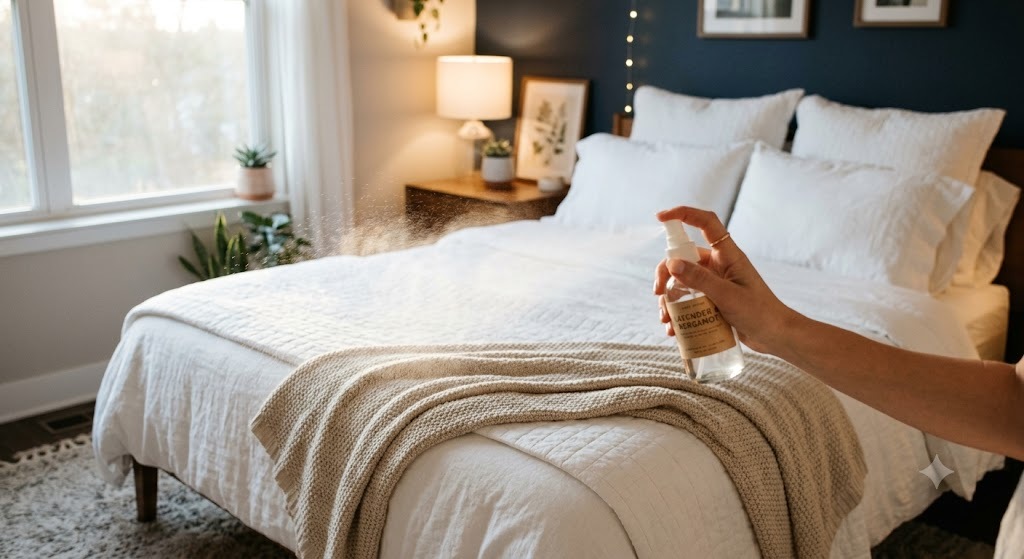
The Best Scent Notes for Bed and Pillow Sprays
Not every fragrance belongs in the bedroom. Notes that work beautifully in a room diffuser can feel overpowering an inch from your face at 2 a.m. Here’s what actually works.
Lavender and Herbal Blends
Lavender is the classic for a reason. It’s soft, slightly powdery, and rarely overwhelming even in higher concentrations. Brands like This Works and Neom have built entire product lines around lavender-forward pillow mists, often blending in chamomile or vetiver for extra depth.
If pure lavender feels a little “spa cliché” to you, look for blends that pair it with clary sage or sweet marjoram. These add a slightly herbal, grounded quality without losing the calming effect.
Warm, Woody Comfort Scents
Sandalwood, cedarwood, and soft amber notes work well for anyone who finds floral scents too sweet before bed. These read as cozy rather than energizing, which is exactly what you want at night.
A linen spray built around cedar and vanilla, for instance, tends to smell more like a candle than a perfume — warm, low-key, and easy to fall asleep next to.
Fresh, Clean Laundry Notes
For anyone who just wants their sheets to smell “clean,” aldehydic and cotton-musk blends recreate that classic fresh-laundry effect without any heavy florals. These are the safest bet if you’re buying a linen spray for someone else, since almost nobody dislikes a clean-linen scent.
How to Choose and Apply Linen Spray: A Step-by-Step Guide
Getting the technique right matters just as much as picking the right bottle. Here’s how to do it properly.
- Hold the bottle 12–18 inches away. Spraying too close can leave damp spots or an overwhelming concentration in one area.
- Mist lightly, in a sweeping motion. Two to three light passes across a pillow is plenty. You can always add more; you can’t take it away.
- Apply 20–30 minutes before bed. This gives any alcohol base time to evaporate fully, so you’re not inhaling raw alcohol as you fall asleep.
- Focus on pillowcases, not the mattress itself. Pillows sit closest to your nose, so that’s where scent matters most. Heavier sprays on a mattress can also linger too long and become cloying.
- Rotate scents seasonally. A warm vanilla-cedar blend in winter and a lighter linen or citrus-lavender blend in summer keeps the ritual feeling fresh rather than routine.

Common Mistakes People Make With Linen Sprays
Even a great product can underdeliver if it’s used the wrong way. Watch out for these.
Spraying too much, too often. Overdoing it — especially with strong scents — leads to “nose blindness,” where you stop smelling it entirely while guests notice it the second they walk in.
Choosing a room spray instead of a fabric-specific formula. General air fresheners aren’t formulated for direct fabric contact and can leave oily marks or stains on light-colored linens. Always check the label says “linen spray” or “fabric mist.”
Skipping the patch test. Before spraying an entire pillowcase, test a small hidden area first — especially with silk or linen fabrics, which can be more reactive to alcohol-based sprays.
Using scents that are too stimulating at night. Bright citrus and peppermint are refreshing in the morning but can be too energizing right before sleep for some people.
Expert Tips for Getting the Most Out of Your Linen Spray
A few small habits separate a good linen spray routine from a great one.
Layer your scent story. If your body lotion or perfume already has a vanilla or sandalwood base, choose a linen spray in the same family rather than a competing one. Mismatched scent families can smell muddled instead of cohesive.
Store your spray away from direct sunlight and heat, ideally in a drawer or cabinet. UV exposure breaks down essential oils faster, which shortens how long a bottle stays true to its original scent.
Refresh your pillow spray on laundry day. Applying it to freshly washed, slightly damp pillowcases can help the scent set into the fibers more evenly than spraying on dry fabric.
Final Recommendations: Building Your Bedtime Ritual
If you’re just starting out, a lavender-based linen spray is the safest, most universally loved option — it’s calming, widely available, and pairs well with almost any other scent in your home.
For something with more personality, a cedar-vanilla or sandalwood blend brings warmth without sweetness, while a clean-linen or cotton-musk spray works well if you prefer something closer to “no scent, just fresh.”
Whichever direction you go, the goal is consistency. A linen spray works best not as an occasional treat, but as a nightly cue — the fragrance equivalent of dimming the lights before bed.

Conclusion
Choosing the best linen spray for your bed and pillows comes down to matching scent to mood: calming lavender for winding down, warm woods for coziness, or clean linen notes for simplicity. What matters most is applying it thoughtfully — a light mist, well before bedtime, on fabric close to your face rather than across the whole room.
Once you find the right one, it becomes part of the routine you look forward to, not just a product on a shelf. Did you find this helpful? Drop a comment below or share this with a fellow fragrance lover!
Frequently Asked Questions
Q1: What is the best linen spray for sleep? Lavender-based linen sprays are generally considered best for sleep, thanks to their calming, non-stimulating scent profile. Look for blends that pair lavender with chamomile or vetiver for a deeper relaxing effect. Avoid bright citrus or peppermint sprays right before bed, since these tend to feel more energizing than soothing.
Q2: Is linen spray safe to use directly on pillows? Most linen sprays are formulated specifically for fabric and are safe on pillowcases when used as directed. Always check the label for “fabric” or “linen” spray rather than a general room spray, and patch-test on delicate fabrics like silk before full application.
Q3: How often should I spray my sheets? Two to three times a week is typically enough to maintain a light, pleasant scent without overwhelming the fabric. Daily use can lead to a buildup effect where you stop noticing the scent yourself, even though it’s still strong to others.
Q4: Can linen spray stain sheets? Tinted or oil-heavy sprays can occasionally leave marks on light fabrics, especially if sprayed too close. Choosing a clear, alcohol-based linen spray and holding the bottle at least 12 inches away significantly reduces this risk.
Q5: What’s the difference between a linen spray and a perfume? Linen sprays are formulated at a lower concentration and designed to sit on fabric rather than skin, so they tend to be lighter and fade differently over time. Perfumes are built to interact with body chemistry and typically last longer when worn on skin.
Q6: Do linen sprays actually help you sleep better? While a linen spray alone won’t fix sleep issues, calming scents like lavender are associated with reduced restlessness and a lower heart rate before sleep in several studies. Used consistently as part of a wind-down routine, it can be a helpful cue that signals to your brain it’s time to relax.

1 thought on “Best Linen Sprays for Your Bed and Pillows”