


What you’ll learn
- How to neutralize unwanted household odors at their source before adding fragrance.
- The art of scent layering using diffusers, candles, and linen sprays.
- Simple, budget-friendly DIY techniques for continuous, subtle freshness.
- Expert secrets to maintaining a signature ambient aroma in every room.
Introduction
Walking into a home that smells divine instantly shifts your mood. Whether it is the inviting richness of warm vanilla, the clean snap of crushed eucalyptus, or the comforting depth of cedarwood, an ambient aroma shapes how you feel within your space. Yet, many homeowners struggle with fragrances that fade after an hour or clash into an overwhelming synthetic haze. Learning how to make your home smell amazing all the time is not about drowning out bad smells with heavy aerosol sprays; it is an art grounded in consistency, air quality, and strategic scent layering.
Research from the Olfactory Research Fund indicates that pleasant ambient scents can improve mood by up to 40%, demonstrating just how profoundly olfactory cues impact our daily life. When you curate your home’s aroma thoughtfully, you build a welcoming sanctuary for yourself and your guests. Achieving a perpetual, luxurious scent profile requires a balance of proper foundation work and clever fragrance placement. Let us dive in.
The Olfactory Foundation — Why Odor Elimination Comes First
Before you light a single soy candle or set up a reed diffuser, you must address the foundational air quality of your living space. Fragrance molecules attach themselves to existing atmospheric elements. If your room contains ambient moisture, stale cooking oils, or pet dander, adding luxury fragrance merely creates a confusing hybrid scent.
To master how to make your home smell amazing all the time, you must treat your ambient air as a blank canvas. Deep cleaning high-porosity soft furnishings, carpets, and window drapes removes trapped organic compounds that passively emit sour notes over time.


Air Circulation and Deep Purification
Air stagnation is the primary enemy of a fresh-smelling home. Trapped air accumulates humidity and microscopic debris, leading to a lingering musty background note. Opening windows for even fifteen minutes each morning establishes cross-ventilation, replacing trapped indoor pollutants with oxygen-rich external air.
Additionally, deploying a true HEPA air purifier with an activated carbon filter continuously pulls volatile organic compounds (VOCs) and pet odor out of circulation. This ensures your chosen decorative fragrances stay crisp and true to their intended notes.
Core Scent Science — The Art of Scent Layering
Once your space is clean and ventilated, you can begin layering ambient scent. Professional perfumers rely on fragrance pyramids—top notes, heart notes, and base notes—to create balanced personal perfumes. The exact same principle applies to home interior fragrancing.
Understanding Scent Pyramids for Spaces
Top notes like bright citrus, bergamot, and fresh herbs offer an immediate burst of freshness, but they evaporate quickly. Heart notes, including floral jasmine, lavender, and green tea, form the body of your home aroma.
Base notes—such as sandalwood, amber, tonka bean, and dark vanilla—evaporate very slowly over weeks. To ensure your home maintains a steady background fragrance, anchor every room with strong base-note mediums before layering brighter top notes over them.
Matching Scents to Room Functionality
Every room serves a distinct physiological purpose, and your choice of scent should match that energy. Crisp notes like lemongrass, peppermint, and crisp apple belong in kitchens and home offices to boost focus and signal cleanliness.
Conversely, rich, calming notes like chamomile, soft cashmere, and smoked cedar belong in bedrooms and cozy dens. Aligning room function with fragrance psychology prevents sensory fatigue and makes your home feel intuitively harmonious.
Avoiding Olfactory Adaptation
Have you ever noticed that you can no longer smell your own home after a few days? This phenomenon, known as olfactory adaptation or “nose blindness,” occurs when your brain categorizes a continuous scent as safe background noise and tunes it out.
To keep your home scent vibrant to your own senses, rotate your core scent profile every three to four weeks or alternate accent notes seasonally. Switching from a summer citrus-fig combination to an autumn amber-spiced clove layout resets your olfactory receptors.
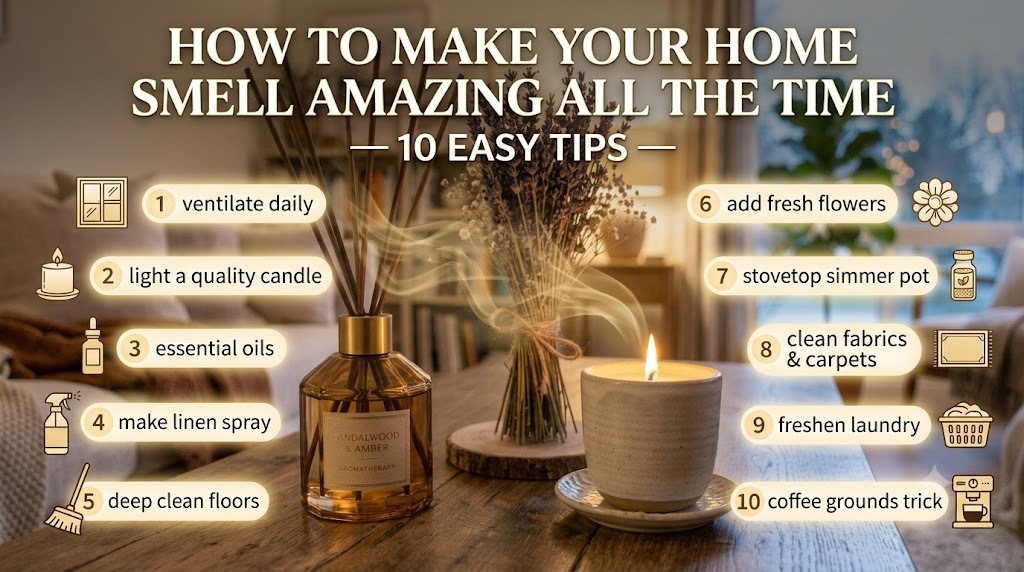
10 Practical Tips to Keep Your Home Smelling Incredible
Here is your actionable, step-by-step master plan to build an enduring home fragrance ecosystem.
1: Eliminate Odors at the Source First
Regularly sprinkle food-grade baking soda onto carpets and upholstered sofas, let it sit for twenty minutes, and vacuum thoroughly. Clean your kitchen trash can base with tea tree oil and warm water weekly.
2: Place Reed Diffusers Strategic to Airflow
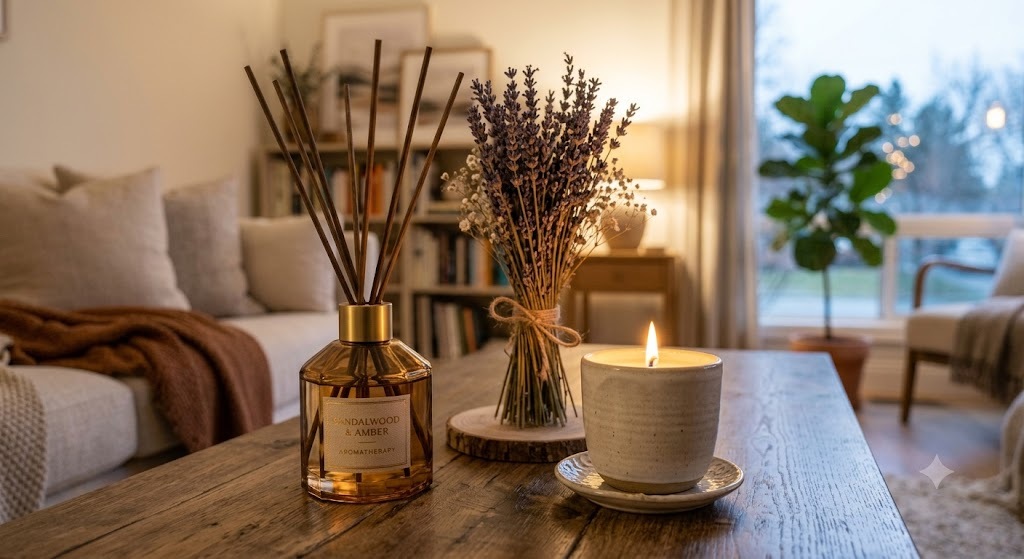
Position high-quality reed diffusers near entryways, doorways, and hallways where foot traffic naturally moves the air currents, wafting the fragrant oil gently through the house.
3: Simmer Natural Botanical Pots
For instant, cozy warmth, simmer a small pot of water on the stove with sliced oranges, cinnamon sticks, fresh rosemary sprigs, and a dash of vanilla extract on low heat.
4: Scent Your HVAC and Furnace Filters
Apply 8–10 drops of pure essential oil—such as eucalyptus, lavender, or grapefruit—directly onto the border of your home air filters before installation to disperse fragrance through central vents.
5: Utilize Dry Dryer Sheet Tricks
Tuck fresh, high-quality fabric softener sheets into the bottoms of laundry hampers, inside linen closets, behind throw pillow covers, and inside luggage to passively neutralize dampness.
6: Simmer Essential Oils on Warm Radiators
During colder months, place a small heat-safe ceramic dish filled with water and a few drops of cedarwood or clove essential oil directly on top of warm radiators or near heating vents.
Tip 7: Spritz Linen Spray on Porous Fabrics
Gently mist curtains, fabric lampshades, rug corners, and throw blankets with a homemade or commercial linen spray containing water, a splash of witch hazel, and your favorite fragrance oils.
8: Use Scented Vacuum Balls or Felt Pads
Add a few drops of aromatic oil to a cotton ball or felt pad and drop it into your vacuum cleaner bag or canister. As you vacuum, the exhaust air will warm the oil and scent the room.
9: Upgrade to Cold-Air Nebulizing Diffusers
Unlike traditional water ultrasonic diffusers that add humidity, cold-air nebulizers break pure fragrance oil into dry nano-particles, filling large square footage efficiently with long-lasting scent.
10: Deep-Clean Garbage Disposals with Citrus
Drop leftover lemon, lime, or orange peels into your kitchen garbage disposal along with ice cubes and coarse salt, then run cold water while grinding to scrub grease and release fresh oils.
Common Home Fragrance Mistakes to Avoid
Many well-intentioned homeowners accidentally create uncomfortable home environments by making a few common missteps. Identifying these errors saves money and elevates your space.
Mixing Conflicting Scent Profiles
Burning a tropical coconut candle in the living room while running a heavy pine electric plug-in in the hallway creates an unpleasant olfactory clash. Stick to one cohesive scent family—such as woody, oriental, fresh, or floral—throughout connected open-concept zones.
Over-Relying on Cheap Synthetic Aerosols
Budget aerosol sprays rely heavily on volatile propellants that mask smells temporarily with harsh chemicals before falling flat. These sprays can irritate sensitive respiratory systems and leave sticky residues on flooring. Invest in cold-pressed essential oils, high-grade soy wax, and slow-release diffusers instead.
Neglecting High-Dampness Zones
Bathrooms and under-sink cabinets often harbour microscopic mildew that ruins surrounding home fragrances. Using moisture-absorbing charcoal bags alongside subtle scent tools prevents stagnant humidity from souring your ambient air.
Pro Secrets for Continuous Ambience
If you want your home to smell like a five-star boutique hotel, consistency and subtle delivery are everything. Luxury hotels like The Ritz-Carlton or Edition do not rely on strong bursts of spray; they utilize ambient diffusion systems calibrated to low, steady outputs.
To achieve this level of perfection, invest in a dedicated HVAC scent diffuser system or place discreet, high-capacity cold-air nebulizers near natural room air intakes. Always pair your primary room scent with matching hand soaps, dish detergent, and linen wash to create an immersive, seamless brand identity for your home.
Summary of the Ultimate Home Scent Routine
Keeping your living space smelling continuously fresh requires a balanced approach. By combining deep odor elimination, proper room ventilation, strategic placement of diffusion tools, and harmonious scent profile choices, you turn your home into an inviting sanctuary.

- Daily: Open windows for brief air exchanges and wipe down high-use kitchen surfaces.
- Weekly: Spritz soft furnishings with custom linen spray and clean kitchen disposals.
- Monthly: Flip reed diffuser sticks, refresh air filter essential oils, and clean carpet fibres with baking soda.
- Seasonally: Rotate your core fragrance profiles to align with changing weather and prevent nose blindness.
Conclusion
Creating a home that smells consistently incredible is one of the most rewarding sensory upgrades you can make to your daily living environment. By mastering how to make your home smell amazing all the time through proper air purification, strategic scent layering, and steady low-level diffusion, you ensure that every step across your threshold feels like a breath of luxurious air.
Did you find this helpful? Drop a comment below or share this with a fellow fragrance lover!
Frequently Asked Questions
Q1: What is the single best way to make your home smell amazing all the time?
A: The most effective method is combining deep source-odor elimination with continuous, low-level diffusion. Using a cold-air nebulizer or strategic reed diffusers anchored by long-lasting base notes like sandalwood or vanilla ensures an uninterrupted, subtle aroma throughout your living spaces.
Q2: Why does my house lose its fresh smell so quickly after cleaning?
A: Houses lose their clean scent quickly because volatile fragrance molecules in cleaning products evaporate within a few hours. Additionally, soft fabrics, carpets, and air filters trap ambient humidity and lingering odor compounds that reassert themselves once initial cleaning scents fade away.
Q3: How can I make my home smell good naturally without artificial chemicals?
A: You can naturally scent your home by simmering botanical ingredients like citrus peels, cinnamon, and herbs in water on the stove. Using 100% pure essential oils in ultrasonic diffusers and sprinkling baking soda on carpets before vacuuming also refreshes air without synthetic chemicals.
Q4: How often should I flip the sticks in a reed diffuser?
A: For optimal fragrance release without burning through oil too quickly, flip your diffuser reeds once every one to two weeks. Flipping them over paper towels prevents oil drips on furniture while giving your room an immediate boost of fresh fragrance.
Q5: Can pet odors be fully neutralized so fragrancing actually works?
A: Yes, pet odors can be fully managed by combining enzymatic cleaners—which break down organic pet waste molecules—with HEPA air purifiers containing thick activated carbon filters. Once these odors are neutralized at the molecular level, subtle home fragrances can shine without clashing.
Q6: How do luxury hotels keep their lobbies smelling so incredible constant?
A: Luxury hotels use commercial-grade cold-air nebulizing systems integrated directly into their central HVAC ductwork. These systems disperse dry micro-droplets of customized scent oil evenly across thousands of square feet at low, consistent concentrations 24 hours a day.
What Is a Soliflore Perfume and Why Are They Having a Moment?
